• Wyszukiwanie zaawansowane
  • Kategorie
  • Kategorie BISAC
  • Książki na zamówienie
  • Promocje
  • Granty
  • Książka na prezent
  • Opinie
  • Pomoc
  • Załóż konto
  • Zaloguj się

Agriculture, Natural Resources and Food Security: Lessons from Nepal » książka


zaloguj się | załóż konto
Logo Krainaksiazek.pl

koszyk

konto

szukaj
topmenu
Księgarnia internetowa
Szukaj
Książki na zamówienie
Promocje
Granty
Książka na prezent
Moje konto
Pomoc
 
 
Wyszukiwanie zaawansowane
Pusty koszyk
Bezpłatna dostawa dla zamówień powyżej 20 złBezpłatna dostawa dla zamówień powyżej 20 zł

Kategorie główne

• Nauka
 [2949965]
• Literatura piękna
 [1857847]

  więcej...
• Turystyka
 [70818]
• Informatyka
 [151303]
• Komiksy
 [35733]
• Encyklopedie
 [23180]
• Dziecięca
 [617748]
• Hobby
 [139972]
• AudioBooki
 [1650]
• Literatura faktu
 [228361]
• Muzyka CD
 [398]
• Słowniki
 [2862]
• Inne
 [444732]
• Kalendarze
 [1620]
• Podręczniki
 [167233]
• Poradniki
 [482388]
• Religia
 [509867]
• Czasopisma
 [533]
• Sport
 [61361]
• Sztuka
 [243125]
• CD, DVD, Video
 [3451]
• Technologie
 [219309]
• Zdrowie
 [101347]
• Książkowe Klimaty
 [123]
• Zabawki
 [2362]
• Puzzle, gry
 [3791]
• Literatura w języku ukraińskim
 [253]
• Art. papiernicze i szkolne
 [7933]
Kategorie szczegółowe BISAC

Agriculture, Natural Resources and Food Security: Lessons from Nepal

ISBN-13: 9783031095542 / Angielski / Twarda / 2022 / 434 str.
Jagadish Timsina; Tek N. Maraseni; Devendra Gauchan
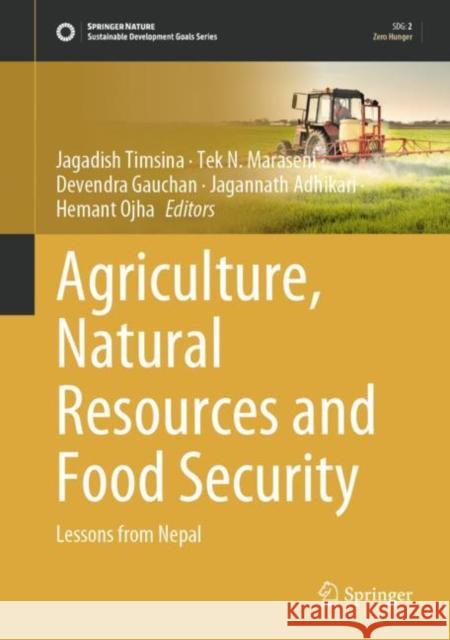
Agriculture, Natural Resources and Food Security: Lessons from Nepal Jagadish Timsina Tek N. Maraseni Devendra Gauchan 9783031095542 Springer - książkaWidoczna okładka, to zdjęcie poglądowe, a rzeczywista szata graficzna może różnić się od prezentowanej.

Agriculture, Natural Resources and Food Security: Lessons from Nepal

ISBN-13: 9783031095542 / Angielski / Twarda / 2022 / 434 str.

Jagadish Timsina; Tek N. Maraseni; Devendra Gauchan
cena 564,88 zł
(netto: 537,98 VAT:  5%)

Najniższa cena z 30 dni: 539,74 zł
Termin realizacji zamówienia:
ok. 22 dni roboczych
Bez gwarancji dostawy przed świętami

Darmowa dostawa!
inne wydania

This book explains how a former net food exporting Nepal has become a net food importing country due to a lack of an integrated system-wide approach to planning and governance of agriculture and natural resources. It demonstrates how various components of the food system, such as agronomy, agrobiodiversity, plant health, post-harvest management, livestock and fisheries, and socio-economics including marketing and trade, have been managed in sectoral silos, crippling the very foundations of food systems innovations. The book also explores ways to tackle climate change impacts while considering gender, social equity, conservation agriculture practices, and crop modeling as cross-cutting themes.This book utilizes Nepal as a case study in relation to wider questions of food security and livelihoods facing South Asia and synthesizes lessons that are relevant to the Global South where countries are struggling to harmonize and integrate natural resources management for sustainable and effective food security outcomes. As such, it significantly contributes to the knowledge toward achieving various United Nations Sustainable Development Goals.


This book explains how a former net food exporting Nepal has become a net food importing country due to a lack of an integrated system-wide approach to planning and governance of agriculture and natural resources. It demonstrates how various components of the food system, such as agronomy, agrobiodiversity, plant health, post-harvest management, livestock and fisheries, and socio-economics including marketing and trade, have been managed in sectoral silos, crippling the very foundations of food systems innovations. The book also explores ways to tackle climate change impacts while considering gender, social equity, conservation agriculture practices, and crop modeling as cross-cutting themes. This book utilizes Nepal as a case study in relation to wider questions of food security and livelihoods facing South Asia and synthesizes lessons that are relevant to the Global South where countries are struggling to harmonize and integrate natural resources management for sustainable and effective food security outcomes. As such, it significantly contributes to the knowledge toward achieving various United Nations Sustainable Development Goals.

Kategorie:
Nauka, Geografia
Kategorie BISAC:
Social Science > Human Geography
Technology & Engineering > Food Science - Food Safety & Security
Science > Earth Sciences - Meteorology & Climatology
Wydawca:
Springer
Seria wydawnicza:
Sustainable Development Goals
Język:
Angielski
ISBN-13:
9783031095542
Rok wydania:
2022
Dostępne języki:
Numer serii:
000812045
Ilość stron:
434
Oprawa:
Twarda

Preface

Jagadish Timsina, Hemant Ojha, Tek N. Maraseni, Devendra Gauchan, and Jagannath Adhikari


Forewords

Bimala Rai Paudyal, Member National Assembly, Federal Parliament, Kathmandu, Nepal


John Dixon, FTSE; Adjunct Professor University of Queensland, Visiting Fellow Australian National University, Australia, and Visiting Professor Gansu Agricultural University, China


Contents


Introduction and overview

Jagadish Timsina, Tek N. Maraseni, Devendra Gauchan, Jagannath Adhikari, and Hemant Ojha


Part 1- Agriculture, horticulture, and post-harvest management


1.            Cereal Demand and Production Projections for 2050: Opportunities for Achieving Food Self-sufficiency in Nepal 

Devendra Gauchan, Krishna P. Timsina, Samaya Gairhe, Jagadish Timsina, and Krishna D. Joshi

2.            Fruits and Vegetables for Food and Nutrition Security and Income Generation in Nepal Indra R. Pandey, Mohan B. Thapa, and Devendra Gauchan

3.            Potential for Citrus Export from Nepal to Tibet

Dipendra Aryal, Phul P. Subedi, Kerry B. Walsh, and Sabnam Shivakoti

4.            Postharvest and Quality Management of Fruits and Vegetables in Nepal

Bed P. Khatiwada, Shanta Karki, Purushottam P. Khatiwada, Kishor C. Dahal

5.            Strengthening National Seed System for Food and Nutrition Security in Nepal

Sita Ram Ghimire, Mahendra P. Khanal, Hari K. Shrestha, and Kedar Adhikari

6.            Agrobiodiversity, and Neglected and Underutilized Species for Food, Nutrition, Livelihood, and Environmental Security in Nepal

Bal K. Joshi and Devendra Gauchan

7.            Improving Soil Health and Soil Security for Food and Nutrition Security in Nepal   

Bhaba P. Tripathi, Jagadish Timsina, Shree P. Vista, Yam K. Gairhe, and Bhoj R. Sapkota

8.            Plant Clinics for Crop Health and Food Security: Experiences from Nepal

Yubak D. GC, Raj K. Adhikari, Shalik R. Adhikari, and Bed P. Khatiwada

9.            Toxins, Contaminants, and Adulteration in Food: Current Policies and Practices, and Future Strategies for Nepal

Bhim Chaulagain, Yakindra P. Timilsena, and Bed P. Khatiwada 


10.          Regenerative Agriculture for Sustainable Food Security and Livelihoods in Nepal: A Proposal for Multi-Scalar Planning Framework

Jagannath Adhikari and Jagadish Timsina

11.          Conservation Agriculture Technologies for Cropping Systems Sustainability and Food and Nutrition Security in Nepal

Lal P. Amgain, Krishna P. Devkota, Santosh Marahatta, Tika B. Karki, Sagar Kafle, Puspa R. Dulal, Susmita Subedi, Shikha T. Magar, and Jagadish Timsina

12.          Urban Agriculture as a Wellbeing Approach and Policy Agenda for Nepal

Arun Kafle, Baden Myers, Rajendra Adhikari, Santosh Adhikari, Prakash K. Sanjel, and Yadav Padhyoti


Part 2 - Livestock and fisheries


13.          Livestock Contribution to Food and Nutrition Security in Nepal

            Shreeram P. Neopane, Bhola S. Shrestha, and Devendra Gauchan

14.          Land and Livestock Ownership and Household Food Security in Nepal

Prem Bhandari

15.          Sustainable Livestock Production Safeguarding Animal and Public Health in Post-COVID Nepal

Santosh Dhakal and Surendra Karki

16.          Changes in Transhumance Systems in Nepal: Analysing Socio-Ecological Impacts using Driver-Pressure-State-Impact-Response Framework

Suman Aryal, Tek N. Maraseni, and Geoff Cockfield

17.          Sustainable Fisheries and Aquaculture for Food and Nutrition Security in Nepal

Madhav K. Shrestha, Narayan P. Pandit, and Ram C. Bhujel


Part 3 – Forestry, community forestry, and agroforestry


18.          Ecosystems Services from Community Forestry: Prospects and Challenges for Improving Local Livelihoods in Nepal

Hemant Ojha, Naya S. Poudel, Jagadish Timsina, Sunita Chaudhary, and Himlal Baral

19.          An Assessment of Selective Logging Policies and Practices in Nepal

Bishnu H. Poudyal, Tek N. Maraseni, Suman Aryal, and Geoff Cockfield

20.          Assessing the Potential of Agroforestry in Nepal: Socio-Economic and Environmental Perspectives

Arun Dhakal, Tek N. Maraseni, and Jagadish Timsina


Part 4 - Cross-cutting topics

21.          Achieving Water, Energy, and Food Security in Nepal through Nexus Approach to Planning and Development

Gopi Uprety, Jagadish Timsina, and Tek N. Maraseni

22.          Potential of Crop Simulation Models to Increase Food and Nutrition Security under a Changing Climate in Nepal

Krishna P. Devkota, Jagadish Timsina, Lal P. Amgain, and Mina Devkota

23.          Agrobiodiversity Management for Gender Equitable Adaptation to Climate Change: Investigating the Gendered Roots of Vulnerability in the Nepal Himalayas 

Basundhara Bhattrai


Dr. Jagadish Timsina is associated with Global Evergreening Alliance, Melbourne, Australia, and the Institute for Study and Development Worldwide, Sydney, Australia. He is a systems agronomist specialising on crop, soil, nutrient and water management; conservation agriculture based sustainable intensification; agroforestry and community forestry systems; participatory farming systems research, extension and development, climate change in agriculture and forestry, and crop and systems modelling. Before he worked with the University of Melbourne and CSIRO, Australia, International Rice Research Institute, Bangladesh and Philippines, International Maize and Wheat Research Centre, Bangladesh and Mexico, and Agricultural and Forestry University and Tribhuvan University, Nepal, for over 35 years. 


Professor Tek Maraseni earned a double BSc Science and Forestry in Nepal, an MSc Natural Resources Management in Thailand, and a PhD Environmental Science and Management in Australia. He has over 26 years of research experience in identifying and adopting management practices that improve productivity, profitability and the sustainability of agriculture and forestry systems whilst reducing greenhouse gas emissions. His research work has been recognized through several national and international awards/fellowships including but not limited to: Research Excellence Award from University of Southern Queensland in 2009 & 2014; “Senior International Scientist” award from Chinese Academy of Sciences in 2013; and “Climate Change Professional Fellows” award from the US State Department in 2011.


Dr Jagannath Adhikari is affiliated with University of New South Wales, Australia, as sessional lecturer. He taught as Visiting Professor in Kyoto University, Japan, and worked as Visiting Scholar in universities like Heidelberg University, Germany, The Australian National University, Canberra, University of Sussex, UK, and Worcester Poly-Technique Institute – WPI, USA. He is a human geographer has over 20 years research, teaching and consultancy experiences in various areas of international development -  sustainable livelihood; climate change and food security; globalization, migration, remittances and development; sustainable agriculture; participatory natural resources management; land management and land reform; agrarian change and livelihoods.


Dr. Devendra Gauchan is an Agricultural Economist with expertise in agrobiodiversity, seed system and food security. He has PhD degree from the University of Birmingham, UK, and has worked in various national and international organizations over the last 25-years. He is currently the National Project Manager at the Alliance of Bioversity International and CIAT, Kathmandu, Nepal, and also serving as Adjunct-Professor at Institute of Agriculture and Animal Sciences (IAAS), Tribhuvan University, Kathmandu. Previously, he was the Head of Socioeconomics & Agricultural Research Policy Division at Nepal Agricultural Research Council (NARC) Kathmandu.


Dr Hemant Ojha is Director of the Institute for Study and Development Worldwide (IFSD), Sydney, Australia. He is also an Adjunct Associate Professor at University of Canberra, Australia. He blends social and environmental sciences to conduct research on forest, water, agriculture and climate change. He also brings rich experiences in policy engagement and practice from Asia and Africa, including expert advisory works for various international agencies in the field of environment and development. He has worked in both developing and developed countries, including Nepal, India, Bangladesh, Cambodia, Cameroon, the UK, and Australia. He is a co-founder and former chair of Forest Action Nepal (2000), South Asia Institute for Advanced Studies (2011).

This book explains how a former net food exporting Nepal has become a net food importing country due to a lack of an integrated system-wide approach to planning and governance of agriculture and natural resources. It demonstrates how various components of the food system, such as agronomy, agrobiodiversity, plant health, post-harvest management, livestock and fisheries, and socio-economics including marketing and trade, have been managed in sectoral silos, crippling the very foundations of food systems innovations. The book also explores ways to tackle climate change impacts while considering gender, social equity, conservation agriculture practices, and crop modeling as cross-cutting themes. 

This book utilizes Nepal as a case study in relation to wider questions of food security and livelihoods facing South Asia and synthesizes lessons that are relevant to the Global South where countries are struggling to harmonize and integrate natural resources management for sustainable and effective food security outcomes. As such, it significantly contributes to the knowledge toward achieving various United Nations Sustainable Development Goals.




Udostępnij

Facebook - konto krainaksiazek.pl


Opinie o Krainaksiazek.pl na Opineo.pl

Partner Mybenefit

Krainaksiazek.pl w programie rzetelna firma Krainaksiaze.pl - płatności przez paypal

Czytaj nas na:

Facebook - krainaksiazek.pl
  • książki na zamówienie
  • granty
  • książka na prezent
  • kontakt
  • pomoc
  • opinie
  • regulamin
  • polityka prywatności

Zobacz:

  • Księgarnia czeska

  • Wydawnictwo Książkowe Klimaty

1997-2025 DolnySlask.com Agencja Internetowa

© 1997-2022 krainaksiazek.pl
     
KONTAKT | REGULAMIN | POLITYKA PRYWATNOŚCI | USTAWIENIA PRYWATNOŚCI
Zobacz: Księgarnia Czeska | Wydawnictwo Książkowe Klimaty | Mapa strony | Lista autorów
KrainaKsiazek.PL - Księgarnia Internetowa

Polityka prywatnosci - link
Krainaksiazek.pl - płatnośc Przelewy24
Przechowalnia Przechowalnia



