• Wyszukiwanie zaawansowane
  • Kategorie
  • Kategorie BISAC
  • Książki na zamówienie
  • Promocje
  • Granty
  • Książka na prezent
  • Opinie
  • Pomoc
  • Załóż konto
  • Zaloguj się

Writing to Reason » książka

zaloguj się | załóż konto
Logo Krainaksiazek.pl

koszyk

konto

szukaj
topmenu
Księgarnia internetowa
Szukaj
Książki na zamówienie
Promocje
Granty
Książka na prezent
Moje konto
Pomoc
 
 
Wyszukiwanie zaawansowane
Pusty koszyk
Bezpłatna dostawa dla zamówień powyżej 20 złBezpłatna dostawa dla zamówień powyżej 20 zł

Kategorie główne

• Nauka
 [2950560]
• Literatura piękna
 [1849509]

  więcej...
• Turystyka
 [71097]
• Informatyka
 [151150]
• Komiksy
 [35848]
• Encyklopedie
 [23178]
• Dziecięca
 [617388]
• Hobby
 [139064]
• AudioBooki
 [1657]
• Literatura faktu
 [228597]
• Muzyka CD
 [383]
• Słowniki
 [2855]
• Inne
 [445295]
• Kalendarze
 [1464]
• Podręczniki
 [167547]
• Poradniki
 [480102]
• Religia
 [510749]
• Czasopisma
 [516]
• Sport
 [61293]
• Sztuka
 [243352]
• CD, DVD, Video
 [3414]
• Technologie
 [219456]
• Zdrowie
 [101002]
• Książkowe Klimaty
 [124]
• Zabawki
 [2311]
• Puzzle, gry
 [3459]
• Literatura w języku ukraińskim
 [254]
• Art. papiernicze i szkolne
 [8079]
Kategorie szczegółowe BISAC

Writing to Reason

ISBN-13: 9781405170994 / Angielski / Miękka / 2008 / 158 str.
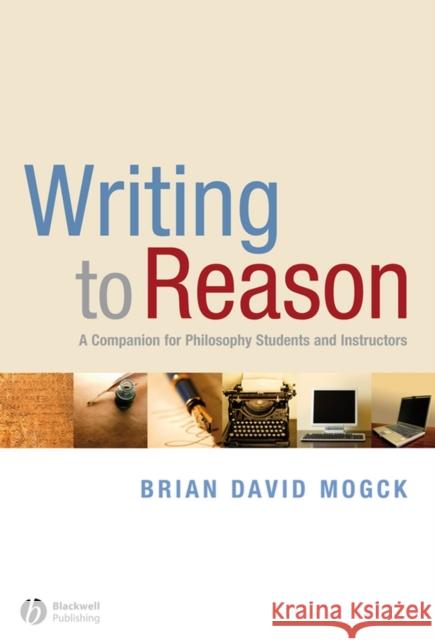
Brian David Mogck
Writing to Reason Mogck, Brian David 9781405170994 Blackwell Publishers - książkaWidoczna okładka, to zdjęcie poglądowe, a rzeczywista szata graficzna może różnić się od prezentowanej.

Writing to Reason

ISBN-13: 9781405170994 / Angielski / Miękka / 2008 / 158 str.

Brian David Mogck
cena 112,01
(netto: 106,68 VAT:  5%)

Najniższa cena z 30 dni: 111,55
Termin realizacji zamówienia:
ok. 30 dni roboczych
Dostawa w 2026 r.

Darmowa dostawa!

Writing to Reason presents the principles of writing a clear and well-argued philosophy paper in an easily-referenced numerical format, which facilitates efficient grading and clearer communication between instructors and students.


  • Points out the most common problems students have achieving these objectives
  • Increases efficiencies for instructors in grading papers
  • Presents students with clearer information, objectivity, and transparency about their graded results
  • Facilitates clearer communication between instructors and students

Kategorie:
Nauka, Językoznawstwo
Kategorie BISAC:
Language Arts & Disciplines > Writing - General
Philosophy > Methodology
Wydawca:
Blackwell Publishers
Język:
Angielski
ISBN-13:
9781405170994
Rok wydania:
2008
Ilość stron:
158
Waga:
0.24 kg
Wymiary:
22.94 x 15.27 x 1.22
Oprawa:
Miękka
Wolumenów:
01
Dodatkowe informacje:
Bibliografia
Glosariusz/słownik

Long–suffering teachers of philosophy will love this volume. It offers sophisticated help for writers at various levels, expressed with simplicity and charm. Best of all, it is directed precisely to the improvement of philosophical writing and thinking.

Joseph W. Koterski, S.J., Fordham University

Preface: A Users Guide ix

P.1 A Note to Instructors ix

P.2 A Note to Students xii

Acknowledgments xviii

Glossary of Philosophical Terms xix

Part I: Writing Philosophy 1

1 Writing a Philosophy Paper 3

1.1 What is a Philosophy Paper Supposed to Accomplish? 3

1.2 Choosing a Topic 4

1.3 Moving through Drafts 11

1.4 The Only Outline You Need is a Sketch of the Argument You Plan to Make 12

1.5 The Cardinal Virtues: Logical Rigor and Clarity of Expression 13

1.6 A Checklist for Spotting Problems Early 14

2 Philosophical Writing Advances a Thesis with an Argument 16

2.1 Consuming Arguments 16

1 What is an argument? 16

2 How is a philosopher s argument to be recognized? 21

3 The principle of charity 23

4 How is an argument to be criticized? 25

2.2 Producing Arguments 28

5 A clearly stated, tightly focused thesis is essential 28

6 The introduction states why you wrote the paper and why your audience should read it 29

7 The body of your paper follows a strategy to demonstrate your thesis 30

8 Consider objections to your view 32

9 The conclusion of your paper explains the conclusion of your argument 34

10 On words that indicate conclusions and premises 35

11 Provide justifi cation for every important claim 35

12 What makes an argument philosophically interesting? 36

3 The Rudiments of Academic Writing 40

3.1 Elements of Style 40

13 Use the fi rst–person, active voice 40

14 Avoid using a conversational tone 41

15 The paper should have a title 41

16 Pages should be numbered 42

17 The correct use of punctuation 42

18 The correct use of Latin abbreviations 43

19 The correct use of Latin expressions 44

20 The consistent use of pronouns 47

21 Grammatical errors 47

22 Using a term vs. mentioning it 48

23 How to edit or add text within a quotation 49

3.2 Elements of Substance 50

24 Avoid mere rhetoric: philosophy is not forensics 50

25 Avoid using fi ve–star vocabulary words 52

26 The standard of precision in written discourse 53

27 On expressions such as It is clear that . . . 53

28 Use accurate terms having clear referents 54

29 Always look for the contrast term 55

30 Watch out for mysterious agents 55

3.3 Substantive Advice 55

31 Never quote the instructor 55

32 Never quote the dictionary 56

3.4 A Few Frequently Misused Terms 56

33 Philosophy vs. view vs. opinion 56

34 Concept vs. conception 57

35 Think vs. feel 58

36 Statement vs. argument 59

37 Sound, valid, and true 59

4 Explaining Philosophical Texts 60

38 Make sense out of the text as a whole 60

39 Make sense out of the main arguments in a text 62

40 Every quotation requires explanation 63

41 Every quotation requires specifi c attribution 64

42 The consistent and meaningful use of technical terminology 66

5 The Rudiments of Academic Research 67

43 Use the library, not the Web 67

44 Primary sources are your primary responsibility 69

45 What kind of secondary sources should be used and how? 70

Part II: Doing Philosophy 73

6 Academic Integrity 75

6.1 Know Your School s Honor Code and its Policies Regarding Plagiarism 75

6.2 What is Plagiarism? 75

6.3 How to Avoid Plagiarism 76

6.4 Proper Attribution Bolsters One s Scholarly Credibility 77

6.5 Cheaters are Likely to be Caught 77

7 How to Succeed in a Philosophy Course 79

7.1 Practice the Intellectual Virtues 79

7.2 Come to Class Prepared 82

7.3 Ask Substantive Questions 83

7.4 Respect the Arduous Process of Careful Reading and Writing 83

7.5 Why is Philosophy So Hard to Do? 84

7.6 Why is Philosophy So Hard to Read? 85

7.7 On the Critical Nature of Philosophy and a Few Myths it is Useful to Discard 87

8 What Does it Mean to Do Philosophy? 93

8.1 Philosophers Inquire into Our Concepts and Commitments 94

8.2 Philosophy Explicates What is Implicit in Our Concepts and Commitments 96

8.3 Philosophical Refl ection and the Public Use of Reason 104

Appendix I: Keywords Cross–Referenced to Section Numbers 117

References 119

Index 123

Brian David Mogck is the author of Is Logic Syntax of Language?: Carnap s Programme, Gödel s Critique, and Wittgenstein s Evasion. He earned a PhD in philosophy from Emory University and taught at Emory, Spelman College, and Clayton College and State University. He received a JD from Columbia Law School, and is now an attorney in New York.

Finally, a guide to writing philosophy essays that addresses the needs of instructors as well as students. Writing to Reason is both an informative guide to writing effective essays and a valuable aid to grading papers that facilitates clearer communication between instructors and students.


Writing to Reason presents the concrete steps of writing a clear, organized, and well–argued philosophical essay. It also addresses common mistakes and confusions about philosophical writing. The key principles of successful philosophical writing are presented in an easily–referenced numerical format, where the numbered sections correspond to the comments instructors most often make when grading papers. Instead of making the same comments and corrections in one paper after another, instructors simply refer students to the relevant numbered section of the book for detailed explanations of key points. The result is clearer communication between instructors and students. The grading process becomes more efficient for instructors and more edifying for students.

Mogck, Brian David Brian David Mogck is the author of "Is Logic Synta... więcej >


Udostępnij

Facebook - konto krainaksiazek.pl


Opinie o Krainaksiazek.pl na Opineo.pl

Partner Mybenefit

Krainaksiazek.pl w programie rzetelna firma Krainaksiaze.pl - płatności przez paypal

Czytaj nas na:

Facebook - krainaksiazek.pl
  • książki na zamówienie
  • granty
  • książka na prezent
  • kontakt
  • pomoc
  • opinie
  • regulamin
  • polityka prywatności

Zobacz:

  • Księgarnia czeska

  • Wydawnictwo Książkowe Klimaty

1997-2025 DolnySlask.com Agencja Internetowa

© 1997-2022 krainaksiazek.pl
     
KONTAKT | REGULAMIN | POLITYKA PRYWATNOŚCI | USTAWIENIA PRYWATNOŚCI
Zobacz: Księgarnia Czeska | Wydawnictwo Książkowe Klimaty | Mapa strony | Lista autorów
KrainaKsiazek.PL - Księgarnia Internetowa

Polityka prywatnosci - link
Krainaksiazek.pl - płatnośc Przelewy24
Przechowalnia Przechowalnia








