• Wyszukiwanie zaawansowane
  • Kategorie
  • Kategorie BISAC
  • Książki na zamówienie
  • Promocje
  • Granty
  • Książka na prezent
  • Opinie
  • Pomoc
  • Załóż konto
  • Zaloguj się

The Fusarium Laboratory Manual » książka


zaloguj się | załóż konto
Logo Krainaksiazek.pl

koszyk

konto

szukaj
topmenu
Księgarnia internetowa
Szukaj
Książki na zamówienie
Promocje
Granty
Książka na prezent
Moje konto
Pomoc
 
 
Wyszukiwanie zaawansowane
Pusty koszyk
Bezpłatna dostawa dla zamówień powyżej 20 złBezpłatna dostawa dla zamówień powyżej 20 zł

Kategorie główne

• Nauka
 [2949965]
• Literatura piękna
 [1857847]

  więcej...
• Turystyka
 [70818]
• Informatyka
 [151303]
• Komiksy
 [35733]
• Encyklopedie
 [23180]
• Dziecięca
 [617748]
• Hobby
 [139972]
• AudioBooki
 [1650]
• Literatura faktu
 [228361]
• Muzyka CD
 [398]
• Słowniki
 [2862]
• Inne
 [444732]
• Kalendarze
 [1620]
• Podręczniki
 [167233]
• Poradniki
 [482388]
• Religia
 [509867]
• Czasopisma
 [533]
• Sport
 [61361]
• Sztuka
 [243125]
• CD, DVD, Video
 [3451]
• Technologie
 [219309]
• Zdrowie
 [101347]
• Książkowe Klimaty
 [123]
• Zabawki
 [2362]
• Puzzle, gry
 [3791]
• Literatura w języku ukraińskim
 [253]
• Art. papiernicze i szkolne
 [7933]
Kategorie szczegółowe BISAC

The Fusarium Laboratory Manual

ISBN-13: 9780813819198 / Angielski / Miękka / 2006 / 388 str.
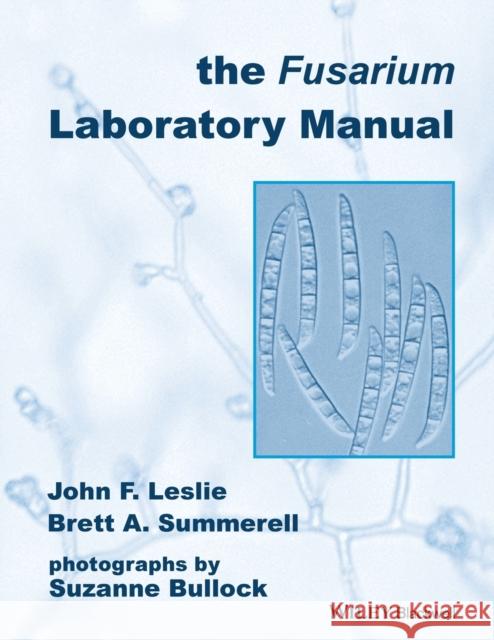
John F. Leslie; Brett Summerell; Suzanne Bullock
The Fusarium Laboratory Manual John F. Leslie Brett Summerell Suzanne Bullock 9780813819198 Blackwell Publishing Professional - książkaWidoczna okładka, to zdjęcie poglądowe, a rzeczywista szata graficzna może różnić się od prezentowanej.

The Fusarium Laboratory Manual

ISBN-13: 9780813819198 / Angielski / Miękka / 2006 / 388 str.

John F. Leslie; Brett Summerell; Suzanne Bullock
cena 822,95 zł
(netto: 783,76 VAT:  5%)

Najniższa cena z 30 dni: 812,87 zł
Termin realizacji zamówienia:
ok. 30 dni roboczych
Bez gwarancji dostawy przed świętami

Darmowa dostawa!

For the first time in over 20 years, a comprehensive collection of photographs and descriptions of species in the fungal genus Fusarium is available. This laboratory manual provides an overview of the biology of Fusarium and the techniques involved in the isolation, identification and characterization of individual species and the populations in which they occur. It is the first time that genetic, morphological and molecular approaches have been incorporated into a volume devoted to Fusarium identification. The authors include descriptions of species, both new and old, and provide protocols for genetic, morphological and molecular identification techniques.

The Fusarium Laboratory Manual also includes some of the evolutionary biology and population genetics thinking that has begun to inform the understanding of agriculturally important fungal pathogens. In addition to practical -how-to- protocols it also provides guidance in formulating questions and obtaining answers about this very important group of fungi. The need for as many different techniques as possible to be used in the identification and characterization process has never been greater. These approaches have applications to fungi other than those in the genus Fusarium. This volume presents an introduction to the genus Fusarium, the toxins these fungi produce and the diseases they can cause.

-The Fusarium Laboratory Manual is a milestone in the study of the genus Fusarium and will help bridge the gap between morphological and phylogenetic taxonomy. It will be used by everybody dealing with Fusarium in the Third Millenium.-
--W.F.O. Marasas, Medical Research Council, South Africa


Kategorie:
Technologie
Kategorie BISAC:
Science > Mikrobiologia
Wydawca:
Blackwell Publishing Professional
Język:
Angielski
ISBN-13:
9780813819198
Rok wydania:
2006
Ilość stron:
388
Waga:
1.03 kg
Wymiary:
24.6 x 28.4 x 3.7
Oprawa:
Miękka
Wolumenów:
01
Dodatkowe informacje:
Bibliografia

The Fusarium Laboratory Manual is a milestone in the study of the genus Fusarium and will help bridge the gap between morphological and phylogenetic taxonomy. It will be used by everybody dealing with Fusarium in the Third Millenium.
––W.F.O. Marasas, Medical Research Council, South Africa

Foreword.

Preface.

1. Introduction.

Techniques and Methods.

2. Media Recipes and Preparation.

2.1 Media for Growing and Identifying Fusarium.

2.2 Supplementary Identification Media.

2.3 Media for Isolating Fusarium.

2.4 Media for the Preparation of Natural Inocula.

2.5 Synthetic and Semi–synthetic Media.

2.6 Media for Sexual Crosses.

2.7 Sterilization of Media and Materials.

3. Techniques for Recovering Fusarium.

3.1 Collecting strategy(ies).

3.2 Isolation Techniques Plants.

3.3 Isolation Techniques Soil.

3.4 Isolation Techniques Spore Trapping and Air Sampling.

3.5 Seed Disinfestation.

4. Techniques for Growing and Maintaining Fusarium.

4.1 Vegetative Propagation.

4.2 Preparing Cultures for Identification.

4.3 Single Spore Subcultures.

4.4 Mutagenesis.

4.5 Culture Preservation.

5. Vegetative Compatibility Groups (VCGs).

5.1 History of and Genetic Basis Underlying Vegetative Compatibility.

5.2 Overall Strategy for Determining if Strains are Vegetatively Compatible.

5.3 Recovering and Identifying nit Mutants.

5.4 Typical Pairing Protocols.

5.5 Common Trouble Spots HSI, crn, and NitMs.

5.6 Characterizing a Population with VCGs.

6. Fertility Concepts.

6.1 Heterothallic, Homothallic and Pseudohomothallic.

6.2 Mating Type.

6.3 Population Effects of Mating Type.

6.4 Male, Female, and Hermaphrodite.

6.5 Crossing Protocols.

6.6 Developing Female–Fertile Tester Strains.

6.7 Species Identification Through Sexual Crosses.

7. Nucleic Acid Analyses.

7.1 DNA Extraction and Purification.

7.2 PCR Mating–Type Alleles.

7.3 Amplified Fragment Length Polymorphisms (AFLPs).

7.4 Sequence Analysis and Sequenced Loci.

7.5 Genetic Maps.

Taxonomy and Identification of Fusarium.

8. A Brief History of Fusarium Taxonomy.

9. Species Concepts in Fusarium.

9.1 Generic Problems in Speciation in Fusarium.

9.2 Morphological Species Concepts.

9.3 Biological Species Concepts.

9.4 Phylogenetic Species Concepts.

9.5 How Many Strains Make a Species?.

9.6 Species Names.

9.7 Subspecific Terminology.

9.8 A Species Concept for Fusarium.

10. Teleomorphs of Fusarium.

10.1 Taxonomy of Teleomorphs.

10.2 General Teleomorph Characters.

10.3 Sexual Development and Differentiation.

10.4 Spore Killer.

10.5 Anamorph–Teleomorph Connections.

11. Practical Approaches to Identification.

11.1 Overall Identification Strategy.

11.2 The Diseased Plant and Its Geographic Origin.

11.3 Native and Agricultural Populations.

11.4 Culture Preparation.

11.5 The Essence of Morphological Identifications.

11.6 Beyond Morphology Sexual Cross Fertility.

11.7 Beyond Morphology Molecular Diagnostics.

11.8 The Special Case of Fusarium oxysporum.

11.9 Differences Between Temperate and Tropical Regions.

11.10 Conclusions.

Species Descriptions.

12. Morphological Characters.

12.1 Macroconidia.

12.2 Microconidia.

12.3 Chlamydospores.

12.4 Other Characters.

12.5 Secondary Characters.

13. Species Descriptions.

F. acuminatum.

F. acutatum.

F. andiyazi.

F. anthophilum.

F. armeniacum.

F. avenaceum.

F. aywerte.

F. babinda.

F. begoniae.

F. beomiforme.

F. brevicatenulatum.

F. bulbicola.

F. camptoceras.

F. chlamydosporum.

F. circinatum.

F. compactum.

F. concentricum.

F. crookwellense (F. cerealis).

F. culmorum.

F. decemcellulare.

F. denticulatum.

F. dimerum.

F. dlamini.

F. equiseti.

F. foetens.

F. fujikuroi.

F. globosum.

F. graminearum.

F. guttiforme.

F. heterosporum.

F. hostae.

F. konzum.

F. lactis.

F. lateritium.

F. longipes.

F. mangiferae.

F. merismoides.

F. miscanthi.

F. musarum.

F. napiforme.

F. nelsonii.

F. nisikadoi.

F. nurragi.

F. nygamai.

F. oxysporum.

F. phyllophilum.

F. poae.

F. polyphialidicum.

F. proliferatum.

F. pseudoanthophilum.

F. pseudocircinatum.

F. pseudograminearum.

F. pseudonygamai.

F. ramigenum.

F. redolens.

F. sacchari.

F. sambucinum.

F. scirpi.

F. semitectum (F. incarnatum).

F. solani.

F. sporotrichioides.

F. sterilihyphosum.

F. subglutinans.

F. succisae.

F. thapsinum.

F. torulosum.

F. tricinctum.

F. udum.

F. venenatum.

F. verticillioides.

References.

Index

John F. Leslie received his Ph.D. in genetics from the University of Wisconsin, Madison in 1979 and is currently a Professor of Plant Pathology and Genetics at Kansas State University.


Brett A. Summerell received his Ph.D. in Plant Pathology from the University of Sydney in 1988 at which time he moved to the Royal Botanic Gardens (Sydney, Australia), where he currently is the Director of Science and Public Programs.

Drs. Leslie and Summerell organize an annual Fusarium Laboratory Workshop in which participants receive hands–on instruction in the implementation of and the interpretation of results from the techniques described in this manual.

For the first time in over 20 years, a comprehensive collection of photographs and descriptions of species in the fungal genus Fusarium is available. This laboratory manual provides an overview of the biology of Fusarium and the techniques involved in the isolation, identification and characterization of individual species and the populations in which they occur. It is the first time that genetic, morphological and molecular approaches have been incorporated into a volume devoted to Fusarium identification. The authors include descriptions of species, both new and old, and provide protocols for genetic, morphological and molecular identification techniques.


The Fusarium Laboratory Manual also includes some of the evolutionary biology and population genetics thinking that has begun to inform the understanding of agriculturally important fungal pathogens. In addition to practical how–to protocols it also provides guidance in formulating questions and obtaining answers about this very important group of fungi. The need for as many different techniques as possible to be used in the identification and characterization process has never been greater. These approaches have applications to fungi other than those in the genus Fusarium. This volume presents an introduction to the genus Fusarium, the toxins these fungi produce and the diseases they can cause.

Leslie, John F. John F. Leslie received his Ph.D. in genetics from... więcej >


Udostępnij

Facebook - konto krainaksiazek.pl


Opinie o Krainaksiazek.pl na Opineo.pl

Partner Mybenefit

Krainaksiazek.pl w programie rzetelna firma Krainaksiaze.pl - płatności przez paypal

Czytaj nas na:

Facebook - krainaksiazek.pl
  • książki na zamówienie
  • granty
  • książka na prezent
  • kontakt
  • pomoc
  • opinie
  • regulamin
  • polityka prywatności

Zobacz:

  • Księgarnia czeska

  • Wydawnictwo Książkowe Klimaty

1997-2025 DolnySlask.com Agencja Internetowa

© 1997-2022 krainaksiazek.pl
     
KONTAKT | REGULAMIN | POLITYKA PRYWATNOŚCI | USTAWIENIA PRYWATNOŚCI
Zobacz: Księgarnia Czeska | Wydawnictwo Książkowe Klimaty | Mapa strony | Lista autorów
KrainaKsiazek.PL - Księgarnia Internetowa

Polityka prywatnosci - link
Krainaksiazek.pl - płatnośc Przelewy24
Przechowalnia Przechowalnia




