• Wyszukiwanie zaawansowane
  • Kategorie
  • Kategorie BISAC
  • Książki na zamówienie
  • Promocje
  • Granty
  • Książka na prezent
  • Opinie
  • Pomoc
  • Załóż konto
  • Zaloguj się

Domain-Specific Languages: Effective Modeling, Automation, and Reuse » książka


zaloguj się | załóż konto
Logo Krainaksiazek.pl

koszyk

konto

szukaj
topmenu
Księgarnia internetowa
Szukaj
Książki na zamówienie
Promocje
Granty
Książka na prezent
Moje konto
Pomoc
 
 
Wyszukiwanie zaawansowane
Pusty koszyk
Bezpłatna dostawa dla zamówień powyżej 20 złBezpłatna dostawa dla zamówień powyżej 20 zł

Kategorie główne

• Nauka
 [2946912]
• Literatura piękna
 [1852311]

  więcej...
• Turystyka
 [71421]
• Informatyka
 [150889]
• Komiksy
 [35717]
• Encyklopedie
 [23177]
• Dziecięca
 [617324]
• Hobby
 [138808]
• AudioBooki
 [1671]
• Literatura faktu
 [228371]
• Muzyka CD
 [400]
• Słowniki
 [2841]
• Inne
 [445428]
• Kalendarze
 [1545]
• Podręczniki
 [166819]
• Poradniki
 [480180]
• Religia
 [510412]
• Czasopisma
 [525]
• Sport
 [61271]
• Sztuka
 [242929]
• CD, DVD, Video
 [3371]
• Technologie
 [219258]
• Zdrowie
 [100961]
• Książkowe Klimaty
 [124]
• Zabawki
 [2341]
• Puzzle, gry
 [3766]
• Literatura w języku ukraińskim
 [255]
• Art. papiernicze i szkolne
 [7810]
Kategorie szczegółowe BISAC

Domain-Specific Languages: Effective Modeling, Automation, and Reuse

ISBN-13: 9783031236686 / Angielski / Miękka / 2023 / 492 str.
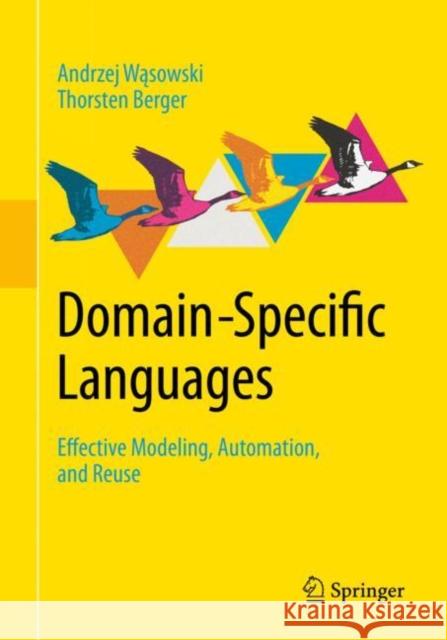
Andrzej Wąsowski; Thorsten Berger
Domain-Specific Languages: Effective Modeling, Automation, and Reuse Andrzej Wąsowski Thorsten Berger 9783031236686 Springer - książkaWidoczna okładka, to zdjęcie poglądowe, a rzeczywista szata graficzna może różnić się od prezentowanej.

Domain-Specific Languages: Effective Modeling, Automation, and Reuse

ISBN-13: 9783031236686 / Angielski / Miękka / 2023 / 492 str.

Andrzej Wąsowski; Thorsten Berger
cena 242,07
(netto: 230,54 VAT:  5%)

Najniższa cena z 30 dni: 231,29
Termin realizacji zamówienia:
ok. 22 dni roboczych
Bez gwarancji dostawy przed świętami

Darmowa dostawa!

This textbook describes the theory and the pragmatics of using and engineering high-level software languages – also known as modeling or domain-specific languages (DSLs) – for creating quality software. This includes methods, design patterns, guidelines, and testing practices for defining the syntax and the semantics of languages. While remaining close to technology, the book covers multiple paradigms and solutions, avoiding a particular technological silo. It unifies the modeling, the object-oriented, and the functional-programming perspectives on DSLs.The book has 13 chapters. Chapters 1 and 2 introduce and motivate DSLs. Chapter 3 kicks off the DSL engineering lifecycle, describing how to systematically develop abstract syntax by analyzing a domain. Chapter 4 addresses the concrete syntax, including the systematic engineering of context-free grammars. Chapters 5 and 6 cover the static semantics – with basic constraints as a starting point and type systems for advanced DSLs. Chapters 7 (Transformation), 8 (Interpretation), and 9 (Generation) describe different paradigms for designing and implementing the dynamic semantics, while covering testing and other kinds of quality assurance. Chapter 10 is devoted to internal DSLs. Chapters 11 to 13 show the application of DSLs and engage with simpler alternatives to DSLs in a highly distinguished domain: software variability. These chapters introduce the underlying notions of software product lines and feature modeling.The book has been developed based on courses on model-driven software engineering (MDSE) and DSLs held by the authors. It aims at senior undergraduate and junior graduate students in computer science or software engineering. Since it includes examples and lessons from industrial and open-source projects, as well as from industrial research, practitioners will also find it a useful reference. The numerous examples include code in Scala 3, ATL, Alloy, C#, F#, Groovy, Java, JavaScript, Kotlin, OCL, Python, QVT, Ruby, and Xtend.  The book contains as many as 277 exercises. The associated code repository facilitates learning and using the examples in a course.

This textbook describes the theory and the pragmatics of using and engineering high-level software languages – also known as modeling or domain-specific languages (DSLs) – for creating quality software. This includes methods, design patterns, guidelines, and testing practices for defining the syntax and the semantics of languages. While remaining close to technology, the book covers multiple paradigms and solutions, avoiding a particular technological silo. It unifies the modeling, the object-oriented, and the functional-programming perspectives on DSLs. 


The book has 13 chapters. Chapters 1 and 2 introduce and motivate DSLs. Chapter 3 kicks off the DSL engineering lifecycle, describing how to systematically develop abstract syntax by analyzing a domain. Chapter 4 addresses the concrete syntax, including the systematic engineering of context-free grammars. Chapters 5 and 6 cover the static semantics – with basic constraints as a starting point and type systems for advanced DSLs. Chapters 7 (Transformation), 8 (Interpretation), and 9 (Generation) describe different paradigms for designing and implementing the dynamic semantics, while covering testing and other kinds of quality assurance. Chapter 10 is devoted to internal DSLs. Chapters 11 to 13 show the application of DSLs and engage with simpler alternatives to DSLs in a highly distinguished domain: software variability. These chapters introduce the underlying notions of software product lines and feature modeling.
The book has been developed based on courses on model-driven software engineering (MDSE) and DSLs held by the authors. It aims at senior undergraduate and junior graduate students in computer science or software engineering. Since it includes examples and lessons from industrial and open-source projects, as well as from industrial research, practitioners will also find it a useful reference. The numerous examples include code in Scala 3, ATL, Alloy, C#, F#, Groovy, Java, JavaScript, Kotlin, OCL, Python, QVT, Ruby, and Xtend.  The book contains as many as 277 exercises. The associated code repository facilitates learning and using the examples in a course.

Kategorie:
Informatyka, Bazy danych
Kategorie BISAC:
Computers > Software Development & Engineering - General
Computers > Business & Productivity Software - General
Wydawca:
Springer
Język:
Angielski
ISBN-13:
9783031236686
Rok wydania:
2023
Dostępne języki:
Ilość stron:
492
Oprawa:
Miękka
Dodatkowe informacje:
Wydanie ilustrowane

- 1. Using Modeling Languages. - 2. Building Modeling Languages. - 3. Domain Analysis and Abstract Syntax. - 4. Concrete Syntax. - 5. Static Semantics. - 6. Static Semantics with Type Systems. - 7. Model and Program Transformation. - 8. Interpretation. - 9. Code Generation. - 10. Internal Domain-Specific Languages. - 11. Software Product Lines. - 12. Feature Modeling. - 13. Model and Language Variability.

Andrzej Wąsowski is a Professor of Software Engineering at the IT University of Copenhagen in Denmark. He has previously held visiting positions at Aalborg University (Denmark), INRIA Rennes (France), and University of Waterloo (Canada). His research and teaching concerns building better software in concrete software domains, where raising the level of abstraction is often necessary. He used, designed, and evolved domain specific languages for embedded systems, operating systems, robotics, data analytics, variability management, and safety engineering. He is an editorial board member of the International Journal on Software and Systems Modeling (SoSyM), has been General Chair of the ACM/IEEE International Conference on Model Driven Engineering Languages and System, is a Steering Committee Chair of International Conference on Fundamental Approaches to Software Engineering (FASE), and member of the steering committee of European joint Conferences on Theory and Practice of Software.


Thorsten Berger is a Professor in Computer Science at Ruhr University Bochum in Germany, with previous positions at Chalmers | University of Gothenburg (Sweden), University of Waterloo (Canada), IT University of Copenhagen (Denmark), and Leipzig University (Germany). His research focuses on automating software engineering for the next generation of intelligent, autonomous, and variant-rich software systems. Since automation requires abstraction, and abstraction requires  language, he has built many DSLs, as well has he taught building DSLs for model-driven software engineering in graduate courses. His research was supported by highly ranked grants, such as a Starting Grant from the Swedish Research Council and a fellowship from the Royal Swedish Academy of Sciences and the Wallenberg Foundation, one of the highest recognitions for researchers in Sweden. He received two best-paper awards, three distinguished reviewer awards, and two most-influential paper awards, the latter for studies of DSLs.


This textbook describes the theory and the pragmatics of using and engineering high-level software languages – also known as modeling or domain-specific languages (DSLs) – for creating quality software. This includes methods, design patterns, guidelines, and testing practices for defining the syntax and the semantics of languages. While remaining close to technology, the book covers multiple paradigms and solutions, avoiding a particular technological silo. It unifies the modeling, the object-oriented, and the functional-programming perspectives on DSLs. 


The book has 13 chapters. Chapters 1 and 2 introduce and motivate DSLs. Chapter 3 kicks off the DSL engineering lifecycle, describing how to systematically develop abstract syntax by analyzing a domain. Chapter 4 addresses the concrete syntax, including the systematic engineering of context-free grammars. Chapters 5 and 6 cover the static semantics – with basic constraints as a starting point and type systems for advanced DSLs. Chapters 7 (Transformation), 8 (Interpretation), and 9 (Generation) describe different paradigms for designing and implementing the dynamic semantics, while covering testing and other kinds of quality assurance. Chapter 10 is devoted to internal DSLs. Chapters 11 to 13 show the application of DSLs and engage with simpler alternatives to DSLs in a highly distinguished domain: software variability. These chapters introduce the underlying notions of software product lines and feature modeling.

The book has been developed based on courses on model-driven software engineering (MDSE) and DSLs held by the authors. It aims at senior undergraduate and junior graduate students in computer science or software engineering. Since it includes examples and lessons from industrial and open-source projects, as well as from industrial research, practitioners will also find it a useful reference. The numerous examples include code in Scala 3, ATL, Alloy, C#, F#, Groovy, Java, JavaScript, Kotlin, OCL, Python, QVT, Ruby, and Xtend.  The book contains as many as 277 exercises. The associated code repository facilitates learning and using the examples in a course.


Udostępnij

Facebook - konto krainaksiazek.pl


Opinie o Krainaksiazek.pl na Opineo.pl

Partner Mybenefit

Krainaksiazek.pl w programie rzetelna firma Krainaksiaze.pl - płatności przez paypal

Czytaj nas na:

Facebook - krainaksiazek.pl
  • książki na zamówienie
  • granty
  • książka na prezent
  • kontakt
  • pomoc
  • opinie
  • regulamin
  • polityka prywatności

Zobacz:

  • Księgarnia czeska

  • Wydawnictwo Książkowe Klimaty

1997-2025 DolnySlask.com Agencja Internetowa

© 1997-2022 krainaksiazek.pl
     
KONTAKT | REGULAMIN | POLITYKA PRYWATNOŚCI | USTAWIENIA PRYWATNOŚCI
Zobacz: Księgarnia Czeska | Wydawnictwo Książkowe Klimaty | Mapa strony | Lista autorów
KrainaKsiazek.PL - Księgarnia Internetowa

Polityka prywatnosci - link
Krainaksiazek.pl - płatnośc Przelewy24
Przechowalnia Przechowalnia





