Global Pandemic and Human Security: Technology and Development Perspective » książka





Global Pandemic and Human Security: Technology and Development Perspective
ISBN-13: 9789811650734 / Angielski / Twarda / 2022 / 454 str.
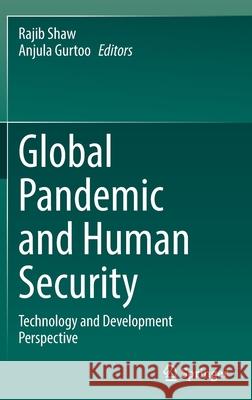
Global Pandemic and Human Security: Technology and Development Perspective
ISBN-13: 9789811650734 / Angielski / Twarda / 2022 / 454 str.
(netto: 556,88 VAT: 5%)
Najniższa cena z 30 dni: 539,74
ok. 16-18 dni roboczych.
Darmowa dostawa!
Chapter 1. Introduction: Global pandemic, human security,technology and development.- Chapter 2. DEVELOPMENTAL AGENDA AND THE GLOBAL PANDEMIC.- Chapter 3. Co-evolution of Pandemic, Human Security and Technology.- Chapter 4. Fiscal policies and post COVID-19 development challenges: An overview.- Chapter 5. Climate change and human security in the context of the global pandemic: Emphasising responses that maximise synergies.- Chapter 6. Global pandemic and human security: Using Health-EDRM risk assessment framework to enhance technology support for DRR.- Chapter 7. Those Above Poverty Line: Development and Vulnerability to the Pandemic.- Chapter 8. URBAN-RURAL LINKAGES AND THEIR IMPLICATION TO HUMAN SECURITY IN PANDEMIC TIME.- Chapter 9. International migration and human security under the COVID 19 pandemic.- Chapter 10. Fragility and resilience in food systems: What can we learn from the COVID-19 crisis?.- Chapter 11. Challenges and Solution Pathways in Water Use through the Lens of COVID-19.- Chapter 12. Education in the time of a pandemic.- Chapter 13. Implications on Gender during the Pandemic.- Chapter 14. Access to green spaces: Consider green infrastructure implementation with/post-COVID-19 world.- Chapter 15. “A Sustainable and Resilient Urban Transportation System”.- Chapter 16. Responses for COVID-19 in the Pacific Small Island Countries.- Chapter 17. "Between protection and empowerment COVID-19: Haiti’s older people’s perception and behavior".- Chapter 18. Government Responses to COVID-19 and their implications on Food Security in Indonesia.- Chapter 19. Preparing for the future crisis: frontier technologies hold the key.- Chapter 20. Emerging Technologies & Global Pandemic.- Chapter 21. The importance of data sharing in managing public health crises.- Chapter 22. Governing Artificial Intelligence in post-pandemic society.
Rajib Shaw is a professor in the Graduate School of Media and Governance at Keio University, Japan. He is also the Senior Fellow of the Institute of Global Environmental Strategies (IGES) Japan, and the Chairperson of SEEDS Asia and CWS Japan, two Japanese NGOs. He is also co-founder of a Delhi (India) based social entrepreneur startup Resilience Innovation Knowledge Academy (RIKA). Earlier, he was the Executive Director of the Integrated Research on Disaster Risk (IRDR) and was a Professor at Kyoto University. His expertise includes disaster governance, community-based disaster risk management, climate change adaptation, urban risk management, and disaster and environmental education. Professor Shaw was the Chair of the United Nations Science Technology Advisory Group (STAG) for disaster risk reduction, and currently the Co-chair of the Asia Pacific Science Technology Academic Advisory Group (ASTAAG). He is also the CLA (Coordinating Lead Author) for the Asia chapter of IPCC’s 6th Assessment Report. He is the editor-in-chief of the journal “Progress in Disaster Science”, and series editor of a Springer book series on disaster risk reduction. Prof. Shaw has published 52 books and over 400 academic papers and book chapters.




Czytaj nas na:
1997-2026 DolnySlask.com Agencja Internetowa
KrainaKsiazek.PL - Księgarnia Internetowa


