Energy Sustainability and Climate Change in ASEAN » książka





Energy Sustainability and Climate Change in ASEAN
ISBN-13: 9789811619991 / Angielski / Twarda / 2021 / 330 str.
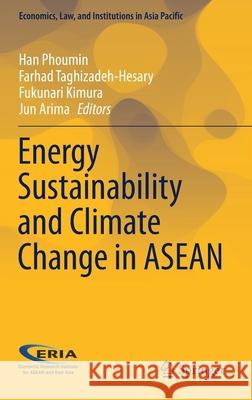
Energy Sustainability and Climate Change in ASEAN
ISBN-13: 9789811619991 / Angielski / Twarda / 2021 / 330 str.
(netto: 716,00 VAT: 5%)
Najniższa cena z 30 dni: 655,41
ok. 16-18 dni roboczych.
Darmowa dostawa!
Impacts of Climate Change on Agriculture in South-East Asia: Drought Conditions and Crop Damage Assessment.- Management of Natural Forests for Carbon Emission Reductions through Improved Logging Practices and Wood Bioenergy Use.- Vehicle Technology Impact Assessment Model for Indonesia (VEIA-ID): Concept and First Results.- Assessment of the Forest Carbon Balance due to Deforestation and Plantation Forestry in Southeast Asia.- ASEAN Energy Landscape and Emissions: The Modelling Scenarios and Policy Implications.
Dr. Han Phoumin is Senior Energy Economist with the Economic Research Institute for ASEAN and East Asia. He has more than 20 years of experience working at various international and inter-governmental organizations and multi-disciplinary research consortiums related to the energy market and technologies, environment, integrated water resource management, governance, and economic development in the region of the Association of Southeast Asian Nations and East Asia. He specializes in economic development and policy and applied econometrics. Over the past ten years, much of his career has involved the power sector, incredibly sustainable hydropower development, renewable energy research, energy efficiency, clean coal technology, energy security, and energy demand and supply forecasting.
This book provides several up-to-date empirical policy-oriented studies on assessing the impacts of climate change on various economic sectors and the role of renewable energy resources in mitigating pollution and climate change. It suggests various policy recommendations on how to increase the share of renewable energy resources in the energy baskets of the members of the Association of Southeast Asian Nations (ASEAN) and the rest of the world to ensure energy sustainability. As of 2020, most of the world’s energy investment still went to carbon-emitting sources, namely, fossil fuels. On the other hand, the Covid-19 pandemic and the economic Project Overview 20 March 2021 08:39 Page 6 of 9 downturns shrank the global energy demand, including fossil fuels, resulting in a sharp drop in their prices. Low fossil fuel prices are harmful to developing renewable energy projects, making solar, wind, and other renewable energy resources less competitive as sources of electricity. This is endangering the Paris agreement and the “Climate Action” goal of the United Nations. Given the high share of fossil fuels in the energy mix of the members of ASEAN, tremendous challenges must be faced for their energy transition in the post-Covid-19 world. The authors call for sound policy and applicable technologies to ensure sustainable energy availability, accessibility, and affordability to reach emission reduction targets.




Czytaj nas na:
1997-2026 DolnySlask.com Agencja Internetowa
KrainaKsiazek.PL - Księgarnia Internetowa


