


ISBN-13: 9783030515362 / Angielski / Twarda / 2020 / 232 str.
CHAPTER 1: Introduction
1.1 Evolution of Foreign Aid
1.2 Theoretical Underpinnings
1.3 Bilateral Aid Architecture1.3.1 North South Cooperation: The Established Donors
1.3.2 South-South Development Cooperation (SSDC)
1.4 The OECD vs. The Emerging Powers1.5 Emerging Powers as Development Assistance Providers
1.6 Changing Identities and Motives of the Emerging Powers
1.7 Research Design
1.7.1 Rationale and Scope of the Book1.7.2 Methodology
1.7.3 Data Sources
1.7.3.1 Brazil
1.7.3.2 China1.7.3.3 India
1.8 Organisation of the Book
CHAPTER 2: Brazilian Cooperation for International Development (Cobradi)
2.1 Historical Overview
2.2 Brazilian Development Cooperation: An Instrument of Brazil’s Economic Statecraft
2.2.1 Defining Brazil’s Development Cooperation
2.2.2 Institutional Structures
2.2.3 Policy Framework2.3 Patterns and Modalities of Development Cooperation
2.3.1 Geographical Patterns
2.3.1.1 Latin America and the Caribbean
2.3.1.2 Africa2.3.1.3 Multilateral Development Cooperation
2.3.2 Modalities
2.4 Motivations and Agendas2.4.1 Regional Solidarity and Neighbourhood Policy
2.4.2 Linguistic, Cultural and Historic Affinity
2.4.3 Trade, Business and Search for Markets2.4.4 Diplomatic Reciprocity
2.5 Conclusion
CHAPTER 3: Chinese Development Assistance
2.1 Historical Overview of Chinese Development Assistance
2.2 Chinese Development Assistance: Spreading the Wings
2.2.1 Defining Chinese Development Assistance2.2.2 Institutional Set-up
2.2.3 Development Assistance Policy
2.3 Geographical Outreach and Modalities of Assistance2.3.1 Geographical Patterns
2.3.1.1 Africa
2.3.1.2 Asia2.3.1.3 Latin America and the Caribbean
2.3.1.4 Multilateral Development Cooperation
2.3.2 Modalities2.4 Motivations for Providing Development Cooperation
2.4.1 Search for Markets and Trade
2.4.2 Energy Security
2.4.3 Gaining Access to Natural Resources2.4.4 Increasing Economic and Political Influence on Partner Countries
2.4.5 Enhancing Diplomatic Clout
2.5 Chinese Development Assistance: Prospects and Challenges2.6 Conclusion
CHAPTER 4: Indian Development Cooperation (IDC)
4.1 Historical Overview
4.2 Indian Development Cooperation in the 21st Century
4.1.1 Definition
4.1.2 Institutional Structures
4.1.3 Policy Framework4.3 Patterns of IDC Flows
4.1.1 Geographical Patterns
4.1.1.1 Asia
4.1.1.2 Africa4.1.1.3 Latin America and the Caribbean
4.1.1.4 Multilateral Development Assistance
4.1.2 Sectoral Distribution4.1.3 Modalities
4.1.3.1 ITEC
4.1.3.2 Lines of Credit (LOCs)4.1.3.3 Grants/Loans
4.4 Motivations and Agendas
4.1.1 Regional Leadership4.1.2 Trade, Markets and Business
4.1.3 Diplomatic Support
4.1.4 Permanent Seat in the United Nations Security Council (UNSC)4.5 India, the Development Partner: Prospects and Challenges
4.6 Conclusion
CHAPTER 5: Comparing Brazil, China and India as Development Assistance Providers
5.1 Emerging Powers’ Development Cooperation: Commonalities and Differences
5.1.1 Definitions
5.1.2 Institutions for Development Cooperation5.1.3 Development Assistance Policies
5.1.4 Geographical Patterns
5.1.5 Modalities5.1.6 Motivations Behind Emerging Powers’ Development Assistance
5.1.7 Effectiveness of Development Cooperation
5.2 Competition and Cooperation amongst Brazil, China and India5.1.1 Scope for Cooperation
5.1.2 Areas of Competition
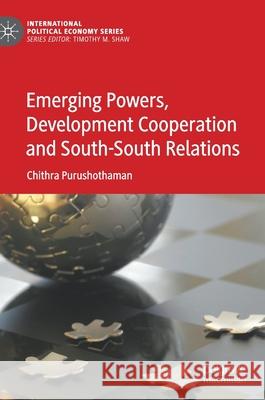
5.3 Conclusion CHAPTER 6: ConclusionThis book analyses the role of emerging powers as a development assistance providers and the nature of their development cooperation, their behaviour, motives and markedly their changing identities in international relations. With their growing economic and political clout, emerging powers are using economic instruments like foreign aid to ensure their position in the international system that is going through power shifts. By comparing three major emerging economies of the Global South- Brazil, India and China- this book would explore how emerging powers are changing the international aid architecture that is created and dominated by the traditional donors.
Chithra Purushothaman is an independent foreign and security policy analyst based in Canada, and has a PhD in International Politics from Centre for International Politics, Organisation and Disarmament (CIPOD), Jawaharlal Nehru University. Dr Purushothaman has previously held research positions at Institute for Defence Studies and Analyses (IDSA), Centre for Policy Research (CPR) ad MyGov India.1997-2026 DolnySlask.com Agencja Internetowa











