ISBN-13: 9783319852553 / Angielski / Miękka / 2018 / 549 str.
Chapter 1: INTRODUCTION: CLIMATE OVERVIEW
1.1. Weather and Climate
1.2. Solar Radiation and Climate
1.3. Greenhouse Effect
1.4. Natural versus Anthropogenic Climate Change
1.5. Conclusions
References
Chapter 2: VARIABILITY AND CHANGE IN CLIMATE
2.1. Introduction
2.2. Radiative Forcing
2.3. Detection and Attribution of Climate Change
2.4. Climate Change
2.5. Conclusions
References
Chapter 3: INTRODUCTION TO GLOBAL CARBON CYCLING: AN OVERRVIEW OF THE GLOBAL CARBON CYCLE
3.1. Introduction
3.2. Photosynthesis and Respiration
3.3. Timescales and Modes of the Carbon Cycle
3.4. Introduction to Carbon Budget
3.5. Global Warming
3.6. Conclusion
References
Chapter 4: THE GLOBAL CARBON INVENTORY
4.1. Introduction
4.2. Atmospheric Carbon Inventory
4.3. Carbon Inventory of the Biosphere And Soils
4.4. Carbon Inventory of the Oceans
4.5. Carbon Inventory of the Lithosphere
4.6. Conclusions
References
Chapter 5: HISTORICAL PERSPECTIVES OF THE GLOBAL CARBON CYCLE
5.1. Introduction
5.2. Mechanisms of Geologic Carbon Cycling
5.3. Geologic Carbon Cycling Evidence from Geological Proxy Data
5.4. Precambrian History of Carbon Cycling
5.5. Carbon Cycling During Phanerozoic
5.6. Carbon Cycling During Cenozoic
5.7. Carbon cycling and Climate of the Cool Icehouse World
5.8. The Last Glacial Termination and Holocene Carbon Cycle Variations
5.9. Carbon Cycling during the most recent Past
5.10. Conclusions
References
Chapter 6: THE MODERN CARBON CYCLE
6.1. Introduction
6.2. Natural Global Carbon Cycle before The Anthropogenic Influence
6.3. Anthropogenic Perturbations to the Global Carbon Cycle
6.4. The Global Carbon Budget
6.5. Conclusions
References
Chapter 7: HISTORICAL AND CONTEMPORARY GLOBAL METHANE CYCLING
7.1. Introduction
7.2. Atmospheric Methane
7.3. Global Methane Budget
7.4. Contemporary Global Methane Budget
7.5. Atmospheric Chemistry of Methane
7.6. Biological Aspects of Methanogenesis
7.7. Methane Clathrate Hydrates
7.8. Conclusions
References
Chapter 8: MITIGATION OF CLIMATE CHANGE: INTRODUCTION
8.1. Introduction
8.2. Drivers of Carbon Dioxide Emissions
8.3. Options for Mitigating Greenhouse Gases Emission
8.4. Geoengineering Options for Climate Mitigation
8.5. Conclusions
References
Chapter 9: INTRODUCTION TO TERRESTRIAL CARBON SEQUESTRATION
9.1. Introduction
9.2. Terrestrial Carbon Pools
9.3. Conclusions
References
Chapter 10: GREENHOUSE GAS MITIGATION UNDER AGRICULTURE AND LIVESTOCK LANDUSE
10.1. Introduction
10.2. Carbon Sequestration
10.3. Nature of Soil Organic Carbon Inputs and the Mechanisms for its Stabilization in Soils
10.4. Greenhouse Gases Emission Trends from Agriculture
10.5. Conclusions
References Chapter 11: GOBAL FORESTS MANAGEMENT FOR CLIMATE CHANGE MITIGATION
11.1. Introduction
11.2. The Role of Forests in the Global Carbon Cycle
11.3. Estimation of Global Forest Area Trends and its Carbon Pools
11.4. Forest area, Status and Trends
11.5. Global Forest Biomass Accumulation and Productivity Trends
11.6. Climate Change Mitigation Options Under Forest
11.7. Conclusions
References
Chapter 12: THE ROLE OF BIOENERGY IN MITIGATING CLIMATE CHANGE
12.1. Introduction
12.2. Definitions
12.3. General Background on Biofuels
12.4. Role of Biomass Crops
12.5. History of Biofuels
12.6. Bioenergy Resources Potential
12.7. Classification of Biofuels
12.8. Perspectives and Future Directions of Bioenergy
References
Chapter 13: CARBON CAPTURE AND STORAGE IN GEOLOGIC FORMATIONS
13.1. Introduction
13.2. What is Carbon Dioxide Capture and Storage?
13.3. Energy Consumption and Carbon dioxide Emissions
13.4. History of Carbon Capture and Storage
13.5. Technology for Capturing and Transporting Carbon dioxide
13.6. Carbon Dioxide Transport
13.7. Carbon Dioxide Storage
13.8. Risks of geological storage of CO2
13.9. Monitoring and Risk Management
13.10. Bioenergy Coupled with Carbon Dioxide Capture and Storage (BECCS)
13.11. Oceanic Sequestration
13.12. Geochemical Sequestration
13.13. Conclusions
References
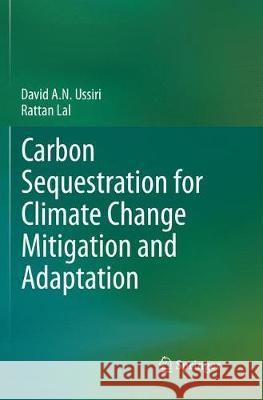
This volume sets out the scientific basis for the current understanding of climate change. It synthesizes and collates an extensive scientific knowledge to show why climate is changing, and the consequences of those changes. Starting with global carbon cycling over geological history of the Earth, the behavior of the carbon cycle is traced back millions of years prior to human influence and shows that the current atmospheric concentration of carbon dioxide is unprecedented, which cannot be found in geological records of at least the past two million years. This book sets the foundation for understanding the contemporary carbon cycling, and shows that the contemporary carbon cycling cannot be isolated from geologic history of carbon cycle. This volume also describes the role of carbon sequestration – both natural ecological, engineered and geoengineered options – for mitigating the increasing atmospheric CO2 concentration. The role of emerging chemical sequestration and climate engineering as future alternatives to avoid dangerous temperature increase are explored. Although the targeted audience is the educators, students, researchers and scientific community, the simplified analysis and synthesis of current and up to date scientific literature makes the volume easier to understand and a tool policy makers can use to make an informed policy decisions.
1997-2026 DolnySlask.com Agencja Internetowa