• Wyszukiwanie zaawansowane
  • Kategorie
  • Kategorie BISAC
  • Książki na zamówienie
  • Promocje
  • Granty
  • Książka na prezent
  • Opinie
  • Pomoc
  • Załóż konto
  • Zaloguj się

assistive technology for visually impaired and blind people » książka


zaloguj się | załóż konto
Logo Krainaksiazek.pl

koszyk

konto

szukaj
topmenu
Księgarnia internetowa
Szukaj
Książki na zamówienie
Promocje
Granty
Książka na prezent
Moje konto
Pomoc
 
 
Wyszukiwanie zaawansowane
Pusty koszyk
Bezpłatna dostawa dla zamówień powyżej 20 złBezpłatna dostawa dla zamówień powyżej 20 zł

Kategorie główne

• Nauka
 [2946912]
• Literatura piękna
 [1852311]

  więcej...
• Turystyka
 [71421]
• Informatyka
 [150889]
• Komiksy
 [35717]
• Encyklopedie
 [23177]
• Dziecięca
 [617324]
• Hobby
 [138808]
• AudioBooki
 [1671]
• Literatura faktu
 [228371]
• Muzyka CD
 [400]
• Słowniki
 [2841]
• Inne
 [445428]
• Kalendarze
 [1545]
• Podręczniki
 [166819]
• Poradniki
 [480180]
• Religia
 [510412]
• Czasopisma
 [525]
• Sport
 [61271]
• Sztuka
 [242929]
• CD, DVD, Video
 [3371]
• Technologie
 [219258]
• Zdrowie
 [100961]
• Książkowe Klimaty
 [124]
• Zabawki
 [2341]
• Puzzle, gry
 [3766]
• Literatura w języku ukraińskim
 [255]
• Art. papiernicze i szkolne
 [7810]
Kategorie szczegółowe BISAC

assistive technology for visually impaired and blind people

ISBN-13: 9781846288661 / Angielski / Twarda / 2008 / 756 str.
Marion Hersh; Michael A. Johnson
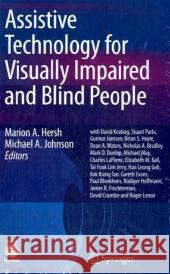
assistive technology for visually impaired and blind people  Hersh, Marion 9781846288661 Springer - książkaWidoczna okładka, to zdjęcie poglądowe, a rzeczywista szata graficzna może różnić się od prezentowanej.

assistive technology for visually impaired and blind people

ISBN-13: 9781846288661 / Angielski / Twarda / 2008 / 756 str.

Marion Hersh; Michael A. Johnson
cena 1331,56
(netto: 1268,15 VAT:  5%)

Najniższa cena z 30 dni: 1272,31
Termin realizacji zamówienia:
ok. 22 dni roboczych
Bez gwarancji dostawy przed świętami

Darmowa dostawa!
inne wydania

Equal accessibility to public places and services is now required by law in many countries. In the case of the vision-impaired, it is often the use of specialised technology which can provide them with a fuller enjoyment of all the facilities of society from large scale meetings and public entertainments to the more personal level of reading a book or making music. In this volume the engineering and design principles and techniques used in assistive technology for blind and vision-impaired people are explained. Features: instruction in the physiology of the human visual system and methods of measuring visual ability; explanation of many devices designed for every-day living in terms of generic electrical engineering principles; sections of practical projects and investigations which will give the reader ideas for student work and for self teaching; contributions by authors of international repute from divers fields which co-operate under the banner of assistive technology, among them: artificial vision systems; psychology, haptics, electrical engineering, design and visual physiology. Assistive Technology for Vision-impaired and Blind People is an an effective means of maintaining the currency of knowledge for engineers and health workers working to provide devices and/or services for people with sight loss and an excellent source of reference for students working in assistive technology and rehabilitation."


Kategorie:
Nauka, Medycyna
Kategorie BISAC:
Medical > Physical Medicine & Rehabilitation
Medical > Okulistyka
Medical > Biotechnology
Wydawca:
Springer
Język:
Angielski
ISBN-13:
9781846288661
Rok wydania:
2008
Wydanie:
2008
Ilość stron:
756
Waga:
1.18 kg
Wymiary:
23.85 x 16.03 x 3.12
Oprawa:
Twarda
Wolumenów:
01
Dodatkowe informacje:
Bibliografia
Wydanie ilustrowane

Disability and Assistive Technology Systems.- Perception, the Eye and Assistive Technology Issues.- Sight Measurement.- Haptics as a Substitute for Vision.- Mobility: An Overview.- Mobility AT: The Batcane (UltraCane).- Navigation AT: Context-aware Computing.- Accessible Global Positioning System (GPS) and Related Orientation Technologies.- Electronic Travel Aids: An Assessment.- Accessible Environments.- Accessible Bus System: A Bluetooth Application.- Accessible Information: An Overview.- Screen Readers and Screen Magnifiers.- Speech, Text and Braille Conversion Technology.- Accessing Books and Documents.- Designing Accessible Music Software for Print Impaired People.- Assistive Technology for Daily Living.- Assistive Technology for Education, Employment and Recreation.

Dr Hersh is currently a senior Lecturer in the Department of Electronics and Electrical Engineering, University of Glasgow. She was previously a lecturer in this Department. She has also held posts as a Post-doctoral Research Fellow at the Universities of Sussex and Strathclyde. She has now been researching in the area of assistive technology for about 12 years.

Her current research interests fall into four main areas:

• Assistive technology, particularly for people with sensory impairments.

• Ethics and Social Responsibility Issues in Science and Engineering.

• Good design practice, including the principles of sustainable and universal design, end user involvement and human centred design approaches.

• The research process.

She is continuing to run the successful CVHI conference series ‘Conference and Workshop on Assistive Technologies for People with Vision and Hearing Impairments’, which she initiated with Prof Mike Johnson of the University of Strathclyde. Funding for the first three events was obtained from the EC High-Level Scientific Conferences Programme and the current funding for three further events, of which one has already taken place. Distinctive features of this conference series include the support given to young researchers and the conference ambience which encourages networking.

Current research projects in the area of assistive technology include the development of a communication and interface device for deafblind people, distance learning for people with mobility impairments with colleagues from Germany, Hungary and Romania and travel support technology for blind people with colleagues from France. Having been a workaholic for most of her life, Dr Hersh has recently become aware of the importance of making leisure activities accessible. Research carried out for the book has confirmed the lack of technology to support the involvement of blind people in sport and other leisure activities. Research projects in this area include technological support for learning swimming and cycling in quiet areas for blind people.

Dr Hersh recently published Mathematical Modelling for Sustainable Development with Springer Verlag (2006). It is organised into three parts, each of which considers the application of a particular type of mathematical or computing technique to problems in sustainable development. Particular features of the book include the large number of examples of the application of the techniques to problems in sustainable development, the detailed case studies, for instance of the application of systems theory to sustainable waste management and the introduction of fuzzy set techniques she developed. She has worked on applications of these techniques in collaboration with colleagues from Germany and Romania.

Dr Hersh’s awareness of the importance of interdisciplinarity for successful research in assistive technology has led her to an examination of the research process and publications on interdisciplinary work and research cultures with colleagues from Wales.

Dr Hersh is a Member of the Institute of Mathematics and its Applications, the Institution of Engineering and Technology (UK) and the Institute of Electronic and Electrical Engineers (USA).

Professor Johnson’s academic career has concentrated on control engineering, theory and applications. He has significant industrial control applications and research experience. He is the author and co-author of books and technical papers on power generation, wastewater control, power transmission, and control benchmarking. He has had a number of student projects in the area of assistive technology and has successfully trained over 40 engineers to PhD level in last 20 years. He is joint Editor to Springer-Verlag-London monograph series Advances in Industrial Control and to the Springer-Verlag-London Advanced Textbooks in Control and Signal Processing series. He was an Associate Editor for Automatica in the years 1985-2002.

His interest in Assistive Technology came through undergraduate teaching commitments which included student group study dissertations at 2nd Year level and assorted project supervision at Masters and undergraduate level. These were used to explore some EEE aspects of assistive devices for the hearing impaired. Subsequent collaboration with Dr. Hersh at the University of Glasgow led to a set of targeted activities in this area. These include a new course module, a new conference series and some research projects.

Professor Johnson retired from academic life in 2002 and was made an Emeritus Professor of the University of Strathclyde in 2003. Emeritus Professor Johnson is a member of Deafblind, UK and the British Retinitis Pigmentosa Society.

Equal access to services and public places is now required by law in many countries. In the case of the visually impaired, it is often the use of assistive technology that facilitates their full participation in many societal activities ranging from meetings and entertainment to the more personal activities of reading books or making music. In this volume, the engineering techniques and design principles used in many solutions for vision-impaired and blind people are described and explained.

Features:

• a new comprehensive assistive technology model structures the volume into groups of chapters on vision fundamentals, mobility, communications and access to information, daily living, education and employment, and finally recreational activities;

• contributions by international authors from the diverse engineering and scientific disciplines needed to describe and develop the necessary assistive technology solutions;

• systematic coverage of the many different types of assistive technology devices, applications and solutions used by visually impaired and blind people;

• chapters open with learning objectives and close with sets of test questions and details of practical projects that can be used for student investigative work and self-study.

Assistive Technology for Vision-impaired and Blind People is an excellent self-study and reference textbook for assistive technology and rehabilitation engineering students and professionals. The comprehensive presentation also allows engineers and health professionals to update their knowledge of recent assistive technology developments for people with sight impairment and loss.


Udostępnij

Facebook - konto krainaksiazek.pl


Opinie o Krainaksiazek.pl na Opineo.pl

Partner Mybenefit

Krainaksiazek.pl w programie rzetelna firma Krainaksiaze.pl - płatności przez paypal

Czytaj nas na:

Facebook - krainaksiazek.pl
  • książki na zamówienie
  • granty
  • książka na prezent
  • kontakt
  • pomoc
  • opinie
  • regulamin
  • polityka prywatności

Zobacz:

  • Księgarnia czeska

  • Wydawnictwo Książkowe Klimaty

1997-2025 DolnySlask.com Agencja Internetowa

© 1997-2022 krainaksiazek.pl
     
KONTAKT | REGULAMIN | POLITYKA PRYWATNOŚCI | USTAWIENIA PRYWATNOŚCI
Zobacz: Księgarnia Czeska | Wydawnictwo Książkowe Klimaty | Mapa strony | Lista autorów
KrainaKsiazek.PL - Księgarnia Internetowa

Polityka prywatnosci - link
Krainaksiazek.pl - płatnośc Przelewy24
Przechowalnia Przechowalnia





