• Wyszukiwanie zaawansowane
  • Kategorie
  • Kategorie BISAC
  • Książki na zamówienie
  • Promocje
  • Granty
  • Książka na prezent
  • Opinie
  • Pomoc
  • Załóż konto
  • Zaloguj się

YSEC Yearbook of Socio-Economic Constitutions 2021: Triangulating Freedom of Speech » książka


zaloguj się | załóż konto
Logo Krainaksiazek.pl

koszyk

konto

szukaj
topmenu
Księgarnia internetowa
Szukaj
Książki na zamówienie
Promocje
Granty
Książka na prezent
Moje konto
Pomoc
 
 
Wyszukiwanie zaawansowane
Pusty koszyk
Bezpłatna dostawa dla zamówień powyżej 20 złBezpłatna dostawa dla zamówień powyżej 20 zł

Kategorie główne

• Nauka
 [2949965]
• Literatura piękna
 [1857847]

  więcej...
• Turystyka
 [70818]
• Informatyka
 [151303]
• Komiksy
 [35733]
• Encyklopedie
 [23180]
• Dziecięca
 [617748]
• Hobby
 [139972]
• AudioBooki
 [1650]
• Literatura faktu
 [228361]
• Muzyka CD
 [398]
• Słowniki
 [2862]
• Inne
 [444732]
• Kalendarze
 [1620]
• Podręczniki
 [167233]
• Poradniki
 [482388]
• Religia
 [509867]
• Czasopisma
 [533]
• Sport
 [61361]
• Sztuka
 [243125]
• CD, DVD, Video
 [3451]
• Technologie
 [219309]
• Zdrowie
 [101347]
• Książkowe Klimaty
 [123]
• Zabawki
 [2362]
• Puzzle, gry
 [3791]
• Literatura w języku ukraińskim
 [253]
• Art. papiernicze i szkolne
 [7933]
Kategorie szczegółowe BISAC

YSEC Yearbook of Socio-Economic Constitutions 2021: Triangulating Freedom of Speech

ISBN-13: 9783031085130 / Angielski / Twarda / 2022 / 274 str.
Steffen Hindelang;Andreas Moberg
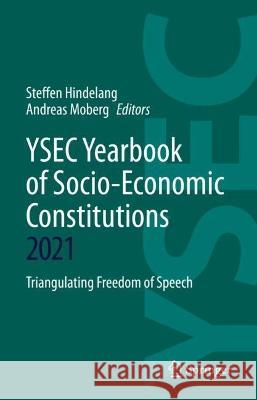
YSEC Yearbook of Socio-Economic Constitutions 2021: Triangulating Freedom of Speech Steffen Hindelang Andreas Moberg  9783031085130 Springer International Publishing AG - książkaWidoczna okładka, to zdjęcie poglądowe, a rzeczywista szata graficzna może różnić się od prezentowanej.

YSEC Yearbook of Socio-Economic Constitutions 2021: Triangulating Freedom of Speech

ISBN-13: 9783031085130 / Angielski / Twarda / 2022 / 274 str.

Steffen Hindelang;Andreas Moberg
cena 726,29 zł
(netto: 691,70 VAT:  5%)

Najniższa cena z 30 dni: 655,41 zł
Termin realizacji zamówienia:
ok. 22 dni roboczych
Bez gwarancji dostawy przed świętami

Darmowa dostawa!
inne wydania

This volume addresses contemporary challenges, enabled by modern technology, that concern upholding freedom of speech where it conflicts with social rights, such as respect for private and family life, and with economic rights, such as the freedom to conduct business or the right to free movement. In today's networked world, technological shifts happen faster than most people even realize. Some of these shifts have made us all potentially powerful: media powerful. We used to sit in silence in front of newspapers and TV screens, and the world was explained to us by just a few sources. Today, thanks to the Internet, social media, and Web 2.0, we can not only share our own thoughts with everyone in a more self-determined way, but we can also take part in public debate and even co-shape it ourselves. Of course, the Internet is not a counter-design to the communication (power) structures of the past. Gains in communicative self-determination are threatened due to algorithmisation, platformisation, and value extraction from self-created private markets. At the same time, the empowerment of the individual challenges the old "grand speakers" who are suddenly detecting "fake news", echo chambers, and filter bubbles everywhere on the Internet. Internet-based communication allegedly hinders us from the "one truth"; as if newspaper hoaxes, propaganda, and narrow-mindedness were an invention of the Internet. The current heated debate over "fake news", copyright, and "upload filters" shows that we are unsure of how to deal with the newer and more complex phenomena of Internet-based speech. This is due in no small part to the fact that an important benchmark - our constitutional compass - is still firmly rooted in the past. Constitutions change far more slowly than technologies. Societal changes can drive constitutional changes; but what about normative content control? Today, there are already demands for "old-school clarity": truth filters on social media platforms, horrendous sums of liability for platforms that encourage (overly)thorough cleaning up. However, it is equally true that private individuals "regulate": they decide what is found on the Internet and who may post on a given platform. Accounting for all interests at play and striking a "fair" balance that avoids both a public and private over- and under-regulation is a complex matter. The authors of this volume not only provide reflections in their highly topical contributions, but also share their understanding of what constitutes a fair balance within the larger frame of freedom of speech in a digital age.


Kategorie:
Nauka, Prawo i administracja
Kategorie BISAC:
Law > General
Social Science > Media Studies
Political Science > World - European
Wydawca:
Springer International Publishing AG
Język:
Angielski
ISBN-13:
9783031085130
Rok wydania:
2022
Dostępne języki:
Ilość stron:
274
Waga:
0.55 kg
Wymiary:
23.39 x 15.6 x 1.6
Oprawa:
Twarda
Dodatkowe informacje:
Wydanie ilustrowane

Introduction.- Part I - Constitutional Challenges Protecting the Freedom of Speech after the Technology Shift: The Impact of the New Mediators of the Digital Age on Freedom of Speech.- Freedom of Speech in the Digital Era – Leveraging its Constitutional and Social Ramifications.- Internet Platforms and Freedom of Expression in Constitution-Making.- Part II - Regulating Freedom of Speech after the Technology Shift: Let the Robot Speak! AI-generated Speech and Freedom of Expression.- Private Life, Freedom of Expression and the Role of Transnational Digital Platforms. A European Perspective.- The Freedom to Conduct a Business as a Counterargument to Limit Platform Users’ Freedom of Expression.- Who Watches the Watchmen? – Social Media and Election Securitization.- Part III - Indirect Regulation for the Protection of the Freedom of Speech: The Marketplace of Ideas and EU Competition Law: Can Antitrust Be Used to Protect the Freedom of Speech?.- Building a Surveillance State in a Digital Age and What Export Control can(not) do about it?.- Part IV - Book Reviews: Anil Yilmaz Vastardis, The Nationality of Corporate Investors under International Investment Law.- Nicolás M. Perrone, Investment Treaties and the Legal Imagination: How Foreign Investors Play by Their Own Rules.


Steffen Hindelang is professor of international investment and trade law at Uppsala University and works in the areas of international economic law, EU law, and German public law. He is also a professor (wsr) at the Department of Law of the University of Southern Denmark in Odense. He was guest professor, among others, at Nagoya University, Bocconi University Milan, the University of Lausanne, the Charles University Prague, and the Turkish-German University Istanbul. Furthermore, he has advised, inter alia, governments on investment screening regulation and in international investment disputes as well as and international organisations on matters of reform of the international investment law regime. He served as ICSID arbitrator and at the ICSID Panel of Conciliators designated by Germany for the term 2019-2025.

Andreas Moberg is a senior lecturer and associate professor at the Department of Law of the University of Gothenburg. He is the director of CERGU (Center for European Research at the University of Gothenburg) which serves to promote multidisciplinary research on Europe. He teaches and researches both EU law and Public international law, but specializes in EU Constitutional law. He has lectured in EU law as a visiting professor at Bond University (Australia), San Pablo CEU Madrid and Háskóla Islands Reykjavík.


This volume addresses contemporary challenges, enabled by modern technology, that concern upholding freedom of speech where it conflicts with social rights, such as respect for private and family life, and with economic rights, such as the freedom to conduct business or the right to free movement.

In today’s networked world, technological shifts happen faster than most people even realize. Some of these shifts have made us all potentially powerful: media powerful. We used to sit in silence in front of newspapers and TV screens, and the world was explained to us by just a few sources. Today, thanks to the Internet, social media, and Web 2.0, we can not only share our own thoughts with everyone in a more self-determined way, but we can also take part in public debate and even co-shape it ourselves. Of course, the Internet is not a counter-design to the communication (power) structures of the past. Gains in communicative self-determination are threatened due to algorithmisation, platformisation, and value extraction from self-created private markets.

At the same time, the empowerment of the individual challenges the old “grand speakers” who are suddenly detecting “fake news”, echo chambers, and filter bubbles everywhere on the Internet. Internet-based communication allegedly hinders us from the “one truth”; as if newspaper hoaxes, propaganda, and narrow-mindedness were an invention of the Internet. The current heated debate over “fake news”, copyright, and “upload filters” shows that we are unsure of how to deal with the newer and more complex phenomena of Internet-based speech. This is due in no small part to the fact that an important benchmark – our constitutional compass – is still firmly rooted in the past. Constitutions change far more slowly than technologies. Societal changes can drive constitutional changes; but what about normative content control?

Today, there are already demands for “old-school clarity”: truth filters on social media platforms, horrendous sums of liability for platforms that encourage (overly)thorough cleaning up. However, it is equally true that private individuals “regulate”: they decide what is found on the Internet and who may post on a given platform. Accounting for all interests at play and striking a “fair” balance that avoids both a public and private over- and under-regulation is a complex matter. The authors of this volume not only provide reflections in their highly topical contributions, but also share their understanding of what constitutes a fair balance within the larger frame of freedom of speech in a digital age.




Udostępnij

Facebook - konto krainaksiazek.pl


Opinie o Krainaksiazek.pl na Opineo.pl

Partner Mybenefit

Krainaksiazek.pl w programie rzetelna firma Krainaksiaze.pl - płatności przez paypal

Czytaj nas na:

Facebook - krainaksiazek.pl
  • książki na zamówienie
  • granty
  • książka na prezent
  • kontakt
  • pomoc
  • opinie
  • regulamin
  • polityka prywatności

Zobacz:

  • Księgarnia czeska

  • Wydawnictwo Książkowe Klimaty

1997-2025 DolnySlask.com Agencja Internetowa

© 1997-2022 krainaksiazek.pl
     
KONTAKT | REGULAMIN | POLITYKA PRYWATNOŚCI | USTAWIENIA PRYWATNOŚCI
Zobacz: Księgarnia Czeska | Wydawnictwo Książkowe Klimaty | Mapa strony | Lista autorów
KrainaKsiazek.PL - Księgarnia Internetowa

Polityka prywatnosci - link
Krainaksiazek.pl - płatnośc Przelewy24
Przechowalnia Przechowalnia




