• Wyszukiwanie zaawansowane
  • Kategorie
  • Kategorie BISAC
  • Książki na zamówienie
  • Promocje
  • Granty
  • Książka na prezent
  • Opinie
  • Pomoc
  • Załóż konto
  • Zaloguj się

X-Ray Differential Diagnosis in Small Bowel Disease: A Practical Approach » książka


zaloguj się | załóż konto
Logo Krainaksiazek.pl

koszyk

konto

szukaj
topmenu
Księgarnia internetowa
Szukaj
Książki na zamówienie
Promocje
Granty
Książka na prezent
Moje konto
Pomoc
 
 
Wyszukiwanie zaawansowane
Pusty koszyk
Bezpłatna dostawa dla zamówień powyżej 20 złBezpłatna dostawa dla zamówień powyżej 20 zł

Kategorie główne

• Nauka
 [2950560]
• Literatura piękna
 [1849509]

  więcej...
• Turystyka
 [71097]
• Informatyka
 [151150]
• Komiksy
 [35848]
• Encyklopedie
 [23178]
• Dziecięca
 [617388]
• Hobby
 [139064]
• AudioBooki
 [1657]
• Literatura faktu
 [228597]
• Muzyka CD
 [383]
• Słowniki
 [2855]
• Inne
 [445295]
• Kalendarze
 [1464]
• Podręczniki
 [167547]
• Poradniki
 [480102]
• Religia
 [510749]
• Czasopisma
 [516]
• Sport
 [61293]
• Sztuka
 [243352]
• CD, DVD, Video
 [3414]
• Technologie
 [219456]
• Zdrowie
 [101002]
• Książkowe Klimaty
 [124]
• Zabawki
 [2311]
• Puzzle, gry
 [3459]
• Literatura w języku ukraińskim
 [254]
• Art. papiernicze i szkolne
 [8079]
Kategorie szczegółowe BISAC

X-Ray Differential Diagnosis in Small Bowel Disease: A Practical Approach

ISBN-13: 9789401070805 / Angielski / Miękka / 2011 / 192 str.
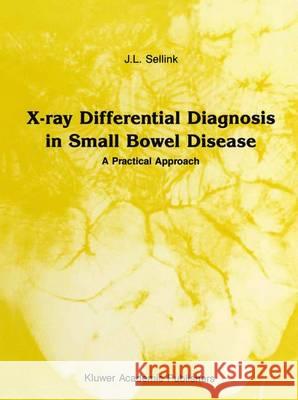
J.L. Sellink
X-Ray Differential Diagnosis in Small Bowel Disease: A Practical Approach Sellink, J. L. 9789401070805 Springer - książkaWidoczna okładka, to zdjęcie poglądowe, a rzeczywista szata graficzna może różnić się od prezentowanej.

X-Ray Differential Diagnosis in Small Bowel Disease: A Practical Approach

ISBN-13: 9789401070805 / Angielski / Miękka / 2011 / 192 str.

J.L. Sellink
cena 201,24
(netto: 191,66 VAT:  5%)

Najniższa cena z 30 dni: 192,74
Termin realizacji zamówienia:
ok. 22 dni roboczych
Dostawa w 2026 r.

Darmowa dostawa!

Publication of this book has been stimulated by 15 performed and duodenal abnormalities thus not years experience with contrast fluid irrigation visualised, occurred frequently. techniques of the small intestine and in particular All too frequently failure to maintain the proper by examinations performed and evaluated by col infusion rate, by many erroneously totally under legues. evaluated, had the result that disturbances in The classification of the X-ray pathology has motility were missed. been arranged to give a more effective application Additional and often too early administration in practice than is usually found in current of water, a measure that is seldom indicated and handbooks. Normally this classification is adapt tends to produce more bad results than good, is ed to that of formal anatomic pathology and quite frequently performed as a sort of panic internal medicine. In this book the classification reaction. The few indications for this procedure is based on the radiological symptomatology. ought to be known and strictly followed, super Thus, often completely unassociated conditions fluous application costs more time and causes are found listed as a possible cause for each unnecessary discomfort for the patient."


Kategorie:
Nauka, Medycyna
Kategorie BISAC:
Medical > Diagnostyka obrazowa
Medical > Allied Health Services - Imaging Technologies
Medical > Radiologia
Wydawca:
Springer
Język:
Angielski
ISBN-13:
9789401070805
Rok wydania:
2011
Wydanie:
Softcover Repri
Numer serii:
000152000
Ilość stron:
192
Waga:
0.42 kg
Wymiary:
26.0 x 19.3
Oprawa:
Miękka
Wolumenów:
01

I. Introduction.- II. Examination technique.- A. General.- B. Preparation of patiens.- C. Duodenal intubation.- D. Contrast fluid and films.- 1. Properties.- 2. Rate of flow and dose.- 3. Number of films.- E. Administration of water after the barium suspension.- F. Indications for aircontrast.- G. Special examination techniques.- 1. In case of ileus and subileus.- 2. In case of babies and small infants.- 2.1. General.- 2.2. Preparation.- 2.3. Duodenal intubation.- 2.4. The contrast fluid.- 2.5. The examination.- 2.6. Results.- 3. Retrograde administration of the contrast fluid.- 4. Visualization of fistulous tracts.- 5. Marshak’s technique.- H. Common errors and failures.- 1. Preparation.- 1.1. Colon not thoroughly cleansed.- 1.2. Colon cleansed by means of a rectal enema.- 1.3. Drugs not discontinued.- 1.4. Temperature of the contrast fluid.- 1.5. Specific gravity of the barium suspension.- 2. Performance of the examination.- 2.1. Tube not far enough into the duodenum.- 2.2. Too slow administration of contrast medium.- 2.3. Too rapid administration of contrast medium.- 2.4. Contrast fluid dose too low.- 2.5. The routine use of aircontrast technique only.- 2.6. Routine use of the water-push technique only.- 2.7. Incorrect decisions during the examination.- 3. General faults and failures.- 3.1. Not enough exposures.- 3.2. Omission of or too few spot films with compression.- 3.3. Voltage too low.- 3.4. Under and overexposure of films.- 3.5. Errors in evaluation.- III. The normal small intestine.- A. Length and position of the small bowel.- B. Calibre of lumen.- C. Intestinal interspaces.- 1. Impressions on the intestine.- 1.1. By other intestinal loops.- 1.2. By vessels.- 2. Filling defects between the intestinal loops.- 2.1. Caused by other organs.- 2.2. Caused by other tissue structures.- D. Mucosal relief.- 1. Height, separation and thickness of folds.- 2. Appearance of fold pattern.- 3. Longitudinal folding.- 4. Fold pattern in babies.- E. Intestinal contents.- 1. Lymphfollicles and Peyer’s patches.- 2. Food residues.- 3. Foaming of the contrast fluid.- F. Motility of the bowel.- IV. Pathological patterns.- A. Changes in the length of the intestine.- 1. Shortening.- 1.1. Presence of a catheter or tube in the lumen.- 1.2. Entero-enteral fistula.- 1.3. Hypermotility and hypertonicity.- 1.4. Short-circuit for bypass in treatment of adiposity, or post-resection in case of ischemia, venous thrombosis, tumor or local Crohn’s disease.- 1.5. Extensive adhesions.- 1.6. Mesenteric fibrosis.- 1.7. Naish’s syndrome.- 2. Lengthening.- 2.1. Intestinal hypomotility.- 2.2. Celiac syndrome.- 2.3. Zollinger-Ellison disease.- 2.4. Tropical sprue.- 3. Alterations in length summarised.- B. Deviation in course or position of part or whole of the bowel.- 1. Positional abnormalities of the entire small testine.- 2. Partial transpositions and herniation.- 2.1. Congenital.- 2.2. Acquired.- 3. Summary of positional anomalies.- C. Alteration in intestinal diameter.- 1. Locally restricted narrowing.- 1.1. General.- 1.2. Narrowing with smooth-walled borders.- 1.2.1. Inflammatory processes.- 1.2.2. Ischemia.- 1.2.3. Tumor growth.- 1.2.4. Celiac disease.- 1.3. Constricted segments arising from swelling of intact mucosa.- 1.4. Constriction with irregularly defined wall.- 1.4.1. Tumors.- 1.4.2. Inflammatory.- 1.4.3. Vascular.- 1.5. Constrictions without significant mucosal changes.- 1.6. Crossing bands, spasm and fake patterns.- 2. Narrowing of the small intestine in its entire length.- 3. Summary of bowel constrictions.- 4. Short or limited segment with dilated lumen.- 4.1. General.- 4.2. Mucosal changes absent.- 4.2.1. Superior mesenteric artery syndrome.- 4.2.2. Crossing band.- 4.2.3. Extraluminal carcinoid lesions.- 4.2.4. Mesenteric fibrosis or retractile mesenteris.- 4.2.5. Adhesions.- 4.2.6. Scleroderma.- 4.2.7. Internal hernias.- 4.3. Thickening of mucosal folds.- 4.3.1. Crohn’s disease.- 4.3.2. After bowel resection.- 4.3.3. Disturbance of circulation.- 4.3.4. Crossing bands.- 4.3.5. Radiation ‘enteritis’.- 4.4. Disappearance of mucosal fold pattern.- 4.4.1. Crohn’s disease or tuberculosis.- 4.4.2. Tumor growth.- 4.4.3. Vascular abnormalities.- 4.5. Irregular mucose pattern.- 4.5.1. Crohn’s disease or tuberculosis.- 4.5.2. Radiation ‘enteritis’.- 4.5.3. Tumor growth.- 4.5.4. Carcinoid lesions.- 4.6. Destruction of mucosa.- 4.6.1. A malignant tumor.- 4.6.2. Non-specific ulcerations.- 4.6.3. Skip lesions in Crohn’s disease.- 4.7. Extraluminal mechanical obstruction.- 4.7.1. Extramural causes.- 4.7.2. Serious hypomotility.- 4.7.3. Intramural lesions.- 4.8. Intraluminal mechanical obstruction.- 4.9. Spasm.- 5. Long segment with dilated lumen.- 5.1. General.- 5.2. Dilation with reduced motility.- 5.2.1. Rate of infusion too high (more than 100 ml/min).- 5.2.2. Atony resulting from medication.- 5.2.3. Paralytic or obstructive ileus.- 5.3. Dilation with increased motility.- 5.3.1. Whipple’s disease.- 5.3.2. Celiac disease.- 5.3.3. Lambliasis.- 5.3.4. Pancreatic insufficiency.- 5.3.5. Naish syndrome.- 5.4. Intestinal dilatation with anatomical abnormalities.- 5.4.1. Congenital lymphedema.- 5.4.2. Zollinger-Ellison disease.- 5.4.3. Amyloidosis disease.- 5.4.4. Scleroderma.- 5.4.5. Tropical sprue.- 5.4.6. Post-resection (extensive).- 6. Summary intestinal dilatations.- D. Spaces between and outwith the intestinal loops.- 1. Increased wall thickness.- Scheme of X-ray signs in dilatations of the small intestine.- 1.1. Hypoalbuminemia.- 1.2. Inflammatory process.- 1.3. Vascular disease.- 1.4. Tumor growth.- 2. Empty spaces between or outwith the bowel loops.- 2.1. Peritoneal and mesenteric fat.- 2.2. Mesenteric fibrosis.- 2.3. Inflammatory disease.- 2.4. Adhesions and spasm.- 2.5. Tumors.- 2.6. Cysts and organs.- 2.7. Perforation of the bowel.- 2.8. Diverse causes.- 3. Barium configurations projecting from or lying without the normal bowel.- 3.1. Adhesions.- 3.2. Ulcers, fistula tracts and abcesses.- 3.3. Diverticula, sacculations.- 3.3.1. Meckel’s diverticulum.- 3.3.2. Congenital and acquired diverticula.- 3.3.3. False diverticula.- 3.3.4. Pseudo diverticula — Fibrotic sacculations.- 3.3.5. Auto-amputations.- 3.3.6. Sacculation in scleroderma and Wernicke’s syndrome.- 3.3.7. Duplications.- 4. Gas shadows outside the contrast fluid column.- 5. Summary of abnormalities between and outwith the bowel loops.- E. Mucosal relief.- 1. General remarks and misleading patterns.- 2. Edema.- 2.1. Hypoalbuminemia.- 2.2. Cobblestone pattern.- 2.3. Railroad track pattern.- 2.4. Lymphedema.- 2.5. Vascular disorders.- 2.6. Occurrence of edema.- 2.6.1. Generalised or long segment.- 2.6.2. Local or limited segment(s).- e.g. Henoch-Schönlein disease.- 2. Interrupted folds.- 4. Local broadening of folds.- 5. Locally aberrant course of folds.- 6. Stretched-out course of folds.- 6.1. Circular course.- 6.2. Circular, oblique or longitudinal course.- 7. Irregular appearance of the folds (folds still recognizable).- 8. Destruction of folds (folds no longer recognizable).- 9. Disapperarance of fold pattern.- F. Translucencies in the lumen.- 1. Foreign bodies.- 2. Small translucencies.- 3. Larger mucosal bodies.- G. Disturbed motility.- 1. General remarks.- 2. Hypermotility.- 2.1. General remarks.- 2.2. Hypermotility with marked dilatation.- 2.3. Hypermotility with mild dilatation.- 2.4. Hypermotility with constriction.- 3. Hypomotility.- 3.1. General remarks.- 3.2. Generalised hypomotility with considerable dilatation.- 3.3. Generalised hypomotility with mild dilatation.- 3.4. Partial hypomotility with mild dilatation.- 3.5. Partial hypomotility with mild constriction.- 3.6. Partial hypomotility with dilatation or constriction.


Udostępnij

Facebook - konto krainaksiazek.pl


Opinie o Krainaksiazek.pl na Opineo.pl

Partner Mybenefit

Krainaksiazek.pl w programie rzetelna firma Krainaksiaze.pl - płatności przez paypal

Czytaj nas na:

Facebook - krainaksiazek.pl
  • książki na zamówienie
  • granty
  • książka na prezent
  • kontakt
  • pomoc
  • opinie
  • regulamin
  • polityka prywatności

Zobacz:

  • Księgarnia czeska

  • Wydawnictwo Książkowe Klimaty

1997-2025 DolnySlask.com Agencja Internetowa

© 1997-2022 krainaksiazek.pl
     
KONTAKT | REGULAMIN | POLITYKA PRYWATNOŚCI | USTAWIENIA PRYWATNOŚCI
Zobacz: Księgarnia Czeska | Wydawnictwo Książkowe Klimaty | Mapa strony | Lista autorów
KrainaKsiazek.PL - Księgarnia Internetowa

Polityka prywatnosci - link
Krainaksiazek.pl - płatnośc Przelewy24
Przechowalnia Przechowalnia






