Wildlife Films » książka





Wildlife Films
ISBN-13: 9780812217285 / Angielski / Miękka / 2000 / 296 str.
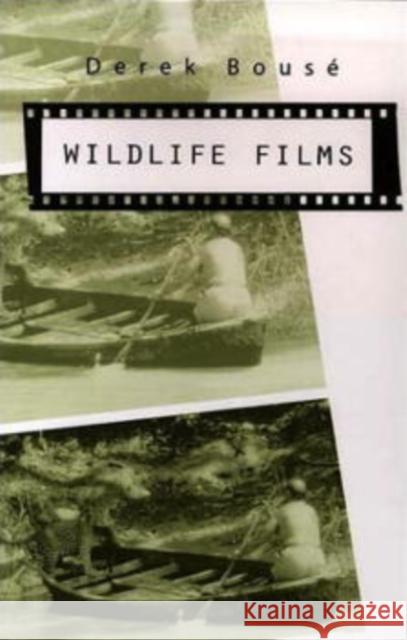
"Quite brilliant. . . . This fascinating book will interest all audiences."--Choice If, as many argue, movies and television have become Western culture's premier storytelling media, so too have they become, for most members of society, the primary source of encounters with the natural world--particularly wild animals. The television fare offered nightly by national and cable networks such as PBS and the Discovery Channel provides millions of viewers with their only experience of the wilderness and its inhabitants. The very films that so many viewers take as accurate portrayals of wildlife, however, have evolved primarily as a form of entertainment, following the established codes and conventions of narrative exposition. The result has been not the representation of nature, but its wholesale reconstruction and reconfiguration according to film and television conventions, audience expectations, and the demands of competition in the media marketplace. Wildlife Films traces the genealogy of the nature film, from its origins as the "animal locomotion" studies that mark the very beginnings of motion pictures themselves, to the founding of the Animal Planet cable channel that boasts "all animals, all the time." The narrative and thematic elements that unite wildlife films as a genre have their roots not in the documentary film tradition, but in the older traditions of oral and written animal fables as reflections of human society. BousE contends that classic wildlife films often portray animal protagonists living in families modeled on an ideal of the human nuclear family and working in communities that resemble an ideal of bucolic human society. In these stories--presented as documentaries--animals are motivated by human emotions and conduct relationships according to human customs. This imposition of culturally satisfying narrative patterns upon the lives of animals has not only led to the misrepresentation of the natural world; it has promoted the notion that our values, our moral vision, our models of society and family structure derive from nature, rather than being cultural formations. Derek BousE received his doctorate from the Annenberg School for Communication, University of Pennsylvania, and is currently a filmmaker residing in Austria.
"Quite brilliant. . . . This fascinating book will interest all audiences."--ChoiceIf, as many argue, movies and television have become Western culture's premier storytelling media, so too have they become, for most members of society, the primary source of encounters with the natural world--particularly wild animals. The television fare offered nightly by national and cable networks such as PBS and the Discovery Channel provides millions of viewers with their only experience of the wilderness and its inhabitants.The very films that so many viewers take as accurate portrayals of wildlife, however, have evolved primarily as a form of entertainment, following the established codes and conventions of narrative exposition. The result has been not the representation of nature, but its wholesale reconstruction and reconfiguration according to film and television conventions, audience expectations, and the demands of competition in the media marketplace.Wildlife Films traces the genealogy of the nature film, from its origins as the "animal locomotion" studies that mark the very beginnings of motion pictures themselves, to the founding of the Animal Planet cable channel that boasts "all animals, all the time." The narrative and thematic elements that unite wildlife films as a genre have their roots not in the documentary film tradition, but in the older traditions of oral and written animal fables as reflections of human society. Bousé contends that classic wildlife films often portray animal protagonists living in families modeled on an ideal of the human nuclear family and working in communities that resemble an ideal of bucolic human society. In these stories--presented as documentaries--animals are motivated by human emotions and conduct relationships according to human customs. This imposition of culturally satisfying narrative patterns upon the lives of animals has not only led to the misrepresentation of the natural world; it has promoted the notion that our values, our moral vision, our models of society and family structure derive from nature, rather than being cultural formations.Derek Bousé received his doctorate from the Annenberg School for Communication, University of Pennsylvania, and is currently a filmmaker residing in Austria.




Czytaj nas na:
KrainaKsiazek.PL - Księgarnia Internetowa


