• Wyszukiwanie zaawansowane
  • Kategorie
  • Kategorie BISAC
  • Książki na zamówienie
  • Promocje
  • Granty
  • Książka na prezent
  • Opinie
  • Pomoc
  • Załóż konto
  • Zaloguj się

Why Elephants Cry: How Observing Unusual Animal Behaviours Can Predict the Weather (and Other Environmental Phenomena) » książka


zaloguj się | załóż konto
Logo Krainaksiazek.pl

koszyk

konto

szukaj
topmenu
Księgarnia internetowa
Szukaj
Książki na zamówienie
Promocje
Granty
Książka na prezent
Moje konto
Pomoc
 
 
Wyszukiwanie zaawansowane
Pusty koszyk
Bezpłatna dostawa dla zamówień powyżej 20 złBezpłatna dostawa dla zamówień powyżej 20 zł

Kategorie główne

• Nauka
 [2946912]
• Literatura piękna
 [1852311]

  więcej...
• Turystyka
 [71421]
• Informatyka
 [150889]
• Komiksy
 [35717]
• Encyklopedie
 [23177]
• Dziecięca
 [617324]
• Hobby
 [138808]
• AudioBooki
 [1671]
• Literatura faktu
 [228371]
• Muzyka CD
 [400]
• Słowniki
 [2841]
• Inne
 [445428]
• Kalendarze
 [1545]
• Podręczniki
 [166819]
• Poradniki
 [480180]
• Religia
 [510412]
• Czasopisma
 [525]
• Sport
 [61271]
• Sztuka
 [242929]
• CD, DVD, Video
 [3371]
• Technologie
 [219258]
• Zdrowie
 [100961]
• Książkowe Klimaty
 [124]
• Zabawki
 [2341]
• Puzzle, gry
 [3766]
• Literatura w języku ukraińskim
 [255]
• Art. papiernicze i szkolne
 [7810]
Kategorie szczegółowe BISAC

Why Elephants Cry: How Observing Unusual Animal Behaviours Can Predict the Weather (and Other Environmental Phenomena)

ISBN-13: 9781032381794 / Angielski / Twarda / 2023 / 232 str.
John T. Hancock
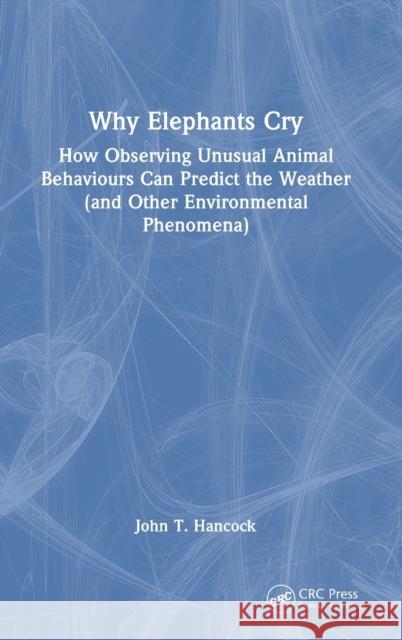
Why Elephants Cry: How Observing Unusual Animal Behaviours Can Predict the Weather (and Other Environmental Phenomena) John T. Hancock 9781032381794 CRC Press - książkaWidoczna okładka, to zdjęcie poglądowe, a rzeczywista szata graficzna może różnić się od prezentowanej.

Why Elephants Cry: How Observing Unusual Animal Behaviours Can Predict the Weather (and Other Environmental Phenomena)

ISBN-13: 9781032381794 / Angielski / Twarda / 2023 / 232 str.

John T. Hancock
cena 605,99
(netto: 577,13 VAT:  5%)

Najniższa cena z 30 dni: 579,30
Termin realizacji zamówienia:
ok. 22 dni roboczych
Dostawa w 2026 r.

Darmowa dostawa!
inne wydania

Why Elephants Cry is a fascinating frolic through the literature and evidence surrounding the use of unusual behavior of animals to measure and predict the environment, framed around the climate crisis.

Why Elephants Cry is a fascinating frolic through the literature and evidence surrounding the use of unusual behavior of animals to measure and predict the environment. The role of animals, from the smallest ant to the biggest elephant, as predictors of environmental changes is framed around the climate crisis, which highlights the increasingly important part that animals will have to play in the future.

Renowned biologist Professor John T. Hancock collects anecdotal stories and myths along with scientific evidence, demonstrating that observation of animals can be of tangible use. He looks at the measurement of the air temperature using ants, crickets and snakes, and goes on to assess the evidence that the observation of a wide range of animals can predict the weather or the imminent eruption of volcanoes and earthquakes. Evidence of animals being able to predict lunar and solar events, such as lunar cycles and the Northern Lights, is also considered.

This is the only time that all this literature has been brought together in one place, a fascinating reference for anybody interested in animals and the environment. The book is also an ideal supplementary textbook for students studying animal behaviour.


Kategorie:
Nauka, Ekonomia i biznes
Kategorie BISAC:
Nature > Animals - General
Nature > Earthquakes & Volcanoes
Nature > Ecology
Wydawca:
CRC Press
Język:
Angielski
ISBN-13:
9781032381794
Rok wydania:
2023
Dostępne języki:
Ilość stron:
232
Oprawa:
Twarda
Dodatkowe informacje:
Bibliografia
Wydanie ilustrowane

Introduction. Introductory Story. Predicting our Environment. Technological and Biochemical Approaches to Measuring the Environment. Why Animals May Alter Their Activities with Environmental Change. Long Term, or the Here and Now. Piquing my Interest. Relevance and Climate Change. Chapter Summary. Measuring Ambient Temperature. Introductory Story. Measuring the Air Temperature with an Animal - an Introduction. Importance of measuring temperature. Instrumentation which has been developed to measure temperature. Measuring temperature with an animal. Biochemical Explanation– why animals move faster as the temperature rises. Chapter Summary. Predicting the Weather. Introductory Story. The Weather and Animals - an Introduction. Why Watch the Weather. Instrumentation which has been Developed to Measure the Weather. Animals and how they can be Used to Predict the Weather. Biochemical Explanation - What Animals may be Sensing to Predict the Weather. Chapter Summary. Predicting Earthquakes, Volcanic Eruptions and Tsunami. Introductory Story. Earthquakes and Other Rumblings - an Introduction. Instrumentation which has been developed to Detect Movements of the Ground. Why Predicting Geophysical Events is Important. Animals and how they can be Used to Predict the Geophysical Events. Biochemical Discussion - What Animals may be Sensing to Predict Movements of the Earth. China and seismic zoos. Animals in the Prediction of Tsunamis and Volcanic Eruptions. Climate Change and Impact on Geophysical Events. Chapter Summary. Solar and Lunar Activity. Introductory Story. Solar and Lunar Events - an Introduction. Instrumentation which has been Developed to Observe the Skies. Animals and the Events in the Sky. Biochemical Discussion - What Animals may be Sensing during Lunar Events. The Solar Eclipse, Northern Lights, and Animals. Chapter Summary. Conclusions, Climate Change and the Future. Introductory Story. The Environment – an Introduction. Differences of Weather Impacts Around the World. Are Animals of Use as Environmental Predictors? Observation of Plants as Environmental Predictors. Use of Sentinel Organisms for Environmental Monitoring. Some of the Famous who have Dabbled. Climate Change. A Final Look at the Biology Behind Animal Sensing. Conclusions and Future.

John T. Hancock is Professor of Cell Signalling at the University of the West of England, Bristol (UWE), UK. In 1984 he was awarded a degree in Biochemistry at the University of Bristol, where he stayed to complete his PhD in 1987. Following post-doctoral positions, he moved to UWE in 1993. John has had a long-standing interest in reduction/oxidation (redox) reactions and the molecules involved, but particularly how these mechanisms control cellular function. He has authored several editions of a textbook, Cell Signalling, where the processes of how cells perceive and respond to their environment is discussed. John also has several editorial positions for international journals, and is Editor-in-Chief of the journal Oxygen. Recently, John’s research has focused on the role of hydrogen gas in biological systems, and he has written several articles on COVID-19, including about the impact of the pandemic on animals and animal welfare.


Udostępnij

Facebook - konto krainaksiazek.pl


Opinie o Krainaksiazek.pl na Opineo.pl

Partner Mybenefit

Krainaksiazek.pl w programie rzetelna firma Krainaksiaze.pl - płatności przez paypal

Czytaj nas na:

Facebook - krainaksiazek.pl
  • książki na zamówienie
  • granty
  • książka na prezent
  • kontakt
  • pomoc
  • opinie
  • regulamin
  • polityka prywatności

Zobacz:

  • Księgarnia czeska

  • Wydawnictwo Książkowe Klimaty

1997-2025 DolnySlask.com Agencja Internetowa

© 1997-2022 krainaksiazek.pl
     
KONTAKT | REGULAMIN | POLITYKA PRYWATNOŚCI | USTAWIENIA PRYWATNOŚCI
Zobacz: Księgarnia Czeska | Wydawnictwo Książkowe Klimaty | Mapa strony | Lista autorów
KrainaKsiazek.PL - Księgarnia Internetowa

Polityka prywatnosci - link
Krainaksiazek.pl - płatnośc Przelewy24
Przechowalnia Przechowalnia





