• Wyszukiwanie zaawansowane
  • Kategorie
  • Kategorie BISAC
  • Książki na zamówienie
  • Promocje
  • Granty
  • Książka na prezent
  • Opinie
  • Pomoc
  • Załóż konto
  • Zaloguj się

When Politicians Talk: The Cultural Dynamics of Public Speaking » książka

zaloguj się | załóż konto
Logo Krainaksiazek.pl

koszyk

konto

szukaj
topmenu
Księgarnia internetowa
Szukaj
Książki na zamówienie
Promocje
Granty
Książka na prezent
Moje konto
Pomoc
 
 
Wyszukiwanie zaawansowane
Pusty koszyk
Bezpłatna dostawa dla zamówień powyżej 20 złBezpłatna dostawa dla zamówień powyżej 20 zł

Kategorie główne

• Nauka
 [2946912]
• Literatura piękna
 [1852311]

  więcej...
• Turystyka
 [71421]
• Informatyka
 [150889]
• Komiksy
 [35717]
• Encyklopedie
 [23177]
• Dziecięca
 [617324]
• Hobby
 [138808]
• AudioBooki
 [1671]
• Literatura faktu
 [228371]
• Muzyka CD
 [400]
• Słowniki
 [2841]
• Inne
 [445428]
• Kalendarze
 [1545]
• Podręczniki
 [166819]
• Poradniki
 [480180]
• Religia
 [510412]
• Czasopisma
 [525]
• Sport
 [61271]
• Sztuka
 [242929]
• CD, DVD, Video
 [3371]
• Technologie
 [219258]
• Zdrowie
 [100961]
• Książkowe Klimaty
 [124]
• Zabawki
 [2341]
• Puzzle, gry
 [3766]
• Literatura w języku ukraińskim
 [255]
• Art. papiernicze i szkolne
 [7810]
Kategorie szczegółowe BISAC

When Politicians Talk: The Cultural Dynamics of Public Speaking

ISBN-13: 9789811635786 / Angielski / Twarda / 2021 / 266 str.
Ofer Feldman
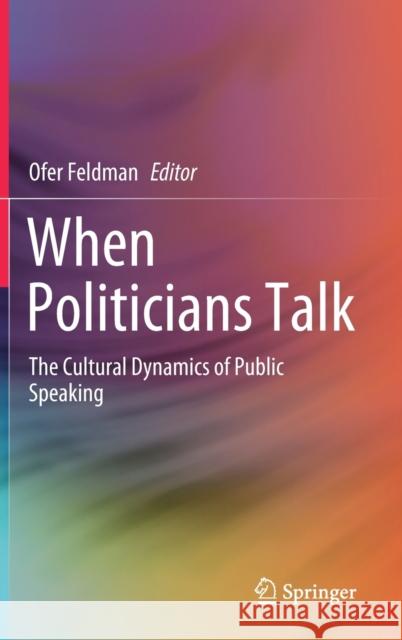
When Politicians Talk: The Cultural Dynamics of Public Speaking Ofer Feldman 9789811635786 Springer - książkaWidoczna okładka, to zdjęcie poglądowe, a rzeczywista szata graficzna może różnić się od prezentowanej.

When Politicians Talk: The Cultural Dynamics of Public Speaking

ISBN-13: 9789811635786 / Angielski / Twarda / 2021 / 266 str.

Ofer Feldman
cena 524,53
(netto: 499,55 VAT:  5%)

Najniższa cena z 30 dni: 501,19
Termin realizacji zamówienia:
ok. 22 dni roboczych
Bez gwarancji dostawy przed świętami

Darmowa dostawa!
inne wydania
Kategorie:
Nauka, Polityka
Kategorie BISAC:
Political Science > Public Policy - General
Wydawca:
Springer
Język:
Angielski
ISBN-13:
9789811635786
Rok wydania:
2021
Wydanie:
2021
Ilość stron:
266
Waga:
0.61 kg
Wymiary:
23.39 x 15.6 x 1.91
Oprawa:
Twarda
Wolumenów:
01
Dodatkowe informacje:
Wydanie ilustrowane


"It is never easy to write or edit a book that aims, like Ofer Feldman's volume, to provide a panoramic account of phenomena that fall under the rubric of political communication. ... Ofer Feldman's volume is a fine attempt to account for the interface of culture, discourse and politics ... . the book possesses a broad appeal, both critical and theoretical, and is bound to attract attention from an interdisciplinary spectrum of early-career as well as experienced scholars." (Piotr Cap, Language and Dialogue, Vol. 12 (3), 2022)

Introduction: The Role of Culture in Shaping Political Leaders’ Rhetoric    


Part 1. Religion and Political Rhetoric    
Chapter 1 A Long Shadow: The Influence of Jewish Culture on Israeli Political Speech
Sam Lehman-Wilzig (Bar-Ilan University, Israel)

Chapter 2 The Influence of Islamic Culture and Quranic Rhetoric on Public Speaking in the Arab World
Ali Badeen Mohammed Al-Rikaby (Mustansiriyah University, Baghdad, Iraq)
Thulfiqar Hussein Altahmazi (Mustansiriyah University, Baghdad, Iraq)
Debbita Ai Lin Tan (Universiti Sains Malaysia, Penang, Malaysia)

Chapter 3 From Catholicism to Gender Equality: Political Rhetoric in Spain from 1980 to 2020
Javier García-Marín (University of Granada, Spain)
Ignacio-Jesús Serrano-Contreras (University of Granada, Spain)


Chapter 4 The Weight of the Cross: The Use of Christianism in the Symbolic Construction of a Brazilian Messiah 
Eduardo Ryô Tamaki (Federal University of Minas Gerais, Brazil)
Renato Duarte Caetano (Federal University of Minas Gerais, Brazil)
Ricardo Fabrino Mendonça (Federal University of Minas Gerais, Brazil)

Part 2. Historical Experiences and Wars and Political Rhetoric  
Chapter 5 Talking Politics: Historical and Cultural Transformations and their Influence on Polish Political Rhetoric
Katarzyna Molek-Kozakowska (University of Opole/VGTU, Poland)  
Agnieszka Kampka (Warsaw University of Life Sciences, Poland)

Chapter 6 Inaugurating War Memory: The Role of Memory of the ‘Homeland War’ in Inaugural Speeches of Croatian Presidents (1990-2020)
Tamara Banjeglav (independent scholar)
Nikolina Židek (IE University Madrid, Spain)

Chapter 7 Rationality and Moderation: German Chancellors’ Post-War Public Rhetoric
Melani Schröter (University of Reading, UK)

Chapter 8 Plural and Divided: The Influence of Greek Culture in Post-Crisis Political Speech
Christos Kostopoulos (Curtin University, Sarawak Campus, Malaysia)  

Chapter 9 Core Socio-Cultural Building Blocks influencing the Israeli Prime Minister Benjamin Netanyahu’s Speeches to the UN General Assembly over the Previous Decade 
Yuval Benziman (Hebrew University of Jerusalem, Israel)

Part 3. ‘Common-Sense’ and Macho Norms and Political Rhetoric
Chapter 10 Selling Sainthood: Commonsense, Prime Minister Narendra Modi, and the Politics of Legitimacy in India
Amit Julka (National University of Singapore, Singapore)

Chapter 11 President Donald Trump and the New American Cultural Divide 
Michael Krasner (City University of New York, USA)  

Chapter 12 President Rodrigo Duterte’s Brutish Rhetoric and the Culture of Machismo in the Philippines
Gene Segarra Navera (National University of Singapore, Singapore)

Part 4. Majority/Minority Relations, Economic System, Immigration patterns, and Geography Isolation and Political Rhetoric

Chapter 13 From “Guests” to “Imposters:” An Analysis of the Impact of culture on Turkish Political Discourse(s) over Migration
Ibrahim EFE (Kilis 7 Aralık University, Turkey)

Chapter 14 Rhetoric, Ideology, and the Influence of Culture in the Spanish Parliamentary Debates: A Case Study of Pablo Iglesias of the Podemos Party
Francisco Jose Sanchez Garcia (Universidad de Granada, Spain)  

Chapter 15 “This Stardust Won’t Settle:” An Analysis of Prime Minister Jacinda Ardern’s Political Rhetoric in Aotearoa New Zealand 
Claire Timperley (Victoria University of Wellington, New Zealand)

Part 5. Collectivism, Social Structure and Relationships and Political Rhetoric 
Chapter 16 Decoding Political Leaders’ Rhetoric in Japan  
Ofer Feldman (Doshisha University, Japan)

Chapter 17 Culture and Politics in Contemporary China: A Cultural-Specific Analysis of Three President Xi Jinping’s Speeches in 2019
Lu Xing (DePaul University, USA)

Chapter 18 Conclusion: How Culture Shapes Political Discourse
Richard Anderson (University of California, USA)


Ofer Feldman is a professor of Political Psychology and Behavior at the Faculty of Policy Studies, Doshisha University, Kyoto, Japan. He is the author of more than 90 journal articles and book chapters, and more than 100 encyclopedia items, in the fields of political psychology/behavior, communication studies, and Japanese politics, and the sole author, co-author, sole editor, and co-editor of 16 books and monographs, including Talking Politics in Japan Today (2004), Seiji shinrigaku [Political Psychology] (in Japanese, 2006), The Psychology of Political Communicators (2019, with Sonja Zmerli), and The Rhetoric of Political Leadership (2020).

This book details the relationship between culture and the language used by public figures, including politicians, political candidates, and government officials, in the broad context of political behavior and communication. Employing a variety of perspectives, theoretical, conceptual, methodological, and analytical approaches, chapters focus specifically on the question of HOW cultural factors (such as religion, history, economy, majority/minority relations, social structure, and values) shape the content, nature, and characteristics of the rhetoric that public figures utilize in selected countries in the Americas, Europe, Asia, Oceania, and the Middle East.

              The chapters enable comparison of the cultural effects on the different structures, styles, and contents of public speaking in societies from West to East. That is, of WHAT leaders say, HOW they say it (e.g., degree of openness, directness, usage of metaphors and slogans, xenophobic and racial expressions), under WHICH specific circumstances (e.g., National Days addresses, national or local assemblies’ debates, during election campaigns appeals, press conferences’ briefings, and in international meetings’ speeches), and for WHAT specific audiences (e.g., supporters and voters, media representatives, or the global community).


Udostępnij

Facebook - konto krainaksiazek.pl


Opinie o Krainaksiazek.pl na Opineo.pl

Partner Mybenefit

Krainaksiazek.pl w programie rzetelna firma Krainaksiaze.pl - płatności przez paypal

Czytaj nas na:

Facebook - krainaksiazek.pl
  • książki na zamówienie
  • granty
  • książka na prezent
  • kontakt
  • pomoc
  • opinie
  • regulamin
  • polityka prywatności

Zobacz:

  • Księgarnia czeska

  • Wydawnictwo Książkowe Klimaty

1997-2025 DolnySlask.com Agencja Internetowa

© 1997-2022 krainaksiazek.pl
     
KONTAKT | REGULAMIN | POLITYKA PRYWATNOŚCI | USTAWIENIA PRYWATNOŚCI
Zobacz: Księgarnia Czeska | Wydawnictwo Książkowe Klimaty | Mapa strony | Lista autorów
KrainaKsiazek.PL - Księgarnia Internetowa

Polityka prywatnosci - link
Krainaksiazek.pl - płatnośc Przelewy24
Przechowalnia Przechowalnia






