When Iron Discipline Met Human Ambition » książka





When Iron Discipline Met Human Ambition
ISBN-13: 9783565198580 / Angielski / Miękka / 228 str.
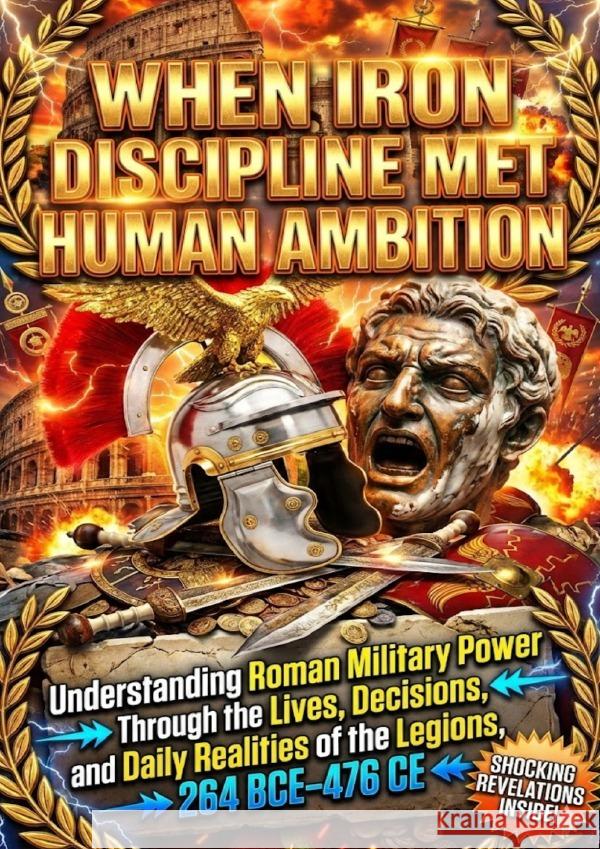
For centuries, Rome's legions were the most feared military force in the ancient world-not because of size or technology alone, but because of something far more complex: a system that turned ordinary farmers into disciplined soldiers, transformed defeat into tactical innovation, and bound individual ambition to collective survival.This book follows the Roman military machine from the Punic Wars through the fall of the Western Empire, examining not just famous battles but the everyday decisions that shaped conquest: how centurions maintained discipline in distant provinces, how engineers adapted siege tactics to unfamiliar terrain, how supply lines determined strategic choices, and how soldiers' letters home reveal the psychological toll of endless expansion.Drawing on archaeological evidence, military correspondence, and ancient testimony, it traces how the legion evolved-from citizen militia to professional standing army-and what that transformation reveals about power, loyalty, and the limits of institutional control. It explores how tactical flexibility coexisted with rigid hierarchy, how Roman commanders learned from enemies, and how the very success of the military system eventually contributed to imperial fragmentation.This is not a story of inevitable triumph, but of human ingenuity, adaptation, and the uncomfortable relationship between military efficiency and the societies it served.
In the mud outside Alesia, a centurion made a choice that would echo through centuries: adapt the drill, or watch the line collapse under Gallic pressure.




Czytaj nas na:
KrainaKsiazek.PL - Księgarnia Internetowa


