When Failing Fast Becomes Failing Forward Without Direction » książka





When Failing Fast Becomes Failing Forward Without Direction
ISBN-13: 9783565201013 / Angielski / Miękka / 224 str.
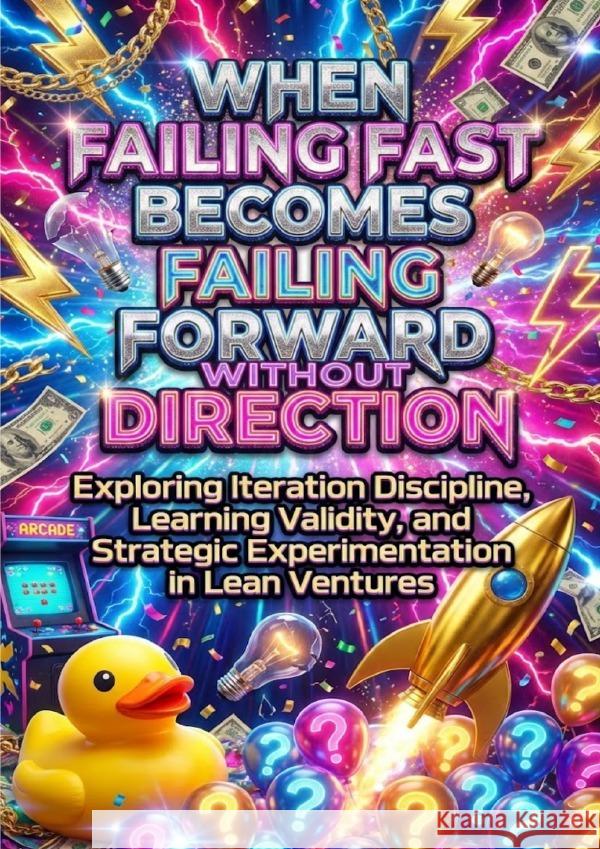
The lean startup movement popularized "fail fast, learn faster"-but many entrepreneurs misinterpret speed for progress, confusing rapid pivots with strategic learning. They launch experiments without clear hypotheses, abandon ideas prematurely when traction is slow, and mistake activity for insight. This book explores why the lean methodology often produces motion without meaningful direction, and how disciplined experimentation differs from chaotic trial and error.It examines what constitutes valid learning in early-stage ventures, revealing how cognitive biases, impatience, and misunderstood metrics lead entrepreneurs to extract wrong lessons from their failures. The work reframes lean thinking as a systematic practice of hypothesis testing rather than speed optimization, exploring how structured experimentation reveals sustainable business models while preserving limited resources.Through analysis of iteration cycles, customer feedback patterns, and decision frameworks, this book offers insight into what separates productive failure from wasted effort. It challenges the assumption that velocity alone drives startup success, demonstrating instead how intentional learning-even when slow-builds stronger foundations than reactive pivoting. Designed for entrepreneurs and solopreneurs who recognize that failing fast without learning deeply creates expensive loops, not viable businesses. Sustainable ventures emerge from disciplined experimentation, not glorified guesswork.
Failing fast is only valuable if you're learning precisely. Speed without strategic hypotheses creates expensive circles, not progress toward product-market fit.




Czytaj nas na:
KrainaKsiazek.PL - Księgarnia Internetowa


