• Wyszukiwanie zaawansowane
  • Kategorie
  • Kategorie BISAC
  • Książki na zamówienie
  • Promocje
  • Granty
  • Książka na prezent
  • Opinie
  • Pomoc
  • Załóż konto
  • Zaloguj się

Wetlands for Remediation in the Tropics: Wet Ecosystems for Nature-based Solutions » książka


zaloguj się | załóż konto
Logo Krainaksiazek.pl

koszyk

konto

szukaj
topmenu
Księgarnia internetowa
Szukaj
Książki na zamówienie
Promocje
Granty
Książka na prezent
Moje konto
Pomoc
 
 
Wyszukiwanie zaawansowane
Pusty koszyk
Bezpłatna dostawa dla zamówień powyżej 20 złBezpłatna dostawa dla zamówień powyżej 20 zł

Kategorie główne

• Nauka
 [2949965]
• Literatura piękna
 [1857847]

  więcej...
• Turystyka
 [70818]
• Informatyka
 [151303]
• Komiksy
 [35733]
• Encyklopedie
 [23180]
• Dziecięca
 [617748]
• Hobby
 [139972]
• AudioBooki
 [1650]
• Literatura faktu
 [228361]
• Muzyka CD
 [398]
• Słowniki
 [2862]
• Inne
 [444732]
• Kalendarze
 [1620]
• Podręczniki
 [167233]
• Poradniki
 [482388]
• Religia
 [509867]
• Czasopisma
 [533]
• Sport
 [61361]
• Sztuka
 [243125]
• CD, DVD, Video
 [3451]
• Technologie
 [219309]
• Zdrowie
 [101347]
• Książkowe Klimaty
 [123]
• Zabawki
 [2362]
• Puzzle, gry
 [3791]
• Literatura w języku ukraińskim
 [253]
• Art. papiernicze i szkolne
 [7933]
Kategorie szczegółowe BISAC

Wetlands for Remediation in the Tropics: Wet Ecosystems for Nature-based Solutions

ISBN-13: 9783031236648 / Angielski / Twarda / 2023 / 254 str.
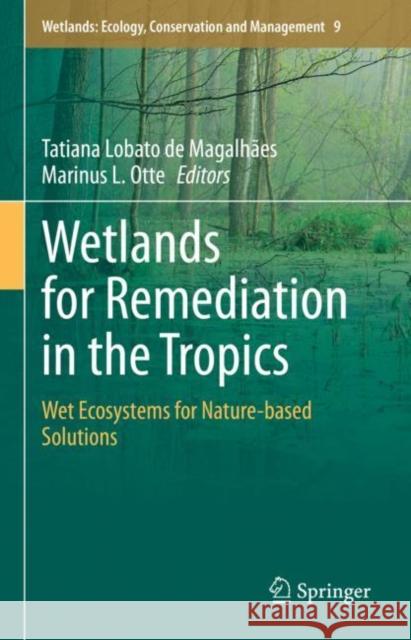
Tatiana Lobato de Magalhães; Marinus L. Otte
Wetlands for Remediation in the Tropics: Wet Ecosystems for Nature-based Solutions Tatiana Lobat Marinus L. Otte 9783031236648 Springer - książkaWidoczna okładka, to zdjęcie poglądowe, a rzeczywista szata graficzna może różnić się od prezentowanej.

Wetlands for Remediation in the Tropics: Wet Ecosystems for Nature-based Solutions

ISBN-13: 9783031236648 / Angielski / Twarda / 2023 / 254 str.

Tatiana Lobato de Magalhães; Marinus L. Otte
cena 685,93
(netto: 653,27 VAT:  5%)

Najniższa cena z 30 dni: 655,41
Termin realizacji zamówienia:
ok. 22 dni roboczych
Bez gwarancji dostawy przed świętami

Darmowa dostawa!
inne wydania

This edited volume provides a review of remediation approaches utilizing aquatic and wetland macrophytes in the Tropics. This form of phytotechnology has exceptional potential as a sustainable nature-based solution, but that potential is not commonly utilized in the Tropics. Constructed wetlands for improvement of water quality are cost-effective, offering affordable solutions for remediation in warm and tropical regions worldwide. The robustness, simplicity, and reliability of treatment wetlands provide efficient long-term operation.Wetlands for Remediation in the Tropicscovers theory, provides case studies, and identifies gaps in our current understanding. It highlights why the Tropics differ from temperate regions in this context, particularly concerning differences in climate and species diversity and abundance. Urban, rural, and industrial examples are discussed across 11 chapters. These nature-based solutions, including the concept of ‘Sponge City’, can be applied to tropical areas worldwide and incorporated particularly in highly urbanized regions.The authors, from Argentina, Australia, Brazil, Canada, Colombia, the USA, the Netherlands, Mexico, Pakistan, and Taiwan, all have substantial research experience using wetlands for remediation.The topic of this book is relevant not only to scholars and academics but also to practitioners and government officials from developing countries, where scarce resources and a lack of a qualified workforce are common, but large differences exist in history, culture, regulations, climate, water fluctuations, and vegetation. Although ideas based on experiences from temperate regions can be applied, the Tropics require distinct approaches to developing constructed wetlands for remediation.


This edited volume provides a review of remediation approaches utilizing aquatic and wetland macrophytes in the Tropics. This form of phytotechnology has exceptional potential as a sustainable nature-based solution, but that potential is not commonly utilized in the Tropics. Constructed wetlands for improvement of water quality are cost-effective, offering affordable solutions for remediation in warm and tropical regions worldwide. The robustness, simplicity, and reliability of treatment wetlands provide efficient long-term operation.Wetlands for Remediation in the Tropics covers theory, provides case studies, and identifies gaps in our current understanding. It highlights why the Tropics differ from temperate regions in this context, particularly concerning differences in climate and species diversity and abundance. Urban, rural, and industrial examples are discussed across 11 chapters. These nature-based solutions, including the concept of ‘Sponge City’, can be applied to tropical areas worldwide and incorporated particularly in highly urbanized regions.The authors, from Argentina, Australia, Brazil, Canada, Colombia, the USA, the Netherlands, Mexico, Pakistan, and Taiwan, all have substantial research experience using wetlands for remediation.The topic of this book is relevant not only to scholars and academics but also to practitioners and government officials from developing countries, where scarce resources and a lack of a qualified workforce are common, but large differences exist in history, culture, regulations, climate, water fluctuations, and vegetation. Although ideas based on experiences from temperate regions can be applied, the Tropics require distinct approaches to developing constructed wetlands for remediation.

Kategorie:
Nauka, Biologia i przyroda
Kategorie BISAC:
Science > Life Sciences - Ecology
Science > Biotechnology
Science > Environmental Science (see also Chemistry - Environmental)
Wydawca:
Springer
Seria wydawnicza:
Wetlands: Ecology, Conservation and Management
Język:
Angielski
ISBN-13:
9783031236648
Rok wydania:
2023
Dostępne języki:
Numer serii:
000325653
Ilość stron:
254
Oprawa:
Twarda

Chapter 1. A brief history of phytoremediation using wetlands (Marinus L. Otte).- Chapter 2. Phytoremediation using tropical wetlands: Are temperate treatment wetlands sound models? (Daniel Campbell).- Chapter 3. Tropical and subtropical plant species used for phytoremediation in treatment wetlands (Hernán Ricardo Hadad).- Chapter 4. Wetlands for bioremediation in Pakistan (Muhammad Afzal).- Chapter 5. Urban wetlands in the tropics – Taiwan as an example (Wei-Ta Fang).- Chapter 6. Treatment of urban stormwater through constructed wetlands – experiences and practical guidance for tropical and non-tropical settings (Swapan Paul).- Chapter 7. Phytoremediation of agricultural pollutants in the Tropics (Megan L. Murray).- Chapter 8. Wetlands to treat mining tailings in the Tropics of Central and South America (Aurora M. Pat-Espadas).- Chapter 9. Bioremediation and biofuel production using microalgae (Wei-Ta Fang).- Chapter 10. Wetlands for remediation in Africa: Threats and opportunities (Oscar Omondi Donde).- Chapter 11. Cost and benefits of treatment wetlands in the Tropics (Marco A. Rodríguez-Domínguez).

Dr. Tatiana Lobato de Magalhães is a research professor at the Universidad Autónoma de Querétaro, QRO, Mexico, and has specialized in wetland research and education for more than 10 years, with a strong focus on ecology, genetics, and distribution of aquatic plants. Her work includes research projects and teaching across the Americas, including the Amazon and Southern Brazil Highlands. She was awarded the 2021 Academic Merit medal by UAQ, the 2019 José Mariano Mociño (1757-1820) medal by the Mexican Society of Botany, and the 2018 Research Fellow Wetland Ambassadors by the Society of Wetland Scientists. She is an associate editor of an international book series and scientific journals (Wetlands, Aquatic Botany, Wetland Ecology, Management, and Conservation), and chapter chair at the Society of Wetland Scientists. Tatiana is recognized by the National System of Researchers in Mexico (2020-2024) and certificated as a professional wetland scientist by PCPSWS (2020-2025). 

Dr. Marinus L. Otte is a professor at North Dakota State University, Fargo, ND, USA, and has specialized in wetlands research and education for more than 30 years, with a strong focus on pollution and phytoremediation. His research, teaching and outreach on water and wetlands has involved projects around the world, most recently in Mexico as a Fulbright Specialist. He is a lifetime member of the Society of Wetland Scientists, and has been the editor-in-chief of the scientific journal Wetlands since 2012. He published about 100 peer-reviewed scientific articles and contributed to many conferences world-wide.


This edited volume provides a review of remediation approaches utilizing aquatic and wetland macrophytes in the Tropics. This form of phytotechnology has exceptional potential as a sustainable nature-based solution, but that potential is not commonly utilized in the Tropics. Constructed wetlands for improvement of water quality are cost-effective, offering affordable solutions for remediation in warm and tropical regions worldwide. The robustness, simplicity, and reliability of treatment wetlands provide efficient long-term operation.

Wetlands for Remediation in the Tropics covers theory, provides case studies, and identifies gaps in our current understanding. It highlights why the Tropics differ from temperate regions in this context, particularly concerning differences in climate and species diversity and abundance. Urban, rural, and industrial examples are discussed across 11 chapters. These nature-based solutions, including the concept of ‘Sponge City’, can be applied to tropical areas worldwide and incorporated particularly in highly urbanized regions.

The authors, from Argentina, Australia, Brazil, Canada, Colombia, the USA, the Netherlands, Mexico, Pakistan, and Taiwan, all have substantial research experience using wetlands for remediation.

The topic of this book is relevant not only to scholars and academics but also to practitioners and government officials from developing countries, where scarce resources and a lack of a qualified workforce are common, but large differences exist in history, culture, regulations, climate, water fluctuations, and vegetation. Although ideas based on experiences from temperate regions can be applied, the Tropics require distinct approaches to developing constructed wetlands for remediation.




Udostępnij

Facebook - konto krainaksiazek.pl


Opinie o Krainaksiazek.pl na Opineo.pl

Partner Mybenefit

Krainaksiazek.pl w programie rzetelna firma Krainaksiaze.pl - płatności przez paypal

Czytaj nas na:

Facebook - krainaksiazek.pl
  • książki na zamówienie
  • granty
  • książka na prezent
  • kontakt
  • pomoc
  • opinie
  • regulamin
  • polityka prywatności

Zobacz:

  • Księgarnia czeska

  • Wydawnictwo Książkowe Klimaty

1997-2025 DolnySlask.com Agencja Internetowa

© 1997-2022 krainaksiazek.pl
     
KONTAKT | REGULAMIN | POLITYKA PRYWATNOŚCI | USTAWIENIA PRYWATNOŚCI
Zobacz: Księgarnia Czeska | Wydawnictwo Książkowe Klimaty | Mapa strony | Lista autorów
KrainaKsiazek.PL - Księgarnia Internetowa

Polityka prywatnosci - link
Krainaksiazek.pl - płatnośc Przelewy24
Przechowalnia Przechowalnia




