• Wyszukiwanie zaawansowane
  • Kategorie
  • Kategorie BISAC
  • Książki na zamówienie
  • Promocje
  • Granty
  • Książka na prezent
  • Opinie
  • Pomoc
  • Załóż konto
  • Zaloguj się

Welding Metallurgy and Weldability of Nickel-Base Alloys » książka

zaloguj się | załóż konto
Logo Krainaksiazek.pl

koszyk

konto

szukaj
topmenu
Księgarnia internetowa
Szukaj
Książki na zamówienie
Promocje
Granty
Książka na prezent
Moje konto
Pomoc
 
 
Wyszukiwanie zaawansowane
Pusty koszyk
Bezpłatna dostawa dla zamówień powyżej 20 złBezpłatna dostawa dla zamówień powyżej 20 zł

Kategorie główne

• Nauka
 [2946600]
• Literatura piękna
 [1856966]

  więcej...
• Turystyka
 [72221]
• Informatyka
 [151456]
• Komiksy
 [35826]
• Encyklopedie
 [23190]
• Dziecięca
 [619653]
• Hobby
 [140543]
• AudioBooki
 [1577]
• Literatura faktu
 [228355]
• Muzyka CD
 [410]
• Słowniki
 [2874]
• Inne
 [445822]
• Kalendarze
 [1744]
• Podręczniki
 [167141]
• Poradniki
 [482898]
• Religia
 [510455]
• Czasopisma
 [526]
• Sport
 [61590]
• Sztuka
 [243598]
• CD, DVD, Video
 [3423]
• Technologie
 [219201]
• Zdrowie
 [101638]
• Książkowe Klimaty
 [124]
• Zabawki
 [2473]
• Puzzle, gry
 [3898]
• Literatura w języku ukraińskim
 [254]
• Art. papiernicze i szkolne
 [8170]
Kategorie szczegółowe BISAC

Welding Metallurgy and Weldability of Nickel-Base Alloys

ISBN-13: 9780470087145 / Angielski / Twarda / 2009 / 456 str.
John C. Lippold; John DuPont; Samuel D. Kiser
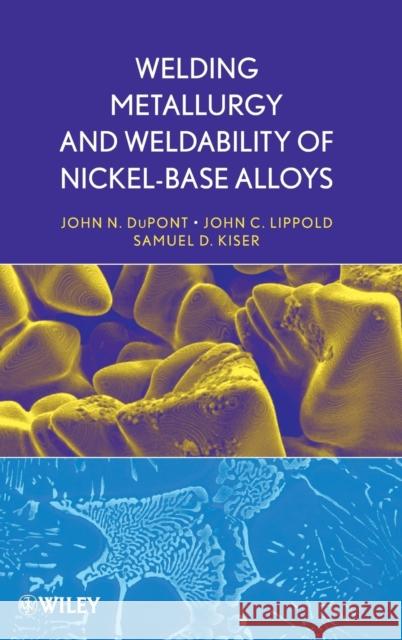
Welding Metallurgy and Weldability of Nickel-Base Alloys John C. Lippold John DuPont Samuel D. Kiser 9780470087145 John Wiley & Sons - książkaWidoczna okładka, to zdjęcie poglądowe, a rzeczywista szata graficzna może różnić się od prezentowanej.

Welding Metallurgy and Weldability of Nickel-Base Alloys

ISBN-13: 9780470087145 / Angielski / Twarda / 2009 / 456 str.

John C. Lippold; John DuPont; Samuel D. Kiser
cena 682,64 zł
(netto: 650,13 VAT:  5%)

Najniższa cena z 30 dni: 675,65 zł
Termin realizacji zamówienia:
ok. 30 dni roboczych
Bez gwarancji dostawy przed świętami

Darmowa dostawa!

The most up-to-date coverage of welding metallurgy aspects and weldability issues associated with Ni-base alloys Welding Metallurgy and Weldability of Nickel-Base Alloys describes the fundamental metallurgical principles that control the microstructure and properties of welded Ni-base alloys. It serves as a practical how-to guide that enables engineers to select the proper alloys, filler metals, heat treatments, and welding conditions to ensure that failures are avoided during fabrication and service. Chapter coverage includes:

  • Alloying additions, phase diagrams, and phase stability
  • Solid-solution strengthened Ni-base alloys
  • Precipitation strengthened Ni-base alloys
  • Oxide dispersion strengthened alloys and nickel aluminides
  • Repair welding of Ni-base alloys
  • Dissimilar welding
  • Weldability testing
  • High-chromium alloys used in nuclear power applications
With its excellent balance between the fundamentals and practical problem solving, the book serves as an ideal reference for scientists, engineers, and technicians, as well as a textbook for undergraduate and graduate courses in welding metallurgy.

Kategorie:
Technologie
Kategorie BISAC:
Technology & Engineering > Metallurgy
Technology & Engineering > Technical & Manufacturing Industries & Trades
Wydawca:
John Wiley & Sons
Język:
Angielski
ISBN-13:
9780470087145
Rok wydania:
2009
Ilość stron:
456
Waga:
0.72 kg
Wymiary:
23.62 x 15.49 x 2.54
Oprawa:
Twarda
Wolumenów:
01
Dodatkowe informacje:
Bibliografia

Preface xiii

1. Introduction 1

1.1 Ni–base Alloy Classification 2

1.1.1 Commercially Pure Nickel Alloys 2

1.1.2 Solid–Solution Strengthened Alloys 3

1.1.3 Precipitation–Strengthened Alloys 4

1.1.4 Other Specialty Alloys 5

1.2 History of Nickel and Ni–base Alloys 5

1.3 Corrosion Resistance 11

1.4 Nickel Alloy Production 12

References 14

2. Alloying Additions, Phase Diagrams, and Phase Stability 15

2.1 Introduction 15

2.2 General Influence of Alloying Additions 16

2.3 Phase Diagrams for Solid–Solution Alloys 20

2.3.1 The Ni–Cu System 20

2.3.2 The Ni–Cr System 21

2.3.3 Ni–Mo System 22

2.3.4 The Ni–Fe–Cr System 22

2.3.5 Ni–Cr–Mo System 24

2.4 Phase Diagrams for Precipitation Hardened Alloys ¶ nFormers 26

2.5 Phase Diagrams for Precipitation–Hardened Alloys ¶ nFormers 30

2.6 Calculated Phase Stability Diagrams 33

2.7 PHACOMP Phase Stability Calculations 40

References 43

3. Solid–Solution Strengthened Ni–base Alloys 47

3.1 Standard Alloys and Consumables 47

3.2 Physical Metallurgy and Mechanical Properties 51

3.3 Welding Metallurgy 57

3.3.1 Microstructural Evolution in the Fusion Zone 57

3.3.2 Heat Affected Zone 81

3.3.3 Postweld Heat Treatment 82

3.4 Mechanical Properties of Weldments 91

3.4.1 Hydrogen Effects 91

3.4.2 Postweld Heat Treatment 93

3.5 Weldability 100

3.5.1 Fusion Zone Solidification Cracking 100

3.5.2 HAZ Liquation Cracking 118

3.5.3 Avoiding Solidification and Liquation Cracking 123

3.5.4 Ductility–Dip Cracking 128

3.6 Corrosion Resistance 143

3.7 Case Studies 149

3.7.1 Pitting Corrosion in MONEL® Welds 149

References 150

4. Precipitation–Strengthened Ni–base Alloys 157

4.1 Standard Alloys and Consumables 158

4.2 Physical Metallurgy and Mechanical Properties 161

4.3 Welding Metallurgy 173

4.3.1 Microstructural Evolution in the Fusion Zone 173

4.3.2 Heat–Affected Zone 201

4.3.3 Postweld Heat Treatment 204

4.4 Mechanical Properties of Weldments 206

4.5 Weldability 207

4.5.1 Solidification Cracking 208

4.5.2 HAZ Liquation Cracking 223

4.5.3 Strain–Age Cracking 235

References 248

5. Oxide Dispersion Strengthened Alloys and Nickel Aluminides 255

5.1 Oxide Dispersion Strengthened Alloys 255

5.1.1 Physical and Mechanical Metallurgy 255

5.1.2 Welding Metallurgy 259

5.1.3 Summary of the Weldability of ODS Alloys 268

5.2 Nickel Aluminide Alloys 268

5.2.1 Physical and Mechanical Metallurgy 268

5.2.2 Weldability of the Ni–Aluminides 272

5.2.3 Summary of the Weldability of Nickel Aluminide Alloys 276

References 278

6. Repair Welding of Ni–base Alloys 281

6.1 Solid–Solution Strengthened Alloys 281

6.2 Precipitation–Strengthened Alloys 283

6.2.1 Alloy 718 284

6.2.2 Waspaloy 295

6.3 Single Crystal Superalloys 298

6.3.1 Control of Single Crystal Weld Repairs 302

6.3.2 Solidification Cracking 314

6.3.3 Optimizing Processing Parameters 317

References 324

7. Dissimilar Welding 327

7.1 Application of Dissimilar Welds 327

7.2 Influence of Process Parameters on Fusion Zone Composition 328

7.3 Carbon, Low Alloy and Stainless Steels 331

7.3.1 Determining Weld Metal Constitution 332

7.3.2 Fusion Boundary Transition Region 334

7.3.3 Weldability 342

7.4 Postweld Heat Treatment Cracking in Stainless Steels Welded with Ni–base Filler Metals 347

7.5 Super Austenitic Stainless Steels 349

7.6 Dissimilar Welds in Ni–base Alloys Effect on Corrosion Resistance 357

7.7 9%Ni Steels 357

7.7.1 Physical Metallurgy of 9%Ni Steels 357

7.7.2 Hot Cracking of Ni–base Deposits 361

7.8 Super Duplex Stainless Steels 363

7.9 Case Studies 364

7.9.1 Postweld Heat Treatment Cracking of Thick Section Welds in Alloy 800H Made with
ENiCrFe–2 Filler Metal 364

7.9.2 Alloy 925 Welded with ERNiCrMo–15 (INCO–WELD 725NDUR) for Manufacturing Vacuum Insulated Oil Patch Tubing 367

7.9.3 Corrosion–Fatigue of Alloy 625 Weld Overlays 369

7.9.4 Overlay of Safe–End Welds using High–Cr, Ni–base Filler Metals 373

References 376

8. Weldability Testing 379

8.1 Introduction 379

8.1.1 Weldability Testing Approaches 380

8.1.2 Types of Weldability Test Techniques 380

8.2 The Varestraint Test 381

8.2.1 Technique for Quantifying Weld Solidification Cracking 383

8.2.2 Technique for Quantifying HAZ Liquation Cracking 386

8.3 Modified Cast Pin Tear Test 388

8.4 The Sigmajig Test 392

8.5 The Hot Ductility Test 394

8.6 The Strain–to–Fracture Test 399

8.7 Other Weldability Tests 401

References 402

Appendix A Composition of Wrought and Cast Nickel–Base Alloys 403

Appendix B Composition of Nickel and Nickel Alloy Consumables 409

Appendix C Corrosion Acceptance Testing Methods 415

Appendix D Etching Techniques for Ni–base Alloys and Welds 419

Author Index 423

Subject Index 431

John N. DuPont, PhD, is the R.D. Stout Distinguished Professor in the Materials Science and Engineering Department at Lehigh University and Associate Director of the Energy Research Center. A Fellow of both the American Welding Society and ASM International, Dr. DuPont has won numerous awards for his research and teaching, including the Charles H. Jennings Memorial Award., the William Spraragen Memorial Award, the Masubuchi Award., the Lehigh Teaching Excellence Award, and the McKay–Helm award. He and his students have published over 200 articles in the area of solidification, high–temperature corrosion, and welding metallurgy.

John C. Lippold, PhD, is a Professor in the Welding Engineering Program and leader of the Welding and Joining Metallurgy Group at The Ohio State University. A Fellow of both the American Welding Society and ASM International, Dr. Lippold has received numerous awards for his research and teaching, including the Charles H. Jennings Memorial Award, the William Spraragen Memorial Award, the McKay–Helm Award, the James F. Lincoln Gold Medal, the Comfort A. Adams Lecture Award, the Plummer Memorial Education Lecture Award, and the IIW Jaeger Lecture Award. Together with his students and colleagues, he has published over 250 articles on welding metallurgy and weldability of structural materials.

Samuel D. Kiser is Director of Technology for the Special Metals Welding Products Co., formerly INCO.  He is a professional welding engineer, a Fellow of the American Welding Society, and holds more than ten patents for nickel alloy welding products. Sam is the recipient of the A.F. Davis Silver Medal and the Samuel Wylie Miller Memorial Medal Awards, and has published more than eighty articles and lectured extensively at AWS meetings to audiences around the world.

The most up–to–date coverage of welding metallurgy aspects and weldability issues associated with Ni–base alloys

Welding Metallurgy and Weldability of Nickel–Base Alloys describes the fundamental metallurgical principles that control the microstructure and properties of welded Ni–base alloys. It serves as a practical how–to guide that enables engineers to select the proper alloys, filler metals, heat treatments, and welding conditions to ensure that failures are avoided during fabrication and service. Chapter coverage includes:

  • Alloying additions, phase diagrams, and phase stability

  • Solid–solution strengthened Ni–base alloys

  • Precipitation strengthened Ni–base alloys

  • Oxide dispersion strengthened alloys and nickel aluminides

  • Repair welding of Ni–base alloys

  • Dissimilar welding

  • Weldability testing

  • High–chromium alloys used in nuclear power applications

With its excellent balance between the fundamentals and practical problem solving, the book serves as an ideal reference for scientists, engineers, and technicians, as well as a textbook for undergraduate and graduate courses in welding metallurgy.

Lippold, John C. JOHN C. LIPPOLD, PhD, is a professor in the Weldin... więcej >


Udostępnij

Facebook - konto krainaksiazek.pl


Opinie o Krainaksiazek.pl na Opineo.pl

Partner Mybenefit

Krainaksiazek.pl w programie rzetelna firma Krainaksiaze.pl - płatności przez paypal

Czytaj nas na:

Facebook - krainaksiazek.pl
  • książki na zamówienie
  • granty
  • książka na prezent
  • kontakt
  • pomoc
  • opinie
  • regulamin
  • polityka prywatności

Zobacz:

  • Księgarnia czeska

  • Wydawnictwo Książkowe Klimaty

1997-2025 DolnySlask.com Agencja Internetowa

© 1997-2022 krainaksiazek.pl
     
KONTAKT | REGULAMIN | POLITYKA PRYWATNOŚCI | USTAWIENIA PRYWATNOŚCI
Zobacz: Księgarnia Czeska | Wydawnictwo Książkowe Klimaty | Mapa strony | Lista autorów
KrainaKsiazek.PL - Księgarnia Internetowa

Polityka prywatnosci - link
Krainaksiazek.pl - płatnośc Przelewy24
Przechowalnia Przechowalnia






