• Wyszukiwanie zaawansowane
  • Kategorie
  • Kategorie BISAC
  • Książki na zamówienie
  • Promocje
  • Granty
  • Książka na prezent
  • Opinie
  • Pomoc
  • Załóż konto
  • Zaloguj się

Wearable Computing : From Modeling to Implementation of Wearable Systems based on Body Sensor Networks » książka


zaloguj się | załóż konto
Logo Krainaksiazek.pl

koszyk

konto

szukaj
topmenu
Księgarnia internetowa
Szukaj
Książki na zamówienie
Promocje
Granty
Książka na prezent
Moje konto
Pomoc
 
 
Wyszukiwanie zaawansowane
Pusty koszyk
Bezpłatna dostawa dla zamówień powyżej 20 złBezpłatna dostawa dla zamówień powyżej 20 zł

Kategorie główne

• Nauka
 [2946600]
• Literatura piękna
 [1856966]

  więcej...
• Turystyka
 [72221]
• Informatyka
 [151456]
• Komiksy
 [35826]
• Encyklopedie
 [23190]
• Dziecięca
 [619653]
• Hobby
 [140543]
• AudioBooki
 [1577]
• Literatura faktu
 [228355]
• Muzyka CD
 [410]
• Słowniki
 [2874]
• Inne
 [445822]
• Kalendarze
 [1744]
• Podręczniki
 [167141]
• Poradniki
 [482898]
• Religia
 [510455]
• Czasopisma
 [526]
• Sport
 [61590]
• Sztuka
 [243598]
• CD, DVD, Video
 [3423]
• Technologie
 [219201]
• Zdrowie
 [101638]
• Książkowe Klimaty
 [124]
• Zabawki
 [2473]
• Puzzle, gry
 [3898]
• Literatura w języku ukraińskim
 [254]
• Art. papiernicze i szkolne
 [8170]
Kategorie szczegółowe BISAC

Wearable Computing : From Modeling to Implementation of Wearable Systems based on Body Sensor Networks

ISBN-13: 9781118864579 / Angielski / Twarda / 2018 / 256 str.
Giancarlo Fortino; Raffaele Gravina; Stefano Galzarano
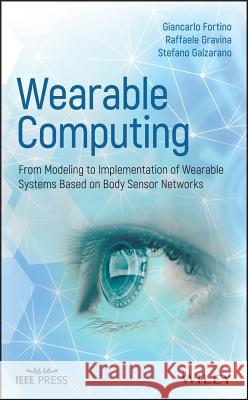
Wearable Computing : From Modeling to Implementation of Wearable Systems based on Body Sensor Networks Giancarlo Fortino Raffaele Gravina Stefano Galzarano 9781118864579 John Wiley & Sons - książkaWidoczna okładka, to zdjęcie poglądowe, a rzeczywista szata graficzna może różnić się od prezentowanej.

Wearable Computing : From Modeling to Implementation of Wearable Systems based on Body Sensor Networks

ISBN-13: 9781118864579 / Angielski / Twarda / 2018 / 256 str.

Giancarlo Fortino; Raffaele Gravina; Stefano Galzarano
cena 425,04 zł
(netto: 404,80 VAT:  5%)

Najniższa cena z 30 dni: 421,55 zł
Termin realizacji zamówienia:
ok. 30 dni roboczych
Bez gwarancji dostawy przed świętami

Darmowa dostawa!

This book has a specific focus on advanced methods for programming Body Sensor Networks (BSNs) based on the reference SPINE project. It features an on-line website (http: //spine.deis.unical.it) to support readers in developing their own BSN application/systems and covers new emerging topics on BSNs such as collaborative BSNs, BSN design methods, autonomic BSNs, integration of BSNs and pervasive environments, and integration of BSNs with cloud computing. The book provides a description of real BSN prototypes with the possibility to see on-line demos and download the software to test them on specific sensor platforms and includes case studies for more practical applications.


Kategorie:
Technologie
Kategorie BISAC:
Computers > General
Wydawca:
John Wiley & Sons
Język:
Angielski
ISBN-13:
9781118864579
Rok wydania:
2018
Ilość stron:
256
Waga:
0.46 kg
Wymiary:
23.4x15.3x1.8
Oprawa:
Twarda
Wolumenów:
01

Preface

Acknowledgements

Chapter 1: Body Sensor Networks

1.1 Introduction

1.2 Background

1.3 Typical m–Health system architecture

1.4 Hardware architecture of a sensor node

1.5 Communication Medium

1.6 Power consumption considerations

1.7 Communication standards

1.8 Network Topologies

1.9 Commercial sensor node platforms

1.10 Bio–physiological signals and sensors

1.11 BSN Application domains

1.12 Summary

1.13 References

Chapter 2: BSN Programming Frameworks

2.1 Introduction

2.2 Developing BSN applications

2.2.1 Application– and platform–specific programming

2.2.2 Automatic code generation

2.2.3 Middleware–based programming

2.2.4 Programming approaches comparison

2.3 Programming abstractions

2.4 Requirements for BSN framework

2.5 BSN programming frameworks

2.5.1 Titan

2.5.2 CodeBlue

2.5.3 RehabSPOT

2.5.4 SPINE

2.5.5 SPINE2

2.5.6 C–SPINE

2.5.7 MAPS

2.5.8 DexterNet

2.6 Summary

2.7 References

Chapter 3: Signal Processing In–Node Environment

3.1 Introduction

3.2 Background

3.3 Motivations and Challenges

3.4 The SPINE Framework

3.4.1 Architecture

3.4.2 Programming perspective

3.4.3 Optional SPINE modules

3.4.4 High–Level Data Processing

3.4.5 Multi–Platform Support

3.5 Summary

3.6 References

Chapter 4: Task–oriented Programming in BSNs

4.1 Introduction

4.2 Background

4.3 Motivations and Challenges

4.3.1 Need for a platform–independent middleware

4.3.2 Challenges in designing task–oriented framework

4.4 SPINE2 overview

4.5 Task–oriented programming in SPINE2

4.6 SPINE2 node–side middleware

4.7 SPINE2 Coordinator

4.8 SPINE2 communication protocol

4.9 Developing application in SPINE2

4.10 Summary

4.11 References

Chapter 5: Autonomic Body Sensor Networks

5.1 Introduction

5.2 Background

5.3 Motivations and Challenges

5.4 State–of–the–art

5.5 SPINE–∗: task–based autonomic architecture

5.6 Autonomic physical activity recognition

5.7 Summary

5.8 References

Chapter 6: Agent–oriented Body Sensor Networks

6.1 Introduction

6.2 Background

6.2.1 Agent–oriented Computing and Wireless Sensor Networks

6.2.2 Mobile Agent Platform for Sun SPOT (MAPS)

6.3 Motivations and Challenges

6.4 State–of–the–art: Description and Comparison

6.5 Agent–based Modeling and Implementation of BSNs

6.6 Engineering Agent–based BSN Applications: a Case Study

6.7 Summary

6.8 References

Chapter 7: Collaborative Body Sensor Networks

7.1 Introduction

7.2 Background

7.3 Motivations and Challenges

7.4 State–of–the–art

7.5 A reference architecture for Collaborative BSN

7.6 C–SPINE: a CBSN architecture

7.6.1 Inter–BSN Communication

7.6.2 BSN Proximity Detection

7.6.3 BSN Service Discovery

7.6.4 BSN Service Selection & Activation

7.7 Summary

7.8 References

Chapter 8: Integration of Body Sensor Networks and Building Networks

8.1 Introduction

8.2 Background

8.2.1 Building Sensor Networks and Systems

8.2.2 Building Management Framework

8.3 Motivations and Challenges

8.4 Integration Layers

8.5 State–of–the–art: Description and Comparison

8.6 An Agent–oriented Integration Gateway

8.7 Application Scenarios

8.8 Summary

8.9 References

Chapter 9: Integration of Wearable and Cloud Computing

9.1 Introduction

9.2 Background

9.2.1 Cloud Computing

9.2.2 Architectures for Sensor Stream Management

9.3 Motivations and Challenges

9.3.1 BSN Challenges

9.3.2 BSN/Cloud computing Integration Challenges

9.4 Reference Architecture for Cloud–Assisted Body Sensor Networks

9.4.1 Sensor Data Collection

9.4.2 Sensor Data Management

9.4.3 Scalable Processing Framework

9.4.4 Persistent Storage

9.4.5 Decision–Making Process

9.4.6 Open Standards and Advanced Visualization

9.4.7 Security

9.5 State–of–the–art: Description and Comparison

9.5.1 Integration of WSNs and Cloud computing

9.5.2 Integration of BSNs and Cloud computing

9.5.3 A comparison

9.6 BodyCloud: A Cloud–based Platform for Community BSN Applications

9.7 Engineering BodyCloud Applications

9.7.1 ECGaaS: Cardiac Monitoring

9.7.2 FEARaaS: Basic Fear Detection

9.7.3 REHABaaS: Remote Rehabilitation

9.7.4 ACTIVITYaaS: Community Activity Monitoring

9.8 Summary

9.9 References

Chapter 10: Development methodology for BSN systems

10.1 Introduction

10.2 Background

10.3 Motivations and Challenges

10.4 SPINE–based Design Methodology

10.4.1 A Pattern–driven Application–level Design

10.4.2 System Parameters

10.4.3 Process schema

10.5 Summary

10.6 References

Chapter 11: SPINE–based Body Sensor Networks Applications

11.1 Introduction

11.2 Background

11.3 Physical Activity Recognition

11.3.1 Related Work

11.3.2 A SPINE–Based Activity Recognition system

11.4 Step Counter

11.4.1 Related Work

11.4.2 A SPINE–based Step Counter

11.5 Emotion Recognition

11.5.1 Stress Detection

11.5.2 Fear Detection

11.6 Handshake Detection

11.6.1 Related Work

11.6.2 A SPINE–Based Handshake Detection System

11.7 Physical Rehabilitation

11.7.1 Related Work

11.7.2 SPINE Motor Rehabilitation Assistant

11.8 Summary

11.9 References

Chapter 12: SPINE at Work

12.1 Introduction

12.2 SPINE 1.x

12.2.1 How to install SPINE 1.x

12.2.2 How to use SPINE

12.2.3 How to run a simple desktop application using SPINE1.3

12.2.4 SPINE Logging capabilities

12.3 SPINE2

12.3.1 How to install SPINE2

12.3.2 How to use the SPINE2 API

12.3.3 How to run a simple application using SPINE2

Index

Giancarlo Fortino is a Professor of Computer Engineering at the Dept. of Informatics, Modeling, Electronics, and Systems of the University of Calabria (Unical), Italy. He received a Ph.D. in Computer Engineering from Unical, in 1995 and 2000, respectively. He is also adjunct professor at Wuhan University of Technology (Wuhan, China) and senior research fellow at the Italian National Research Council ICAR Institute. His research interests include agent–based computing, wireless (body) sensor networks, and Internet of Things. He is author of over 350 papers in int′l journals, conferences and books. He is cofounder and CEO of SenSysCal S.r.l., a Unical spinoff focused on innovative IoT systems. Fortino is currently member of the IEEE SMCS BoG and chair of the IEEE SMCS Italian Chapter.

Raffaele Gravina is Assistant Professor of Computer Engineering at the Dept. of Informatics, Modeling, Electronics, and Systems of the University of Calabria (Unical), Italy. He received a Ph.D. in Computer and Systems Engineering from Unical, in 2012. His research interests include wireless body sensor networks, smart–Health, and IoT technology. He is author of over 60 papers in int′l journals, conferences and books. He is cofounder and CTO healthcare sector of SenSysCal S.r.l., a Unical spin–off focused on innovative IoT systems.

Stefano Galzarano received the B.S., M.S., and PhD degrees in computer engineering from the University of Calabria, Rende, Italy, in 2006, 2009, and 2014, respectively. He is currently an external research collaborator of the University of Calabria. He authored several research papers in journals, conferences and books. His research interests are focused on high–level programming methods for wireless sensor networks and, specifically, novel methods and frameworks for autonomic wireless body sensor networks.

The Most Up–To–Date Research and Development on Wearable Computing, Wireless Body Sensor Networks, Wearable Systems Integrated with Mobile Computing, Wireless Networking and Cloud Computing

This book has a specific focus on advanced methods for programming Body Sensor Networks (BSNs) based on the reference SPINE project. It features an on–line website (http://spine.deis.unical.it) to support readers in developing their own BSN application/systems and covers new emerging topics on BSNs such as collaborative BSNs, BSN design methods, autonomic BSNs, integration of BSNs and pervasive environments, and integration of BSNs with cloud computing. The book provides a description of real BSN prototypes with the possibility to see on–line demos and download the software to test them on specific sensor platforms and includes case studies for more practical applications.

  • Provides a future roadmap by learning advanced technology and open research issues
  • Gathers the background knowledge to tackle key problems, for which solutions will enhance the evolution of next–generation wearable systems
  • References the SPINE web site (http://spine.deis.unical.it) that accompanies the text
  • Includes SPINE case studies and span topics like human activity recognition, rehabilitation of elbow/knee, handshake detection, emotion recognition systems

Wearable Computing: From Modeling to Implementation of Wearable Systems Based on Body Sensor Networks is a great reference for systems architects, practitioners, and product developers.


Udostępnij

Facebook - konto krainaksiazek.pl


Opinie o Krainaksiazek.pl na Opineo.pl

Partner Mybenefit

Krainaksiazek.pl w programie rzetelna firma Krainaksiaze.pl - płatności przez paypal

Czytaj nas na:

Facebook - krainaksiazek.pl
  • książki na zamówienie
  • granty
  • książka na prezent
  • kontakt
  • pomoc
  • opinie
  • regulamin
  • polityka prywatności

Zobacz:

  • Księgarnia czeska

  • Wydawnictwo Książkowe Klimaty

1997-2025 DolnySlask.com Agencja Internetowa

© 1997-2022 krainaksiazek.pl
     
KONTAKT | REGULAMIN | POLITYKA PRYWATNOŚCI | USTAWIENIA PRYWATNOŚCI
Zobacz: Księgarnia Czeska | Wydawnictwo Książkowe Klimaty | Mapa strony | Lista autorów
KrainaKsiazek.PL - Księgarnia Internetowa

Polityka prywatnosci - link
Krainaksiazek.pl - płatnośc Przelewy24
Przechowalnia Przechowalnia




