• Wyszukiwanie zaawansowane
  • Kategorie
  • Kategorie BISAC
  • Książki na zamówienie
  • Promocje
  • Granty
  • Książka na prezent
  • Opinie
  • Pomoc
  • Załóż konto
  • Zaloguj się

Water in Biomechanical and Related Systems » książka

zaloguj się | załóż konto
Logo Krainaksiazek.pl

koszyk

konto

szukaj
topmenu
Księgarnia internetowa
Szukaj
Książki na zamówienie
Promocje
Granty
Książka na prezent
Moje konto
Pomoc
 
 
Wyszukiwanie zaawansowane
Pusty koszyk
Bezpłatna dostawa dla zamówień powyżej 20 złBezpłatna dostawa dla zamówień powyżej 20 zł

Kategorie główne

• Nauka
 [2949965]
• Literatura piękna
 [1857847]

  więcej...
• Turystyka
 [70818]
• Informatyka
 [151303]
• Komiksy
 [35733]
• Encyklopedie
 [23180]
• Dziecięca
 [617748]
• Hobby
 [139972]
• AudioBooki
 [1650]
• Literatura faktu
 [228361]
• Muzyka CD
 [398]
• Słowniki
 [2862]
• Inne
 [444732]
• Kalendarze
 [1620]
• Podręczniki
 [167233]
• Poradniki
 [482388]
• Religia
 [509867]
• Czasopisma
 [533]
• Sport
 [61361]
• Sztuka
 [243125]
• CD, DVD, Video
 [3451]
• Technologie
 [219309]
• Zdrowie
 [101347]
• Książkowe Klimaty
 [123]
• Zabawki
 [2362]
• Puzzle, gry
 [3791]
• Literatura w języku ukraińskim
 [253]
• Art. papiernicze i szkolne
 [7933]
Kategorie szczegółowe BISAC

Water in Biomechanical and Related Systems

ISBN-13: 9783030672263 / Angielski / Twarda / 2021 / 334 str.
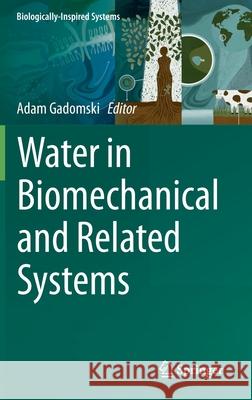
Adam Gadomski
Water in Biomechanical and Related Systems Adam Gadomski 9783030672263 Springer - książkaWidoczna okładka, to zdjęcie poglądowe, a rzeczywista szata graficzna może różnić się od prezentowanej.

Water in Biomechanical and Related Systems

ISBN-13: 9783030672263 / Angielski / Twarda / 2021 / 334 str.

Adam Gadomski
cena 685,93 zł
(netto: 653,27 VAT:  5%)

Najniższa cena z 30 dni: 655,41 zł
Termin realizacji zamówienia:
ok. 22 dni roboczych
Bez gwarancji dostawy przed świętami

Darmowa dostawa!
inne wydania
Kategorie:
Nauka, Biologia i przyroda
Kategorie BISAC:
Science > Life Sciences - General
Science > Life Sciences - Ecology
Computers > Data Science - General
Wydawca:
Springer
Seria wydawnicza:
Biologically-Inspired Systems
Język:
Angielski
ISBN-13:
9783030672263
Rok wydania:
2021
Wydanie:
2021
Numer serii:
000404848
Ilość stron:
334
Waga:
0.65 kg
Wymiary:
23.39 x 15.6 x 2.06
Oprawa:
Twarda
Wolumenów:
01
Dodatkowe informacje:
Wydanie ilustrowane


Preface Adam Gadomski, UTP University of Science and Technology in Bydgoszcz; agad@utp.edu.pl


Introduction Adam Gadomski; UTP University of Science and Technology in Bydgoszcz; agad@utp.edu.pl


Chapter 1 Basics on the water and its states

Arieh Ben-Naim, University of Jerusalem; ariehbennaim@gmail.com  


Chapter 2 Superior role of amphiphiles in friction-lubrication articulating systems

Piotr Bełdowski and coworkers, UTP University of Science and Technology in Bydgoszcz; piobel000@utp.edu.pl  


Chapter 3 Synergies in lubricating biosystems

Andra Dedinaite and Per Claesson, KTH Stockholm; andra@kth.se  


Chapter 4  Water-based tribology of soft materials with percolating contact areas at nanometer scale

Bo Persson and coworkers, FZ Jülich, b.persson@fz-juelich.de  


Chapter 5 Coarse-grained and all-atom computer modeling for self-assembled amphiphiles of viscoelastic propensity

Natalia Kruszewska and Jacek Siódmiak, UTP University of Science and Technology in Bydgoszcz; nkruszewska@utp.edu.pl  


Chapter 6 Networks and gels as revealed by SAXS experiment and computer simulations

Matija Tomsic and coworkers, University of Ljubljana; Matija.Tomsic@fkkt.uni-lj.si  


Chapter 7 Properties of hydrated materials as exemplified by silk supercontraction with its molecular origin

Admir Masic and coworkers, MIT Boston, masic@mit.edu


Chapter 8 Examples of functional morphologies with promising biomechanical properties

Stanislav Gorb and coworkers, University of Kiel; sgorb@zoologie.uni-kiel.de


Chapter 9 Water percolation phenomena on microstructured surfaces and adhesive pads

Alexander Filippov, Donetsk Institute for Physics and Engineering, Ukraine; filippov_ae@yahoo.com  


Chapter 10 On the properties of skin in a (de)hydrated stage

Michał Żmijewski, GUMED Gdańsk; michal.zmijewski@gumed.edu.pl  


Chapter 11 Plants partly devoid of water, and their characteristics

Stan Flasinski, BAYER US; stanislaw.flasinski@bayer.com, flasinskis@gmail.com


Chapter 12 On the percolation properties of soils, a case study

Karoly Bodnar and coworkers, Szarvas University; bodnar.karoly.lajos@gk.szie.hu


Chapter 13 A study on contaminated groundwater and its natural filtration

Beata Gorczyca, University of Manitoba; beata.gorczyca@umanitoba.ca


Chapter 14 Mushrooms containing reservoirs fed by certain (un)controllable amounts of water

Roman Rolbiecki and coworkers, UTP University of Science and Technology in Bydgoszcz ; roman.rolbiecki@utp.edu.pl

Adam Gadomski (born in 1959, in Katowice, Poland), a full professor of physics at the UTP University of Science and Technology, Bydgoszcz, Poland, leads a group of researchers focused on the modeling of physicochemical and biophysical processes. He specializes in statistical soft-condensed matter physics, and works in computational physics and physical computation problems, with an emphasis placed on biomaterials with a structure–property and function relationship. He is an editor for three open access journals: Frontiers-Computational Physics, Entropy and an associate editor for Frontiers in Mechanical Engineering. He is also an editor to numerous special issues publlished in Physica A, Biosystems (two times), Entropy, Molecules, etc. He published about 150 papers, mainly in reviewed international journals, and (co)authored chapters to the books and papers to journal proceedings. 

The contributed volume puts emphasis on a superior role of water in (bio)systems exposed to a mechanical stimulus. It is well known that water plays an extraordinary role in our life. It feeds mammalian or other organism after distributing over its whole volume to support certain physiological and locomotive (friction-adhesion) processes to mention but two of them, both of extreme relevance.

Water content, not only in the mammalian organism but also in other biosystems such as whether those of soil which is equipped with microbiome or the ones pertinent to plants, having their own natural network of water vessels, is always subjected to a force field.
The decisive force field applied to the biosystems makes them biomechanically agitated irrespective of whether they are subjected to external or internal force-field conditions. It ought to be noted that the decisive mechanical factor shows up in a close relation with the space-and-time scale in which it is causing certain specific phenomena to occur.
The scale problem, emphasizing the range of action of gravitational force, thus the millimeter or bigger force vs. distance scale, is supposed to enter the so-called macroscale approach to water transportation through soil or plants’ roots system. It is merely related to a percolation problem, which assumes to properly inspect the random network architecture assigned to the biosystems invoked. The capillarity conditions turn out to be of prior importance, and the porous-medium effect has to be treated, and solved in a fairly approximate way.
The deeper the scale is penetrated by a force-exerting and hydrated agent the more non-gravitational force fields manifest. This can be envisaged in terms of the corresponding thermodynamic (non-Newtonian) forces, and the phenomena of interest are mostly attributed to suitable changes of the osmotic pressure. In low Reynolds number conditions, thus in the (sub)micrometer distance-scale zone, they are related with the corresponding viscosity changes of the aqueous, e.g. cytoplasmatic solutions, of semi-diluted and concentrated (but also electrolytic) characteristics. For example, they can be observed in articulating systems of mammals, in their skin, and to some extent, in other living beings, such as lizards, geckos or even insects. Through their articulating devices an external mechanical stimulus is transmitted from macro- to nanoscale, wherein the corresponding osmotic-pressure conditions apply.

The content of the proposed work can be distributed twofold. First, the biomechanical mammalian-type (or, similar) systems with extraordinary relevance of water for their functioning will be presented, also including a presentation of water itself as a key physicochemical system/medium. Second, the suitably chosen related systems, mainly of soil and plant addressing provenience, will be examined thoroughly. As a common denominator of all of them, it is proposed to look at their hydrophobic and/or (de)hydration effects, and how do they impact on their basic mechanical (and related, such as chemo-mechanical or piezoelectric, etc.) properties. An additional tacit assumption employed throughout the monograph concerns statistical scalability of the presented biosystems which is equivalent to take for granted a certain similarity between local and global system’s properties, mostly those of mechanical nature. The presented work’s chapters also focus on biodiversity and ecological aspects in the world of animals and plants, and the related systems. The chapters’ contents underscore the bioinspiration as the key landmark of the proposed monograph.


Udostępnij

Facebook - konto krainaksiazek.pl


Opinie o Krainaksiazek.pl na Opineo.pl

Partner Mybenefit

Krainaksiazek.pl w programie rzetelna firma Krainaksiaze.pl - płatności przez paypal

Czytaj nas na:

Facebook - krainaksiazek.pl
  • książki na zamówienie
  • granty
  • książka na prezent
  • kontakt
  • pomoc
  • opinie
  • regulamin
  • polityka prywatności

Zobacz:

  • Księgarnia czeska

  • Wydawnictwo Książkowe Klimaty

1997-2025 DolnySlask.com Agencja Internetowa

© 1997-2022 krainaksiazek.pl
     
KONTAKT | REGULAMIN | POLITYKA PRYWATNOŚCI | USTAWIENIA PRYWATNOŚCI
Zobacz: Księgarnia Czeska | Wydawnictwo Książkowe Klimaty | Mapa strony | Lista autorów
KrainaKsiazek.PL - Księgarnia Internetowa

Polityka prywatnosci - link
Krainaksiazek.pl - płatnośc Przelewy24
Przechowalnia Przechowalnia







