• Wyszukiwanie zaawansowane
  • Kategorie
  • Kategorie BISAC
  • Książki na zamówienie
  • Promocje
  • Granty
  • Książka na prezent
  • Opinie
  • Pomoc
  • Załóż konto
  • Zaloguj się

Vsc-Facts-Hvdc: Analysis, Modelling and Simulation in Power Grids » książka


zaloguj się | załóż konto
Logo Krainaksiazek.pl

koszyk

konto

szukaj
topmenu
Księgarnia internetowa
Szukaj
Książki na zamówienie
Promocje
Granty
Książka na prezent
Moje konto
Pomoc
 
 
Wyszukiwanie zaawansowane
Pusty koszyk
Bezpłatna dostawa dla zamówień powyżej 20 złBezpłatna dostawa dla zamówień powyżej 20 zł

Kategorie główne

• Nauka
 [2946912]
• Literatura piękna
 [1852311]

  więcej...
• Turystyka
 [71421]
• Informatyka
 [150889]
• Komiksy
 [35717]
• Encyklopedie
 [23177]
• Dziecięca
 [617324]
• Hobby
 [138808]
• AudioBooki
 [1671]
• Literatura faktu
 [228371]
• Muzyka CD
 [400]
• Słowniki
 [2841]
• Inne
 [445428]
• Kalendarze
 [1545]
• Podręczniki
 [166819]
• Poradniki
 [480180]
• Religia
 [510412]
• Czasopisma
 [525]
• Sport
 [61271]
• Sztuka
 [242929]
• CD, DVD, Video
 [3371]
• Technologie
 [219258]
• Zdrowie
 [100961]
• Książkowe Klimaty
 [124]
• Zabawki
 [2341]
• Puzzle, gry
 [3766]
• Literatura w języku ukraińskim
 [255]
• Art. papiernicze i szkolne
 [7810]
Kategorie szczegółowe BISAC

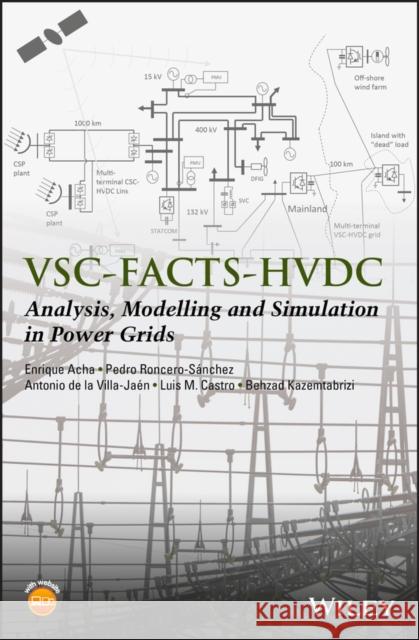
Vsc-Facts-Hvdc: Analysis, Modelling and Simulation in Power Grids

ISBN-13: 9781119973980 / Angielski / Twarda / 2019 / 416 str.
Enrique E. Acha; Rodrigo Garc?a-Valle; Luigi Vanfretti
Vsc-Facts-Hvdc: Analysis, Modelling and Simulation in Power Grids Acha, Enrique 9781119973980 John Wiley & Sons - książkaWidoczna okładka, to zdjęcie poglądowe, a rzeczywista szata graficzna może różnić się od prezentowanej.

Vsc-Facts-Hvdc: Analysis, Modelling and Simulation in Power Grids

ISBN-13: 9781119973980 / Angielski / Twarda / 2019 / 416 str.

Enrique E. Acha; Rodrigo Garc?a-Valle; Luigi Vanfretti
cena 479,69
(netto: 456,85 VAT:  5%)

Najniższa cena z 30 dni: 477,72
Termin realizacji zamówienia:
ok. 30 dni roboczych
Bez gwarancji dostawy przed świętami

Darmowa dostawa!

Contains the most up-to-date research on Flexible Alternating Current Transmission Systems (FACTS) and discusses its technological convergence with the long-standing application of High Voltage Direct Current (HVDC) using Voltage Source Converters (VSC)

The book describes technology that has emerged over the past five years in the area of Flexible Alternating Current Transmission Systems (FACTS) and its technological convergence with the long-standing application of High Voltage Direct current (HVDC) using Voltage Source Converters (VSC), including back-to-back and point-to-point HVDC-VSC applications and the multi-terminal application. The subject is addressed from a modern perspective, including the latest development in the wider power systems industry that will extend the applicability of the FACTS-HVDC-VSC technology. For the first time, the topics of multi-terminal HVDC-VSC and phasor measurement units for FACTS monitoring and control applications are covered. Unlike Professor Acha's previous book, this book addresses new FACTS power system application areas which have received attention from the industry over the last five years. These areas include: FACTS state estimation, constrained OPF, harmonic penetration, studies of FACTS dynamic performance and control, and the exploitation of phasor measurement units (PMUs), analysis, and control applications. These coincide with research areas which the authors have developed, published in IEEE journals, and presented at international forums. Addresses new FACT power system application areas that have emerged over the past five years, including state estimation, constrained optimal power flow (OPF), and harmonic penetration Presents studies of FACTS dynamic performance and control, and the exploitation of phasor measurement units (PMU) which are considered to be one of the most important future devices for advanced FACTS monitoring, analysis and control Facilitates hands-on experience in modelling, analysis and simulation of electrical power networks with FACTS-HVDC-VSC equipment, by providing MATLAB routines and suitable data with each new model and application area presented in the book Comes with a companion website hosting software-based case studies


Kategorie:
Technologie
Kategorie BISAC:
Technology & Engineering > Power Resources - General
Technology & Engineering > Electrical
Wydawca:
John Wiley & Sons
Język:
Angielski
ISBN-13:
9781119973980
Rok wydania:
2019
Ilość stron:
416
Waga:
0.85 kg
Wymiary:
24.64 x 17.53 x 2.79
Oprawa:
Twarda
Wolumenów:
01
Dodatkowe informacje:
Bibliografia

Preface xiiiAbout the Book xviiAcknowledgements xxiAbout the Companion Website xxiii1 Flexible Electrical Energy Systems 11.1 Introduction 11.2 Classification of Flexible Transmission System Equipment 51.2.1 SVC 61.2.2 STATCOM 71.2.3 SSSC 91.2.4 Compound VSC Equipment for AC Applications 101.2.5 CSC-HVDC Links 121.2.6 VSC-HVDC 131.3 Flexible Systems Vs Conventional Systems 151.3.1 Transmission 161.3.1.1 HVAC Vs HVDC Power Transmission for Increased Power Throughputs 161.3.1.2 VAR Compensation 191.3.1.3 Frequency Compensation 241.3.2 Generation 271.3.2.1 Wind Power Generation 281.3.2.2 Solar Power Generation 301.3.3 Distribution 331.3.3.1 Load Compensation 351.3.3.2 Dynamic Voltage Support 351.3.3.3 Flexible Reconfigurations 361.3.3.4 AC-DC Distribution Systems 371.3.3.5 DC Power Grids with Multiple Voltage Levels 401.3.3.6 Smart Grids 401.4 Phasor Measurement Units 431.5 Future Developments and Challenges 461.5.1 Generation 461.5.2 Transmission 471.5.3 Distribution 48References 492 Power Electronics for VSC-Based Bridges 532.1 Introduction 532.2 Power Semiconductor Switches 532.2.1 The Diode 552.2.2 The Thyristor 562.2.3 The Bipolar Junction Transistor 572.2.4 The Metal-Oxide-Semiconductor Field-Effect Transistor 592.2.5 The Insulated-Gate Bipolar Transistor 592.2.6 The Gate Turn-Off Thyristor 592.2.7 The MOS-Controlled Thyristor 602.2.8 Considerations for the Switch Selection Process 612.3 Voltage Source Converters 612.3.1 Basic Concepts of PulseWidth Modulated-Output Schemes and Half-Bridge VSC 622.3.2 Single-Phase Full-Bridge VSC 662.3.2.1 PWM with Bipolar Switching 672.3.2.2 PWM with Unipolar Switching 692.3.2.3 Square-Wave Mode 692.3.2.4 Phase-Shift Control Operation 692.3.3 Three-Phase VSC 722.3.4 Three-Phase Multilevel VSC 742.3.4.1 The Multilevel NPC VSC 762.3.4.2 The Multilevel FC VSC 802.3.4.3 The Cascaded H-Bridge VSC 812.3.4.4 PWM Techniques for Multilevel VSCs 852.3.4.5 An Alternative Multilevel Converter Topology 852.4 HVDC Systems Based on VSC 882.5 Conclusions 94References 953 Power Flows 993.1 Introduction 993.2 Power Network Modelling 1003.2.1 Transmission Lines Modelling 1003.2.2 Conventional Transformers Modelling 1003.2.3 LTC Transformers Modelling 1013.2.4 Phase-Shifting Transformers Modelling 1013.2.5 Compound Transformers Modelling 1023.2.6 Series and Shunt Compensation Modelling 1023.2.7 Load Modelling 1023.2.8 Network Nodal Admittance 1023.3 Peculiarities of the Power Flow Formulation 1033.4 The Nodal Power Flow Equations 1053.5 The Newton-Raphson Method in Rectangular Coordinates 1063.5.1 The Linearized Equations 1073.5.2 Convergence Characteristics of the Newton-Raphson Method 1083.5.3 Initialization of Newton-Raphson Power Flow Solutions 1093.5.4 Incorporation of PMU Information in Newton-Raphson Power Flow Solutions 1113.6 The Voltage Source Converter Model 1123.6.1 VSC Nodal Admittance Matrix Representation 1133.6.2 Full VSC Station Model 1153.6.3 VSC Nodal Power Equations 1173.6.4 VSC Linearized System of Equations 1173.6.5 Non-Regulated Power Flow Solutions 1193.6.6 Practical Implementations 1203.6.6.1 Control Strategy 1203.6.6.2 Initial Parameters and Limits 1203.6.7 VSC Numerical Examples 1213.7 The STATCOM Model 1253.7.1 STATCOM Numerical Examples 1273.8 VSC-HVDC Systems Modelling 1293.8.1 VSC-HVDC Nodal Power Equations 1313.8.2 VSC-HVDC Linearized Equations 1333.8.3 Back-to-Back VSC-HVDC Systems Modelling 1353.8.4 VSC-HVDC Numerical Examples 1353.9 Three-Terminal VSC-HVDC System Model 1393.9.1 VSC Types 1423.9.2 Power Mismatches 1423.9.3 Linearized System of Equations 1433.10 Multi-Terminal VSC-HVDC System Model 1463.10.1 Multi-Terminal VSC-HVDC System with Common DC Bus Model 1473.10.2 Unified Solutions of AC-DC Networks 1483.10.3 Unified vs Quasi-Unified Power Flow Solutions 1483.10.4 Test Case 9 1503.11 Conclusions 153References 1533.A Appendix 1543.B Appendix 1564 Optimal Power Flows 1594.1 Introduction 1594.2 Power Flows in Polar Coordinates 1604.3 Optimal Power Flow Formulation 1614.4 The Lagrangian Methods 1624.4.1 Necessary Optimality Conditions (Karush-Kuhn-Tucker Conditions) 1634.5 AC OPF Formulation 1644.5.1 Objective Function 1654.5.2 Linearized System of Equations 1654.5.3 Augmented Lagrangian Function 1674.5.4 Selecting the OPF Solution Algorithm 1684.5.5 Control Enforcement in the OPF Algorithm 1684.5.6 Handling Limits of State Variables 1694.5.7 Handling Limits of Functions 1694.5.8 A Simple Network Model 1704.5.8.1 Step One - Identifying State and Control Variables 1704.5.8.2 Step Two - Identifying Constraints 1704.5.8.3 StepThree - Forming the Lagrangian Function 1714.5.8.4 Step Four - Linearized System of Equations 1724.5.8.5 Step Five - Implementation of the Augmented Lagrangian 1724.5.9 Recent Extensions in the OPF Problem 1734.5.10 Test Case: IEEE 30-Bus System 1734.5.10.1 Test System 1734.5.10.2 Problem Formulation 1734.5.10.3 OPF Test Cases 1744.5.10.4 Benchmark Test Case (With No Voltage Control) 1754.5.10.5 Test Case with Voltage Control Using Variable Transformers Taps (Case I) 1764.5.10.6 Test Case with Nodal Voltage Regulation (Case II) 1764.5.10.7 Test Case with Nodal Voltage Regulation (Case III) 1774.5.10.8 A Summary of Results 1774.6 Generalization of the OPF Formulation for AC-DC Networks 1794.7 Inclusion of the VSC Model in OPF 1814.7.1 VSC Power Balance Equations 1814.7.2 VSC Control Considerations 1834.7.3 VSC Linearized System of Equations 1844.8 The Point-to-Point and Back-to-Back VSC-HVDC Links Models in OPF 1844.8.1 VSC-HVDC Link Power Balance Formulation 1854.8.2 VSC-HVDC Link Control 1874.8.3 VSC-HVDC Full Set of Equality Constraints 1884.8.4 Linearized System of Equations 1894.9 Multi-Terminal VSC-HVDC Systems in OPF 1914.9.1 The Expanded, General Formulation 1924.9.2 Multi-Terminal VSC-HVDC Test Case 1934.9.2.1 DC Network 1934.9.2.2 AC Network 1944.9.2.3 Objective Function 1944.9.2.4 Summary of OPF Results 195DC Network 1964.9.2.5 Converter Outputs - No Converter Losses 1964.9.2.6 Converter Outputs -With Converter Losses 197AC Network 1994.9.2.7 Power Flows in AC Transmission Lines -With No Converter Losses 1994.9.2.8 Power Flows in AC Transmission Lines -With Converter Losses 2004.10 Conclusion 200References 2015 State Estimation 2035.1 Introduction 2035.2 State Estimation of Electrical Networks 2045.3 Network Model and Measurement System 2065.3.1 Topological Processing 2065.3.2 Network Model 2065.3.3 The Measurements System Model 2085.4 Calculation of the Estimated State 2105.4.1 Solution by the Normal Equations 2105.4.2 Equality-Constrained WLS 2125.4.3 Observability Analysis and Reference Phase 2135.4.4 Weighted Least Squares State Estimator (WLS-SE) Using Matlab Code 2155.5 Bad Data Identification 2175.5.1 Bad Data 2175.5.2 The Largest Normalized Residual Test 2185.5.3 Bad Data Identification Using WLS-SE 2195.6 FACTS Device State Estimation Modelling in Electrical Power Grids 2205.6.1 Incorporation of New Models in State Estimation 2205.6.2 Voltage Source Converters 2215.6.3 STATCOM 2245.6.4 STATCOM Model in WLS-SE 2255.6.5 Unified Power Flow Controller 2275.6.6 The UPFC Model in WLS-SE 2285.6.7 High Voltage Direct Current Based on Voltage Source Converters 2305.6.8 VSC-HVDC Model in WLS-SE 2315.6.9 Multi-terminal HVDC 2335.6.10 MT-VSC-HVDC Model in WLS-SE 2355.7 Incorporation of Measurements Furnished by PMUs 2365.7.1 Incorporation of Synchrophasors in State Estimation 2365.7.2 Synchrophasors Formulations 2375.7.3 Phase Reference 2395.7.4 PMU Outputs in WLS-SE 2395.A Appendix 2405.A.1 Input Data and Output Results in WLS-SE 2405.A.1.1 Input Data 2405.A.1.2 Network Data 2405.A.1.3 Measurements Data 2425.A.1.4 State Estimator Configuration 2435.A.2 Output Results 243References 2446 Dynamic Simulations of Power Systems 2476.1 Introduction 2476.2 Modelling of Conventional Power System Components 2486.2.1 Modelling of Synchronous Generators 2486.2.2 Synchronous Generator Controllers 2506.2.2.1 Speed Governors 2506.2.2.2 Steam Turbine and Hydro Turbine 2516.2.2.3 Automatic Voltage Regulator 2526.2.2.4 Transmission Line Model 2536.2.2.5 Load Model 2536.3 Time Domain Solution Philosophy 2546.3.1 Numerical Solution Technique 2546.3.2 Benchmark Numerical Example 2576.4 Modelling of the STATCOM for Dynamic Simulations 2616.4.1 Discretization and Linearization of the STATCOM Differential Equations 2646.4.2 Numerical Example with STATCOMs 2666.5 Modelling of VSC-HVDC Links for Dynamic Simulations 2726.5.1 Discretization and Linearization of the Differential Equations of the VSC-HVDC 2766.5.2 Validation of the VSC-HVDC Link Model 2806.5.3 Numerical Example with an Embedded VSC-HVDC Link 2836.5.4 Dynamic Model of the VSC-HVDC Link with Frequency Regulation Capabilities 2896.5.4.1 Linearization of the Equations of the VSC-HVDC Model with Frequency Regulation Capabilities 2916.5.4.2 Validation of the VSC-HVDC LinkModel Providing Frequency Support 2926.5.4.3 Numerical Example with a VSC-HVDC Link Model Providing Frequency Support 2946.6 Modelling of Multi-terminal VSC-HVDC Systems for Dynamic Simulations 2986.6.1 Three-terminal VSC-HVDC Dynamic Model 2996.6.2 Validation of the Three-Terminal VSC-HVDC Dynamic Model 3076.6.3 Multi-Terminal VSC-HVDC Dynamic Model 3106.6.4 Numerical Example with a Six-Terminal VSC-HVDC Link Forming a DC Ring 3146.6.4.1 Disconnection of a DC Transmission Line 3146.6.4.2 Three-Phase Fault Applied to AC3 3146.7 Conclusion 317References 3187 Electromagnetic Transient Studies and Simulation of FACTS-HVDC-VSC Equipment 3217.1 Introduction 3217.2 The STATCOM Case 3227.3 STATCOM Based on Multilevel VSC 3367.4 Example of HVDC based on Multilevel FC Converter 3477.5 Example of a Multi-Terminal HVDC System Using Multilevel FC Converters 3587.6 Conclusions 375References 375Index 377

Professor Enrique Acha, Laboratory of Electrical Energy Engineering, Tampere University of Technology, FinlandDr Pedro Roncero-ánchez, Department of Electronics, Electrical Engineering and Control Systems, University of Castilla-La Mancha, SpainDr Antonio de la Villa-Jaén, Department of Electrical Engineering, University of Seville, SpainDr Luis M. Castro, Faculty of Engineering, National University of Mexico (UNAM), Mexico City, MexicoDr Behzad Kazemtabrizi, School of Engineering, Durham University, U


Udostępnij

Facebook - konto krainaksiazek.pl


Opinie o Krainaksiazek.pl na Opineo.pl

Partner Mybenefit

Krainaksiazek.pl w programie rzetelna firma Krainaksiaze.pl - płatności przez paypal

Czytaj nas na:

Facebook - krainaksiazek.pl
  • książki na zamówienie
  • granty
  • książka na prezent
  • kontakt
  • pomoc
  • opinie
  • regulamin
  • polityka prywatności

Zobacz:

  • Księgarnia czeska

  • Wydawnictwo Książkowe Klimaty

1997-2025 DolnySlask.com Agencja Internetowa

© 1997-2022 krainaksiazek.pl
     
KONTAKT | REGULAMIN | POLITYKA PRYWATNOŚCI | USTAWIENIA PRYWATNOŚCI
Zobacz: Księgarnia Czeska | Wydawnictwo Książkowe Klimaty | Mapa strony | Lista autorów
KrainaKsiazek.PL - Księgarnia Internetowa

Polityka prywatnosci - link
Krainaksiazek.pl - płatnośc Przelewy24
Przechowalnia Przechowalnia





