• Wyszukiwanie zaawansowane
  • Kategorie
  • Kategorie BISAC
  • Książki na zamówienie
  • Promocje
  • Granty
  • Książka na prezent
  • Opinie
  • Pomoc
  • Załóż konto
  • Zaloguj się

Vision-Based Vehicle Guidance » książka


zaloguj się | załóż konto
Logo Krainaksiazek.pl

koszyk

konto

szukaj
topmenu
Księgarnia internetowa
Szukaj
Książki na zamówienie
Promocje
Granty
Książka na prezent
Moje konto
Pomoc
 
 
Wyszukiwanie zaawansowane
Pusty koszyk
Bezpłatna dostawa dla zamówień powyżej 20 złBezpłatna dostawa dla zamówień powyżej 20 zł

Kategorie główne

• Nauka
 [2946600]
• Literatura piękna
 [1856966]

  więcej...
• Turystyka
 [72221]
• Informatyka
 [151456]
• Komiksy
 [35826]
• Encyklopedie
 [23190]
• Dziecięca
 [619653]
• Hobby
 [140543]
• AudioBooki
 [1577]
• Literatura faktu
 [228355]
• Muzyka CD
 [410]
• Słowniki
 [2874]
• Inne
 [445822]
• Kalendarze
 [1744]
• Podręczniki
 [167141]
• Poradniki
 [482898]
• Religia
 [510455]
• Czasopisma
 [526]
• Sport
 [61590]
• Sztuka
 [243598]
• CD, DVD, Video
 [3423]
• Technologie
 [219201]
• Zdrowie
 [101638]
• Książkowe Klimaty
 [124]
• Zabawki
 [2473]
• Puzzle, gry
 [3898]
• Literatura w języku ukraińskim
 [254]
• Art. papiernicze i szkolne
 [8170]
Kategorie szczegółowe BISAC

Vision-Based Vehicle Guidance

ISBN-13: 9781461276654 / Angielski / Miękka / 2011 / 332 str.
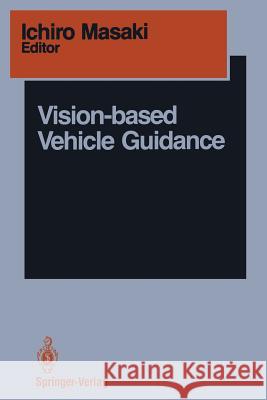
Ichiro Masaki
Vision-Based Vehicle Guidance Ichiro Masaki 9781461276654 Springer - książkaWidoczna okładka, to zdjęcie poglądowe, a rzeczywista szata graficzna może różnić się od prezentowanej.

Vision-Based Vehicle Guidance

ISBN-13: 9781461276654 / Angielski / Miękka / 2011 / 332 str.

Ichiro Masaki
cena 201,72 zł
(netto: 192,11 VAT:  5%)

Najniższa cena z 30 dni: 192,74 zł
Termin realizacji zamówienia:
ok. 22 dni roboczych
Bez gwarancji dostawy przed świętami

Darmowa dostawa!

There is a growing social interest in developing vision-based vehicle guidance systems for improving traffic safety and efficiency and the environment. Ex amples of vision-based vehicle guidance systems include collision warning systems, steering control systems for tracking painted lane marks, and speed control systems for preventing rear-end collisions. Like other guidance systems for aircraft and trains, these systems are ex pected to increase traffic safety significantly. For example, safety improve ments of aircraft landing processes after the introduction of automatic guidance systems have been reported to be 100 times better than prior to installment. Although the safety of human lives is beyond price, the cost for automatic guidance could be compensated by decreased insurance costs. It is becoming more important to increase traffic safety by decreasing the human driver's load in our society, especially with an increasing population of senior people who continue to drive. The second potential social benefit is the improvement of traffic efficiency by decreasing the spacing between vehicles without sacrificing safety. It is reported, for example, that four times the efficiency is expected if the spacing between cars is controlled automatically at 90 cm with a speed of 100 kmjh compared to today's typical manual driving. Although there are a lot of tech nical, psychological, and social issues to be solved before realizing the high density jhigh-speed traffic systems described here, highly efficient highways are becoming more important because of increasing traffic congestion."


Kategorie:
Informatyka
Kategorie BISAC:
Transportation > Automotive - Driver Education
Computers > Image Processing
Computers > Design, Graphics & Media - CAD-CAM
Wydawca:
Springer
Seria wydawnicza:
Springer Series in Perception Engineering
Język:
Angielski
ISBN-13:
9781461276654
Rok wydania:
2011
Wydanie:
Softcover Repri
Numer serii:
000022125
Ilość stron:
332
Waga:
0.50 kg
Wymiary:
23.39 x 15.6 x 1.91
Oprawa:
Miękka
Wolumenów:
01

1 Vision-based Autonomous Road Vehicles.- 1.1 Abstract.- 1.2 Introduction.- 1.3 Some Experimental Autonomous Road Vehicles.- 1.3.1 Japan.- 1.3.2 United States of America.- 1.3.3 United Kingdom.- 1.3.4 Germany.- 1.4 Future Developments.- 1.4.1 Camera Systems.- 1.4.2 Hardware for Low- and Intermediate-Level Real-Time Vision.- 1.4.3 Feature Extraction.- 1.4.4 Model Banks and Situation Recognition.- 1.4.5 Behavioral Competence.- 1.4.6 Hardware and Software Concepts.- 1.5 Applications.- 1.5.1 Warning and Monitoring.- 1.5.2 Intelligent Cruise Control.- 1.5.3 Fully Automatic Driving.- 1.6 Conclusions.- Appendix. Dynamic Vision Systems: The BVV Family.- A.1 Concept of Dynamic Vision.- A.2 Architecture for Dynamic Vision.- A.3 Features of Dynamic Vision.- A.4 The BVV 2.- A.5 The BVV 3.- A.6 Conclusions.- References.- 2 The New Generation System for the CMU Navlab.- 2.1 Abstract.- 2.2 Introduction.- 2.2.1 Systems.- 2.2.2 Context.- 2.2.3 Evolution of Experimental Robots at CMU.- 2.3 Color Vision for Road Following.- 2.3.1 SCARF.- 2.3.2 YARF.- 2.3.3 ALVINN.- 2.4 3-D Perception.- 2.4.1 Range Sensing.- 2.4.2 Discrete Objects and Obstacle Detection.- 2.4.3 Feature-based Terrain Modelling.- 2.4.4 High-Resolution Terrain Models.- 2.4.5 Discussion.- 2.5 Planning.- 2.6 Architectures.- 2.6.1 CODGER.- 2.6.2 EDDIE.- 2.6.3 Discussion.- 2.7 Maps and Missions.- 2.7.1 Related Work.- 2.7.2 Scenario.- 2.7.3 Tenets of Map Construction and Use.- 2.7.4 Implementation of Annotations.- 2.7.5 Discussion.- 2.8 Contributions, Lessons, and Conclusions.- 2.8.1 Contributions.- 2.8.2 Perception Lessons.- 2.8.3 Systems Lessons.- 2.8.4 Conclusions.- References.- 3 Algorithms for Road Navigation.- 3.1 Introduction.- 3.2 Maryland Road Follower.- 3.2.1 System Overview.- 3.3 Recovery of Three-Dimensional Road Geometry.- 3.3.1 Summary.- 3.3.2 The Matching Point Problem.- 3.3.3 Conditions for Two Image Points to Be Matching Points.- 3.3.4 Directions of Tangents to Opposite Points.- 3.3.5 Direction of a Cross Segment.- 3.3.6 Matching Condition.- 3.3.7 Local Normal to the Road.- 3.3.8 Search for a Matching Point of a Given Image Point.- 3.3.9 Dynamic Programming Road Reconstruction.- 3.3.10 Experimental Results.- 3.4 Detection of Stationary Obstacles on Roads.- 3.4.1 The Range Derivative Algorithm for Obstacle Detection.- 3.5 Conclusion.- References.- 4 A Visual Control System Using Image Processing and Fuzzy Theory.- 4.1 Abstract.- 4.2 Introduction.- 4.3 Development of the System.- 4.3.1 Real-Time Marker Identification.- 4.3.2 Fast Recognition of Marker Sequence.- 4.3.3 Steering Control System.- 4.3.4 Marker Sequence Selection Method.- 4.4 Developed System.- 4.4.1 Image Processing Board.- 4.4.2 CPU Board.- 4.5 Experiment.- 4.5.1 Description.- 4.5.2 Results.- 4.6 Conclusion.- 4.7 Further Study.- References.- 5 Local Processing as a Cue for Decreasing 3-D Structure Computation.- 5.1 Abstract.- 5.2 Introduction.- 5.3 Active Vision.- 5.3.1 Navigation Strategy.- 5.3.2 Local Computation of 3-D Structure.- 5.3.3 Preliminary Results.- 5.4 Tracking.- 5.4.1 Tracking for Matching.- 5.4.2 Hardware Design.- 5.4.3 Tracking for Motion Stereo.- 5.5 Conclusion.- References.- 6 Object Detection Using Model-based Prediction and Motion Parallax.- 6.1 Motion Parallax and Object Background Separation.- 6.2 Image Transformation for Motion Relative to a Planar Surface.- 6.3 Estimation of Parameters by Minimization of Prediction Error.- 6.4 Sequential Estimation Using Recorded Sequence.- 6.5 Object Detection Using Prediction Error.- 6.6 Experimental Results and Conclusions.- References.- 7 Road Sign Recognition: A Study of Vision-based Decision Making for Road Environment Recognition.- 7.1 Abstract.- 7.2 Introduction.- 7.3 Technology and Car Equipment.- 7.3.1 Road Signs.- 7.3.2 Hardware.- 7.3.3 Vision.- 7.4 Vision Algorithm.- 7.4.1 Description.- 7.4.2 Performances.- 7.5 Decision Making.- 7.5.1 Criteria.- 7.5.2 Structured Programming.- 7.5.3 Expert System Classification.- 7.5.4 A Neural Network.- 7.6 Performances and Conclusions.- References.- 8 From Self-Navigation to Driver’s Associate: An Application of Mobile Robot Vision to a Vehicle Information System.- 8.1 Abstract.- 8.2 Introductory Remarks.- 8.3 The Concept of Driver’s Associate.- 8.4 An Environment Identification Problem.- 8.5 Image Feature Extraction and Segmentation.- 8.6 Frustration Resolution Schemes for Top-Down Processing.- 8.7 2-D Syntax Analysis for Bottom-Up Processing.- 8.8 Hardware Structure.- 8.9 Dynamic Image Analysis Mechanism.- 8.10 Basic Operation Scenario.- 8.11 Discussion.- 8.12 Concluding Remarks.- References.- 9 Recent Progress in Mobile Robot Harunobu-4.- 9.1 Introduction.- 9.2 Visuomotor System in a Mobile Robot.- 9.3 Active Sensing in Stereotyped Motion.- 9.3.1 Moving for Sighting.- 9.3.2 Dynamic Window.- 9.3.3 TV Camera Stabilization.- 9.4 Shadow Elimination.- 9.4.1 Shadow Elimination Algorithm.- 9.4.2 Implementation and Results.- 9.5 Concluding Remarks.- References.- 10 Visual Navigation of an Autonomous On-Road Vehicle: Autonomous Cruising on Highways.- 10.1 Abstract.- 10.2 Introduction.- 10.3 Vehicle Autonomy.- 10.3.1 Human Aspects of Highway Driving.- 10.3.2 Needs for Vehicle Autonomy.- 10.3.3 Autonomous Highway Vehicle Concept.- 10.4 Framework of the Autonomous Control System.- 10.4.1 Driving Skills.- 10.4.2 Cruise Planning.- 10.4.3 Perception System.- 10.5 Autonomous Cruise Simulation.- 10.5.1 Environmental Model.- 10.5.2 Driving Programs.- 10.5.3 Cruise Planner.- 10.5.4 Simulation Results and Discussion.- 10.6 Visual Navigation Experiment.- 10.6.1 Experimental Vehicle.- 10.6.2 Test Results and Discussion.- 10.7 Summary and Discussion.- References.- 11 Finding Road Lane Boundaries for Vision-guided Vehicle Navigation.- 11.1 Abstract.- 11.2 Introduction.- 11.3 Road Model.- 11.4 Transformation between Image and Real-World Coordinates.- 11.5 Extraction of White Lane Markings.- 11.5.1 Segmentation.- 11.5.2 Feature Descriptors and Shape Analysis.- 11.6 Fitting Lane Boundaries to the Lane Markings.- 11.6.1 Fitting Lane Boundaries to Solid Markings.- 11.6.2 Fitting Lane Boundaries to the Dashed Markings.- 11.7 Grouping the Lane Boundaries into Road Lanes.- 11.7.1 Finding Arcs of Constant Separation.- 11.7.2 Vehicle Width Constraint.- 11.8 Experimental Results.- 11.9 Conclusions.- References.- 12 An Extracting Method of the Optical Flow for an Anticollision System.- 12.1 Abstract.- 12.2 Introduction.- 12.3 A Gradient Method.- 12.3.1 A Calculation Method.- 12.3.2 An Application for a Stereo Method.- 12.3.3 An Application for the Optical Flow.- 12.4 A Calculation Algorithm.- 12.4.1 A Transformation into the One-Dimensional Image.- 12.4.2 A Calculation Algorithm.- 12.5 Calculation Results.- 12.6 Discussion.- 12.6.1 An Influence of the Target Reflectance Property.- 12.6.2 An Influence of the Vision System.- 12.6.3 The Problem to Be Solved in Actual Implementation.- 12.7 Conclusion.- References.- 13 Obstacle Avoidance and Trajectory Planning for an Indoor Mobile Robot Using Stereo Vision and Delaunay Triangulation.- 13.1 Abstract.- 13.2 Introduction.- 13.3 What Do We Do with the 3-D Wire Frames?.- 13.4 Two-Dimensional Map Simplification.- 13.4.1 Representation of Line Segments.- 13.4.2 Simplification.- 13.5 Constructing a Volume Representation of Free Space.- 13.5.1 Constructing a Triangulation of the 2-D Maps.- 13.5.2 Marking Empty Triangles.- 13.5.3 Taking into Account Several Viewpoints.- 13.5.4 Parallelization.- 13.6 Results.- 13.7 Conclusions.- References.- 14 A Parallel Architecture for Curvature-based Road Scene Classification.- 14.1 Abstract.- 14.2 Introduction.- 14.2.1 Navigation.- 14.2.2 Hough Transforms.- 14.2.3 Vanishing Points.- 14.3 System Outline.- 14.4 Parallel Implementation of System Algorithms.- 14.4.1 Processing Equations.- 14.4.2 Sobel Edge Detector.- 14.4.3 Hough Transforms.- 14.4.4 Edge Linking.- 14.4.5 Vanishing Point Detection.- 14.4.6 Vanishing Point Analysis.- 14.5 Implementation Results.- 14.6 Directions for Future Research.- 14.7 Conclusion.- References.- 15 Mobile Robot Perception Using Vertical Line Stereo.- 15.1 Abstract.- 15.2 Introduction.- 15.2.1 Design Principles.- 15.2.2 System Organization.- 15.3 Detecting and Linking Vertical Edges.- 15.3.1 The Filter for First Vertical Derivatives.- 15.3.2 Detecting Vertical Edge Points.- 15.3.3 Raster-Scan Edge Chaining.- 15.3.4 The MDL Edge Segment Representation.- 15.3.5 Example of Detected Edge Segments.- 15.4 Measuring Image Flow by Tracking Edge Segments.- 15.4.1 Representation for the Image Flow.- 15.4.2 Maintenance of a Dynamic Flow Model.- 15.5 Correspondence Matching Using Dynamic Programming.- 15.5.1 Process Overview.- 15.5.2 Matching by Dynamic Programming.- 15.5.3 Cost Functions.- 15.5.4 Cost Propagation.- 15.5.5 Example of Matching Results.- 15.6 Recovery of 3-D Position from Stereo Information.- 15.6.1 Coordinate Systems.- 15.6.2 Rectification.- 15.6.3 Depth from Coplanar Stereo Cameras.- 15.6.4 Projecting Stereo Matches to 3-D.- 15.7 Generating 3-D Vertical Segments in Scene Coordinates.- 15.7.1 Transformation to Midpoint, Direction, and Length.- 15.7.2 Transformation to Scene Coordinates.- 15.7.3 An Example of 3-D Reconstruction.- 15.8 Conclusions and Perspectives.- References.


Udostępnij

Facebook - konto krainaksiazek.pl


Opinie o Krainaksiazek.pl na Opineo.pl

Partner Mybenefit

Krainaksiazek.pl w programie rzetelna firma Krainaksiaze.pl - płatności przez paypal

Czytaj nas na:

Facebook - krainaksiazek.pl
  • książki na zamówienie
  • granty
  • książka na prezent
  • kontakt
  • pomoc
  • opinie
  • regulamin
  • polityka prywatności

Zobacz:

  • Księgarnia czeska

  • Wydawnictwo Książkowe Klimaty

1997-2025 DolnySlask.com Agencja Internetowa

© 1997-2022 krainaksiazek.pl
     
KONTAKT | REGULAMIN | POLITYKA PRYWATNOŚCI | USTAWIENIA PRYWATNOŚCI
Zobacz: Księgarnia Czeska | Wydawnictwo Książkowe Klimaty | Mapa strony | Lista autorów
KrainaKsiazek.PL - Księgarnia Internetowa

Polityka prywatnosci - link
Krainaksiazek.pl - płatnośc Przelewy24
Przechowalnia Przechowalnia





