• Wyszukiwanie zaawansowane
  • Kategorie
  • Kategorie BISAC
  • Książki na zamówienie
  • Promocje
  • Granty
  • Książka na prezent
  • Opinie
  • Pomoc
  • Załóż konto
  • Zaloguj się

Virtual Reconstruction: A Primer in Computer-Assisted Paleontology and Biomedicine » książka


zaloguj się | załóż konto
Logo Krainaksiazek.pl

koszyk

konto

szukaj
topmenu
Księgarnia internetowa
Szukaj
Książki na zamówienie
Promocje
Granty
Książka na prezent
Moje konto
Pomoc
 
 
Wyszukiwanie zaawansowane
Pusty koszyk
Bezpłatna dostawa dla zamówień powyżej 20 złBezpłatna dostawa dla zamówień powyżej 20 zł

Kategorie główne

• Nauka
 [2949965]
• Literatura piękna
 [1857847]

  więcej...
• Turystyka
 [70818]
• Informatyka
 [151303]
• Komiksy
 [35733]
• Encyklopedie
 [23180]
• Dziecięca
 [617748]
• Hobby
 [139972]
• AudioBooki
 [1650]
• Literatura faktu
 [228361]
• Muzyka CD
 [398]
• Słowniki
 [2862]
• Inne
 [444732]
• Kalendarze
 [1620]
• Podręczniki
 [167233]
• Poradniki
 [482388]
• Religia
 [509867]
• Czasopisma
 [533]
• Sport
 [61361]
• Sztuka
 [243125]
• CD, DVD, Video
 [3451]
• Technologie
 [219309]
• Zdrowie
 [101347]
• Książkowe Klimaty
 [123]
• Zabawki
 [2362]
• Puzzle, gry
 [3791]
• Literatura w języku ukraińskim
 [253]
• Art. papiernicze i szkolne
 [7933]
Kategorie szczegółowe BISAC

Virtual Reconstruction: A Primer in Computer-Assisted Paleontology and Biomedicine

ISBN-13: 9780471205074 / Angielski / Twarda / 2005 / 334 str.
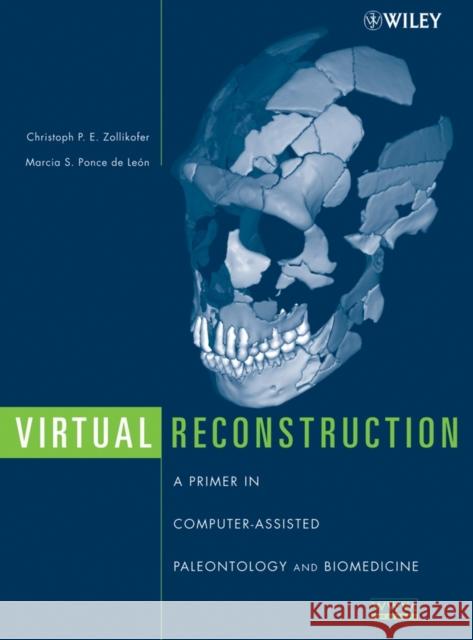
Christoph P. E. Zollikofer; Marcia S. Ponce De Leon
Virtual Reconstruction: A Primer in Computer-Assisted Paleontology and Biomedicine Zollikofer, Christoph P. 9780471205074 Wiley-Interscience - książkaWidoczna okładka, to zdjęcie poglądowe, a rzeczywista szata graficzna może różnić się od prezentowanej.

Virtual Reconstruction: A Primer in Computer-Assisted Paleontology and Biomedicine

ISBN-13: 9780471205074 / Angielski / Twarda / 2005 / 334 str.

Christoph P. E. Zollikofer; Marcia S. Ponce De Leon
cena 718,58 zł
(netto: 684,36 VAT:  5%)

Najniższa cena z 30 dni: 711,23 zł
Termin realizacji zamówienia:
ok. 30 dni roboczych
Bez gwarancji dostawy przed świętami

Darmowa dostawa!

Illustrating the concepts, methods, and applications of computer-assisted virtual reconstruction

Virtual Reconstruction demonstrates how readers can transform organisms from physical reality into virtual reality. Specifically, the authors provide the knowledge and tools needed to enable researchers to reconstruct fragmented and distorted fossil specimens in 3-D images so that their function, biomechanics, developmental changes, and evolutionary modifications can be determined. Likewise, the authors demonstrate how the same 3-D techniques can be used to enhance medical diagnosis and permit detailed planning of surgical intervention and forensic reconstruction on the basis of patient-specific anatomical data. They also provide a thorough introduction into modern methods of 3-D geometric-morphometric analysis.

All the steps of 3-D reconstruction are covered in detail, including data acquisition, processing, graphical representation, interactive manipulation, morphometric analysis, and rapid prototyping. Helping readers to bridge the gap between theory and practice, the authors have taken a four-pronged approach to their subject:

  • The main text introduces basic concepts, provides technical information, presents practical applications, and discusses potential issues for further research
  • Feature boxes offer schematic diagrams to simplify difficult concepts and case studies that demonstrate how concepts and methods are applied in real-world situations
  • Appendices contain classical linear algebra formulation as well as standard data formats for text, standard images, biomedical images, and graphicalobjects
  • Companion Internet site allows readers to experiment with sample data sets and applets and provides links to tutorials, applets, databases, and technical definitions: www.wiley.com/go/virtualreconstruction

The two authors are internationally recognized as leaders and innovators in their field. Their text reflects more than a decade of research in computer-assisted paleoanthropology as well as their insightful lectures and courses in biomedical imaging, scientific visualization, and computational morphology.

This is the only reference that introduces readers, in the biosciences, to the concepts, methods, and applications of computer-assisted virtual reconstruction. It is an invaluable resource for researchers in physical anthropology, paleontology, morphology, anatomy, medicine, forensics, and primatology. Surgeons will find this book a reliable and state-of-the-art information source. Furthermore, the text is an excellent reference for computer scientists working in the biosciences.


Kategorie:
Nauka, Biologia i przyroda
Kategorie BISAC:
Science > Paleontology
Medical > Radiologia
Wydawca:
Wiley-Interscience
Język:
Angielski
ISBN-13:
9780471205074
Rok wydania:
2005
Ilość stron:
334
Waga:
1.03 kg
Wymiary:
27.7 x 21.3 x 2.4
Oprawa:
Twarda
Wolumenów:
01
Dodatkowe informacje:
Bibliografia
Wydanie ilustrowane

"..a worthy contribution." ( Journal of Anthropological Research, Summer 2006)

"If you are interested in...three–dimensional reconstruction of past and present human and other anatomy, this is the text for you!" (IEEE Engineering in Medicine and Biology Magazine, May/June 2006)

"The authors have done a stupendous job of mining the available literature to present a coherent and organized work...the book is a useful addition to any anthropologist′s library." (American Journal of Human Biology, May/June 2006)

" well presented. This is a decidedly visual topic, and the illustrations in the book are wonderful " (CHOICE, February 2006)

"This book is well written. It is surprising easy to read considering the technical subjects that were covered." (The Quarterly Review of Biology, March 2006)

a very useful resource for anyone wanting to get started in a much wider variety of fields (International Journal of Primatology, April 2007)

an excellent source for computer scientists working in the biosciences. (Journal of Comparative Human Biology, March 2007)


Preface xiii

Acknowledgments xv

Introduction 1

1 Virtual Reconstruction 7

1.1 A Virtual Reality Contest 7

1.2 Virtual Reconstruction 10

1.3 Computer–Assisted Paleontology 12

1.3.1 Data Acquisition 12

1.3.2 Data Segmentation and Three–Dimensional Reconstruction 14

1.3.3 Virtual Fossil Reconstruction 14

1.3.4 From Virtual Reality to Real Virtuality 15

1.3.5 Databases and Morphometry 15

1.3.6 Virtual Reconstruction in Space and Time 16

1.4 Computer–Assisted Surgery 17

1.5 Further Reading 19

2 Data Representation 21

2.1 World Food on a Chessboard 21

2.2 Facts About Data to Get Data About Facts 22

2.2.1 Analog and Digital Data 22

2.2.2 Bits, Bytes, and Words 23

2.2.3 Characters, Numbers, Pixels, and Voxels 29

2.2.4 Representing Gray Tones and Colors 32

2.2.5 Data Compression 40

2.2.6 Some Common Image File Formats 41

2.2.7 Implicit Versus Explicit Representation of Object Data 44

2.2.8 Modeling Three–Dimensional Objects 48

2.3 A Taxonomy of Biomedical Data 50

2.3.1 Perspectives on Data 50

2.3.2 Volume Data 50

2.3.3 Surface Data 52

2.3.4 Landmark Data 53

2.3.5 Extent–Based Data 54

2.3.6 Relational Data 55

2.4 Further Reading 56

3 Data Acquisition 57

3.1 Data and the Physical World 57

3.2 Vision and Photography as Data Acquisition: Performance Considerations 59

3.3 Computed Tomography 64

3.3.1 Frau Röntgen s Wedding Ring 64

3.3.2 Radiographic Projections 67

3.3.3 Reconstructing CT Images 72

3.3.4 CT Scanning: Technical Considerations 74

3.3.5 Limitations of CT Data Acquisition 77

3.3.6 Slice–to–Slice, Helical, and Multislice CT 80

3.3.7 Industrial and Micro Computed Tomography 82

3.3.8 Three–Dimensional Data Acquisition with a Medical Scanner 84

3.4 Magnetic Resonance Imaging 85

3.5 Surface Scanners 91

3.6 3D Digitizers 93

3.7 Further Reading 94

4 Image Data Processing 97

4.1 Recovering Objects from Images 97

4.2 Converting a CT Image into a Screen Image 100

4.3 Filtering Images 102

4.3.1 Coffee and Kernels 102

4.3.2 Convolution and Fourier Analysis 106

4.3.3 Statistical Filters 107

4.3.4 Edge Detection Filters 108

4.4 Extracting Isosurfaces 113

4.4.1 Determining Boundaries in CT Images 113

4.4.2 From Edges to Isocontours and Isosurfaces 119

4.5 Interactive Segmentation 121

4.6 Further Reading 126

5 Visualization and Interaction 129

5.1 Visualizing Data in Two and More Dimensions 129

5.2 Interaction with Virtual Worlds 131

5.3 The Graphics Rendering Pipeline 132

5.4 Setting Up a Virtual Environment 132

5.4.1 Object Materials, Lighting, and Shading 133

5.4.2 Setting Up the Camera 139

5.4.3 Object Manipulation and Interaction 143

5.5 Volume Rendering 151

5.6 Further Reading 154

6 Virtual Fossil Reconstruction 155

6.1 A Baroque Puzzle 155

6.2 Principles of Reconstruction 157

6.3 Physical and Virtual Reconstruction 159

6.4 Preparing and Restoring Fossils on the Computer Screen 160

6.5 Reconstructing Fossil Morphologies 164

6.5.1 Recovering Implicit Anatomic Information 164

6.5.2 Combining Computer Graphics and Anatomy: The Globe Paradigm 166

6.5.3 Inferring Missing Information 175

6.5.4 Interpolation and Extrapolation 181

6.6 Correcting Fossil Deformation 181

6.6.1 Taphonomic Scenarios 182

6.6.2 Correcting Plastic Deformation 184

6.7 Validating Virtual Reconstructions 189

6.8 Paleodiagnostics and Paleoforensics 192

6.9 Inferring Soft Tissue Structures 193

6.9.1 Motivation 193

6.9.2 Fossil Soft Tissue Reconstruction: Classic and Virtual Approaches 196

6.9.3 What Shall Be Reconstructed? 199

6.9.4 Soft Tissue Reconstruction and Measurement 200

6.10 Virtual Surgery: a Paleoanthropologist s Eye View 201

6.10.1 Motivation 201

6.10.2 Virtual Planning and Simulation of Surgical Interventions 201

6.10.3 Custom Implant Design 203

6.10.4 Soft Tissue Reconstruction 203

6.11 Further Reading 206

7 From Virtual Reality to Real Virtuality 209

7.1 Reifying Virtual Objects 209

7.2 Principles of Rapid Prototyping 210

7.3 Combining Virtual Reality and Real Virtuality 217

7.4 Further Reading 223

8 Morphometric Analysis 225

8.1 Morphometry as Reconstruction 225

8.2 Morphometry and Geometry 227

8.2.1 The Role of Geometry 227

8.2.2 The Role of Size and Shape 230

8.2.3 Multivariate Morphometry 233

8.2.4 Principal Components Analysis and Dimension Reduction 235

8.2.5 Classic Multivariate Morphometry: Geometry Lost 237

8.2.6 Geometric Morphometrics: Geometry Recovered 239

8.3 Shape Space Analysis 241

8.3.1 From D Arcy Thompson to Kendall 241

8.3.2 The Workflow of Shape Space Analysis 246

8.3.3 Determining a Reference Shape 246

8.3.4 Analyzing Data in Shape Space 251

8.3.5 Visualizing Patterns of Shape Difference and Shape Change 253

8.4 Euclidean Distance Matrix Analysis 259

8.4.1 In Search of the Golden Mean 259

8.4.2 Exploring Form Variability with EDMA 260

8.5 Outline Analysis 266

8.6 A Comparison of Geometric Morphometric Methods 269

8.6.1 Criteria for Comparison 269

8.6.2 From Pattern to Process 271

8.7 Exploring Morphometric Patterns 272

8.8 Further Reading 275

Appendix A Image Data Acquisition Systems: Performance Considerations 277

Appendix B Parameters Influencing the Quality of CT Image Data 281

Appendix C CT Scanning of Fossil Specimens and Recent Skeletal Specimens: How to Proceed? 285

C.1 Preparation 285

C.1.1 Mounting the Specimens 285

C.1.2 Materials Used for Fixation 285

C.1.3 Placement 286

C.2 Parameters for CT Data Acquisition 287

C.2.1 Scanned Area 287

C.2.2 X–Ray Tube Current and Voltage 287

C.2.3 Gantry Tilt 288

C.2.4 Scanning Direction and Object Orientation 288

C.2.5 Object Positioning 288

C.3 Image Reconstruction 290

C.3.1 Reconstruction Kernels 290

C.3.2 Image Reconstruction 290

C.4 CT Data Storage 291

C.4.1 Raw Data Storage 291

C.4.2 Image Data Storage 291

C.5 Calibration 291

C.5.1 Test Scans 291

C.5.2 Calibration 292

Appendix D Object Manipulation in Virtual Space 293

D.1 Matrices 293

D.2 Rigid Transforms 294

D.3 Homogeneous Matrices 295

Appendix E A Parsimonious Approach to Correction of Taphonomic Deformation 297

Appendix F Morphometry 299

F.1 Anatomic Axes and Planes 299

F.2 Accuracy and Precision of Measurement 299

F.3 Allometry 299

F.4 Multivariate Analysis and Dimension Reduction 301

F.5 Centroid Size 303

F.6 Procrustes Superimposition, Generalized Least–Squares Fitting, and Linearized Shape Space 303

F.7 Shape Space Analysis 304

F.8 Shape Variability as Deformation: Principal, Partial, and Relative Warps 306

References 309

Index 325

CHRISTOPH P. E. ZOLLIKOFER, Ph.D., Anthropological Institute, University of Zurich, Switzerland

MARCIA S. PONCE DE LEÓN, Ph.D., Anthropological Institute, University of Zurich, Switzerland

Illustrating the concepts, methods, and applications of computer–assisted virtual reconstruction

Virtual Reconstruction demonstrates how readers can transform organisms from physical reality into virtual reality. Specifically, the authors provide the knowledge and tools needed to enable researchers to reconstruct fragmented and distorted fossil specimens in 3–D images so that their function, biomechanics, developmental changes, and evolutionary modifications can be determined. Likewise, the authors demonstrate how the same 3–D techniques can be used to enhance medical diagnosis and permit detailed planning of surgical intervention and forensic reconstruction on the basis of patient–specific anatomical data. They also provide a thorough introduction into modern methods of 3–D geometric–morphometric analysis.

All the steps of 3–D reconstruction are covered in detail, including data acquisition, processing, graphical representation, interactive manipulation, morphometric analysis, and rapid prototyping. Helping readers to bridge the gap between theory and practice, the authors have taken a four–pronged approach to their subject:

  • The main text introduces basic concepts, provides technical information, presents practical applications, and discusses potential issues for further research
  • Feature boxes offer schematic diagrams to simplify difficult concepts and case studies that demonstrate how concepts and methods are applied in real–world situations
  • Appendices contain classical linear algebra formulation as well as standard data formats for text, standard images, biomedical images, and graphical objects
  • Companion Internet site allows readers to experiment with sample data sets and applets and provides links to tutorials, applets, databases, and technical definitions: www.wiley.com/go/virtualreconstruction

The two authors are internationally recognized as leaders and innovators in their field. Their text reflects more than a decade of research in computer–assisted paleoanthropology as well as their insightful lectures and courses in biomedical imaging, scientific visualization, and computational morphology.

This is the only reference that introduces readers, in the biosciences, to the concepts, methods, and applications of computer–assisted virtual reconstruction. It is an invaluable resource for researchers in physical anthropology, paleontology, morphology, anatomy, medicine, forensics, and primatology. Surgeons will find this book a reliable and state–of–the–art information source. Furthermore, the text is an excellent reference for computer scientists working in the biosciences.

Zollikofer, Christoph P. E. CHRISTOPH P. E. ZOLLIKOFER, Ph.D., Anthropological... więcej >


Udostępnij

Facebook - konto krainaksiazek.pl


Opinie o Krainaksiazek.pl na Opineo.pl

Partner Mybenefit

Krainaksiazek.pl w programie rzetelna firma Krainaksiaze.pl - płatności przez paypal

Czytaj nas na:

Facebook - krainaksiazek.pl
  • książki na zamówienie
  • granty
  • książka na prezent
  • kontakt
  • pomoc
  • opinie
  • regulamin
  • polityka prywatności

Zobacz:

  • Księgarnia czeska

  • Wydawnictwo Książkowe Klimaty

1997-2025 DolnySlask.com Agencja Internetowa

© 1997-2022 krainaksiazek.pl
     
KONTAKT | REGULAMIN | POLITYKA PRYWATNOŚCI | USTAWIENIA PRYWATNOŚCI
Zobacz: Księgarnia Czeska | Wydawnictwo Książkowe Klimaty | Mapa strony | Lista autorów
KrainaKsiazek.PL - Księgarnia Internetowa

Polityka prywatnosci - link
Krainaksiazek.pl - płatnośc Przelewy24
Przechowalnia Przechowalnia





