Vibration Mechanics: A Research-Oriented Tutorial » książka

topmenu




Vibration Mechanics: A Research-Oriented Tutorial
ISBN-13: 9789811654565 / Angielski / Twarda / 2022 / 500 str.
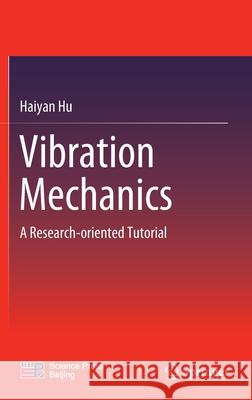
Vibration Mechanics: A Research-Oriented Tutorial
ISBN-13: 9789811654565 / Angielski / Twarda / 2022 / 500 str.
cena 446,94
(netto: 425,66 VAT: 5%)
Najniższa cena z 30 dni: 424,07
(netto: 425,66 VAT: 5%)
Najniższa cena z 30 dni: 424,07
Termin realizacji zamówienia:
ok. 16-18 dni roboczych.
ok. 16-18 dni roboczych.
Darmowa dostawa!
Kategorie:
Kategorie BISAC:
Wydawca:
Springer
Język:
Angielski
ISBN-13:
9789811654565
Rok wydania:
2022
Wydanie:
2022
Ilość stron:
500
Waga:
0.88 kg
Wymiary:
23.39 x 15.6 x 2.87
Oprawa:
Twarda
Wolumenów:
01
Dodatkowe informacje:
Bibliografia
Wydanie ilustrowane
Wydanie ilustrowane
1 Start of Research-oriented Study 1
1.1 Needs for Research-oriented Study 1
1.2 Case Studies and Associated Problems 3
1.2.1 Preliminary study of a tethered satellite 4
1.2.2 Design of a hydro-elastic vibration isolation system 8
1.2.3 Two kinds of immovable points in a vibration system 11
1.2.4 Identical natural frequencies of different structures 15
1.2.5 Closely distributed natural modes of a symmetric structure 18
1.2.6 Transient response of a slender structure 21
1.3 Scope and Style of the Book 23
1.4 Further Reading and Thinking 25
2 Preparation of Research-oriented Study 27
2.1 Briefs of Beauty of Science 27
2.2 Beautiful Features of Vibration Mechanics 29
2.2.1 Unity 29
2.2.2 Simplicity 312.2.3 Regularity 34
2.2.4 Symmetry 37
2.2.5 Singularity 42
2.3 Enlightenments of Beauty of Vibration Mechanics 47
2.3.1 Methods of thinking 47
2.3.2 Aesthetic literacy 52
2.4 Concluding Remarks 54
2.5 Further Reading and Thinking 55
3 Models of Vibration Systems 57
3.1 Continuous Systems and Their Discrete Models 58
3.1.1 Dynamic models of continuous systems 58
3.1.2 Preconditions of discretization 66
3.1.3 Case studies of discretization 73
3.1.4 Concluding remarks 80
3.2 A Half Degree of Freedom of Discrete Systems 81
3.2.1 Degeneration of a degree of freedom 81
3.2.2 Conventional concept of degree of freedom 83
3.2.3 Degree of freedom based on accessible manifolds 86
3.2.4 Demonstrative systems with a non-holonomic constraint 90
3.2.5 Demonstrative systems with two non-holonomic constraints 97
3.2.6 Concluding remarks 106
3.3 Structural Damping 107
3.3.1 Frequency-invariant damping and its limitations 108
3.3.2 Frequency-variant damping model and system response 111
3.3.3 An approximate viscous damping model 114
3.3.4 An approximate viscoelastic damping model 116
3.3.5 Concluding remarks 1233.4 Further Reading and Thinking 124
4 Vibration Analysis of Discrete Systems 127
4.1 Vibration Systems with Non-holonomic Constraints 128
4.1.1 Dynamic analysis in time domain 128
4.1.2 Dynamic analysis in frequency domain 141
4.1.3 Concluding remarks 145
4.2 Node Number of a Natural Mode Shape 146
4.2.1 Reexamination of current results 148
4.2.2 Rules of node numbers of 2-DoF systems 153
4.2.3 Design feasibility of nodes in a mode shape 159
4.2.4 Concluding remarks 162
4.3 Anti-resonances of a Harmonically Excited System 163
4.3.1 Anti-resonances of 2-DoF systems 164
4.3.2 Mechanisms behind two kinds of anti-resonances 166
4.3.3 Design feasibility of anti-resonances 171
4.3.4 Concluding remarks 176
4.4 Dynamic Modifications of a System 177
4.4.1 Frequency response of a composite system 178
4.4.2 Adjusting an anti-resonance of a primary system 181
4.4.3 Adjusting resonances of a primary system 184
4.4.4 Concluding remarks 1924.5 Further Reading and Thinking 193
5 Natural Vibrations of One-dimensional Structures 195
5.1 Natural Vibrations of a Tether Pendulum 195
5.1.1 Dynamic equation of a tether pendulum 196
5.1.2 Analysis of natural vibrations 199
5.1.3 Comparison between continuous model and discrete models 207
5.1.4 Concluding remarks 209
5.2 Duality Analysis of Rods in Natural Vibrations 210
5.2.1 A dual of different cross-sections 212
5.2.2 A dual of identical cross-sections 218
5.2.3 A dual of two uniform rods 223
5.2.4 A dual of two rods with axially varying material properties 225
5.2.5 Concluding remarks 228
5.3 Duality Analysis of Beams in Natural Vibrations 228
5.3.1 A dual of different cross-sections 230
5.3.2 A dual of identical cross-sections 238
5.3.3 A dual of two uniform beams 247
5.3.4 Concluding remarks 251
5.4 Further Reading and Thinking 252
6 Natural Vibrations of Symmetric Structures 255
6.1 Natural Vibrations of Mirror-symmetric Structures 2566.1.1 Decoupling of mirror-symmetric structures 257
6.1.2 Free vibrations of thin rectangular plates 267
6.1.3 Repeated natural frequencies of a thin rectangular plate 272
6.1.4 Close natural frequencies of a thin rectangular plate 282
6.1.5 Concluding remarks 292
6.2 Vibration Computations of Cyclosymmetric Structures 293
6.2.1 Decoupling a cyclosymmetric structure without a central axis 295
6.2.2 Decoupling a cyclosymmetric structure with a central axis 312
6.2.3 High-efficient computation based on modal reduction 323
6.2.4 Concluding remarks 331
6.3 Modal Properties of Cyclosymmetric Structures 332
6.3.1 Modal properties in representative subspaces of cyclic group 333
6.3.2 Modal properties in physical space 336
6.3.3 Central displacements in mode shapes 343
6.3.4 Orthogonality of mode shapes with repeated frequencies 3506.3.5 Modal test of a bladed disc model 354
6.3.6 Concluding remarks 358
6.4 Further Reading and Thinking 359
7 Waves and Vibrations of One-dimensional Structures 361
7.1 Non-dispersive Waves of Rods 362
7.1.1 Wave analysis of an infinitely long rod 362
7.1.2 Complex function analysis of waves of an infinitely long rod 369
7.1.3 Harmonic wave analysis of a finitely long rod 373
7.1.4 Harmonic vibration analysis of a finitely long rod 380
7.1.5 Concluding remarks 386
7.2 Dispersive Waves of Rods 387
7.2.1 Dispersive waves in a rod due to non-uniform cross-section 389
7.2.2 Dispersive waves of a rod due to transverse inertia 401
7.2.3 Dispersive waves of a rod due to an elastic boundary 407
7.2.4 Concluding remarks 412
7.3 Waves in a Rod Impacting a Rigid Wall 413
7.3.1 Wave analysis of an impacting uniform rod 414
7.3.2 Modal analysis of an impacting uniform rod 421
7.3.3 Influence of non-uniform cross-section 429
7.3.4 Influence of transverse inertia 438
7.3.5 Criteria of modal truncation 443
7.3.6 Concluding remarks 447
7.4 Free Waves and Vibrations of Beams 448
7.4.1 Free waves of an Euler-Bernoulli beam 448
7.4.2 Free waves of a Timoshenko beam 455
7.4.3 Natural vibrations of a Timoshenko beam 466
7.4.4 Concluding remarks 474
7.5 Forced Waves and Vibrations of Beams 475
7.5.1 Waves of an infinitely long beam to a transverse harmonic force 475
7.5.2 Vibrations of a finitely long beam to a transverse harmonic force 480
7.5.3 Impact response of a clamped-free beam 484
7.5.4 Concluding remarks 494
7. 6 Further Reading and Thinking 495
Appendix Three-Dimensional Waves in an Elastic Medium 497
A1 Description of Three-dimensional Waves 497
A1.1 Elasto-dynamic equations of a three-dimensional medium 497
A1.2 Helmholtz decomposition of a displacement field 500
A1.3 Solutions of three-dimensional wave equations 505
A2 Two Kinds of Simple Waves 508
A2.1 Planar waves 509
A2.2 Spherical waves 517
A3 Wave Reflections at Boundary of a Semi-infinite Medium 519
A3.1 Reflections of a P-wave and an SV-wave 520
A3.2 Reflection of an SH-wave 536
A3.3 Rayleigh surface waves 541
Bibliography 549
Subject Index 553Dr. Haiyan Hu is Professor of Mechanics at Beijing Institute of Technology, where he served as President from 2007 to 2017. Prior to that appointment, he was President of Nanjing University of Aeronautics and Astronautics, China from 2001 to 2007, Professor of Mechanics at that university from 1994 to 2007, and a Humboldt Research Fellow at University of Stuttgart, Germany from 1992 to 1994.
Prof. Hu has made recognized contributions to the nonlinear dynamics and control of aerospace structures, including the stability and bifurcations of nonlinear vibration systems under delayed control, the active flutter suppression for aircraft structures, and the deployment dynamics of space structures in orbit. He has authored and co-authored 5 monographs/books and around 300 journal papers, which have been cited over 12,000 times. Prof. Hu received The State Award of Natural Science of China twice and many honors, such as Fellow of Chinese Academy of Sciences in 2007, Fellow of TWAS in 2010, and Honorary Doctor of Science from Moscow State University, Russia in 2015.
This book is a novel tutorial for research-oriented study of vibration mechanics. The book begins with twelve open problems from six case studies of vibration mechanics in order to guide readers in studying the entire book. Then, the book surveys both theories and methods of linear vibrations in an elementary course from a new perspective of aesthetics of science so as to assist readers to upgrade their way of learning. The successive chapters offer a theoretical frame of linear vibrations and waves, covering the models of vibration systems, the vibration analysis of discrete systems, the natural vibrations of one-dimensional structures, the natural vibrations of symmetric structures, and the waves and vibrations of one-dimensional structures. The chapters help readers solve the twelve open problems step by step during the research-oriented study.
The book tries to arouse the interest of graduate students and professionals, who have learnt an elementary course of vibration mechanics of two credits, to conduct the research-oriented study and achieve a helical upgrade understanding to vibration mechanics.




Czytaj nas na:
1997-2026 DolnySlask.com Agencja Internetowa
Zobacz: Księgarnia Czeska | Wydawnictwo Książkowe Klimaty | Mapa strony | Lista autorów
KrainaKsiazek.PL - Księgarnia Internetowa

KrainaKsiazek.PL - Księgarnia Internetowa

