• Wyszukiwanie zaawansowane
  • Kategorie
  • Kategorie BISAC
  • Książki na zamówienie
  • Promocje
  • Granty
  • Książka na prezent
  • Opinie
  • Pomoc
  • Załóż konto
  • Zaloguj się

Utopias: A Brief History from Ancient Writings to Virtual Communities » książka

zaloguj się | załóż konto
Logo Krainaksiazek.pl

koszyk

konto

szukaj
topmenu
Księgarnia internetowa
Szukaj
Książki na zamówienie
Promocje
Granty
Książka na prezent
Moje konto
Pomoc
 
 
Wyszukiwanie zaawansowane
Pusty koszyk
Bezpłatna dostawa dla zamówień powyżej 20 złBezpłatna dostawa dla zamówień powyżej 20 zł

Kategorie główne

• Nauka
 [2949965]
• Literatura piękna
 [1857847]

  więcej...
• Turystyka
 [70818]
• Informatyka
 [151303]
• Komiksy
 [35733]
• Encyklopedie
 [23180]
• Dziecięca
 [617748]
• Hobby
 [139972]
• AudioBooki
 [1650]
• Literatura faktu
 [228361]
• Muzyka CD
 [398]
• Słowniki
 [2862]
• Inne
 [444732]
• Kalendarze
 [1620]
• Podręczniki
 [167233]
• Poradniki
 [482388]
• Religia
 [509867]
• Czasopisma
 [533]
• Sport
 [61361]
• Sztuka
 [243125]
• CD, DVD, Video
 [3451]
• Technologie
 [219309]
• Zdrowie
 [101347]
• Książkowe Klimaty
 [123]
• Zabawki
 [2362]
• Puzzle, gry
 [3791]
• Literatura w języku ukraińskim
 [253]
• Art. papiernicze i szkolne
 [7933]
Kategorie szczegółowe BISAC

Utopias: A Brief History from Ancient Writings to Virtual Communities

ISBN-13: 9781405183291 / Angielski / Twarda / 2012 / 304 str.
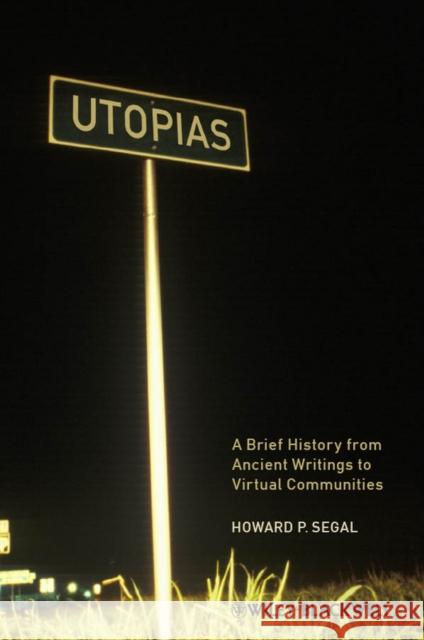
Howard P. Segal
Utopias: A Brief History from Ancient Writings to Virtual Communities Segal, Howard P. 9781405183291 Wiley-Blackwell - książkaWidoczna okładka, to zdjęcie poglądowe, a rzeczywista szata graficzna może różnić się od prezentowanej.

Utopias: A Brief History from Ancient Writings to Virtual Communities

ISBN-13: 9781405183291 / Angielski / Twarda / 2012 / 304 str.

Howard P. Segal
cena 374,57
(netto: 356,73 VAT:  5%)

Najniższa cena z 30 dni: 370,73
Termin realizacji zamówienia:
ok. 30 dni roboczych
Bez gwarancji dostawy przed świętami

Darmowa dostawa!
inne wydania

This brief history connects the past and present of utopian thought, from the first utopias in ancient Greece, right up to present day visions of cyberspace communities and paradise.

  • Explores the purpose of utopias, what they reveal about the societies who conceive them, and how utopias have changed over the centuries
  • Unique in including both non-Western and Western visions of utopia
  • Explores the many forms utopias have taken - prophecies and oratory, writings, political movements, world's fairs, physical communities - and also discusses high-tech and cyberspace visions for the first time
  • The first book to analyze the implicitly utopian dimensions of reform crusades like Technocracy of the 1930s and Modernization Theory of the 1950s, and the laptop classroom initiatives of recent years


Kategorie:
Religia
Kategorie BISAC:
Religion > General
Political Science > Political Ideologies - Communism, Post-Communism & Socialism
Political Science > Utopias
Wydawca:
Wiley-Blackwell
Seria wydawnicza:
Blackwell Brief Histories of Religion
Język:
Angielski
ISBN-13:
9781405183291
Rok wydania:
2012
Numer serii:
000255853
Ilość stron:
304
Waga:
0.44 kg
Wymiary:
22.2 x 14.5 x 1.9
Oprawa:
Twarda
Wolumenów:
01
Dodatkowe informacje:
Bibliografia
Wydanie ilustrowane

"Segal does not shy away from bold definitions and delineations to separate utopias from millenarianism and science fiction, from abstract utopias and daydreams. ...Utopias is an accessible and thought–provoking introduction to utopias and utopianism and will appeal to scholars, students, and the general reader alike."  (Utopian Studies, 1 October 2015)

"In the capable hands of Howard P. Segal, professor of history at the University of Maine, technology rightfully has an important role in the imagination of alternative societies. His concise, well–written book covers utopias ancient and modern, Western and non–Western, and it is not limited to fiction conventionally labeled utopian but includes world s fairs, social science, digital media, prophecies, millennial movements, and science fiction."  (Technology and Culture, 1 October 2015)

To conclude: Segal s book on utopias is a well–made treatise on an important aspect of European and American history. He convincingly shows that utopias had a political, as well as an economic, relevance. The view on the interaction between different cultural systems, such as art, politics, religion, technology, and economics, is a great strength of the book. It shows how complex processes around utopian visions have been, and how relevant they are for the implementation and change of different cultural spheres.   (Religion, 30 May 2015)

This text provides a unique approach for teaching history and the history of science.  Highly recommended.  General readers; lower–division undergraduates and above.  (Choice, 1 February 2013)

Segal brings considerable scholarship and experience to bear, particularly on the historical intersections between technology and utopia ... [He] covers several continents and many centuries, addressing key texts and thinkers ... [and] supplies impressive coverage and thoughtful interpretations. (Times Higher Education, 12 July 2012)


Preface xi

Introduction 1

1 The Nature of Utopias 5

Utopias Defined 5

Utopias Differ from both Millenarian Movements and Science Fiction 8

Utopias′ Spiritual Qualities are Akin to those of Formal Religions 9

Utopias′Real Goal: Not Prediction of the Future but Improvement of the Present 12

How and When Utopias are Expected to be Established 13

2 The Variety of Utopias 16

The Global Nature of Utopias: Utopias are Predominantly but not Exclusively Western 16

The Several Genres of Utopianism: Prophecies and Oratory, Political Movements, Communities, Writings, World′s Fairs, Cyberspace 24

3 The European Utopias and Utopians and Their Critics 47

The Pioneering European Visionaries and Their Basic Beliefs: Plato′s Republic and More′s Utopia 47

Forging the Connections Between Science, Technology, and Utopia 50

The Pansophists 53

The Prophets of Progress: Condorcet, Saint–Simon, and Comte 55

Dissenters from the Ideology of Unadulterated Scientific and Technological Progress: Thomas Carlyle, John Ruskin, and William Morris 58

The Expansive Visions of Robert Owen and Charles Fourier 60

The "Scientific"Socialism of Karl Marx and Friedrich Engels 66

4 The American Utopias and Utopians and Their Critics 74

America as Utopia: Potential and Fulfillment 74

The Pioneering American Visionaries and their Basic Beliefs in America as Land of Opportunity: John Adolphus Etzler, Thomas Ewbank, and Mary Griffith 78

America as "Second Creation": Enthusiasm and Disillusionment 81

5 Growing Expectations of Realizing Utopia in the United States and Europe 89

Later American Technological Utopians: John Macnie Through Harold Loeb 89

Utopia Within Sight: The American Technocracy Crusade 96

Utopia Within Reach: "The Best and the Brightest" Post–World War II Science and Technology Policy in the United States and Western Europe and the Triumph of the Social Sciences 99

On Misreading Frankenstein: How Scientific and Technological Advances have Changed Traditional Criticisms of Utopianism in the Twentieth and Twenty–First Centuries 123

6 Utopia Reconsidered 139

The Growing Retreat from Space Exploration and Other Megaprojects 139

Nuclear Power: Its Rise, Fall, and Possible Revival Maine Yankee as a Case Study 142

The Declining Belief in Inventors, Engineers, and Scientists as Heroes; in Experts as Unbiased; and in Science and Technology as Social Panaceas 157

Contemporary Prophets for Profit: The Rise and Partial Fall of Professional Forecasters 160

Post–colonial Critiques of Western Science and Technology as Measures of "Progress"169

7 The Resurgence of Utopianism 186

The Major Contemporary Utopians and Their Basic Beliefs 186

Social Media: Utopia at One′s Fingertips 193

Recent and Contemporary Utopian Communities 194

The Star Trek Empire: Science Fiction Becomes Less Escapist 199

Edutopia: George Lucas and Others 203

The Fate of Books and Newspapers: Utopian and Dystopian Aspirations 217

8 The Future of Utopias and Utopianism 234

The "Scientific and Technological Plateau"and the Redefinition of Progress 234

Conclusion: Why Utopia Still Matters Today and Tomorrow 241

Further Reading 261

Index 269

Howard P. Segal is Bird Professor of History at the University of Maine, where he has taught since 1986. He received his M.A. and Ph.D. from Princeton University. His previous books include Technological Utopianism in American Culture (1985) , Future Imperfect: The Mixed Blessings of Technology in America (1994), Technology in America: A Brief History (1989, 1999, with Alan Marcus), and Recasting the Machine Age: Henry Ford′s Village Industries (2005). He also reviews for, among other publications, Nature and the Times Higher Education.

The term utopia typically conjures up naive, impractical, and superficial notions of a perfect society. This book offers a less stereotyped and more complex view of utopias––of their history, their varying manifestations, and their reflection of the societies from which they hail. 

Segal connects past to present utopianism, from the first utopias in ancient Greece through their flourishing in the Renaissance to the famous "dystopias" of Orwell, Huxley, and Zamyatin in the twentieth century and right up to present–day high tech and virtual utopias. 

The book explores the many genres in which utopianism has expressed  itself–––prophecies and oratory, writings, political movements, world′s fairs, physical communities, and cyberspace communities.  The book shows that, far from an exclusively Western enterprise, utopias have been worldwide, appearing in regions such as Latin America and Asia.  With the current strong interest in utopias, now conceived as cyberspace paradises or as the result of high–tech advances, this book offers a timely appraisal of the joys and pitfalls of utopian thought.

Segal, Howard P. Howard P. Segal is professor of history at the Uni... więcej >


Udostępnij

Facebook - konto krainaksiazek.pl


Opinie o Krainaksiazek.pl na Opineo.pl

Partner Mybenefit

Krainaksiazek.pl w programie rzetelna firma Krainaksiaze.pl - płatności przez paypal

Czytaj nas na:

Facebook - krainaksiazek.pl
  • książki na zamówienie
  • granty
  • książka na prezent
  • kontakt
  • pomoc
  • opinie
  • regulamin
  • polityka prywatności

Zobacz:

  • Księgarnia czeska

  • Wydawnictwo Książkowe Klimaty

1997-2025 DolnySlask.com Agencja Internetowa

© 1997-2022 krainaksiazek.pl
     
KONTAKT | REGULAMIN | POLITYKA PRYWATNOŚCI | USTAWIENIA PRYWATNOŚCI
Zobacz: Księgarnia Czeska | Wydawnictwo Książkowe Klimaty | Mapa strony | Lista autorów
KrainaKsiazek.PL - Księgarnia Internetowa

Polityka prywatnosci - link
Krainaksiazek.pl - płatnośc Przelewy24
Przechowalnia Przechowalnia







