• Wyszukiwanie zaawansowane
  • Kategorie
  • Kategorie BISAC
  • Książki na zamówienie
  • Promocje
  • Granty
  • Książka na prezent
  • Opinie
  • Pomoc
  • Załóż konto
  • Zaloguj się

Urbanisation and Crime in Nigeria » książka


zaloguj się | załóż konto
Logo Krainaksiazek.pl

koszyk

konto

szukaj
topmenu
Księgarnia internetowa
Szukaj
Książki na zamówienie
Promocje
Granty
Książka na prezent
Moje konto
Pomoc
 
 
Wyszukiwanie zaawansowane
Pusty koszyk
Bezpłatna dostawa dla zamówień powyżej 20 złBezpłatna dostawa dla zamówień powyżej 20 zł

Kategorie główne

• Nauka
 [2952079]
• Literatura piękna
 [1850969]

  więcej...
• Turystyka
 [71058]
• Informatyka
 [151066]
• Komiksy
 [35579]
• Encyklopedie
 [23181]
• Dziecięca
 [620496]
• Hobby
 [139036]
• AudioBooki
 [1646]
• Literatura faktu
 [228729]
• Muzyka CD
 [379]
• Słowniki
 [2932]
• Inne
 [445708]
• Kalendarze
 [1409]
• Podręczniki
 [164793]
• Poradniki
 [480107]
• Religia
 [510956]
• Czasopisma
 [511]
• Sport
 [61267]
• Sztuka
 [243299]
• CD, DVD, Video
 [3411]
• Technologie
 [219640]
• Zdrowie
 [100984]
• Książkowe Klimaty
 [124]
• Zabawki
 [2281]
• Puzzle, gry
 [3363]
• Literatura w języku ukraińskim
 [258]
• Art. papiernicze i szkolne
 [8020]
Kategorie szczegółowe BISAC

Urbanisation and Crime in Nigeria

ISBN-13: 9783030197674 / Angielski / Miękka / 2020 / 247 str.
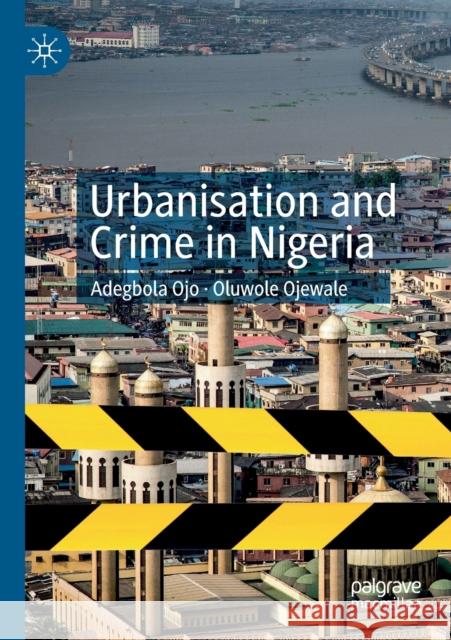
Adegbola Ojo; Oluwole Ojewale
Urbanisation and Crime in Nigeria Adegbola Ojo Oluwole Ojewale 9783030197674 Palgrave MacMillan - książkaWidoczna okładka, to zdjęcie poglądowe, a rzeczywista szata graficzna może różnić się od prezentowanej.

Urbanisation and Crime in Nigeria

ISBN-13: 9783030197674 / Angielski / Miękka / 2020 / 247 str.

Adegbola Ojo; Oluwole Ojewale
cena 402,53
(netto: 383,36 VAT:  5%)

Najniższa cena z 30 dni: 385,52
Termin realizacji zamówienia:
ok. 22 dni roboczych
Dostawa w 2026 r.

Darmowa dostawa!
inne wydania
Kategorie:
Nauka, Prawo i administracja
Kategorie BISAC:
Social Science > Criminology
Social Science > Sociology - Urban
Social Science > Human Geography
Wydawca:
Palgrave MacMillan
Język:
Angielski
ISBN-13:
9783030197674
Rok wydania:
2020
Wydanie:
2019
Ilość stron:
247
Waga:
0.33 kg
Wymiary:
21.01 x 14.81 x 1.47
Oprawa:
Miękka
Wolumenów:
01
Dodatkowe informacje:
Wydanie ilustrowane

• Preface and Acknowledgement
• Foreword
• List of Figures
• List of Tables
• List of Abbreviations

1. Introduction
1.1. Overview of the Book
1.2. Why this Book Was Written
1.3. Who Should Read this Book
1.4. A Note on Sources
1.5. Structure of the Book

2. Nigeria’s Urbanisation History, Trends, Drivers and Implications
2.1. Urban Settlements and Urbanisation: Conceptual Clarification
2.2. Brief Historical Context of Urbanisation in Nigeria
2.3. Urban Data, Trends and Scale of Contemporary Urbanisation
2.3.1. GRUMP Dataset
2.3.2. WorldPop Dataset
2.3.3. Africapolis Dataset
2.3.4. United Nations World Urbanisation Prospects
2.3.5. Urbanisation Trends
2.3.6. Density and Expansion of Urban Frontiers
2.4. What is Driving Urbanisation in Nigeria?
2.5. Cities as Forces of Transformation
2.6. A Diagnosis of Challenges Confronting Nigerian Cities and Urban Dwellers
2.7. Urbanisation and the Crime Challenge

3. The Criminal Justice System: Actors, Processes and Policies
3.1. The Colonial Foundations of the Nigerian Criminal Justice System
3.2. Legal Frameworks for Criminal Proceedings in Nigeria
3.2.1. Constitution of the Federal Republic of Nigeria, 1999
3.2.2. Criminal Procedure Act (CPA) and Criminal Procedure Laws of the Various States of the Federation
3.2.3. Criminal Procedure Code (CPC) and Criminal Procedure Code Laws of the Various States
3.2.4. Criminal Procedure Code Act Cap 491, Laws of the Federation of Nigeria 1990
3.2.5. Criminal Code Act Cap C 38 Laws of the Federation 2004 and Criminal Code Laws of the Southern States
3.2.6. Economic and Financial Crimes Commission (Establishment) Act, 2004
3.2.7. Recovery of Public Property (Special Provisions) Act
3.2.8. Police Act Cap P19 Laws of the Federation of Nigeria 2004
3.2.9. Public Order Act (Cap P42) Laws of the Federation of Nigeria, 2004
3.2.10. Terrorism (Prevention) Act No. 10, 2011 and Terrorism (Prevention) (Amendment) Act, 2013
3.2.11. Money Laundering (Prohibition) Act 2011 and Money Laundering (Prohibition) (Amendment) Act 2012
3.2.12. Cyber Crimes (Prohibition and Prevention) Act
3.2.13. Other Ancillary Frameworks
3.2.14. Administration of Criminal Justice Act 2015
3.3. Systemic Indices of Failure
3.3.1. Failure of Governance
3.3.2. Lack of Public Confidence in the Police and Justice System
3.3.3. Weak Enforcement of the Administration of Criminal Justice Act (ACJA)
3.3.4. Connivance of State Security Actors with Vandals
3.3.5. Inter-Agency Rivalry among Internal Security Institutions in Nigeria
3.4. Impact of the Criminal Justice System on Security

4. Applicability of Traditional Environmental Criminological Theories in Developing Country Contexts
4.1. Theories and their Usefulness for Studying Urban Crime
4.2. Overview of Environmental Criminology Theories
4.2.1. Crime Prevention Through Environmental Design (CPTED)
4.2.2. Crime Opportunity Theory
4.2.3. Routine Activity Theory
4.2.4. Crime Pattern Theory
4.2.5. Broken Windows Theory
4.2.6. Rational Choice Theory
4.3. Using Theories and Empirical Frameworks to Support Evidence-Based Security Decision-Making
4.4. Reflections: The Case for a New Wave of African Urban Ecological Theories of Crime

5. A Framework for Inter-City Comparative Analysis of Crime
5.1. Arguments in Support of Empirical Inter-City Comparative Analysis of Crime
5.2. Crime Frequency
5.2.1. Volume of Urban Crime
5.2.2. Prevalence of Urban Crime
5.2.3. Incidence of Urban Crime
5.3. Concentration of Crime
5.3.1. Urban Crime Concentration among Victims
5.3.2. Urban Crime Concentration at Places
5.4. Fear of Crime
5.5. Crime Specialisation  
5.6. Crime Trends
5.7. Drivers of Crime
5.8. Impact of Crime

6. Contemporary Configuration of Crime across Nigerian Cities
6.1. Sources of Crime Data in Nigeria
6.2. Urban Crime Morphology and Mapping
6.3. Pervasiveness of Crime and Collective Perception
6.4. Spatial and Temporal Structure of Violent Crimes
6.5. Spatial and Temporal Structure of Property Crimes
6.6. Spatial and Temporal Structure of Serious Sexual Offences

7. Crime Precipitators 
7.1. Deprivation and Social Polarisation
7.2. Migration and Unemployment
7.3. Proliferation of Shanty Settlements, Demolition and Displacement
7.4. Social Exclusion and Poor Community Networking
7.5. Weakened Family Structure and Breakdown of Value Systems
7.6. Hate Speeches, Radicalisation and Violent Extremism 
7.7. Population Growth 
7.8. Increasing Wave of White Collar Criminals in Public Service
7.9. Uncontrolled Street Trading
6.10. Drug Abuse
6.11. Small Arms and Light Weapons Trafficking
6.12. Incessant Political Violence
6.13. Agitation for Environmental Justice

8. Urban Crime Harm
8.1. Concept and Classification of the Cost of Crime
8.2. Crime Harm: A Different Approach to Evaluating the Repercussions of Crime
8.3. Why Does Harm Matter?
8.4. Modelling Urban Crime Harm in Nigeria
8.5. Variations in the Distribution of Crime Harm in Nigeria

9. Urban Crime Prevention and Control
9.1. Crime Prevention Through Environmental Design (CPTED)
9.1.1. Territorial Behaviour Strategy
9.1.2. Surveillance Strategy
9.1.3. Lighting Strategy
9.1.4. Security Barriers
9.1.5. Landscaping
9.1.6. Activity Support
9.1.7. Situational Crime Prevention
9.2. Co-opted Community Policing
9.3. State-sponsored Community Policing
9.3.1. Yobe Peace Group
9.3.2. Civilian Joint Task Force (CJTF)
9.3.3. Ibn Fadlallah Vigilante Group
9.4. Joint Patrol System among Security Forces
9.5. Establishment of Neighbourhood Safety Corps (NSC)
9.6. Enactment of Anti-kidnapping Legislation
9.7. Community Organising
9.8. Voluntary Sector Participation
9.9. Community Crime Prevention Approach
9.10. Amnesty Programme

10. Conclusion
10.1. Summary of Stylised Facts
10.2. Nexus with Theory
10.3. Protecting our Cities
10.3.1. Data
10.3.2. Promoting Evidence-Based Practice in Urban Policing
10.3.3. Improving Public Confidence in Law Enforcement Organisations
10.3.4. Corruption
10.3.5. Menace of Kidnapping
10.3.6. Young People
10.3.7. Urban Poor
10.3.8. Civilian Security Platforms
10.3.9. Digitisation and Speedy Prosecution of Criminal Trials

Adegbola Ojo is Senior Lecturer in Urban Geography & Applications of Big Data, and Director of Teaching and Learning at the School of Geography, University of Lincoln, UK. His research focuses on the understanding and representation of the socio-economic and spatial intricacies of population behaviour within the framework of interdisciplinary studies, population and urban geography, quantitative social science and computer modelling.


Oluwole Ojewale is a public policy researcher and global development worker with experiences in governance, advocacy, community resilience, human and environmental security. He works with a broad range of stakeholders on programmes such as: accountable governance for justice and security; national survey on election and democracy; preventing and countering violent extremism projects. He heads the research and strategy development unit at CLEEN Foundation, Nigeria.

This book uses crime-science and traditional criminological approaches to explore urban crime in the rapidly urbanising country Nigeria, as a case study for urban crime in developing nations. In Africa’s largest democracy, rapid unmanaged growth in its cities combined with decaying public infrastructure mean that risk factors accumulate and deepen the potential for urban crime. This book includes a thorough explanation of key concepts alongside an examination of the contemporary configuration, dynamics, dimensions, drivers and potential responses to urban crime challenges. The authors also discuss a range of methodological techniques and applications that can be used, including spatial technologies to generate new data for analysis. It brings together history, theory, trends, patterns, drivers, repercussions and responses to provide a deep analysis of the challenges that confront urban dwellers. Urbanisation and Crime in Nigeria offers academics, researchers, governments, civil society organisations, citizens, and international partners a tool with which to engage in a serious dialogue about crime within cities, based on evidence and good practices from inside and outside sub-Saharan Africa.




Udostępnij

Facebook - konto krainaksiazek.pl


Opinie o Krainaksiazek.pl na Opineo.pl

Partner Mybenefit

Krainaksiazek.pl w programie rzetelna firma Krainaksiaze.pl - płatności przez paypal

Czytaj nas na:

Facebook - krainaksiazek.pl
  • książki na zamówienie
  • granty
  • książka na prezent
  • kontakt
  • pomoc
  • opinie
  • regulamin
  • polityka prywatności

Zobacz:

  • Księgarnia czeska

  • Wydawnictwo Książkowe Klimaty

1997-2025 DolnySlask.com Agencja Internetowa

© 1997-2022 krainaksiazek.pl
     
KONTAKT | REGULAMIN | POLITYKA PRYWATNOŚCI | USTAWIENIA PRYWATNOŚCI
Zobacz: Księgarnia Czeska | Wydawnictwo Książkowe Klimaty | Mapa strony | Lista autorów
KrainaKsiazek.PL - Księgarnia Internetowa

Polityka prywatnosci - link
Krainaksiazek.pl - płatnośc Przelewy24
Przechowalnia Przechowalnia




