• Wyszukiwanie zaawansowane
  • Kategorie
  • Kategorie BISAC
  • Książki na zamówienie
  • Promocje
  • Granty
  • Książka na prezent
  • Opinie
  • Pomoc
  • Załóż konto
  • Zaloguj się

Urban Informatics Using Mobile Network Data: Travel Behavior Research Perspectives » książka


zaloguj się | załóż konto
Logo Krainaksiazek.pl

koszyk

konto

szukaj
topmenu
Księgarnia internetowa
Szukaj
Książki na zamówienie
Promocje
Granty
Książka na prezent
Moje konto
Pomoc
 
 
Wyszukiwanie zaawansowane
Pusty koszyk
Bezpłatna dostawa dla zamówień powyżej 20 złBezpłatna dostawa dla zamówień powyżej 20 zł

Kategorie główne

• Nauka
 [2946912]
• Literatura piękna
 [1852311]

  więcej...
• Turystyka
 [71421]
• Informatyka
 [150889]
• Komiksy
 [35717]
• Encyklopedie
 [23177]
• Dziecięca
 [617324]
• Hobby
 [138808]
• AudioBooki
 [1671]
• Literatura faktu
 [228371]
• Muzyka CD
 [400]
• Słowniki
 [2841]
• Inne
 [445428]
• Kalendarze
 [1545]
• Podręczniki
 [166819]
• Poradniki
 [480180]
• Religia
 [510412]
• Czasopisma
 [525]
• Sport
 [61271]
• Sztuka
 [242929]
• CD, DVD, Video
 [3371]
• Technologie
 [219258]
• Zdrowie
 [100961]
• Książkowe Klimaty
 [124]
• Zabawki
 [2341]
• Puzzle, gry
 [3766]
• Literatura w języku ukraińskim
 [255]
• Art. papiernicze i szkolne
 [7810]
Kategorie szczegółowe BISAC

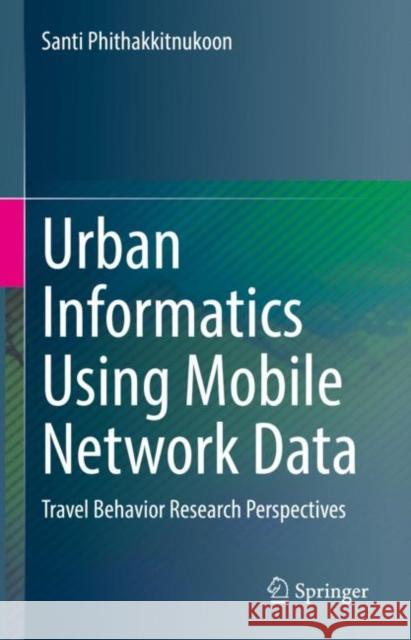
Urban Informatics Using Mobile Network Data: Travel Behavior Research Perspectives

ISBN-13: 9789811967139 / Angielski / Twarda / 2022 / 241 str.
Santi Phithakkitnukoon
Urban Informatics Using Mobile Network Data: Travel Behavior Research Perspectives Santi Phithakkitnukoon 9789811967139 Springer - książkaWidoczna okładka, to zdjęcie poglądowe, a rzeczywista szata graficzna może różnić się od prezentowanej.

Urban Informatics Using Mobile Network Data: Travel Behavior Research Perspectives

ISBN-13: 9789811967139 / Angielski / Twarda / 2022 / 241 str.

Santi Phithakkitnukoon
cena 682,72
(netto: 650,21 VAT:  5%)

Najniższa cena z 30 dni: 655,41
Termin realizacji zamówienia:
ok. 22 dni roboczych
Dostawa w 2026 r.

Darmowa dostawa!
inne wydania

This book discusses the role of mobile network data in urban informatics, particularly how mobile network data is utilized in the mobility context, where approaches, models, and systems are developed for understanding travel behavior. The objectives of this book are thus to evaluate the extent to which mobile network data reflects travel behavior and to develop guidelines on how to best use such data to understand and model travel behavior. To achieve these objectives, the book attempts to evaluate the strengths and weaknesses of this data source for urban informatics and its applicability to the development and implementation of travel behavior models through a series of the authors’ research studies.Traditionally, survey-based information is used as an input for travel demand models that predict future travel behavior and transportation needs. A survey-based approach is however costly and time-consuming, and hence its information can be dated and limited to a particular region. Mobile network data thus emerges as a promising alternative data source that is massive in both cross-sectional and longitudinal perspectives, and one that provides both broader geographic coverage of travelers and longer-term travel behavior observation. The two most common types of travel demand model that have played an essential role in managing and planning for transportation systems are four-step models and activity-based models. The book’s chapters are structured on the basis of these travel demand models in order to provide researchers and practitioners with an understanding of urban informatics and the important role that mobile network data plays in advancing the state of the art from the perspectives of travel behavior research.

This book discusses the role of mobile network data in urban informatics, particularly how mobile network data is utilized in the mobility context, where approaches, models, and systems are developed for understanding travel behavior. The objectives of this book are thus to evaluate the extent to which mobile network data reflects travel behavior and to develop guidelines on how to best use such data to understand and model travel behavior. To achieve these objectives, the book attempts to evaluate the strengths and weaknesses of this data source for urban informatics and its applicability to the development and implementation of travel behavior models through a series of the authors’ research studies.



Traditionally, survey-based information is used as an input for travel demand models that predict future travel behavior and transportation needs. A survey-based approach is however costly and time-consuming, and hence its information can be dated and limited to a particular region. Mobile network data thus emerges as a promising alternative data source that is massive in both cross-sectional and longitudinal perspectives, and one that provides both broader geographic coverage of travelers and longer-term travel behavior observation. The two most common types of travel demand model that have played an essential role in managing and planning for transportation systems are four-step models and activity-based models. The book’s chapters are structured on the basis of these travel demand models in order to provide researchers and practitioners with an understanding of urban informatics and the important role that mobile network data plays in advancing the state of the art from the perspectives of travel behavior research.

Kategorie:
Informatyka, Bazy danych
Kategorie BISAC:
Computers > Information Theory
Computers > Artificial Intelligence - General
Computers > Data Science - Data Analytics
Wydawca:
Springer
Język:
Angielski
ISBN-13:
9789811967139
Rok wydania:
2022
Dostępne języki:
Ilość stron:
241
Waga:
0.53 kg
Wymiary:
23.39 x 15.6 x 1.6
Oprawa:
Twarda
Dodatkowe informacje:
Wydanie ilustrowane

Chapter 1 The Overview of Mobile Network Data-Driven Urban Informatics.- Chapter 2 Inferring Passenger Travel Demand Using Mobile Phone CDR Data.- Chapter 3 Modeling Trip Distribution Using Mobile Phone CDR Data.- Chapter 4 Inferring and Modeling Migration Flows Using Mobile Phone CDR Data.- Chapter 5 Inferring Social Influence in Transport Mode Choice Using Mobile Phone CDR Data.- Chapter 6 Inferring Route Choice Using Mobile Phone CDR Data.- Chapter 7 Analysis of Weather Effects on People’s Daily Activity Patterns Using Mobile Phone GPS Data.- Chapter 8 Analysis of Tourist Behavior Using Mobile Phone GPS Data.- Chapter 9 An Outlook for Future Mobile Network Data-Driven Urban Informatics.

Santi Phithakkitnukoon is originally from Chiang Mai, Thailand. Santi is currently an Associate Professor with the Department of Computer Engineering, Faculty of Engineering, Chiang Mai University. He received B.S. and M.S. degrees in electrical engineering from the Southern Methodist University, USA, in 2003 and 2005, respectively, and a Ph.D. in computer science and engineering from the University of North Texas, USA. Before joining Chiang Mai University, he was a Lecturer in Computing with The Open University, U.K., a Research Associate with the Culture Lab (now known as Open Lab), Newcastle University, U.K., and a Postdoctoral Fellow with the SENSEable City Lab, Massachusetts Institute of Technology, USA. His research interest is in urban informatics, particularly in analyzing large-scale digital footprints such as mobile phone CDRs, GPS traces, social media data, and opportunistic sensing data sources to better understand human behavior and urban dynamics.


This book discusses the role of mobile network data in urban informatics, particularly how mobile network data is utilized in the mobility context, where approaches, models, and systems are developed for understanding travel behavior. The objectives of this book are thus to evaluate the extent to which mobile network data reflects travel behavior and to develop guidelines on how to best use such data to understand and model travel behavior. To achieve these objectives, the book attempts to evaluate the strengths and weaknesses of this data source for urban informatics and its applicability to the development and implementation of travel behavior models through a series of the authors’ research studies.


Traditionally, survey-based information is used as an input for travel demand models that predict future travel behavior and transportation needs. A survey-based approach is however costly and time-consuming, and hence its information can be dated and limited to a particular region. Mobile network data thus emerges as a promising alternative data source that is massive in both cross-sectional and longitudinal perspectives, and one that provides both broader geographic coverage of travelers and longer-term travel behavior observation. The two most common types of travel demand model that have played an essential role in managing and planning for transportation systems are four-step models and activity-based models. The book’s chapters are structured on the basis of these travel demand models in order to provide researchers and practitioners with an understanding of urban informatics and the important role that mobile network data plays in advancing the state of the art from the perspectives of travel behavior research.


Udostępnij

Facebook - konto krainaksiazek.pl


Opinie o Krainaksiazek.pl na Opineo.pl

Partner Mybenefit

Krainaksiazek.pl w programie rzetelna firma Krainaksiaze.pl - płatności przez paypal

Czytaj nas na:

Facebook - krainaksiazek.pl
  • książki na zamówienie
  • granty
  • książka na prezent
  • kontakt
  • pomoc
  • opinie
  • regulamin
  • polityka prywatności

Zobacz:

  • Księgarnia czeska

  • Wydawnictwo Książkowe Klimaty

1997-2025 DolnySlask.com Agencja Internetowa

© 1997-2022 krainaksiazek.pl
     
KONTAKT | REGULAMIN | POLITYKA PRYWATNOŚCI | USTAWIENIA PRYWATNOŚCI
Zobacz: Księgarnia Czeska | Wydawnictwo Książkowe Klimaty | Mapa strony | Lista autorów
KrainaKsiazek.PL - Księgarnia Internetowa

Polityka prywatnosci - link
Krainaksiazek.pl - płatnośc Przelewy24
Przechowalnia Przechowalnia



