• Wyszukiwanie zaawansowane
  • Kategorie
  • Kategorie BISAC
  • Książki na zamówienie
  • Promocje
  • Granty
  • Książka na prezent
  • Opinie
  • Pomoc
  • Załóż konto
  • Zaloguj się

Urban Bats: Biology, Ecology, and Human Dimensions » książka


zaloguj się | załóż konto
Logo Krainaksiazek.pl

koszyk

konto

szukaj
topmenu
Księgarnia internetowa
Szukaj
Książki na zamówienie
Promocje
Granty
Książka na prezent
Moje konto
Pomoc
 
 
Wyszukiwanie zaawansowane
Pusty koszyk
Bezpłatna dostawa dla zamówień powyżej 20 złBezpłatna dostawa dla zamówień powyżej 20 zł

Kategorie główne

• Nauka
 [2946912]
• Literatura piękna
 [1852311]

  więcej...
• Turystyka
 [71421]
• Informatyka
 [150889]
• Komiksy
 [35717]
• Encyklopedie
 [23177]
• Dziecięca
 [617324]
• Hobby
 [138808]
• AudioBooki
 [1671]
• Literatura faktu
 [228371]
• Muzyka CD
 [400]
• Słowniki
 [2841]
• Inne
 [445428]
• Kalendarze
 [1545]
• Podręczniki
 [166819]
• Poradniki
 [480180]
• Religia
 [510412]
• Czasopisma
 [525]
• Sport
 [61271]
• Sztuka
 [242929]
• CD, DVD, Video
 [3371]
• Technologie
 [219258]
• Zdrowie
 [100961]
• Książkowe Klimaty
 [124]
• Zabawki
 [2341]
• Puzzle, gry
 [3766]
• Literatura w języku ukraińskim
 [255]
• Art. papiernicze i szkolne
 [7810]
Kategorie szczegółowe BISAC

Urban Bats: Biology, Ecology, and Human Dimensions

ISBN-13: 9783031131721 / Angielski / Twarda / 2023 / 190 str.
Lauren Moretto; Brock Fenton; Krista J. Patriquin
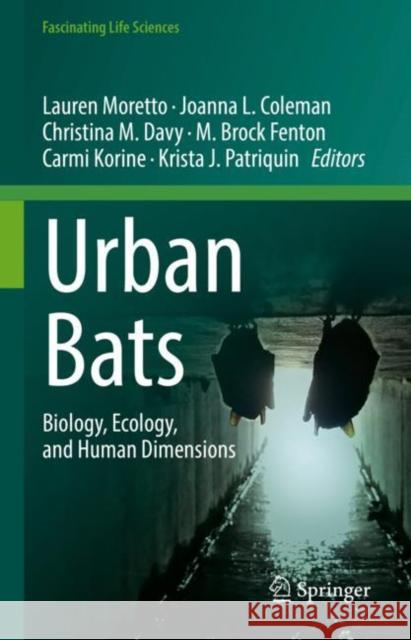
Urban Bats: Biology, Ecology, and Human Dimensions Lauren Moretto Brock Fenton Krista J. Patriquin 9783031131721 Springer - książkaWidoczna okładka, to zdjęcie poglądowe, a rzeczywista szata graficzna może różnić się od prezentowanej.

Urban Bats: Biology, Ecology, and Human Dimensions

ISBN-13: 9783031131721 / Angielski / Twarda / 2023 / 190 str.

Lauren Moretto; Brock Fenton; Krista J. Patriquin
cena 443,82
(netto: 422,69 VAT:  5%)

Najniższa cena z 30 dni: 424,07
Termin realizacji zamówienia:
ok. 22 dni roboczych
Bez gwarancji dostawy przed świętami

Darmowa dostawa!
inne wydania

The Anthropocene is the “age of human influence”, an epoch well known for its urban impact. More than half of all people already live in cities, and this proportion is expected to rise to almost 70 percent by 2050. Like other species in urban areas, bats must contend with the pressures of profound and irreversible land cover change and overcome certain unique challenges, such as the high density of roads, lights, glass, and free-ranging domestic animals. Research on urban bats in recent decades indicates that when it comes to urban life, some bats are synanthropes. In other words, although most species of bats are negatively impacted by urbanisation, many appear to not only succeed, but also thrive in cities and towns. This observation has inspired interesting questions about bats in relation to urbanisation. Which traits and behaviours equip bats for urban success? What features of urban areas increase the likelihood that bats will successfully persist there or even colonize new areas? And how does the success of urban bats affect co-habiting humans?Our book explores the interactions between bats and urban environments through case studies and reviews.  Understanding how different species interact with urban environments can reveal potential opportunities to mitigate urban threats to bats and threats posed by bats to other urban organisms, including humans. With this book, we thus aspire to provide a knowledge base to help guide current and future efforts to conserve bats.


The Anthropocene is the “age of human influence”, an epoch well known for its urban impact. More than half of all people already live in cities, and this proportion is expected to rise to almost 70 percent by 2050. Like other species in urban areas, bats must contend with the pressures of profound and irreversible land cover change and overcome certain unique challenges, such as the high density of roads, lights, glass, and free-ranging domestic animals. Research on urban bats in recent decades indicates that when it comes to urban life, some bats are synanthropes. In other words, although most species of bats are negatively impacted by urbanisation, many appear to not only succeed, but also thrive in cities and towns. This observation has inspired interesting questions about bats in relation to urbanisation. Which traits and behaviours equip bats for urban success? What features of urban areas increase the likelihood that bats will successfully persist there or even colonize new areas? And how does the success of urban bats affect co-habiting humans?

Our book explores the interactions between bats and urban environments through case studies and reviews.  Understanding how different species interact with urban environments can reveal potential opportunities to mitigate urban threats to bats and threats posed by bats to other urban organisms, including humans. With this book, we thus aspire to provide a knowledge base to help guide current and future efforts to conserve bats.

Kategorie:
Nauka, Biologia i przyroda
Kategorie BISAC:
Science > Life Sciences - Ecology
Nature > Environmental Conservation & Protection - General
Science > Life Sciences - Evolution
Wydawca:
Springer
Seria wydawnicza:
Fascinating Life Sciences
Język:
Angielski
ISBN-13:
9783031131721
Rok wydania:
2023
Dostępne języki:
Numer serii:
000799451
Ilość stron:
190
Oprawa:
Twarda
Dodatkowe informacje:
Wydanie ilustrowane

Chapter Outlines

Section 1: What is an Urban Bat? Morphological, Physiological, Behavioural and Genetic Adaptations

Chapter 1: Physiological adaptation of bats to urban areas

Chapter 2: Genetic impoverishment and species endangerment in the Anthropocene

Chapter 3: Behavioral preadaptation of molossid bats to urban environments

Chapter 4: The ecology of bats and their parasites in relation to urbanisation

Chapter 5: Effect of urbanization on the social and mating system of bats

Section 2: How do Bats Inhabit Urban Environments? Uses of Artificial Roosts, the Aerospace, and Green Spaces

Chapter 6: Roost selection by urban bats

Chapter 7: Bat boxes as roosting habitat in cities – ‘thinking outside the box’

Chapter 8: Woah, living in the air! Aerial habitats and aeroconservation for urban bats

Chapter 9: What traits of greenspace in urban environments influence bat abundance and diversity?

Chapter 10:  Urban bats living in the city of Recife, Brazil

Section 3: How do Bats and Humans Interact in Urban Environments? Human Perceptions, Public Health, and Ecosystem Services of Bats

Chapter 11: Human dimension of bats in the city

Chapter 12: Public health /conflicts between humans and bats

Chapter 13: Ecosystem services of bats in urban habitats

Chapter 14: The big picture, and moving forward with urban bat research, management, and conservation

Lauren Moretto is a Master of Science graduate from the Fahrig Landscape Ecology Lab in the Department of Biology at Carleton University. Lauren's general research interests are wildlife and habitat management, but she specializes in urban, bat, and landscape ecology.

Joanna L. Coleman is an Assistant Professor at City University of New York-Queens College. She is also a core member of the Human Dimensions Working Group and the Co-Chair of the Bat Trade Working Group, within the IUCN Species Survival Commission, Bat Specialist Group. Her applied and interdisciplinary research agenda uses ecology and social science and to mitigate biodiversity loss and promote sustainability on an increasingly urban planet.

M. Brock Fenton, Professor Emeritus at Western University in Ontario, Canada, uses bats to explore the interfaces between animal behaviour, ecology and evolution. His research involves different aspects of the biology of bats using a combination of field and laboratory experiments and observations in settings ranging from different locations in Canada to a variety of sites in the tropics and subtropics.

Christina M. Davy is a Conservation Ecologist based at Carleton University, where she and her students study the impacts of rapid environmental change on endangered wildlife, including bats. She is particularly interested in understanding bats’ behavioral and genetic responses to habitat modification, including urbanisation, and the selective impacts of pathogens on bat behavior and population viability.

Carmi Korine is a Professor at Ben-Gurion University of the Negev, Israel. Carmi is studying the physiological ecology of bats, a discipline that explores, in an ecological and evolutionary context, the ways in which animals function in response to their natural environments. Currently, Carmi’s research explores the effects of anthropogenic disturbances on conservation ecology of desert-dwelling bats.

Krista J. Patriquin is an Adjunct Professor at Saint Mary’s University, and Research Coordinator with the Sable Island Institute, both in Nova Scotia, Canada. Broadly, her work investigates how organisms respond to change, including human-induced change. Most of this work has focused on foraging behaviour and conservation of bats in myriad environments, including urban parks.

The Anthropocene is the “age of human influence”, an epoch well known for its urban impact. More than half of all people already live in cities, and this proportion is expected to rise to almost 70 percent by 2050. Like other species in urban areas, bats must contend with the pressures of profound and irreversible land cover change and overcome certain unique challenges, such as the high density of roads, lights, glass, and free-ranging domestic animals. Research on urban bats in recent decades indicates that when it comes to urban life, some bats are synanthropes. In other words, although most species of bats are negatively impacted by urbanisation, many appear to not only succeed, but also thrive in cities and towns. This observation has inspired interesting questions about bats in relation to urbanisation. Which traits and behaviours equip bats for urban success? What features of urban areas increase the likelihood that bats will successfully persist there or even colonize new areas? And how does the success of urban bats affect co-habiting humans?

Our book explores the interactions between bats and urban environments through case studies and reviews.  Understanding how different species interact with urban environments can reveal potential opportunities to mitigate urban threats to bats and threats posed by bats to other urban organisms, including humans. With this book, we thus aspire to provide a knowledge base to help guide current and future efforts to conserve bats.

Fenton, Brock Brock Fenton... więcej >


Udostępnij

Facebook - konto krainaksiazek.pl


Opinie o Krainaksiazek.pl na Opineo.pl

Partner Mybenefit

Krainaksiazek.pl w programie rzetelna firma Krainaksiaze.pl - płatności przez paypal

Czytaj nas na:

Facebook - krainaksiazek.pl
  • książki na zamówienie
  • granty
  • książka na prezent
  • kontakt
  • pomoc
  • opinie
  • regulamin
  • polityka prywatności

Zobacz:

  • Księgarnia czeska

  • Wydawnictwo Książkowe Klimaty

1997-2025 DolnySlask.com Agencja Internetowa

© 1997-2022 krainaksiazek.pl
     
KONTAKT | REGULAMIN | POLITYKA PRYWATNOŚCI | USTAWIENIA PRYWATNOŚCI
Zobacz: Księgarnia Czeska | Wydawnictwo Książkowe Klimaty | Mapa strony | Lista autorów
KrainaKsiazek.PL - Księgarnia Internetowa

Polityka prywatnosci - link
Krainaksiazek.pl - płatnośc Przelewy24
Przechowalnia Przechowalnia



