Unorthodox Freud: The View from the Couch » książka





Unorthodox Freud: The View from the Couch
ISBN-13: 9781572301283 / Angielski / Twarda / 1996 / 241 str.
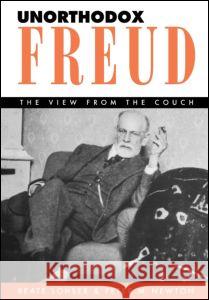
Offering a fresh analysis of how Freud practiced psychoanalysis which has profound implications for practice today, the authors draw from the existing full-length accounts written by patients who were treated by Freud in the 1920s and 1930s. Presented together for the first time as detailed case studies, these vivid, intimate biographies of the analytic process reveal an unexpected Freud. Quite different from the current stereotype of the Freudian analyst, Freud is depicted as an organized, persistent, personally engaged, and expressive clinician. Demonstrating how Freud s use of free association allowed him to be spontaneous and personal, the authors also describe the consequences of the current reliance on transference and resistance analysis as the engine of treatment. Bound to stir controversy, they contend that by subordinating the entirety of their clinical behavior to protecting the transference, contemporary clinicians are indeed doing psychoanalysis, but the work they are doing is not Freudian.




Czytaj nas na:
KrainaKsiazek.PL - Księgarnia Internetowa


