• Wyszukiwanie zaawansowane
  • Kategorie
  • Kategorie BISAC
  • Książki na zamówienie
  • Promocje
  • Granty
  • Książka na prezent
  • Opinie
  • Pomoc
  • Załóż konto
  • Zaloguj się

Universes in Delicate Balance: Chemokines and the Nervous System » książka


zaloguj się | załóż konto
Logo Krainaksiazek.pl

koszyk

konto

szukaj
topmenu
Księgarnia internetowa
Szukaj
Książki na zamówienie
Promocje
Granty
Książka na prezent
Moje konto
Pomoc
 
 
Wyszukiwanie zaawansowane
Pusty koszyk
Bezpłatna dostawa dla zamówień powyżej 20 złBezpłatna dostawa dla zamówień powyżej 20 zł

Kategorie główne

• Nauka
 [2946912]
• Literatura piękna
 [1852311]

  więcej...
• Turystyka
 [71421]
• Informatyka
 [150889]
• Komiksy
 [35717]
• Encyklopedie
 [23177]
• Dziecięca
 [617324]
• Hobby
 [138808]
• AudioBooki
 [1671]
• Literatura faktu
 [228371]
• Muzyka CD
 [400]
• Słowniki
 [2841]
• Inne
 [445428]
• Kalendarze
 [1545]
• Podręczniki
 [166819]
• Poradniki
 [480180]
• Religia
 [510412]
• Czasopisma
 [525]
• Sport
 [61271]
• Sztuka
 [242929]
• CD, DVD, Video
 [3371]
• Technologie
 [219258]
• Zdrowie
 [100961]
• Książkowe Klimaty
 [124]
• Zabawki
 [2341]
• Puzzle, gry
 [3766]
• Literatura w języku ukraińskim
 [255]
• Art. papiernicze i szkolne
 [7810]
Kategorie szczegółowe BISAC

Universes in Delicate Balance: Chemokines and the Nervous System

ISBN-13: 9780444510020 / Angielski / Twarda / 2002 / 404 str.
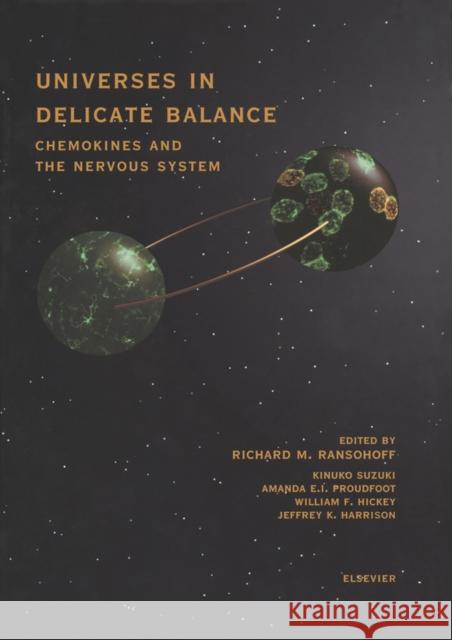
Richard M. Ransohoff; R. M. Ransohoff; K. Suzuki
Universes in Delicate Balance: Chemokines and the Nervous System Richard M. Ransohoff R. M. Ransohoff K. Suzuki 9780444510020 Elsevier Science & Technology - książkaWidoczna okładka, to zdjęcie poglądowe, a rzeczywista szata graficzna może różnić się od prezentowanej.

Universes in Delicate Balance: Chemokines and the Nervous System

ISBN-13: 9780444510020 / Angielski / Twarda / 2002 / 404 str.

Richard M. Ransohoff; R. M. Ransohoff; K. Suzuki
cena 844,88
(netto: 804,65 VAT:  5%)

Najniższa cena z 30 dni: 844,88
Termin realizacji zamówienia:
ok. 30 dni roboczych
Bez gwarancji dostawy przed świętami

Darmowa dostawa!

It is commonly acknowledged that the nervous system and the immune system, those most complex of networks, share attributes beyond their intricacy. Elements common to the two systems include memory, connectivity, flexibility and developmental selection of cellular composition by a rigorous process involving widespread programmed cell death. There is one salient difference: the cells of the immune system are predominantly in constant motion, while post-mitotic neurons and glia are largely fixed in place. Therefore, chemokines, initially characterized as leukocyte chemoattractants, have for the last one and one-half decades been intensely and productively studied in the contexts of inflammation, immunity and hematopoietic development. Only recently have the two fields, neurobiology and immunology, displayed mutual interests in chemokines. This convergence of the two tribes of investigators was catalyzed by the finding that SDF-1 (now known as CXCL12) and its receptor, CXCR4, exerted significant and similar functions in development of both nervous and immune systems. Indeed CXCL12 and CXCR4 were required, in an uncannily similar fashion, for retention of pre-B lymphocytes at sites of maturation in the bone marrow and of neuronal progenitors in the external granule cell layer of the developing cerebellum. Recent reports indicate that chemoattraction of cerebellar granule cells through CXCR4 can be suppressed by reverse signaling initiated by binding of soluble eph receptors to transmembrane ephrin B, thereby establishing a link between chemokine action and a cardinal patterning system of the developing nervous system. As may be anticipated when a dam breaks, a massive influx of correlative observations in the nervous and immune systems is likely to ensue.
This volume represents the state of current knowledge. To this end, introductory material for both systems is provided. Basic and advanced 'chemokinology' are presented. The recipe for making a nervous system (both ingredients and instructions for preparation) is described, as are the roles of chemokines and their receptors in making an immune system. Given their importance and complexity, CXCL12/CXCR4 interactions are separately treated in varying contexts.
The field of 'neurobiology of chemokines' has not lain fallow during the last ten years. During much of this time the principal focus has been on neuroinflammation. Linking the immune and nervous systems are explanations of the functions of chemokines and their receptors for resident brain macrophages, the microglia, the unique cerebrovascular endothelium and angiogenesis.
Understanding human disease is the goal of much of this research. New discoveries are being made and reported at a gratifying rate. It is expected that this volume will promote the steady production and application of useful new knowledge in this developing field. It provides a unique single-source database for basic neurobiology highlighting the fundamental aspects of chemokines and discussing the relations of chemokine science to animal models and human disease.


Kategorie:
Nauka, Medycyna
Kategorie BISAC:
Medical > Immunology
Medical > Neuroscience
Medical > Neurologia i neurofizjologia kliniczna
Wydawca:
Elsevier Science & Technology
Język:
Angielski
ISBN-13:
9780444510020
Rok wydania:
2002
Ilość stron:
404
Oprawa:
Twarda
Wolumenów:
01
Dodatkowe informacje:
Bibliografia
Wydanie ilustrowane

D.A. Weigent
"The overall strength of the book lies in the timely and comprehensive coverage of the newly developing area of chemokine neurobiology. ...The test is well written and for the most part has avoided large amounts of detail that burden some readers." --International Journal of Toxicology

Preface.
1. The nervous system (K. Suzuki).
1.1 Cellular elements, tissue organization, organogenesis (J. Dupree).
1.2 Cellular reactions to insult (K. Suzuki).
1.3 Patterns of tissue pathology in neurological diseases (K. Suzuki).
2. The chemokine system(A.E.I. Proudfoot).
2.1 The biology of chemokines (B. Rollins).
2.2 Chemokines (A.E.I. Proudfoot, J.P. Shaw, C.A. Power, T.N.C. Wells).
2.3 Chemokine receptors (D. Slattery, N. Gerard, C. Gerard).
2.4 Chemokine receptor signal transduction (K. Bacon).
2.5 Development and function of the hemato-lymphopoiteic system (G.N. Schwartz, J.M. Farber).
2.6 CXC chemokines in angiogenesis (R.M. Strieter, J.A. Belperiio, D.A. Arenberg, M.I. Smith, M.D. Burdiek, M.P. Keane).
3. Chemokines and neural inflammation in model systems (W.F. Hickey).
3.1 Expression, functions and interactions of chemokines in CNS trauma (V.W. Yong).
3.2 Animal models of multiple sclerosis (W.J. Karpus).
3.3 Chemokines and neonatal excitotoxic brain injury (J.M. Galasso, F. Silverstein).
3.4 Stroke: chemokine-induced infiltration of immune cells (H.W.G.M. Boddeke).
3.5 Chemokine responses in virus-induced neurologic disease: balancing host defence and neuropathology (T.E. Lane, M.J. Buchmeier).
3.6 Cell recruitment in the axotomized facial nucleus: role of cytokines, chemokines and cell adhesion molecules (G. Raivich).
3.7 Chemokines and neural inflammation in experimental brain abscesses (T. Kielian, W.F. Hickey).
3.8 Insights from transgenic and knockout mice (I.L. Campbell, V.C. Asensio).
4. Chemokines effects on other CNS processes and resident cells (J.K. Harrison).
4.1 Constitutive roles for SDF-1/CXCR4 and fractalkine/CX3CR1 in the CNS (J.K. Harrison).
4.2 The role of the chemokine GRO-1 in the development of vertebrate CNS glial cells (R.H. Miller, S. Robinson).
4.3 Chemokine interactions with astrocytes (M.E. Dorf, F.R. Fischer, M.A. Berman, Y. Luo).
4.4 Why do neurons express chemokine receptors? (R.J. Miller, S.B. Oh).
4.5 Microglial chemokines and chemokine receptors (K. Biber).
4.6 Chemokines and chemokine receptors along the brain microvasculature (A.V. Andjelkovic, J.S. Pachter).
5. Chemokines and neurological diseases (R. Ransohoff).
5.1 Chemokines and chemokine receptors in multiple sclerosis: a few answers and many more questions (R. Ransohoff, C. Trebst).
5.2 Chemokines in the central nervous system and Alzheimer's Disease (M. Xia, B.T. Hyman).
5.3 HIV-1 associated dementia (D. Gabuzda, J. Wang, P.R. Gorry).
5.4 Infections: meningitis and encephalitis (K.S. Spanaus, A. Fontana).
5.5 Chemokines in the inflamed peripheral nervous system (B.C. Kieseier, H.-P. Hartung).

Ransohoff, Richard M. Richard M. Ransohoff is Director of the Neuroinfla... więcej >


Udostępnij

Facebook - konto krainaksiazek.pl


Opinie o Krainaksiazek.pl na Opineo.pl

Partner Mybenefit

Krainaksiazek.pl w programie rzetelna firma Krainaksiaze.pl - płatności przez paypal

Czytaj nas na:

Facebook - krainaksiazek.pl
  • książki na zamówienie
  • granty
  • książka na prezent
  • kontakt
  • pomoc
  • opinie
  • regulamin
  • polityka prywatności

Zobacz:

  • Księgarnia czeska

  • Wydawnictwo Książkowe Klimaty

1997-2025 DolnySlask.com Agencja Internetowa

© 1997-2022 krainaksiazek.pl
     
KONTAKT | REGULAMIN | POLITYKA PRYWATNOŚCI | USTAWIENIA PRYWATNOŚCI
Zobacz: Księgarnia Czeska | Wydawnictwo Książkowe Klimaty | Mapa strony | Lista autorów
KrainaKsiazek.PL - Księgarnia Internetowa

Polityka prywatnosci - link
Krainaksiazek.pl - płatnośc Przelewy24
Przechowalnia Przechowalnia





