• Wyszukiwanie zaawansowane
  • Kategorie
  • Kategorie BISAC
  • Książki na zamówienie
  • Promocje
  • Granty
  • Książka na prezent
  • Opinie
  • Pomoc
  • Załóż konto
  • Zaloguj się

Universal Usability: Designing Computer Interfaces for Diverse User Populations » książka


zaloguj się | załóż konto
Logo Krainaksiazek.pl

koszyk

konto

szukaj
topmenu
Księgarnia internetowa
Szukaj
Książki na zamówienie
Promocje
Granty
Książka na prezent
Moje konto
Pomoc
 
 
Wyszukiwanie zaawansowane
Pusty koszyk
Bezpłatna dostawa dla zamówień powyżej 20 złBezpłatna dostawa dla zamówień powyżej 20 zł

Kategorie główne

• Nauka
 [2946600]
• Literatura piękna
 [1856966]

  więcej...
• Turystyka
 [72221]
• Informatyka
 [151456]
• Komiksy
 [35826]
• Encyklopedie
 [23190]
• Dziecięca
 [619653]
• Hobby
 [140543]
• AudioBooki
 [1577]
• Literatura faktu
 [228355]
• Muzyka CD
 [410]
• Słowniki
 [2874]
• Inne
 [445822]
• Kalendarze
 [1744]
• Podręczniki
 [167141]
• Poradniki
 [482898]
• Religia
 [510455]
• Czasopisma
 [526]
• Sport
 [61590]
• Sztuka
 [243598]
• CD, DVD, Video
 [3423]
• Technologie
 [219201]
• Zdrowie
 [101638]
• Książkowe Klimaty
 [124]
• Zabawki
 [2473]
• Puzzle, gry
 [3898]
• Literatura w języku ukraińskim
 [254]
• Art. papiernicze i szkolne
 [8170]
Kategorie szczegółowe BISAC

Universal Usability: Designing Computer Interfaces for Diverse User Populations

ISBN-13: 9780470027271 / Angielski / Miękka / 2007 / 624 str.

Jonathan Lazar
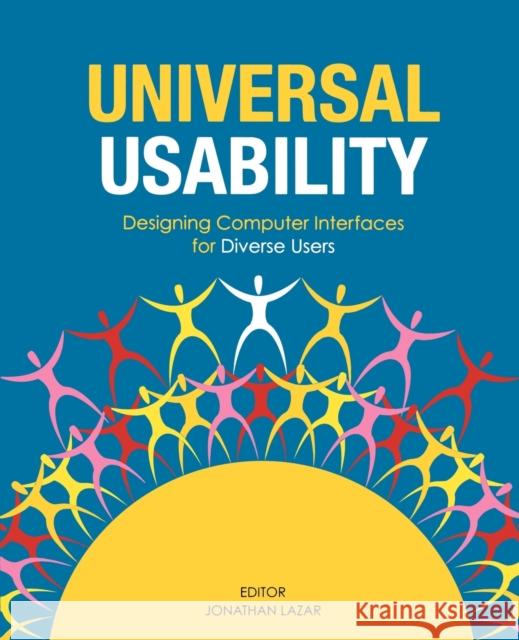
Universal Usability: Designing Computer Interfaces for Diverse User Populations Lazar, Jonathan 9780470027271 John Wiley & Sons - książkaWidoczna okładka, to zdjęcie poglądowe, a rzeczywista szata graficzna może różnić się od prezentowanej.

Universal Usability: Designing Computer Interfaces for Diverse User Populations

ISBN-13: 9780470027271 / Angielski / Miękka / 2007 / 624 str.

Jonathan Lazar
cena 291,82 zł
(netto: 277,92 VAT:  5%)

Najniższa cena z 30 dni: 289,42 zł
Termin realizacji zamówienia:
ok. 30 dni roboczych
Bez gwarancji dostawy przed świętami

Darmowa dostawa!

Universal Usability is the concept of designing computer interfaces that are easy for all users to utilize. It is a concept which many decry as elusive, impossible, or impractical, but this book, which addresses usability issues for a number of diverse user groups, proves that there is no problem in interface design that cannot be solved, or at least improved upon. Individuals with cognitive, motor, and perceptual impairments, as well as older, younger, and economically disadvantaged users, face a variety of complex challenges when interacting with computers. However, with user involvement, good design practice, and thorough testing, computer interfaces can be successfully developed for any user population. This book, featuring key chapters by Human-Computer Interaction luminaries such as Jonathan Lazar, Ron Baecker, Allison Druin, Ben Shneiderman, Brad Myers and Jenny Preece, examines innovative and groundbreaking research and practice, and provides a practical overview of a number of successful projects which have addressed a need for these specific user populations. Chapters in this book address topics including age diversity, economic diversity, language diversity, visual impairment, and spinal cord injuries. Several of these trailblazing projects in the book are amongst the first to examine usability issues for users with Down Syndrome, users with Amnesia, users with Autism Spectrum Disorders, and users with Alzheimer's Disease, and coverage extends to projects where multiple categories of needs are addressed. These chapters represent real-world projects, being carried out on different continents. The authors of the chapters also represent diversity--interface researchers and software developers in university, industrial, and government settings. In the practical spirit of the book, chapter authors provide guidelines and suggestions for those attempting similar projects, as well as implications for different stakeholders such as policymakers, researchers, and designers. Ideal for students of HCI and User Interface Design, and essential reading for usability practitioners, this fascinating collection of real-world projects demonstrates that computer interfaces can truly be designed to meet the needs of any category of user.


Kategorie:
Informatyka, Programowanie
Kategorie BISAC:
Computers > User Interfaces
Wydawca:
John Wiley & Sons
Język:
Angielski
ISBN-13:
9780470027271
Rok wydania:
2007
Ilość stron:
624
Waga:
1.12 kg
Wymiary:
23.37 x 18.85 x 3.43
Oprawa:
Miękka
Wolumenów:
01
Dodatkowe informacje:
Wydanie ilustrowane

"It is probably the most comprehensive book on universal usability and its applications to date. I would therefore recommend it to all people who are interested in universal usability, not only user interface designers. Considering the growing relevance of this topic, it should be read by all people involved in user interface design projects." SAP Design Guild News

Editor′s Note vii

Preface ix
Ben Shneiderman

1. Introduction to Universal Usability 1
Jonathan Lazar

2. Designing Searching and Browsing Software for Elementary–Age Children 13
Hilary Hutchinson, Allison Druin and Benjamin B. Bederson

3. The Why and How of Senior–Focused Design 43
Theresa A. O′Connell

4. Online Redesign of a Web Site′s Information Architecture to Improve Accessibility for Users Who are Blind 93
Vanessa Evers and Hans Hillen

5. Listening to Choropleth Maps: Interactive Sonification of Geo–referenced Data for Users with Vision Impairment 141
Haixia Zhao, Ben Shneiderman and Catherine Plaisant

6. Improving the Screen Reading Experience for Blind Users on the Web 175
Jonathan Lazar and Aaron Allen

7. Web Fun Central: Online Learning Tools for Individuals with Down Syndrome 195
Assadour Kirijian, Matt Myers, and Sylvie Charland

8. Using Virtual Peer Technology as an Intervention for Children with Autism 231
Andrea Tartaro and Justine Cassell

9. Evidence–Based Computer–Assisted Instruction for Autism Spectrum Disorders 263
Christina Whalen, Lars Lidén, Brooke Ingersoll, and Sven Lidén

10. Making Software Accessible for Users with Dementia 299
Norman Alm, Richard Dye, Arlene Astell, Maggie Ellis, Gary Gowans, and Jim Campbell

11. Designing a Cognitive Aid for and with People Who Have Anterograde Amnesia 317
Mike Wu, Ron Baecker and Brian Richards

12. Memories of a Life: A Design Case Study for Alzheimer′s Disease 357
Tira Cohene, Ron Baecker, Elsa Marziali, and Simona Mindy

13. Interaction Techniques for Users with Spinal Cord Injuries: A Speech–Based Solution 389
Jinjuan Feng and Andrew Sears

14. Adding Gestural Text Entry to Input Devices for People with Motor Impairments 421
Jacob O. Wobbrock and Brad A. Myers

15. The Creating Community Connections Project: Social and Cultural Approaches for Engaging Low–Income Communities 457
Randal D. Pinkett

16. Implementing Community–Based Participatory Research to Reduce Health and Technology Disparities Among Low–Income African–American Women 491
Diane Maloney–Krischmar, Eleanor Walker, David Bushnell, and Sadanand Sirvastava

17. Evaluating the Usability and Accessibility of an Online Form for Census Data Collection 517
Elizabeth D. Murphy, Lawrence A. Malakhoff, and David A. Coon

18. Internationalizing Greenstone: A Multilingual Tool for Building Digital Libraries 559
David M. Nichols, Te Taka Keegan, David Bainbridge, Sally Jo Cunningham, Michael Dewship, and Ian H. Witten

19. Making Universal Access Truly Universal: Looking Toward the Future 587
Jennifer Preece

Index.

Dr. Jonathan Lazar is an Associate Professor of Computer and Information Sciences at Towson University, where he serves as head of the Computer Information Systems Program, and is the founder and director of the Universal Usability Laboratory.
Dr. Lazar has authored over 70 refereed publications, on the topics of web usability, assistive technology, user error and frustration, and user–centered design methods. He has previously authored two books and edited two books. His most recent authored book is "Web Usability: A User–Centered Design Approach", published by Addison–Wesley in 2006, and his most recent edited book is "Universal Usability: Designing Computer Interfaces for Diverse User Populations" published by John Wiley in 2007.
Dr. Lazar is a founding member and currently serves as Chair of the Association for Computing Machinery (ACM) SIGCHI U.S. Public Policy Committee. He was also recently named a Distinguished Speaker of the ACM. He has served on a number of conference committees, including CHI, ASSETS, INTERACT, and HCII.

Universal Usability describes the goal of designing computer interfaces that ar4e easy for all to use. It is a concept which many decry as elusive, impossible or impractical, but this book, which addresses usability issues for a number of diverse user groups, proves that there is no challenge in interface design that cannot be addressed. Individuals with cognitive, motor and perceptual impairments, as well as older, younger and economically disadvantaged users, face a variety of complex challenges when interacting with computers. However, with user involvement, good design practice, and thorough testing, computer interfaces can be successfully developed for any user population.

This book, featuring key chapters by Human–Computer Interaction luminaries such as Jonathan Lazar, Ron Baecker, Allison Druin, Ben Shneiderman, Brad Myers and Jenny Preece, examines innovative and groundbreaking research and practice, and provides a practical overview of a number of successful projects which have addressed a need for specific user populations. Chapters address topics including age, economic, and language diversity, visual impairment, and spinal chord injuries, and include trailblazing projects that examine usability issues for users with Down Syndrome, Amnesia, Autism Spectrum Disorders and Alzheimer′s Disease. Coverage extends to projects where multiple categories of needs are addressed.

These chapters represent real–world projects, being carried out on different continents, by authors representing diversity – interfaced researchers and software developers in university, industrial and government settings. In the practical spirit of the book, guidelines and suggestions are provided for those attempting similar projects, and implications considered for stakeholders such as policymakers, researchers, and designers. Ideal for students of HCI and User–Interface design, and essential reading for usability practitioners, this fascinating collection demonstrates that computer interfaces can truly be designed to meet the needs of every user.

Lazar, Jonathan Born May, 1985, to probably the greatest generatio... więcej >


Udostępnij

Facebook - konto krainaksiazek.pl


Opinie o Krainaksiazek.pl na Opineo.pl

Partner Mybenefit

Krainaksiazek.pl w programie rzetelna firma Krainaksiaze.pl - płatności przez paypal

Czytaj nas na:

Facebook - krainaksiazek.pl
  • książki na zamówienie
  • granty
  • książka na prezent
  • kontakt
  • pomoc
  • opinie
  • regulamin
  • polityka prywatności

Zobacz:

  • Księgarnia czeska

  • Wydawnictwo Książkowe Klimaty

1997-2025 DolnySlask.com Agencja Internetowa

© 1997-2022 krainaksiazek.pl
     
KONTAKT | REGULAMIN | POLITYKA PRYWATNOŚCI | USTAWIENIA PRYWATNOŚCI
Zobacz: Księgarnia Czeska | Wydawnictwo Książkowe Klimaty | Mapa strony | Lista autorów
KrainaKsiazek.PL - Księgarnia Internetowa

Polityka prywatnosci - link
Krainaksiazek.pl - płatnośc Przelewy24
Przechowalnia Przechowalnia