• Wyszukiwanie zaawansowane
  • Kategorie
  • Kategorie BISAC
  • Książki na zamówienie
  • Promocje
  • Granty
  • Książka na prezent
  • Opinie
  • Pomoc
  • Załóż konto
  • Zaloguj się

Understanding Pragmatic Markers: A Variational Pragmatic Approach » książka


zaloguj się | załóż konto
Logo Krainaksiazek.pl

koszyk

konto

szukaj
topmenu
Księgarnia internetowa
Szukaj
Książki na zamówienie
Promocje
Granty
Książka na prezent
Moje konto
Pomoc
 
 
Wyszukiwanie zaawansowane
Pusty koszyk
Bezpłatna dostawa dla zamówień powyżej 20 złBezpłatna dostawa dla zamówień powyżej 20 zł

Kategorie główne

• Nauka
 [2946600]
• Literatura piękna
 [1856966]

  więcej...
• Turystyka
 [72221]
• Informatyka
 [151456]
• Komiksy
 [35826]
• Encyklopedie
 [23190]
• Dziecięca
 [619653]
• Hobby
 [140543]
• AudioBooki
 [1577]
• Literatura faktu
 [228355]
• Muzyka CD
 [410]
• Słowniki
 [2874]
• Inne
 [445822]
• Kalendarze
 [1744]
• Podręczniki
 [167141]
• Poradniki
 [482898]
• Religia
 [510455]
• Czasopisma
 [526]
• Sport
 [61590]
• Sztuka
 [243598]
• CD, DVD, Video
 [3423]
• Technologie
 [219201]
• Zdrowie
 [101638]
• Książkowe Klimaty
 [124]
• Zabawki
 [2473]
• Puzzle, gry
 [3898]
• Literatura w języku ukraińskim
 [254]
• Art. papiernicze i szkolne
 [8170]
Kategorie szczegółowe BISAC

Understanding Pragmatic Markers: A Variational Pragmatic Approach

ISBN-13: 9780748635498 / Angielski / Twarda / 2013 / 203 str.
Karin Aijmer
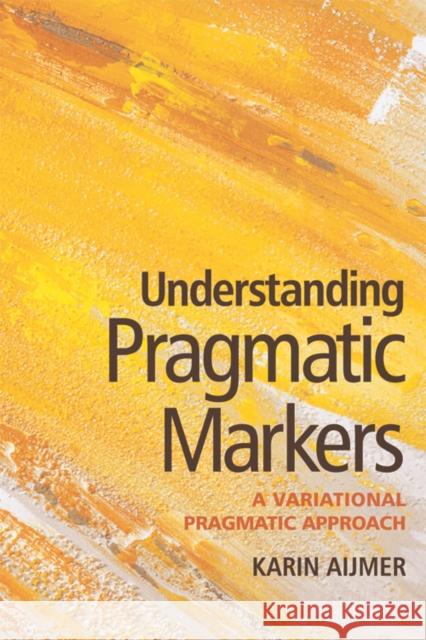
Understanding Pragmatic Markers: A Variational Pragmatic Approach Karin Aijmer 9780748635498 Edinburgh University Press - książkaWidoczna okładka, to zdjęcie poglądowe, a rzeczywista szata graficzna może różnić się od prezentowanej.

Understanding Pragmatic Markers: A Variational Pragmatic Approach

ISBN-13: 9780748635498 / Angielski / Twarda / 2013 / 203 str.

Karin Aijmer
cena 486,78 zł
(netto: 463,60 VAT:  5%)

Najniższa cena z 30 dni: 352,62 zł
Termin realizacji zamówienia:
ok. 30 dni roboczych
Bez gwarancji dostawy przed świętami

Darmowa dostawa!
inne wydania

The multifunctionality of pragmatic markers makes it difficult to describe their meaning and functional potential. For example we know very little about pragmatic markers and prosody, their sociolinguistic use (how they are related to the speaker's social class, age or gender) or their distribution across text types (informal conversation, discussion, broadcast programme). This book looks at pragmatic markers in a corpus of spoken English, with a focus on the functions performed by the markers in different types of text. The author explores the syntactic, semantic, pragmatic and discourse aspects of the markers. By taking a broader perspective on the markers, classifying them, describing their class-specific properties and analysing individual markers, Karen Aijmer assesses whether any generalisations can be made about the prosody of the markers.


Kategorie:
Nauka, Językoznawstwo
Kategorie BISAC:
Language Arts & Disciplines > Linguistics - Pragmatics
Language Arts & Disciplines > Linguistics - Semantics
Wydawca:
Edinburgh University Press
Język:
Angielski
ISBN-13:
9780748635498
Rok wydania:
2013
Dostępne języki:
Angielski
Ilość stron:
203
Wymiary:
23.423.4 x 15.6
Oprawa:
Twarda
Wolumenów:
01

Chapter 1 Introduction; 1.1 Introduction, 1.2 The definition of pragmatic markers in this work, 1.2.1 Pragmatic markers and reflexivity, 1.2.2 Pragmatic markers as contextualization cues; 1.3 Methodology; 1.4 Linguistic theories accounting for the relationship between pragmatic markers and context, 1.4.1 Integrative theories, 1.4.2 Relevance theory, 1.4.3 Pragmatic markers and meaning potentials; 1.5 Pragmatic markers and the context; 1.6 The formal features of pragmatic markers; 1.7 The functional features of pragmatic markers; 1.8 Summing up and conclusion; Chapter 2 The pragmatic marker well; 2.1 Introduction; 2.2 Previous studies of well ; 2.3 Distribution of well in the corpus; 2.4 Formal properties of well; 2.5 Well and collocation; 2.6 Well and meaning potentials; 2.7 The classification of well in this work; 2.8 Well and coherence, 2.8.1 Word search and self-repair, 2.8.2 Well as a turn-taking device, 2.8.3 Transition according to an agenda, 2.8.4 Transition to a quotation; 2.9 Well and involvement, 2.9.1 Well and agreement, 2.9.2 Well and disagreement, 2.9.3 Well as a feedback to questions; 2.10 Well and politeness; 2.11 Well in private dialogue, 2.11.1 Well in face-to-face conversation, 2.11.2 Well in telephone conversation; 2.12 Well in public dialogue, 2.12.1 Well in broadcast discussion, 2.12.2 Well in cross-examination; 2.13 Well in spontaneous commentaries; 2.14 Conclusion; Chapter 3 In fact and actually – a class of factuality markers; 3.1 Introduction; 3.2 Previous work ; 3.3 The distribution of in fact and actually over text types; 3.4 In fact, 3.4.1 Introduction, 3.4.2 Formal factors, 3.4.2.1 Position, 3.4.2.2 Prosodic factors, 3.4.2.3 In fact and collocation; 3.5 In fact and function, 3.5.1 The adversative in fact , 3.5.1.1 Emphasising reality, 3.5.1.2 Strong and weak opposition, 3.5.2 The elaborative in fact, 3.5.3 In fact as a hedging device, 3.5.3 In fact as a softener in end position, 3.5.4 Summarising in fact in conversation; 3.6 In fact in public dialogue, 3.6.1 In fact in legal cross-examinations, 3.6.2 In fact in broadcast discussion, 3.6.3 In fact in demonstrations; 3.7 In fact in monologues, 3.7.1 In fact in demonstrations, 3.7.2 In fact in unscripted speeches; 3.8 In fact in writing; 3.9 Summarising in fact; 3.10 Actually , 3.10.1 Introduction , 3.10.2 Formal factors, 3.10.2.1 Position, 3.10.2.2 Prosodic factors, 3.10.2.3 Actually and collocation; 3.11 Actually and function , 3.11.1 Emphasising reality, 3.11.2 Explicit and implicit opposition, 3.11. 3 Hedging and politeness, 3.11. 4 Novelty and surprise, 3.11. 5 Emphasising the speaker’s position, 3.11.6 Elaboration, 3.11.6.1 Topic shift, 3.11.6.2 A ‘change of mind’, 3.11.6.3 Self-interruption and restart 3.11.6.4 Actually as a softener in end position; 3.12 Summarising actually in conversation; 3.13 Actually in public dialogue; 3.13.1 Actually in classroom lessons, 3.13.2 Actually in business transactions; 3.14 Actually in monologues, 3.14.1 Actually in demonstrations; 3.15 Actually in writing ; 3.16 Summarising actually; 3.17 Comparison of in fact and actually; Chapter 4 General extenders; 4.1 Introduction; 4.2 Previous work;4.3 The formal structure of general extenders; 4.4 The data; 4.5 Distribution of the general extenders across varieties; 4.6 Factors accounting for the variability of general extenders, 4.6.1 Grammaticalization, 4.6.2 The function of and – and or-extenders, 4.6.3 Shared knowledge and positive politeness, 4.6.4 Intensification, 4.6.5 Hedging and negative politeness, 4.6.6 General extenders and fluency; 4.7Conclusion; Chapter 5 Conclusion; References; Index


Udostępnij

Facebook - konto krainaksiazek.pl


Opinie o Krainaksiazek.pl na Opineo.pl

Partner Mybenefit

Krainaksiazek.pl w programie rzetelna firma Krainaksiaze.pl - płatności przez paypal

Czytaj nas na:

Facebook - krainaksiazek.pl
  • książki na zamówienie
  • granty
  • książka na prezent
  • kontakt
  • pomoc
  • opinie
  • regulamin
  • polityka prywatności

Zobacz:

  • Księgarnia czeska

  • Wydawnictwo Książkowe Klimaty

1997-2025 DolnySlask.com Agencja Internetowa

© 1997-2022 krainaksiazek.pl
     
KONTAKT | REGULAMIN | POLITYKA PRYWATNOŚCI | USTAWIENIA PRYWATNOŚCI
Zobacz: Księgarnia Czeska | Wydawnictwo Książkowe Klimaty | Mapa strony | Lista autorów
KrainaKsiazek.PL - Księgarnia Internetowa

Polityka prywatnosci - link
Krainaksiazek.pl - płatnośc Przelewy24
Przechowalnia Przechowalnia





