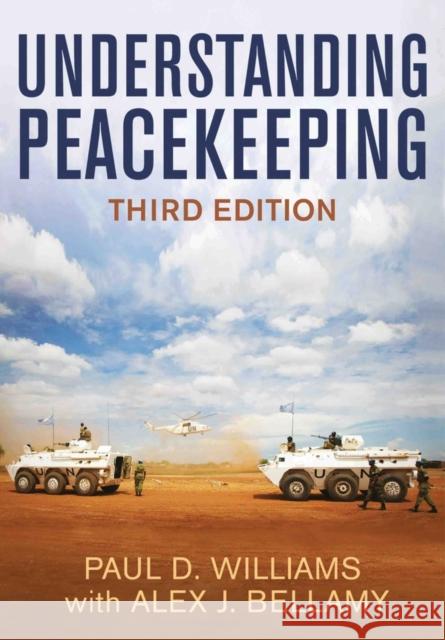
"This book is magisterial in bringing together the various strands of research and viewpoints into a clear, accessible, remarkably comprehensive and very readable format."Katharina Coleman, University of British Columbia"This book is the perfect introduction to peacekeeping - complete with little-known facts, reliable statistics, insightful theories, provoking debates, and in-depth analyses. It will be incredibly useful to students and experienced researchers alike."Séverine Autesserre, Author of Peaceland and The Frontlines of Peace"This book is by far the most comprehensive and readable overview of the evolution, challenges, and controversies of peace operations yet written. It will be exceptionally valuable not only as an introduction to the subject but also as a reference document for experts."Roland Paris, University of Ottawa
List of FiguresList of MapsList of BoxesList of TablesList of AbbreviationsAcknowledgmentsIntroductionPart I: Concepts and Issues1. Peace Operations in Global Politics2. Who Deploys Peace Operations?Part II: Historical Development3. Peace Operations during the Cold War4. Peace Operations during the 1990s5. Peace Operations in the Twenty-First CenturyPart III: The Purposes of Peace Operations6. Prevention7. Observation8. Assistance9. Enforcement10. Stabilisation11. AdministrationPart IV: Contemporary Challenges12. Force Generation13. Regionalization14. Privatization15. Use of Force16. Civilian Protection17. Gender18. Policing19. Organized Crime20. ExitAppendixReferencesIndex
Paul D. Williams is Professor in the Elliott School of International Affairs at the George Washington University.Alex J. Bellamy is Professor of Peace and Conflict Studies at the University of Queensland, and Director of the Asia Pacific Centre for the Responsibility to Protect.