• Wyszukiwanie zaawansowane
  • Kategorie
  • Kategorie BISAC
  • Książki na zamówienie
  • Promocje
  • Granty
  • Książka na prezent
  • Opinie
  • Pomoc
  • Załóż konto
  • Zaloguj się

Understanding Facts: Concepts and Technology of Flexible AC Transmission Systems » książka


zaloguj się | załóż konto
Logo Krainaksiazek.pl

koszyk

konto

szukaj
topmenu
Księgarnia internetowa
Szukaj
Książki na zamówienie
Promocje
Granty
Książka na prezent
Moje konto
Pomoc
 
 
Wyszukiwanie zaawansowane
Pusty koszyk
Bezpłatna dostawa dla zamówień powyżej 40 złBezpłatna dostawa dla zamówień powyżej 40 zł

Kategorie główne

• Nauka
 [2950464]
• Literatura piękna
 [1818042]

  więcej...
• Turystyka
 [70123]
• Informatyka
 [151510]
• Komiksy
 [36386]
• Encyklopedie
 [23145]
• Dziecięca
 [612723]
• Hobby
 [135488]
• AudioBooki
 [1799]
• Literatura faktu
 [226050]
• Muzyka CD
 [373]
• Słowniki
 [2969]
• Inne
 [447626]
• Kalendarze
 [1159]
• Podręczniki
 [167118]
• Poradniki
 [469407]
• Religia
 [508205]
• Czasopisma
 [523]
• Sport
 [61168]
• Sztuka
 [242947]
• CD, DVD, Video
 [3513]
• Technologie
 [218724]
• Zdrowie
 [98968]
• Książkowe Klimaty
 [124]
• Zabawki
 [2556]
• Puzzle, gry
 [3690]
• Literatura w języku ukraińskim
 [264]
• Art. papiernicze i szkolne
 [8106]
Kategorie szczegółowe BISAC

Understanding Facts: Concepts and Technology of Flexible AC Transmission Systems

ISBN-13: 9780780334557 / Angielski / Twarda / 1999 / 452 str.
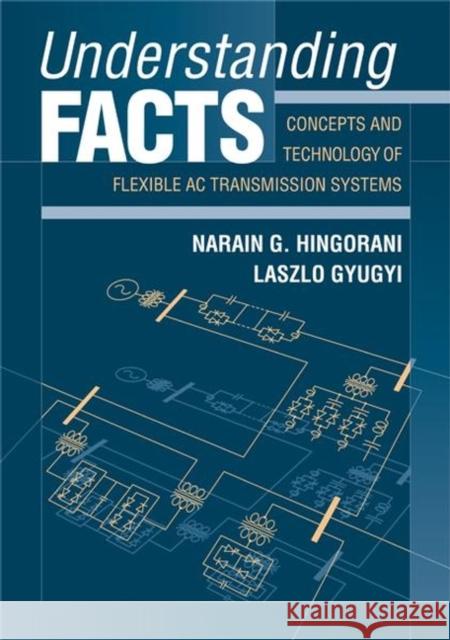
Narain G. Hingorani; Laszlo Gyugyi; Lazlo Gyugyi
Understanding Facts: Concepts and Technology of Flexible AC Transmission Systems Hingorani, Narain G. 9780780334557 IEEE Computer Society Press - książkaWidoczna okładka, to zdjęcie poglądowe, a rzeczywista szata graficzna może różnić się od prezentowanej.

Understanding Facts: Concepts and Technology of Flexible AC Transmission Systems

ISBN-13: 9780780334557 / Angielski / Twarda / 1999 / 452 str.

Narain G. Hingorani; Laszlo Gyugyi; Lazlo Gyugyi
cena 875,95
(netto: 834,24 VAT:  5%)

Najniższa cena z 30 dni: 870,57
Termin realizacji zamówienia:
ok. 30 dni roboczych.

Darmowa dostawa!

-The Flexible AC Transmission System (FACTS) -- a new technology based on power electronics -- offers an opportunity to enhance controllability, stability, and power transfer capability of AC transmission systems. Pioneers in FACTS and leading world experts in power electronics applications Narain G. Hingorani and Laszlo Gyugyi have teamed together to bring you the definitive book on FACTS technology.

Hingorani and Gyugyi present a practical approach to FACTS that will enable electrical engineers working in the power industry to understand the principles underlying this advanced system. UNDERSTANDING FACTS will also enhance expertise in equipment specifications and engineering design, offering an informed view of the future of power electronics in AC transmission systems.

This comprehensive reference book provides an in-depth look at:
* Power semiconductor devices
* Voltage-sourced and current-sourced converters
* Specific FACTS controllers including SVC, STATCOM, TCSC, SSSC, UPFC, IPFC plus voltage regulators, phase shifters, and special controllers with a detailed comparison of their performance attributes
* Major FACTS applications used in the United States.


UNDERSTANDING FACTS is an authoritative resource that is essential reading for electrical engineers who want to stay on the cusp of the power electronics revolution.-

Sponsored by:
IEEE Power Engineering Society.

Kategorie:
Technologie
Kategorie BISAC:
Technology & Engineering > Electrical
Technology & Engineering > Mechanical
Technology & Engineering > Power Resources - General
Wydawca:
IEEE Computer Society Press
Język:
Angielski
ISBN-13:
9780780334557
Rok wydania:
1999
Ilość stron:
452
Waga:
0.97 kg
Wymiary:
26.21 x 18.54 x 3.05
Oprawa:
Twarda
Wolumenów:
01
Dodatkowe informacje:
Bibliografia
Wydanie ilustrowane

PREFACE xiii

ACKNOWLEDGMENTS xvii

CHAPTER 1 FACTS Concept and General System Considerations 1

1.1 Transmission Interconnections 1

1.1.1 Why We Need Transmission Interconnections 1

1.1.2 Opportunities for FACTS 2

1.2 Flow of Power in an AC System 3

1.2.1 Power Flow in Parallel Paths 4

1.2.2 Power Flow in Meshed System 4

1.3 What Limits the Loading Capability? 7

1.4 Power Flow and Dynamic Stability Considerations of a Transmission Interconnection 9

1.5 Relative Importance of Controllable Parameters 12

1.6 Basic Types of FACTS Controllers 13

1.6.1 Relative Importance of Different Types of Controllers 14

1.7 Brief Description and Definitions of FACTS Controllers 16

1.7.1 Shunt Connected Controllers 18

1.7.2 Series Connected Controllers 20

1.7.3 Combined Shunt and Series Connected Controllers 23

1.7.4 Other Controllers 24

1.8 Checklist of Possible Benefits from FACTS Technology 25

1.9 In Perspective: HVDC or FACTS 26

CHAPTER 2 Power Semiconductor Devices 37

2.1 Perspective on Power Devices 37

2.1.1 Types of High–Power Devices 40

2.2 Principal High–Power Device Characteristics and Requirements 41

2.2.1 Voltage and Current Ratings 41

2.2.2 Losses and Speed of Switching 42

2.2.3 Parameter Trade–Off of Devices 44

2.3 Power Device Material 45

2.4 Diode (Pn Junction) 46

2.5 Transistor 48

2.5.1 MOSFET 51

2.6 Thyristor (without Turn–Off Capability) 52

2.7 Gate Turn–Off Thyristor (GTO) 54

2.7.1 Turn–On and Turn–Off Process 56

2.8 MOS Turn–Off Thyristor (MTO) 58

2.9 Emitter Turn–Off Thyristor 60

2.10 Integrated Gate–Commutated Thyristor (GCT and IGCT) 61

2.11 Insulated Gate Bipolar Transistor (IGBT) 63

2.12 MOS–Controlled Thyristor (MCT) 64

CHAPTER 3 Voltage–Sourced Converters 67

3.1 Basic Concept of Voltage–Sourced Converters 67

3.2 Single–Phase Full–Wave Bridge Converter Operation 69

3.3 Single Phase–Leg Operation 72

3.4 Square–Wave Voltage Harmonics for a Single–Phase Bridge 73

3.5 Three–Phase Full–Wave Bridge Converter 74

3.5.1 Converter Operation 74

3.5.2 Fundamental and Harmonics for a Three–Phase Bridge Converter 77

3.6 Sequence of Valve Conduction Process in Each Phase–Leg 80

3.7 Transformer Connections for 12–Pulse Operation 83

3.8 24– and 48–Pulse Operation 85

3.9 Three–Level Voltage–Sourced Converter 87

3.9.1 Operation of Three–Level Converter 87

3.9.2 Fundamental and Harmonic Voltages for a Three–Level Converter 88

3.9.3 Three–Level Converter with Parallel Legs 91

3.10 Pulse–Width Modulation (PWM) Converter 91

3.11 Generalized Technique of Harmonic Elimination and Voltage Control 95

3.12 Converter Rating General Comments 97

CHAPTER 4 Self– and Line–Commutated Current–Sourced Converters 103

4.1 Basic Concept of Current–Sourced Converters 103

4.2 Three–Phase Full–Wave Diode Rectifier 106

4.3 Thyristor–Based Converter (With Gate Turn–On but Without Gate Turn–Off) 110

4.3.1 Rectifier Operation 110

4.3.2 Inverter Operation 113

4.3.3 Valve Voltage 116

4.3.4 Commutation Failures 118

4.3.5 AC Current Harmonics 120

4.3.6 DC Voltage Harmonics 126

4.4 Current–Sourced Converter with Turn–Off Devices (Current Stiff Converter) 129

4.5 Current–Sourced Versus Voltage–Sourced Converters 132

CHAPTER 5 Static Shunt Compensators: SVC and STATCOM 135

5.1 Objectives of Shunt Compensation 135

5.1.1 Midpoint Voltage Regulation for Line Segmentation 135

5.1.2 End of Line Voltage Support to Prevent Voltage Instability 138

5.1.3 Improvement of Transient Stability 138

5.1.4 Power Oscillation Damping 142

5.1.5 Summary of Compensator Requirements 143

5.2 Methods of Controllable Var Generation 144

5.2.1 Variable Impedance Type Static Var Generators 145

5.2.2 Switching Converter Type Var Generators 164

5.2.3 Hybrid Var Generators: Switching Converter with TSC and TCR 177

5.2.4 Summary of Static Var Generators 178

5.3 Static Var Compensators: SVC and STATCOM 179

5.3.1 The Regulation Slope 183

5.3.2 Transfer Function and Dynamic Performance 184

5.3.3 Transient Stability Enhancement and Power Oscillation Damping 188

5.3.4 Var Reserve (Operating Point) Control 193

5.3.5 Summary of Compensator Control 195

5.4 Comparison Between STATCOM and SVC 197

5.4.1 V–I and V–Q Characteristics 197

5.4.2 Transient Stability 199

5.4.3 Response Time 201

5.4.4 Capability to Exchange Real Power 201

5.4.5 Operation With Unbalanced AC System 202

5.4.6 Loss Versus Var Output Characteristic 204

5.4.7 Physical Size and Installation 204

5.4.8 Merits of Hybrid Compensator 205

5.5 Static Var Systems 205

CHAPTER 6 Static Series Compensators: GCSC, TSSC, TCSC, and SSSC 209

6.1 Objectives of Series Compensation 209

6.1.1 Concept of Series Capacitive Compensation 210

6.1.2 Voltage Stability 211

6.1.3 Improvement of Transient Stability 212

6.1.4 Power Oscillation Damping 213

6.1.5 Subsynchronous Oscillation Damping 214

6.1.6 Summary of Functional Requirements 215

6.1.7 Approaches to Controlled Series Compensation 216

6.2 Variable Impedance Type Series Compensators 216

6.2.1 GTO Thyristor–Controlled Series Capacitor (GCSC) 216

6.2.2 Thyristor–Switched Series Capacitor (TSSC) 223

6.2.3 Thyristor–Controlled Series Capacitor (TCSC) 225

6.2.4 Subsynchronous Characteristics 236

6.2.5 Basic Operating Control Schemes for GCSC, TSSC, and TCSC 239

6.3 Switching Converter Type Series Compensators 243

6.3.1 The Static Synchronous Series Compensator (SSSC) 244

6.3.2 Transmitted Power Versus Transmission Angle Characteristic 245

6.3.3 Control Range and VA Rating 248

6.3.4 Capability to Provide Real Power Compensation 250

6.3.5 Immunity to Subsynchronous Resonance 254

6.3.6 Internal Control 257

6.4 External (System) Control for Series Reactive Compensators 259

6.5 Summary of Characteristics and Features 261

CHAPTER 7 Static Voltage and Phase Angle Regulators: TCVR and TCPAR 267

7.1 Objectives of Voltage and Phase Angle Regulators 267

7.1.1 Voltage and Phase Angle Regulation 269

7.1.2 Power Flow Control by Phase Angle Regulators 270

7.1.3 Real and Reactive Loop Power Flow Control 272

7.1.4 Improvement of Transient Stability with Phase Angle Regulators 274

7.1.5 Power Oscillation Damping with Phase Angle Regulators 276

7.1.6 Summary of Functional Requirements 277

7.2 Approaches to Thyristor–Controlled Voltage and Phase Angle Regulators (TCVRs and TCPARs) 277

7.2.1 Continuously Controllable Thyristor Tap Changers 280

7.2.2 Thyristor Tap Changer with Discrete Level Control 286

7.2.3 Thyristor Tap Changer Valve Rating Considerations 289

7.3 Switching Converter–Based Voltage and Phase Angle Regulators 290

7.4 Hybrid Phase Angle Regulators 293

CHAPTER 8 Combined Compensators: Unified Power Flow Controller (UPFC) and Interline Power Flow Controller (IPFC) 297

8.1 Introduction 297

8.2 The Unified Power Flow Controller 299

8.2.1 Basic Operating Principles 300

8.2.2 Conventional Transmission Control Capabilities 301

8.2.3 Independent Real and Reactive Power Flow Control 305

8.2.4 Comparison of UPFC to Series Compensators and Phase Angle Regulators 308

8.2.5 Control Structure 315

8.2.6 Basic Control System for P and Q Control 319

8.2.7 Dynamic Performance 322

8.2.8 Hybrid Arrangements: UPFC with a Phase Shifting Transformer 329

8.3 The Interline Power Flow Controller (IPFC) 333

8.3.1 Basic Operating Principles and Characteristics 334

8.3.2 Control Structure 343

8.3.3 Computer Simulation 344

8.3.4 Practical and Application Considerations 346

8.4 Generalized and Multifunctional FACTS Controllers 348

CHAPTER 9 Special Purpose Facts Controllers: NGH–SSR Damping Scheme and Thyristor–Controlled Braking Resistor 353

9.1 Subsynchronous Resonance 353

9.2 NGH–SSR Damping Scheme 358

9.2.1 Basic Concept 358

9.2.2. Design and Operation Aspects 361

9.3 Thyristor–Controlled Braking Resistor (TCBR) 362

9.3.1 Basic Concept 362

9.3.2 Design and Operation Aspects 364

CHAPTER 10 Application Examples 373

10.1 WAPA′s Kayenta Advanced Series Capacitor (ASC) 373

10.1.1 Introduction and Planning Aspects 373

10.1.2 Functional Specification 376

10.1.3 Design and Operational Aspects 377

10.1.4 Results of the Project 380

10.2 BPA′s Slatt Thyristor–Controlled Series Capacitor (TCSC) 382

10.2.1 Introduction and Planning Aspects 382

10.2.2 Functional Specifications 384

10.2.3 Design and Operational Aspects 387

10.2.4 Results of the Project 392

10.3 TVA′s Sullivan Static Synchronous Compensator (STATCOM) 394

10.3.1 Introduction and Planning Aspects 394

10.3.2 STATCOM Design Summary 396

10.3.3 Steady–State Performance 400

10.3.4 Dynamic Performance 401

10.3.5 Results of the Project 407

10.4 AEP′s Inez Unified Power Flow Controller (UPFC) 407

10.4.1 Introduction and Planning Aspects 407

10.4.2 Description of the UPFC 411

10.4.3 Operating Performance 414

10.4.4 Results of the Project 423

INDEX 425

ABOUT THE AUTHORS 431

About the Authors...
Narain G. Hingorani is credited with originating the concepts of FACTS and Custom Power. He is a retired vice president of Electrical Systems at EPRI and provides consulting services that help utilities plan and purchase power electronics technology. Dr. Hingorani has published widely on HVDC and ac transmission and is coauthor of High Voltage Direct Current Power Transmission (Garaway Ltd., 1960). Dr. Hingorani is the recipient of the 1985 Uno Lamm Medal of the IEEE Power Engineering Society for outstanding contributions to High Voltage Direct Current Technology and the 1995 IEEE Lamme Medal for leadership and pioneering contributions to the transmission and distribution of electric power. He is a Fellow of the IEEE and in 1988 he was elected to the National Academy of Engineering.
Laszlo Gyugyi is technical director at Siemens FACTS & Power Quality Division in Orlando, Florida. His research covers a broad range of power electronic circuits and systems. In collaboration with B. R. Pelly, Dr. Gyugyi established the theoretical foundations of ac to ac switching converters in Static Power Frequency Changers (John Wiley & Sons, 1976). Subsequently, he has focused on the development of new power electronic technologies for electric transmission and distribution systems, and has pioneered the converter–based approach for FACTS. Dr. Gyugyi has published more than 50 papers in the field and holds 76 U.S. patents. He is the recipient of the 1992 Westinghouse Order of Merit, the 1994 William E. Newell Power Electronics Award of the IEEE Power Electronics Society, and the first Flexible AC Transmission System (FACTS) Award given by the IEEE Power Engineering Society in 1999. He is a Fellow of the IEE.

Electrical Engineering Understanding FACTS Concepts and Technology of Flexible AC Transmission Systems The Flexible AC Transmission System (FACTS) a new technology based on power electronics offers an opportunity to enhance controllability, stability, and power transfer capability of ac transmission systems. Pioneers in FACTS and leading world experts in power electronics applications, Narain G. Hingorani and Laszlo Gyugyi, have teamed together to bring you the definitive book on FACTS technology. Drs. Hingorani and Gyugyi present a practical approach to FACTS that will enable electrical engineers working in the power industry to understand the principles underlying this advanced system. Understanding FACTS will enhance your expertise in equipment specifications and engineering design, and will offer you an informed view of the future of power electronics in ac transmission systems. This comprehensive reference book provides in–depth discussions on:

  • Power semiconductor devices
  • Voltage–sourced and current–sourced converters
  • Specific FACTS Controllers, including SVC, STATCOM, TCSC, SSSC, UPFC, IPFC plus voltage regulators, phase shifters, and special Controllers with a detailed comparison of their performance attributes
  • Major FACTS applications in the U.S.
Understanding FACTS is an authoritative resource that is essential reading for electrical engineers who want to stay on the cusp of the power electronics revolution.

Gyugyi, Laszlo About the Authors...
Narain G. Hingorani is cre... więcej >


Udostępnij

Facebook - konto krainaksiazek.pl


Opinie o Krainaksiazek.pl na Opineo.pl

Partner Mybenefit

Krainaksiazek.pl w programie rzetelna firma Krainaksiaze.pl - płatności przez paypal

Czytaj nas na:

Facebook - krainaksiazek.pl
  • książki na zamówienie
  • granty
  • książka na prezent
  • kontakt
  • pomoc
  • opinie
  • regulamin
  • polityka prywatności

Zobacz:

  • Księgarnia czeska

  • Wydawnictwo Książkowe Klimaty

1997-2026 DolnySlask.com Agencja Internetowa

© 1997-2022 krainaksiazek.pl
     
KONTAKT | REGULAMIN | POLITYKA PRYWATNOŚCI | USTAWIENIA PRYWATNOŚCI
Zobacz: Księgarnia Czeska | Wydawnictwo Książkowe Klimaty | Mapa strony | Lista autorów
KrainaKsiazek.PL - Księgarnia Internetowa

Polityka prywatnosci - link
Krainaksiazek.pl - płatnośc Przelewy24
Przechowalnia Przechowalnia






