• Wyszukiwanie zaawansowane
  • Kategorie
  • Kategorie BISAC
  • Książki na zamówienie
  • Promocje
  • Granty
  • Książka na prezent
  • Opinie
  • Pomoc
  • Załóż konto
  • Zaloguj się

Ultra Low Power Electronics and Adiabatic Solutions » książka


zaloguj się | załóż konto
Logo Krainaksiazek.pl

koszyk

konto

szukaj
topmenu
Księgarnia internetowa
Szukaj
Książki na zamówienie
Promocje
Granty
Książka na prezent
Moje konto
Pomoc
 
 
Wyszukiwanie zaawansowane
Pusty koszyk
Bezpłatna dostawa dla zamówień powyżej 20 złBezpłatna dostawa dla zamówień powyżej 20 zł

Kategorie główne

• Nauka
 [2952079]
• Literatura piękna
 [1850969]

  więcej...
• Turystyka
 [71058]
• Informatyka
 [151066]
• Komiksy
 [35579]
• Encyklopedie
 [23181]
• Dziecięca
 [620496]
• Hobby
 [139036]
• AudioBooki
 [1646]
• Literatura faktu
 [228729]
• Muzyka CD
 [379]
• Słowniki
 [2932]
• Inne
 [445708]
• Kalendarze
 [1409]
• Podręczniki
 [164793]
• Poradniki
 [480107]
• Religia
 [510956]
• Czasopisma
 [511]
• Sport
 [61267]
• Sztuka
 [243299]
• CD, DVD, Video
 [3411]
• Technologie
 [219640]
• Zdrowie
 [100984]
• Książkowe Klimaty
 [124]
• Zabawki
 [2281]
• Puzzle, gry
 [3363]
• Literatura w języku ukraińskim
 [258]
• Art. papiernicze i szkolne
 [8020]
Kategorie szczegółowe BISAC

Ultra Low Power Electronics and Adiabatic Solutions

ISBN-13: 9781848217386 / Angielski / Twarda / 2016 / 338 str.
Hervé Fanet
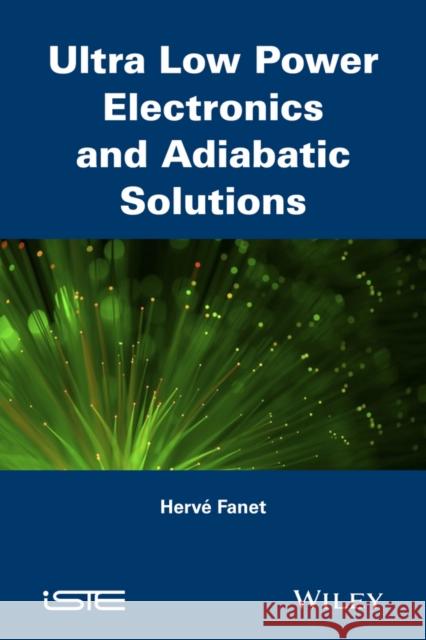
Ultra Low Power Electronics and Adiabatic Solutions Fanet, Hervé 9781848217386 John Wiley & Sons - książkaWidoczna okładka, to zdjęcie poglądowe, a rzeczywista szata graficzna może różnić się od prezentowanej.

Ultra Low Power Electronics and Adiabatic Solutions

ISBN-13: 9781848217386 / Angielski / Twarda / 2016 / 338 str.

Hervé Fanet
cena 713,44
(netto: 679,47 VAT:  5%)

Najniższa cena z 30 dni: 706,15
Termin realizacji zamówienia:
ok. 30 dni roboczych
Dostawa w 2026 r.

Darmowa dostawa!

The improvement of energy efficiency in electronics and computing systems is currently central to information and communication technology design; low-cost cooling, autonomous portable systems and functioning on recovered energy all need to be continuously improved to allow modern technology to compute more while consuming less. This book presents the basic principles of the origins and limits of heat dissipation in electronic systems. Mechanisms of energy dissipation, the physical foundations for understanding CMOS components and sophisticated optimization techniques are explored in the first half of the book, before an introduction to reversible and quantum computing. Adiabatic computing and nano-relay technology are then explored as new solutions to achieving improvements in heat creation and energy consumption, particularly in renewed consideration of circuit architecture and component technology. Concepts inspired by recent research into energy efficiency are brought together in this book, providing an introduction to new approaches and technologies which are required to keep pace with the rapid evolution of electronics.


Kategorie:
Informatyka, Programowanie
Kategorie BISAC:
Computers > Programming - Algorithms
Technology & Engineering > Electronics - General
Wydawca:
John Wiley & Sons
Seria wydawnicza:
Iste
Język:
Angielski
ISBN-13:
9781848217386
Rok wydania:
2016
Ilość stron:
338
Waga:
0.65 kg
Wymiary:
23.39 x 15.6 x 2.06
Oprawa:
Twarda
Wolumenów:
01
Dodatkowe informacje:
Bibliografia

Introduction  ix

Chapter 1. Dissipation Sources in Electronic Circuits 1

1.1. Brief description of logic types 1

1.1.1. Boolean logic 1

1.1.2. Combinational and sequential logic  7

1.1.3. NMOS and PMOS transistors 15

1.1.4. Complementary CMOS logic  21

1.1.5. Pass–transistor logic 26

1.1.6. Dynamic logic 29

1.2. Origins of heat dissipation in circuits 32

1.2.1. Joule effect in circuits  32

1.2.2. Calculating dynamic power 34

1.2.3. Calculating static power and its origins  37

Chapter 2. Thermodynamics and Information Theory 39

2.1. Recalling the basics: entropy and information  39

2.1.1. Statistical definition of entropy 39

2.1.2. Macroscopic energy and entropy  42

2.1.3. Thermostat exchange, Boltzmann’s law and the equal division of energy  46

2.1.4. Summary and example of energy production in a conductor carrying a current 50

2.1.5. Information and the associated entropy  52

2.2. Presenting Landauer’s principle 57

2.2.1. Presenting Landauer’s principle and other examples  57

2.2.2. Experimental validations of Landauer’s principle  64

2.3. Adiabaticity and reversibility  66

2.3.1. Adiabatic principle of charging capacitors  66

2.3.2. Adiabaticity and reversibility: a circuit approach  82

Chapter 3. Transistor Models in CMOS Technology  91

3.1. Reminder on semiconductor properties  91

3.1.1. State densities and semiconductor properties  91

3.1.2. Currents in a semiconductor  100

3.1.3. Contact potentials 102

3.1.4. Metal–oxide semiconductor structure 103

3.1.5. Weak and strong inversion 109

3.2. Long– and short–channel static models 114

3.2.1. Basic principle and brief history of semiconductor technology 114

3.2.2. Transistor architecture and Fermi pseudo–potentials 117

3.2.3. Calculating the current in a long–channel static regime  120

3.2.4. Calculating the current in a short–channel regime 129

3.3. Dynamic transistor models  132

3.3.1. Quasi–static regime  132

3.3.2. Dynamic regime 135

3.3.3. “Small signals” transistor model  136

Chapter 4. Practical and Theoretical Limits of CMOS Technology 143

4.1. Speed–dissipation trade–off and limits of CMOS technology  143

4.1.1. From the transistor to the integrated circuit 143

4.1.2. Trade–off between speed and consumption  146

4.1.3. The trade–off between dynamic consumption and static consumption 149

4.2. Sub–threshold regimes  154

4.2.1. Recall of the weak inversion properties  154

4.2.2. Limits to sub–threshold CMOS technology  160

4.3. Practical and theoretical limits in CMOS technology  162

4.3.1. Economic considerations and evolving methodologies 162

4.3.2. Technological difficulties: dissipation, variability and interconnects  164

4.3.3. Theoretical limits and open questions 171

Chapter 5. Very Low Consumption at System Level  177

5.1. The evolution of power management technologies 177

5.1.1. Basic techniques for reducing dynamic power  177

5.1.2. Basic techniques for reducing static power  180

5.1.3. Designing in 90, 65 and 45 nm technology  185

5.2. Sub–threshold integrated circuits  186

5.2.1. Sub–threshold circuit features  186

5.2.2. Pipeline and parallelization 187

5.2.3. New SRAM structures  187

5.3. Near–threshold circuits  188

5.3.1. Optimization method 189

5.4. Chip interconnect and networks 194

5.4.1. Dissipation in the interconnect 194

5.4.2. Techniques for reducing dissipation in the interconnect  199

Chapter 6. Reversible Computing and Quantum Computing  203

6.1. The basis for reversible computing 203

6.1.1. Introduction  203

6.1.2. Group structure of reversible gates  205

6.1.3. Conservative gates, linearity and affinity 206

6.1.4. Exchange gates  207

6.1.5. Control gates 210

6.1.6. Two basic theorems: “no fan–out” and “no cloning” 213

6.2. A few elements for synthesizing a function  214

6.2.1. The problem and constraints on synthesis  214

6.2.2. Synthesizing a reversible function 215

6.2.3. Synthesizing an irreversible function 218

6.2.4. The adder example  219

6.2.5. Hardware implementation of reversible gates  222

6.3. Reversible computing and quantum computing 225

6.3.1. Principles of quantum computing 226

6.3.2. Entanglement 227

6.3.3. A few examples of quantum gates 229

6.3.4. The example of Grover’s algorithm  231

Chapter 7. Quasi–adiabatic CMOS Circuits 237

7.1. Adiabatic logic gates in CMOS 237

7.1.1. Implementing the principles of optimal charge and adiabatic pipeline  237

7.1.2. ECRL and PFAL in CMOS 244

7.1.3. Comparison to other gate technologies  250

7.2. Calculation of dissipation in an adiabatic circuit 251

7.2.1. Calculation in the normal regime 251

7.2.2. Calculation in sub–threshold regimes 259

7.3. Energy–recovery supplies and their contribution to dissipation 264

7.3.1. Capacitor–based supply 264

7.3.2. Inductance–based supply 273

7.4. Adiabatic arithmetic architecture  280

7.4.1. Basic principles  280

7.4.2. Adder example  281

7.4.3. The interest in complex gates  283

Chapter 8. Micro–relay Based Technology 285

8.1. The physics of micro–relays 285

8.1.1. Different computing technologies 285

8.1.2. Different actuation technologies  287

8.1.3. Dynamic modeling of microelectro–mechanical relays  290

8.1.4. Implementation examples and technological difficulties  297

8.2. Calculation of dissipation in a micro–relay based circuit 299

8.2.1. Optimization of micro–relays through electrostatic actuation 299

8.2.2. Adiabatic regime solutions 307

8.2.3. Comparison between CMOS logic and micro–relays  312

Bibliography  317

Index 321

Hervé Fanet is a Senior Scientist at CEA–LETI in France.


Udostępnij

Facebook - konto krainaksiazek.pl


Opinie o Krainaksiazek.pl na Opineo.pl

Partner Mybenefit

Krainaksiazek.pl w programie rzetelna firma Krainaksiaze.pl - płatności przez paypal

Czytaj nas na:

Facebook - krainaksiazek.pl
  • książki na zamówienie
  • granty
  • książka na prezent
  • kontakt
  • pomoc
  • opinie
  • regulamin
  • polityka prywatności

Zobacz:

  • Księgarnia czeska

  • Wydawnictwo Książkowe Klimaty

1997-2025 DolnySlask.com Agencja Internetowa

© 1997-2022 krainaksiazek.pl
     
KONTAKT | REGULAMIN | POLITYKA PRYWATNOŚCI | USTAWIENIA PRYWATNOŚCI
Zobacz: Księgarnia Czeska | Wydawnictwo Książkowe Klimaty | Mapa strony | Lista autorów
KrainaKsiazek.PL - Księgarnia Internetowa

Polityka prywatnosci - link
Krainaksiazek.pl - płatnośc Przelewy24
Przechowalnia Przechowalnia






