• Wyszukiwanie zaawansowane
  • Kategorie
  • Kategorie BISAC
  • Książki na zamówienie
  • Promocje
  • Granty
  • Książka na prezent
  • Opinie
  • Pomoc
  • Załóż konto
  • Zaloguj się

U.S. Indo-Pacific Command: Implications for East Asia » książka


zaloguj się | załóż konto
Logo Krainaksiazek.pl

koszyk

konto

szukaj
topmenu
Księgarnia internetowa
Szukaj
Książki na zamówienie
Promocje
Granty
Książka na prezent
Moje konto
Pomoc
 
 
Wyszukiwanie zaawansowane
Pusty koszyk
Bezpłatna dostawa dla zamówień powyżej 20 złBezpłatna dostawa dla zamówień powyżej 20 zł

Kategorie główne

• Nauka
 [2949965]
• Literatura piękna
 [1857847]

  więcej...
• Turystyka
 [70818]
• Informatyka
 [151303]
• Komiksy
 [35733]
• Encyklopedie
 [23180]
• Dziecięca
 [617748]
• Hobby
 [139972]
• AudioBooki
 [1650]
• Literatura faktu
 [228361]
• Muzyka CD
 [398]
• Słowniki
 [2862]
• Inne
 [444732]
• Kalendarze
 [1620]
• Podręczniki
 [167233]
• Poradniki
 [482388]
• Religia
 [509867]
• Czasopisma
 [533]
• Sport
 [61361]
• Sztuka
 [243125]
• CD, DVD, Video
 [3451]
• Technologie
 [219309]
• Zdrowie
 [101347]
• Książkowe Klimaty
 [123]
• Zabawki
 [2362]
• Puzzle, gry
 [3791]
• Literatura w języku ukraińskim
 [253]
• Art. papiernicze i szkolne
 [7933]
Kategorie szczegółowe BISAC

U.S. Indo-Pacific Command: Implications for East Asia

ISBN-13: 9789811952678 / Angielski / Twarda / 2022 / 177 str.
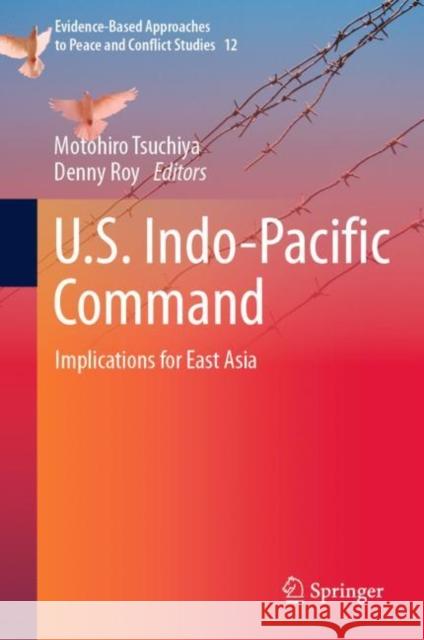
Motohiro Tsuchiya; Denny Roy
U.S. Indo-Pacific Command: Implications for East Asia Motohiro Tsuchiya Denny Roy 9789811952678 Springer - książkaWidoczna okładka, to zdjęcie poglądowe, a rzeczywista szata graficzna może różnić się od prezentowanej.

U.S. Indo-Pacific Command: Implications for East Asia

ISBN-13: 9789811952678 / Angielski / Twarda / 2022 / 177 str.

Motohiro Tsuchiya; Denny Roy
cena 484,18 zł
(netto: 461,12 VAT:  5%)

Najniższa cena z 30 dni: 462,63 zł
Termin realizacji zamówienia:
ok. 22 dni roboczych
Bez gwarancji dostawy przed świętami

Darmowa dostawa!
inne wydania

The purpose of this book is to introduce readers to INDOPACOM, which is responsible for U.S. military operations in a region covering approximately 50 percent of the Earth from the Pacific Ocean to the Indian Ocean.  INDOPACOM has not received much attention in Japan compared to USFJ or the US Seventh Fleet. This book shines a spotlight on INDOPACOM in an effort to promote an understanding of its various aspects.The mission of INDOPACOM is to protect U.S. territory, people, and national interests. However, it also includes protection of the countries within its geographic scope that are U.S. allies and security partners.  INDOPACOM and its precursor Pacific Command, established in 1947, have always been major contributors to the peace and safety of Japan in the post-World War II era.In view of the importance of U.S. interests in Northeast Asia, the region also has two Sub-Unified Combatant Commands called United States Forces Japan (USFJ) and United States Forces Korea (USFK). Each of these organizations strives to strengthen the relationship with the Japan Self-Defense Forces and the Republic of Korea armed forces. Together, the United States, Japan and our partners around the globe will continue to safeguard the rules-based security order that has underpinned peace and prosperity for decades.


The purpose of this book is to introduce readers to INDOPACOM, which is responsible for U.S. military operations in a region covering approximately 50 percent of the Earth from the Pacific Ocean to the Indian Ocean.  INDOPACOM has not received much attention in Japan compared to USFJ or the US Seventh Fleet. This book shines a spotlight on INDOPACOM in an effort to promote an understanding of its various aspects. The mission of INDOPACOM is to protect U.S. territory, people, and national interests. However, it also includes protection of the countries within its geographic scope that are U.S. allies and security partners.  INDOPACOM and its precursor Pacific Command, established in 1947, have always been major contributors to the peace and safety of Japan in the post-World War II era. In view of the importance of U.S. interests in Northeast Asia, the region also has two Sub-Unified Combatant Commands called United States Forces Japan (USFJ) and United States Forces Korea (USFK). Each of these organizations strives to strengthen the relationship with the Japan Self-Defense Forces and the Republic of Korea armed forces. Together, the United States, Japan and our partners around the globe will continue to safeguard the rules-based security order that has underpinned peace and prosperity for decades.

Kategorie:
Nauka, Polityka
Kategorie BISAC:
Political Science > Security (National & International)
Political Science > International Relations - Trade & Tariffs
Political Science > Public Policy - Military Policy
Wydawca:
Springer
Seria wydawnicza:
Evidence-Based Approaches to Peace and Conflict Studies
Język:
Angielski
ISBN-13:
9789811952678
Rok wydania:
2022
Dostępne języki:
Numer serii:
001153831
Ilość stron:
177
Waga:
0.45 kg
Wymiary:
23.39 x 15.6 x 1.27
Oprawa:
Twarda
Dodatkowe informacje:
Wydanie ilustrowane

Preface

Chapter 1: Organization and History of the Unified Commands of the United States
1.1. From "Pacific Command" to "Indo-Pacific Command"
1.2. Formation of Unified Commands
1.3. Goldwater-Nichols Act
1.4. Positioning of Pacific Command
1.5. U.S.-led Liberal International Order and Indo-Pacific Command
1.6. Conclusion
Chapter 2: America’s Deep Rationale for PACOM
2.1. Introduction
2.2. How the USA Became a “Resident Asian Power”
2.3. Persistence of the Deep Rationale
2.4. The Rationale Under Challenge
Chapter 3: Hawaii and Pacific Command: Historical Backdrop and Civil Society of Hawaii, Home of Pacific Command Headquarters
3.1. Introduction
3.2. Hawaii as the Central Pillar of Cooperative Military Interaction in the Pacific Ocean
3.3. Hawaii's Path to Becoming a Geographic Unified Combatant Command Hub
3.4. Distinguished World War II Service by Japanese from Hawaii
3.5. Headquarters of Four Military Branches Located in Hawaii
3.6. The Hawaiian Economy and the Presence of the Military
3.7. Conclusion
Chapter 4: PACOM and the Pentagon
4.1. Introduction
4.2. Biggest is not necessarily most prestigious.
4.3. PACOM-Pentagon Tensions
4.4. PACOM, the Pentagon and Japan
Chapter 5: The Japan Self-Defense Forces and the U.S. Pacific Command
5.1. Introduction
5.2. The Unique Conditions of the JSDF and Their Background
5.2.1 The Establishment of a New Constitution and the Impact of the Cold War
5.2.2. The Establishment of the JSDF
5.3. Changes in the Security Relationship between Japan and the United States and the Strengthening of the Japan-U.S. Alliance
5.3.1. Signing and Revision of the First Security Treaty
5.3.2 Features of the Japan-U.S. Security Treatmenty
5.3.3. Formulating the 1978 Guidelines – Facilitating Bilateral Operations
5.3.4 Guideline Revision – Formulating the 1997 Guidelines
5.3.5. Results of and Lessons from Operation Tomodachi After the Great East Japan Earthquake (a.k.a. the 2011 Tohoku earthquake)
5.4. Implementing New Security Arrangements
5.4.1. Revising Security Policy in the Second Abe Administration
5.4.2. The 2015 Guidelines and Security Legislation
5.5. The current State of Collaboration Between the JSDF and PACOM
5.5.1. Ongoing Developments in Japan-U.S. bilateral Training
5.5.2. Posting Japanese Liaison Officials to PACOM
5.6. Conclusion
Chapter 6: The Korean Peninsula and the Pacific Command
6.1. Introduction
6.2. Security Structure on the Korean Peninsula: Pacific Command and Defense of the ROK
6.3. Special Position of the Commander of United States Forces Korea: A “Triple-Hatted” Commander
6.4. U.S.-ROK Military Exercises and PACOM
6.5. Preparations for a Contingency on Korean Peninsula: Establishment of an Operational Plan
6.6. USFJ and the Korean Peninsula: The Role of UNC-Rear
6.7. Conclusion
Chapter 7: China and Pacific Command: The Course of Hegemony in the Indo-Pacific Region
7.1. Introduction
7.2. Two Taiwan Strait Crises
7.3. Changes to Pacific Command’s Recognition of Threats from China
7.4. Pacific Command as Supporter of a “Tacit Alliance” between the United States and China
7.5. Aftermath of the Tiananmen Square Incident and the Third Taiwan Strait Crisis
7.6. China’s Intervention Prevention Strategy and Pacific Command
7.7. Conclusion
Chapter 8: Taiwan and Pacific Command
8.1. Introduction
8.2. History of Pacific Command and Taiwan
8.3. Severing of Relations between the United States and Taiwan and the Taiwan Relations Act
8.4. Sale of arms to Taiwan and the Six Assurances
8.5. Shift after severing of ties between the United States and Taiwan
8.6. Taiwan and Pacific Command during the Taiwan Strait emergencies
8.6.1. Saturation attacks with ballistic missiles
8.6.2. Repairing of runways
8.6.3. Air superiority strategies
8.7. Growing collaboration between the Pacific Command and the ROC Armed Forces under the Trump Administration
8.8. Conclusion
Chapter 9: Joint Operations and Pacific Command: Development and Implementation of the Multi Domain Battle Concept
9.1. Introduction
9.2. Changes in the Operational Environment Surrounding PACOM
9.3. What is the Multi Domain Battle Concept?
9.4. The Western Pacific and the MDB Concept
9.5. Implications for Japan's National Security
Afterword
Speech by Admiral Harry Harris
Index

Dr. Motohiro TSUCHIYA is Vice-President for Global Engagement and Information Technology at Keio University, and Professor at Keio University Graduate School of Media and Governance.Prior to joining the Keio faculty, he was associate professor at Center for Global Communications (GLOCOM), International University of Japan. In 2001 and 2002 he researched in Washington, DC, as visiting scholar at Center for International Development and Conflict Management (CIDCM), University of Maryland, and at Cyberspace Policy Institute (CPI), George Washington University. From March 2008 to March 2009 he was visiting scholar at MIT (Massachusetts Institute of Technology) Center for International Studies. He served as deputy director of Keio University Global Security Research Institute (G-SEC) from 2009 to 2013, and was an expert member of the Information Security Policy Council (ISPC) of the Japanese government from 2009 to 2013. From March 2014 to February 2015 he was visiting scholar at East-West Center. He served as dean of Faculty of Policy Management at Keio University from October 2019 to July 2021.

He is interested in the impact of the information revolution on international relations; global governance and information technologies; and cyber security. He has been a member of the Editorial Advisory Board of Info Journal since spring of 2008 and a member of the Editorial Board of Journal of Cyber Policy since 2015. He is also a visiting research fellow at Center for Global Communications (GLOCOM) and a visiting researcher at Institute for International Socio-Economic Studies (I-ISE).

He authored Information and Global Governance (Tokyo: Keio University Press, 2001, in Japanese), Net Politics (Tokyo: Iwanami Publishing, 2003, in Japanese), Network Power (Tokyo: NTT Publishing, 2007, in Japanese), Intelligence and National Security (Tokyo: Keio University Press, 2007, in Japanese), Network Hegemony (Tokyo: NTT Publishing, 2011, in Japanese), Cyber Terror (Tokyo: Bungeishunju, 2012, in Japanese), Cyber Security and International Relations (Tokyo: Chikura Shobo, 2015, in Japanese), and co-authored more than 20 books including Japanese Telecommunications: Market and Policy in Transition (London: Routledge, 2006, in English), Cybersecurity: Public Sector Threats and Responses (Boca Raton, FL: CRC Press, 2012, in English), The Digital Divide: The Internet and Social Inequality in International Perspective (London: Routledge, 2013, in English), Pacific Island Regional and International Cooperation: ICT Policy and Development (Honolulu: Social Science Research Institute, University of Hawaii, 2014, in English), and Information Governance in Japan: Towards a New Comparative Paradigm (SVNJ eBook series, Kindle Edition, 2016).He earned his BA in political science, MA in international relations, and Ph.D. in media and governance from Keio University.

Dr. Denny ROY’s work has focused mostly on Asia Pacific security issues, particularly those involving China.  Recently Roy has written on Chinese foreign policy, the North Korea nuclear weapons crisis, China-Japan relations, and China-Taiwan relations.  Before joining the East-West Center in 2007, Roy worked at the Asia-Pacific Center for Security Studies in Honolulu; the Naval Postgraduate School in Monterey, California; the Strategic and Defence Studies Centre at the Australian National University in Canberra; the National University of Singapore; and Brigham Young University.  Roy’s most recent book  is Return of the Dragon: Rising China and Regional Security (Columbia University Press, 2013).  He has also written many articles for scholarly journals such as International Security, Survival, Asian Survey, Security Dialogue, Contemporary Southeast Asia, Armed Forces & Society, and Issues & Studies. Dr. Roy obtained a Ph.D. in Political Science from the University of Chicago.

The purpose of this book is to introduce readers to INDOPACOM, which is responsible for U.S. military operations in a region covering approximately 50 percent of the Earth from the Pacific Ocean to the Indian Ocean.  INDOPACOM has not received much attention in Japan compared to USFJ or the US Seventh Fleet. This book shines a spotlight on INDOPACOM in an effort to promote an understanding of its various aspects.


The mission of INDOPACOM is to protect U.S. territory, people, and national interests. However, it also includes protection of the countries within its geographic scope that are U.S. allies and security partners.  INDOPACOM and its precursor Pacific Command, established in 1947, have always been major contributors to the peace and safety of Japan in the post-World War II era.


In view of the importance of U.S. interests in Northeast Asia, the region also has two Sub-Unified Combatant Commands called United States Forces Japan (USFJ) and United States Forces Korea (USFK). Each of these organizations strives to strengthen the relationship with the Japan Self-Defense Forces and the Republic of Korea armed forces. Together, the United States, Japan and our partners around the globe will continue to safeguard the rules-based security order that has underpinned peace and prosperity for decades.




Udostępnij

Facebook - konto krainaksiazek.pl


Opinie o Krainaksiazek.pl na Opineo.pl

Partner Mybenefit

Krainaksiazek.pl w programie rzetelna firma Krainaksiaze.pl - płatności przez paypal

Czytaj nas na:

Facebook - krainaksiazek.pl
  • książki na zamówienie
  • granty
  • książka na prezent
  • kontakt
  • pomoc
  • opinie
  • regulamin
  • polityka prywatności

Zobacz:

  • Księgarnia czeska

  • Wydawnictwo Książkowe Klimaty

1997-2025 DolnySlask.com Agencja Internetowa

© 1997-2022 krainaksiazek.pl
     
KONTAKT | REGULAMIN | POLITYKA PRYWATNOŚCI | USTAWIENIA PRYWATNOŚCI
Zobacz: Księgarnia Czeska | Wydawnictwo Książkowe Klimaty | Mapa strony | Lista autorów
KrainaKsiazek.PL - Księgarnia Internetowa

Polityka prywatnosci - link
Krainaksiazek.pl - płatnośc Przelewy24
Przechowalnia Przechowalnia




