• Wyszukiwanie zaawansowane
  • Kategorie
  • Kategorie BISAC
  • Książki na zamówienie
  • Promocje
  • Granty
  • Książka na prezent
  • Opinie
  • Pomoc
  • Załóż konto
  • Zaloguj się

Tribology of Elastomers » książka


zaloguj się | załóż konto
Logo Krainaksiazek.pl

koszyk

konto

szukaj
topmenu
Księgarnia internetowa
Szukaj
Książki na zamówienie
Promocje
Granty
Książka na prezent
Moje konto
Pomoc
 
 
Wyszukiwanie zaawansowane
Pusty koszyk
Bezpłatna dostawa dla zamówień powyżej 20 złBezpłatna dostawa dla zamówień powyżej 20 zł

Kategorie główne

• Nauka
 [2949965]
• Literatura piękna
 [1857847]

  więcej...
• Turystyka
 [70818]
• Informatyka
 [151303]
• Komiksy
 [35733]
• Encyklopedie
 [23180]
• Dziecięca
 [617748]
• Hobby
 [139972]
• AudioBooki
 [1650]
• Literatura faktu
 [228361]
• Muzyka CD
 [398]
• Słowniki
 [2862]
• Inne
 [444732]
• Kalendarze
 [1620]
• Podręczniki
 [167233]
• Poradniki
 [482388]
• Religia
 [509867]
• Czasopisma
 [533]
• Sport
 [61361]
• Sztuka
 [243125]
• CD, DVD, Video
 [3451]
• Technologie
 [219309]
• Zdrowie
 [101347]
• Książkowe Klimaty
 [123]
• Zabawki
 [2362]
• Puzzle, gry
 [3791]
• Literatura w języku ukraińskim
 [253]
• Art. papiernicze i szkolne
 [7933]
Kategorie szczegółowe BISAC

Tribology of Elastomers

ISBN-13: 9789811929076 / Angielski / Miękka / 2022
Ferial Hakami;Alokesh Pramanik;Animesh Kumar Basak
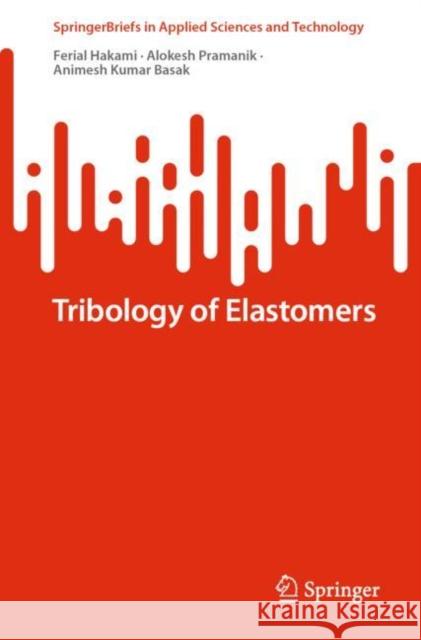
Tribology of Elastomers Ferial Hakami, Alokesh Pramanik, Animesh Kumar Basak 9789811929076 Springer Nature Singapore - książkaWidoczna okładka, to zdjęcie poglądowe, a rzeczywista szata graficzna może różnić się od prezentowanej.

Tribology of Elastomers

ISBN-13: 9789811929076 / Angielski / Miękka / 2022

Ferial Hakami;Alokesh Pramanik;Animesh Kumar Basak
cena 201,72 zł
(netto: 192,11 VAT:  5%)

Najniższa cena z 30 dni: 192,74 zł
Termin realizacji zamówienia:
ok. 22 dni roboczych
Bez gwarancji dostawy przed świętami

Darmowa dostawa!

This book highlights the tribological behavior of elastomers by investigating the effect of operating variables such as, the applied load and the abrasive particle size, and the materials’ mechanical properties such as, tensile strength, elongation at break, hardness, and tear strength by the experimental, statistical and analytical methods. It is found that the wear mechanism is mostly friction wear, which is mixed with fatigue wear and abrading under higher applied loads or larger abrasives. The statistical method shows that the abrasive particle size has the highest contribution followed by the applied load on the wear process. Wear equation is developed to predict the wear rate considering the trends of the input variables.


Kategorie:
Technologie
Kategorie BISAC:
Technology & Engineering > Materials Science - Thin Films, Surfaces & Interfaces
Science > Chemia
Mathematics > Prawdopodobieństwo i statystyka
Wydawca:
Springer Nature Singapore
Seria wydawnicza:
SpringerBriefs in Applied Sciences and Technology
Język:
Angielski
ISBN-13:
9789811929076
Rok wydania:
2022
Waga:
0.29 kg
Wymiary:
23.5 x 15.5
Oprawa:
Miękka

Chapter 1. Introduction          

1.1. Introduction        

1.2. Scope of the work           


Chapter 2. General background         

2.1. Elastomers          

2.1.1 Natural Rubber

2.1.2. Styrene Butadiene Rubber

2.1.3.  Acrylonitrile Butadiene Rubber

2.2. Tribology of polymers     

2.2.1. Wear    

2.2.2. Friction 

2.2.3. Friction and wear mechanism

2.2.4. Effective parameters on the wear and friction

2.2.5. Prediction of wear in polymers

2.2.6. Summary and aim of this work


Chapter 3. Materials and Methodology         

3.1. Introduction        

3.2. Materials

3.2.1. Elastomers

3.2.2.  Abrasives

3.3. Tribotests

3.3.1. Two body wear tests    

3.3.2. Friction test      

3.4. Micro-structural characterization

3.5. Measurement of surface roughness and surface temperature

3.6. Summary


Chapter 4. Effect of the applied load  48

4.1. Introduction

4.2. Method   

4.3. Results     

4.4. Discussion

4.4.1. Effect of the applied load on wear

4.4.2. Effect of the applied load on the friction

4.5. Summary


Chapter 5. Effect of the abrasive particle size

5.1. Introduction        

5.2. Methods  

5.3. Results

5.4. Discussion

5.4.1. Effect of the abrasive particle size on wear    

5.4.2. Effect of the abrasive particle size on the friction

5.5. Summary  106


Chapter 6. Statistical analysis

6.1. Introduction

6.2. Method

6.3. Results

6.3.1. Wear rate

6.3.2. Surface roughness

6.3.3. Temperature build-up (TBU)

6.4. Discussion

6. 5. Summary


Chapter 7. Development of an experimental model

7.1. Introduction        

7.2. Model development       

7.3. Derivation of the exponents       

7.4. Model verification          

7.5. Discussion           

7. 6. Summary


Chapter 8. Summary


References


Appendix 1

Appendix 2

Dr Ferial Hakami graduated in 2007 with a BSc in Materials Engineering degree from Amir Kabir University of Technology, Tehran, Iran. She then completed her  MS (2010) in Metallurgy & Materials Engineering from University of Tehran, Tehran, Iran. She obtained her PhD on the Tribology of Elastomers from Curtin University, Perth, Australia in 2018. Currently, she is working as a visiting scholar at the Department of Mechanical Engineering, Curtin University.  Her research interests are in the areas of tribology, manufacturing processes, material behavior and material treatment.


Dr Alokesh Pramanik is currently a lecturer in the Mechanical Engineering Discipline, School of Civil and Mechanical Engineering at Curtin University. He completed his Masters and PhD degrees in Mechanical Engineering from National University of Singapore and University of Sydney respectively. Dr Pramanik has more than 15 year of research experience in the fields of manufacturing as well as composite materials at different universities. 

Dr Animesh Kumar Basak graduated in 2002 with a BSc in Metallurgical Engineering from Bangladesh University of Engineering and Technology (BUET), Dhaka, Bangladesh with honours. Upon completion of his Masters and PhD degree in Materials Science and Engineering from Katholieke Universeteit Leuven (KULeuven), Belgium, he started working in different Australian universities. His research interests include nanostructured materials, high resolution electron microscopy and probe analysis, nanoscale fabrication of materials, deformation mechanisms of novel materials, nanomechanics, tribology and tribocorrosion, electrochemistry and electrochemical measurement techniques. He has published more than 50 research articles which are well cited in this area. 

This book highlights the tribological behavior of elastomers by investigating the effect of operating variables such as, the applied load and the abrasive particle size, and the materials’ mechanical properties such as, tensile strength, elongation at break, hardness, and tear strength by the experimental, statistical and analytical methods. It is found that the wear mechanism is mostly friction wear, which is mixed with fatigue wear and abrading under higher applied loads or larger abrasives. The statistical method shows that the abrasive particle size has the highest contribution followed by the applied load on the wear process. Wear equation is developed to predict the wear rate considering the trends of the input variables.




Udostępnij

Facebook - konto krainaksiazek.pl


Opinie o Krainaksiazek.pl na Opineo.pl

Partner Mybenefit

Krainaksiazek.pl w programie rzetelna firma Krainaksiaze.pl - płatności przez paypal

Czytaj nas na:

Facebook - krainaksiazek.pl
  • książki na zamówienie
  • granty
  • książka na prezent
  • kontakt
  • pomoc
  • opinie
  • regulamin
  • polityka prywatności

Zobacz:

  • Księgarnia czeska

  • Wydawnictwo Książkowe Klimaty

1997-2025 DolnySlask.com Agencja Internetowa

© 1997-2022 krainaksiazek.pl
     
KONTAKT | REGULAMIN | POLITYKA PRYWATNOŚCI | USTAWIENIA PRYWATNOŚCI
Zobacz: Księgarnia Czeska | Wydawnictwo Książkowe Klimaty | Mapa strony | Lista autorów
KrainaKsiazek.PL - Księgarnia Internetowa

Polityka prywatnosci - link
Krainaksiazek.pl - płatnośc Przelewy24
Przechowalnia Przechowalnia




