• Wyszukiwanie zaawansowane
  • Kategorie
  • Kategorie BISAC
  • Książki na zamówienie
  • Promocje
  • Granty
  • Książka na prezent
  • Opinie
  • Pomoc
  • Załóż konto
  • Zaloguj się

Treatment Wetlands for Environmental Pollution Control » książka


zaloguj się | załóż konto
Logo Krainaksiazek.pl

koszyk

konto

szukaj
topmenu
Księgarnia internetowa
Szukaj
Książki na zamówienie
Promocje
Granty
Książka na prezent
Moje konto
Pomoc
 
 
Wyszukiwanie zaawansowane
Pusty koszyk
Bezpłatna dostawa dla zamówień powyżej 20 złBezpłatna dostawa dla zamówień powyżej 20 zł

Kategorie główne

• Nauka
 [2946600]
• Literatura piękna
 [1856966]

  więcej...
• Turystyka
 [72221]
• Informatyka
 [151456]
• Komiksy
 [35826]
• Encyklopedie
 [23190]
• Dziecięca
 [619653]
• Hobby
 [140543]
• AudioBooki
 [1577]
• Literatura faktu
 [228355]
• Muzyka CD
 [410]
• Słowniki
 [2874]
• Inne
 [445822]
• Kalendarze
 [1744]
• Podręczniki
 [167141]
• Poradniki
 [482898]
• Religia
 [510455]
• Czasopisma
 [526]
• Sport
 [61590]
• Sztuka
 [243598]
• CD, DVD, Video
 [3423]
• Technologie
 [219201]
• Zdrowie
 [101638]
• Książkowe Klimaty
 [124]
• Zabawki
 [2473]
• Puzzle, gry
 [3898]
• Literatura w języku ukraińskim
 [254]
• Art. papiernicze i szkolne
 [8170]
Kategorie szczegółowe BISAC

Treatment Wetlands for Environmental Pollution Control

ISBN-13: 9783319137933 / Angielski / Twarda / 2015 / 169 str.
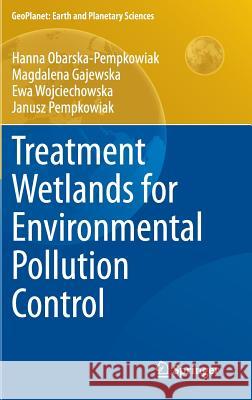
Hanna Obarska-Pempkowiak; Magdalena Gajewska; Ewa Wojciechowska
Treatment Wetlands for Environmental Pollution Control Hanna Obarska-Pempkowiak Magdalena Gajewska Ewa Wojciechowska 9783319137933 Springer - książkaWidoczna okładka, to zdjęcie poglądowe, a rzeczywista szata graficzna może różnić się od prezentowanej.

Treatment Wetlands for Environmental Pollution Control

ISBN-13: 9783319137933 / Angielski / Twarda / 2015 / 169 str.

Hanna Obarska-Pempkowiak; Magdalena Gajewska; Ewa Wojciechowska
cena 403,47 zł
(netto: 384,26 VAT:  5%)

Najniższa cena z 30 dni: 385,52 zł
Termin realizacji zamówienia:
ok. 22 dni roboczych
Bez gwarancji dostawy przed świętami

Darmowa dostawa!

The aim of this book is to present an overview of the state of the art with regard to the function, application and design of TWSs in order to better protect surface water from contamination. Accordingly, it also presents applications of constructed wetlands with regard to climatic and cultural aspects. The use of artificial and natural treatment wetland systems (TWSs) for wastewater treatment is an approach that has been developed over the last thirty years. Europe is currently home to roughly 10,000 constructed wetland treatment systems (CWTSs), which simulate the aquatic habitat conditions of natural marsh ecosystems; roughly 3,500 systems are in operation in Germany alone. TWSs can also be found in many other European countries, for example 200 - 400 in Denmark, 400 - 600 in Great Britain, and ca. 1,000 in Poland. Most of the existing systems serve as local or individual household treatment systems. CWTSs are easy to operate and do not require specialized maintenance; further, no biological sewage sludge is formed during treatment processes.As TWSs are resistant to fluctuations in hydraulic loads, they are primarily used in rural areas as well as in urbanized areas with dispersed habitats, where conventional sewer systems and central conventional wastewater treatment plants (WWTPs) cannot be applied due to the high costs they would entail. TWSs are usually applied at the 2nd stage of domestic wastewater treatment, after mechanical treatment, and/or at the 3rd stage of treatment in order to ensure purification of effluent from conventional biological reactors and re-naturalization. New applications of TWSs include rainwater treatment as well as industrial and landfill leachate treatment. TWSs are well suited to these fields, as they can potentially remove not only organic matter and nitrogen compounds but also trace metals and traces of persistent organic pollutants and pathogens. Based on the practical experience gathered to date, and on new research regarding the processes and mechanisms of pollutant removal and advances in the systems properties and design, TWSs continue to evolve.


Kategorie:
Technologie
Kategorie BISAC:
Technology & Engineering > Environmental - Pollution Control
Science > Environmental Science (see also Chemistry - Environmental)
Science > Earth Sciences - Limnology
Wydawca:
Springer
Seria wydawnicza:
Geoplanet: Earth and Planetary Sciences
Język:
Angielski
ISBN-13:
9783319137933
Rok wydania:
2015
Numer serii:
000409371
Ilość stron:
169
Waga:
4.36 kg
Wymiary:
23.5 x 15.5
Oprawa:
Twarda
Wolumenów:
01

Introduction.- Characteristic of hydrophytes method.- Type of treatment wetlands.- Domestic wastewater treatment.- The quality of the outflow from conventional WWTPs and treatment wetlands systems.- Storm water treatment in TWs.- Landfill leachate treatment.- Reject water from digested sludge centrifugation in HTWs.- Sewage sludge stabilization.

The aim of this book is to present an overview of the state of the art with regard to the function, application and design of TWSs in order to better protect surface water from contamination. Accordingly, it also presents applications of constructed wetlands with regard to climatic and cultural aspects.

The use of artificial and natural treatment wetland systems (TWSs) for wastewater treatment is an approach that has been developed over the last thirty years. Europe is currently home to roughly 10,000 constructed wetland treatment systems (CWTSs), which simulate the aquatic habitat conditions of natural marsh ecosystems; roughly 3,500 systems are in operation in Germany alone. TWSs can also be found in many other European countries, for example 200 – 400 in Denmark, 400 – 600 in Great Britain, and ca. 1,000 in Poland. Most of the existing systems serve as local or individual household treatment systems. CWTSs are easy to operate and do not require specialized maintenance; further, no biological sewage sludge is formed during treatment processes. As TWSs are resistant to fluctuations in hydraulic loads, they are primarily used in rural areas as well as in urbanized areas with dispersed habitats, where conventional sewer systems and central conventional wastewater treatment plants (WWTPs) cannot be applied due to the high costs they would entail. TWSs are usually applied at the 2nd stage of domestic wastewater treatment, after mechanical treatment, and/or at the 3rd stage of treatment in order to ensure purification of effluent from conventional biological reactors and re-naturalization. New applications of TWSs include rainwater treatment as well as industrial and landfill leachate treatment. TWSs are well suited to these fields, as they can potentially remove not only organic matter and nitrogen compounds but also trace metals and traces of persistent organic pollutants and pathogens. Based on the practical experience gathered to date, and on new research regarding the processes and mechanisms of pollutant removal and advances in the systems properties and design, TWSs continue to evolve.




Udostępnij

Facebook - konto krainaksiazek.pl


Opinie o Krainaksiazek.pl na Opineo.pl

Partner Mybenefit

Krainaksiazek.pl w programie rzetelna firma Krainaksiaze.pl - płatności przez paypal

Czytaj nas na:

Facebook - krainaksiazek.pl
  • książki na zamówienie
  • granty
  • książka na prezent
  • kontakt
  • pomoc
  • opinie
  • regulamin
  • polityka prywatności

Zobacz:

  • Księgarnia czeska

  • Wydawnictwo Książkowe Klimaty

1997-2025 DolnySlask.com Agencja Internetowa

© 1997-2022 krainaksiazek.pl
     
KONTAKT | REGULAMIN | POLITYKA PRYWATNOŚCI | USTAWIENIA PRYWATNOŚCI
Zobacz: Księgarnia Czeska | Wydawnictwo Książkowe Klimaty | Mapa strony | Lista autorów
KrainaKsiazek.PL - Księgarnia Internetowa

Polityka prywatnosci - link
Krainaksiazek.pl - płatnośc Przelewy24
Przechowalnia Przechowalnia




