• Wyszukiwanie zaawansowane
  • Kategorie
  • Kategorie BISAC
  • Książki na zamówienie
  • Promocje
  • Granty
  • Książka na prezent
  • Opinie
  • Pomoc
  • Załóż konto
  • Zaloguj się

Transforming Security: A New Balance-of-Power Doctrine » książka


zaloguj się | załóż konto
Logo Krainaksiazek.pl

koszyk

konto

szukaj
topmenu
Księgarnia internetowa
Szukaj
Książki na zamówienie
Promocje
Granty
Książka na prezent
Moje konto
Pomoc
 
 
Wyszukiwanie zaawansowane
Pusty koszyk
Bezpłatna dostawa dla zamówień powyżej 20 złBezpłatna dostawa dla zamówień powyżej 20 zł

Kategorie główne

• Nauka
 [2946912]
• Literatura piękna
 [1852311]

  więcej...
• Turystyka
 [71421]
• Informatyka
 [150889]
• Komiksy
 [35717]
• Encyklopedie
 [23177]
• Dziecięca
 [617324]
• Hobby
 [138808]
• AudioBooki
 [1671]
• Literatura faktu
 [228371]
• Muzyka CD
 [400]
• Słowniki
 [2841]
• Inne
 [445428]
• Kalendarze
 [1545]
• Podręczniki
 [166819]
• Poradniki
 [480180]
• Religia
 [510412]
• Czasopisma
 [525]
• Sport
 [61271]
• Sztuka
 [242929]
• CD, DVD, Video
 [3371]
• Technologie
 [219258]
• Zdrowie
 [100961]
• Książkowe Klimaty
 [124]
• Zabawki
 [2341]
• Puzzle, gry
 [3766]
• Literatura w języku ukraińskim
 [255]
• Art. papiernicze i szkolne
 [7810]
Kategorie szczegółowe BISAC

Transforming Security: A New Balance-of-Power Doctrine

ISBN-13: 9783030870997 / Angielski / Miękka / 2022 / 180 str.
Ursula Werther-Pietsch
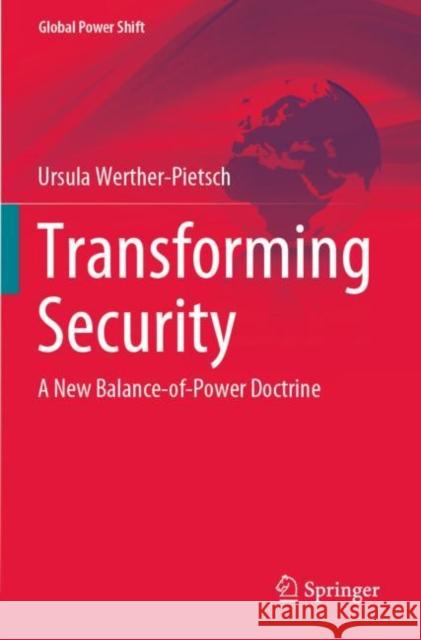
Transforming Security: A New Balance-of-Power Doctrine Ursula Werther-Pietsch 9783030870997 Springer - książkaWidoczna okładka, to zdjęcie poglądowe, a rzeczywista szata graficzna może różnić się od prezentowanej.

Transforming Security: A New Balance-of-Power Doctrine

ISBN-13: 9783030870997 / Angielski / Miękka / 2022 / 180 str.

Ursula Werther-Pietsch
cena 443,82
(netto: 422,69 VAT:  5%)

Najniższa cena z 30 dni: 424,07
Termin realizacji zamówienia:
ok. 22 dni roboczych
Bez gwarancji dostawy przed świętami

Darmowa dostawa!
inne wydania

This book analyses the collective security system as it now stands, focusing on strategic and normative frameworks. The old system of international collective security is based on assumptions that are inadequate in relation to current challenges. Against the backdrop of changed geopolitical constellations, democracies under siege and the challenges posed by new types of warfare, critical analysts hold that not a single multilateral institution today is fully up to the task it was created for. The UN, from its founding to the Sustained Peace Approach, represents a fascinating global process of vision-building and adaptation to reality.Based on this understanding, the dynamics of the UN peace and security architecture are examined along with major agendas, from peacebuilding to development. In turn, reform proposals in the post-COVID-19 era are discussed.The book examines whether a regionalization of security structures within the UN framework may offer a way out of global fragility and growing instability factors, a question of utmost importance for conflict prevention and crisis management in the next few decades. In turn, the author discusses a normative positioning of a new intervention logic as the lowest common denominator between collaborative regional orders. Reinvented multilateralism will return as a “must.” Given its scope, the book will appeal to students and scholars of international relations and international security studies, as well as to policymakers in governments and international organizations.


This book analyses the collective security system as it now stands, focusing on strategic and normative frameworks. The old system of international collective security is based on assumptions that are inadequate in relation to current challenges. Against the backdrop of changed geopolitical constellations, democracies under siege and the challenges posed by new types of warfare, critical analysts hold that not a single multilateral institution today is fully up to the task it was created for. The UN, from its founding to the Sustained Peace Approach, represents a fascinating global process of vision-building and adaptation to reality.Based on this understanding, the dynamics of the UN peace and security architecture are examined along with major agendas, from peacebuilding to development. In turn, reform proposals in the post-COVID-19 era are discussed.The book examines whether a regionalization of security structures within the UN framework may offer a way out of global fragility and growing instability factors, a question of utmost importance for conflict prevention and crisis management in the next few decades. In turn, the author discusses a normative positioning of a new intervention logic as the lowest common denominator between collaborative regional orders. Reinvented multilateralism will return as a “must.” Given its scope, the book will appeal to students and scholars of international relations and international security studies, as well as to policymakers in governments and international organizations.

Kategorie:
Nauka, Polityka
Kategorie BISAC:
Political Science > Security (National & International)
Law > International
Political Science > International Relations - General
Wydawca:
Springer
Seria wydawnicza:
Global Power Shift
Język:
Angielski
ISBN-13:
9783030870997
Rok wydania:
2022
Dostępne języki:
Numer serii:
000441674
Ilość stron:
180
Waga:
0.29 kg
Wymiary:
23.39 x 15.6 x 1.09
Oprawa:
Miękka
Dodatkowe informacje:
Wydanie ilustrowane

Chapter 1. The Interplay of Geopolitics and Law.- Part I. Collective Security and its Inherent Failures.- Chapter 2. Intertwined Pillars in a World of Change.- Chapter 3. New Ways to Tackle Global Peace and Security.- Chapter 4. Who, Why and When - The Normative Framework.- Chapter 5. How To Do It – Strategies of International Crisis and Conflict Management.- Chapter 6. Resume Part I - Global Peace & Security Today.- Part II. Towards a New Balance-of-Power Doctrine.- Chapter 7. Changed Geopolitical Conditions.- Chapter 8. Dynamics and UN Reform from 1990 to 2030.- Chapter 9. Resume Part II - Milestones of Progress in Multilateralism.- Part III. Collaborative Regional Security.- Chapter 10. How to Keep Peace - Learning from History.- Chapter 11. Modelling the Future: A Global Peace Mechanism for 2050.- Chapter 12. Resume Part III – Global Peace Mechanism Model


Ursula Werther-Pietsch is Lecturer of International Law and International Relations at the University of Graz, Austria. Furthermore, she teaches at the University of the German Armed Forces in Munich, the Vienna Diplomatic Academy, and the Austrian National Defence Academy. She is Co-editor of The Defence Horizon Journal Special Edition and, Member of the Scientific Commission at the Austrian Ministry of Defence. Her research focuses on collective security; fragility and resilience; multilateral system thinking; anticipatory governance; and human centrism.

This book analyses the collective security system as it now stands, focusing on strategic and normative frameworks. The old system of international collective security is based on assumptions that are inadequate in relation to current challenges. Against the backdrop of changed geopolitical constellations, democracies under siege and the challenges posed by new types of warfare, critical analysts hold that not a single multilateral institution today is fully up to the task it was created for. The UN, from its founding to the Sustained Peace Approach, represents a fascinating global process of vision-building and adaptation to reality.

Based on this understanding, the dynamics of the UN peace and security architecture are examined along with major agendas, from peacebuilding to development. In turn, reform proposals in the post-COVID-19 era are discussed.

The book examines whether a regionalization of security structures within the UN framework may offer a way out of global fragility and growing instability factors, a question of utmost importance for conflict prevention and crisis management in the next few decades. In turn, the author discusses a normative positioning of a new intervention logic as the lowest common denominator between collaborative regional orders. Reinvented multilateralism will return as a “must.” Given its scope, the book will appeal to students and scholars of international relations and international security studies, as well as to policymakers in governments and international organizations.




Udostępnij

Facebook - konto krainaksiazek.pl


Opinie o Krainaksiazek.pl na Opineo.pl

Partner Mybenefit

Krainaksiazek.pl w programie rzetelna firma Krainaksiaze.pl - płatności przez paypal

Czytaj nas na:

Facebook - krainaksiazek.pl
  • książki na zamówienie
  • granty
  • książka na prezent
  • kontakt
  • pomoc
  • opinie
  • regulamin
  • polityka prywatności

Zobacz:

  • Księgarnia czeska

  • Wydawnictwo Książkowe Klimaty

1997-2025 DolnySlask.com Agencja Internetowa

© 1997-2022 krainaksiazek.pl
     
KONTAKT | REGULAMIN | POLITYKA PRYWATNOŚCI | USTAWIENIA PRYWATNOŚCI
Zobacz: Księgarnia Czeska | Wydawnictwo Książkowe Klimaty | Mapa strony | Lista autorów
KrainaKsiazek.PL - Księgarnia Internetowa

Polityka prywatnosci - link
Krainaksiazek.pl - płatnośc Przelewy24
Przechowalnia Przechowalnia




