Transformational Ethics of Film: Thinking the Cinemakeover in the Film-Philosophy Debate » książka





Transformational Ethics of Film: Thinking the Cinemakeover in the Film-Philosophy Debate
ISBN-13: 9789004459953 / Angielski / Twarda / 2021 / 334 str.
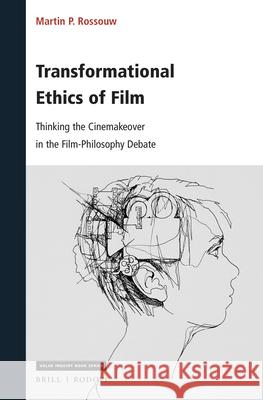
Transformational Ethics of Film: Thinking the Cinemakeover in the Film-Philosophy Debate
ISBN-13: 9789004459953 / Angielski / Twarda / 2021 / 334 str.
(netto: 567,91 VAT: 5%)
Najniższa cena z 30 dni: 569,14
ok. 30 dni roboczych
Bez gwarancji dostawy przed świętami
Darmowa dostawa!
Charting new routes for film ethics, Transformational Ethics of Film develops a critical account of the ethics of personal transformation at work within the 'film as philosophy' debate.
"Martin Rossouw's engaging, rigorous, and original book on the 'film-philosophy' movement breaks new ground in the 'film as philosophy' debate. By exploring film-philosophers' implicit commitments to a 'transformational ethics', he deepens our understanding of the ethical potential, as well as theoretical limits, of film-philosophy. Essential reading for anyone concerned with film and philosophy." - Robert Sinnerbrink (Macquarie University), author of Cinematic Ethics and Terrence Malick: Filmmaker and Philosopher.
"Rossouw approaches the question of the ethical impact of film upon its audience in a refreshing and original manner. Using Johann Visagie's theory of ethical transformation, Rossouw posits a complex process by means of which members of a film's audience can come to enhance their moral perspective. This is an important work that all those interested in the relationship between film and ethics will have to take seriously." - Thomas E. Wartenberg (Mount Holyoke College), author of Thinking on Screen: Film as Philosophy and Mel Bochner: Illustrating Philosophy.
"Rossouw's conversational register [...] conjures a friendly and approachable philosopher figure who truly wants to communicate, to share in dialogic joys, not simply to evince a discursive authority. The fun of philosophy shines through... [Transformational Ethics of Film] represents a significant step forward in the philosophy of film, shining a light on guiding assumptions of the manner of transformation film is capable of provoking [...]" - Wyatt Moss-Wellington, review in: Projections: The Journal for Movies and Mind.
"Recasting much of the existing debate, Martin Rossouw's [...] emphasis on film's power for enacting ethical transformation, rather than theoretical insight or discovery, gives a much-needed shot in the arm to a topic whose development has stalled in recent years. [...] This highly original book offers a unique and provocative contribution to the scholarship. Rossouw is a persistent questioner, often demonstrating sharp philosophical instincts." - Shawn Loht, in: Philosophy in Review, Vol. 43 no. 1 (February 2023).
Preface
Acknowledgments
Introduction
1 The Fact of the 'Meta'
2 The Good of Film: The Inherent Ethics of Film as Philosophy
3 On Transformational Ethics
4 Thinking the Cinemakeover
5 Statements of (Meta-critical) Intent
6 Case Studies
7 A Roadmap to This Book
1 'Going Meta' on Film as Philosophy
Opening Up the Field
1 A Two-Way Street: Philosophy of Film and Film as Philosophy
2 Degrees vs. Conditions: Axes of Engagement
3 Degrees of Engagement: Weak, Moderate, and Bold
3.1 Weak Engagement: 'Film as (Illustration of) Philosophy'
3.2 Moderate Engagement: 'Film (to Some Extent) as Philosophy'
3.3 Bold Engagement: 'Film as Philosophy'
3.4 A Reconsideration of Degree: 'Engaging in' versus 'Engaging with' Philosophy
4 Conditions of Engagement
4.1 Film as Illustration and Representation
4.2 Philosophical Methods
4.2.1 A Methodological Characterization of Philosophy
4.2.2 Argument
4.2.3 Thought Experiment
4.3 Philosophical Thinking
4.3.1 'Thinking in Just the Way Philosophers Do'
4.3.2 Thinking Philosophical Problems
4.4 Self-Reflection
4.5 Cinematic Thinking
4.5.1 Cinematic Thinking in 'Romantic Film-Philosophy'
4.5.2 Cinematic Thinking in 'Filmosophy'
4.6 A Reconsideration of Conditions? The Suspended Condition of 'Non-philosophy'
5 Conclusion: Motives and Meta-perspectives
2 When Philosophers Join Fight Club
A Framework for Transformational Ethics of Film
1 Johann Visagie's Theory of Transformational Ethics
1.1 Transformation as Motive, Ethic, and Practice
1.2 Frames of Analysis
1.2.1 Technique of Transformation
1.2.2 Mode of Transformation
1.2.3 Value of Transformation
1.2.4 Domain of Transformation
1.2.5 Paradigm of Transformation
1.3 On/Against a Critical-Ideological Conception of Transformational Ethics
2 Adapting the Framework: Transformational Ethics of Film, and Its Meta-analysis
2.1 Transformational Ethics of Film
2.2 Meta-theoretical Analysis of Film as Philosophy
2.2.1 The 'How' in Film as Philosophy I: Viewing Film as Technique
2.2.2 The 'How' in Film as Philosophy II: Modes of Transformation
2.2.3 The 'To What End' in Film as Philosophy: Values of Transformation
2.2.4 The 'What' in Film as Philosophy: Domains of Transformation
2.2.5 The 'Why' in Film as Philosophy: Paradigms of Transformation
2.2.6 Final Calibrations
2.3 Conclusions and Clarifications
3 Post-script: Violent Strokes for Different Folks
3.1 Everyday Reception
3.2 Critical Reception
3.3 Philosophical Reception: Commentary and Interpretation
3.4 Philosophical Reception: Film as Philosophy
3.5 Conclusion: Fight Club, Violence, and Transformation
3 Slogans for Self-Transformation
How Films Are Thought to Do More Than 'Think'
1 From Movies to Ethical Makeover-Slogans
2 Ethics of Self-Concentration
2.1 'Know Yourself': Film as Thought Experiment
2.1.1 Be-(a)-ware: The Matrix of Hidden Assumptions
2.1.2 Other Twists and Trammels: Do the Right Thing and Happy-Go-Lucky
2.2 'Remind Yourself': No ë l Carroll
2.2.1 Self-Knowledge as Recollection and Sunset Boulevard
2.2.2 Ancient Backing
2.2.3 Self-Knowledge as Clarification
2.3 'Know Yourself' Some More: A Word on Film as Philosophy Doubters
2.4 'Sense Your Senses': Vivian Sobchack
2.4.1 Sobchack's Blue Exercise
2.4.2 Disclosures, Disruptions, and Deepenings
3 Ethics of Self-Expansion
3.1 'Expand Your Mind': Stephen Mulhall and Others
3.1.1 The Thinking Film's Transformations of Thought
3.1.2 Perspectives, Frames, and Aspect-Seeing
3.2 'Blow Your Mind': Deleuzian Inspirations in Sinnerbrink and Frampton
3.2.1 Robert Sinnerbrink: Ethical Motives and Motifs
3.2.2 Sinnerbrink's Ethic: Domains and Modes
3.2.3 Romanticism, the New, and Practicing Receptivity
3.2.4 Daniel Frampton: Posit a 'Filmind' to 'Blow Your Mind'
3.2.5 Filmosophy, the Prequel: Preparatory Ethics
3.2.6 The Sequel to the Prequel: Filmosophy's Transformational Effects
3.3 'Lose Your Self': Deleuzian Inspirations Take #2 (Radical Immanence)
3.3.1 Dismantle Your Self: The Body without Organs (as Return to Nature)
3.3.2 Lose Your Self (to Nature)... through Film
3.3.3 Affect Your Self: Elena del Río
3.3.4 See Your Self Enworlded: William Brown
3.3.5 Disperse Your Self: Leo Bersani & Ulysse Dutoit
3.3.6 Prepare to Lose Your Self: The Deleuzian Model Viewer
4 Intermezzo: Stanley Cavell and Some Stickers That 'Could'
4.1 From 'Overcome Yourself' to 'Connect Yourself': The Moving Image of Skepticism
4.2 Not 'Perfect Yourself', but 'Become Yourself': Emersonian Perfectionism
4.3 Open-Ended Ends
5 'Ready Yourself': Model Viewers and Their Preparatory Ethics
5.1 Aspects of the Model Viewer
5.2 The 'Spirituality' of Film as Philosophy
5.3 Ascetic Preparations and Ethics of Interpretation
5.4 Questions and Problems
5.4.1 Exclusivism
5.4.2 Idealism
5.4.3 Contradiction
5.4.4 Initiative
4 There's Something about Malick
From Contemplative Style to Ethics of Transformation
1 "I've got style!" - A Prelude
2 'Contemplative Style', Philosophy, Transformation
3 Seeking Transformational Ethics in Malick: Contributing Factors
3.1 Personal Transformation in Malick's Narratives
3.1.1. Identity, Meaning, Transcendence
3.1.2 Characters as Transformationalist Figures
3.1.3 Nature
3.1.4 Unity
3.2 Transformationalism in Malick's Authorial Image
4 From Contemplative Style to Ethics of Transformation: Three Cases
4.1 Cinematographic Presentations of Nature
4.1.1 Simon Critchley: Calm in the Presence of Nature
4.1.2 Robert Silberman: Nature as a Challenge to Imagination
4.1.3 Robert Pippin: Interrogative Attention
4.2 Voice-Over
4.2.1 Steven Rybin: Self-Reflection and Voicing Meaning
4.2.2 David Davies: Self-Reflection and Embodied Agency
4.3 Perspective-Effects
4.3.1 Whose Perspective?
4.3.2 Robert Sinnerbrink: The Perspective of Nature
4.3.3 Iain Macdonald: A Deconstruction of Perspectives
4.3.4 Bersani & Dutoit: An Erasure of Perspective
5 Some Things about Film as Philosophy: Method, Value, and Assumption
5 Concluding Thoughts
On Detective Work and Wearing Different Hats
1 Meta-critical Detective Notes
1.1 The Scene of the Investigation
1.2 My Forensic Tools: A Multipurpose Set
1.3 Profiles and Patterns
1.4 The Curious Case of Terrence Malick
2 Looking Ahead: Taking Off the Meta-hat
2.1 On Film-Ethical Interpretation (and Hat-Switching with Malick)
2.2 On Film-Ethical Theory (and the Many Futures of the Cinemakeover)
Bibliography
Index
Martin P. Rossouw, Ph.D. (2019), University of Groningen, is chair of the Department of Art History and Image Studies, University of the Free State, South Africa, where he teaches as senior lecturer in the Programme of Film and Visual Media.




Czytaj nas na:
1997-2025 DolnySlask.com Agencja Internetowa
KrainaKsiazek.PL - Księgarnia Internetowa


