Transcending the Self: An Object Relations Model of Psychoanalytic Therapy » książka





Transcending the Self: An Object Relations Model of Psychoanalytic Therapy
ISBN-13: 9780881634235 / Angielski / Miękka / 1999 / 280 str.
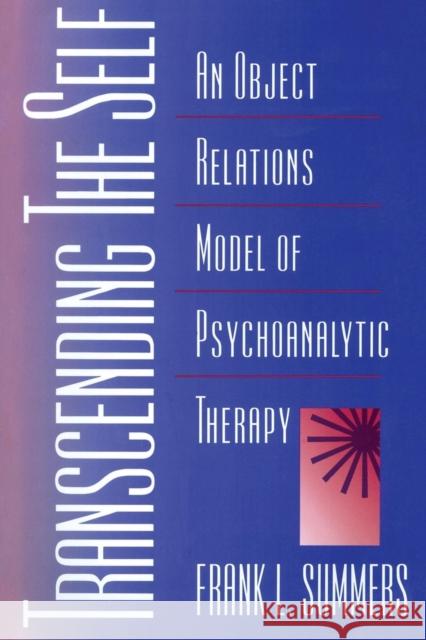
< P> Despite the popularity of object relations theories, these theories are often abstract, with the relation between theory and clinical technique left vague and unclear.& nbsp; Now, in < EM> Transcending the Self: An Object Relations Model of Psychoanalytic Therapy< /EM> , & nbsp; Summers answers the need for an integrative object relations model that can be understood and applied by the clinician in the daily conduct of psychoanalytic therapy.< BR> & nbsp; < BR> Drawing on recent infancy research, developmental psychology, and the works of major theorists, including Bollas, Benjamin, Fairbairn, Guntrip, Kohut, and Winnicott, Summers melds diverse object-relational contributions into a coherent viewpoint with broad clinical applications.& nbsp; The object relations model emerges as a distinct amalgam of interpersonal/relational& nbsp; and interpretive perspectives.& nbsp; It is a model that can help patients undertake the most gratifying and treacherous of personality journeys: & nbsp; that aiming at the transcendence of the childhood self.& nbsp; Self-transcendence, in Summers' sense, means moving beyond the profound limitations of early life via the therapeutically mediated creation of a newly meaningful and authentic sense of self.< BR> & nbsp; < BR> Following two chapters that present the empirical and theoretical basis of the model, he launches into clinical applications by presenting the concept of therapeutic action that derives from the model.& nbsp; Then, in three successive chapters, he applies the model to patients traditionally conceptualized as borderline, narcissistic, and neurotic.& nbsp; He concludes with achapter that addresses more broadly the craft of conducting psychoanalytic therapy.< BR> & nbsp; < BR> Filled with richly detailed case discussions, < EM> Transcending the Self< /EM> provides practicing clinicians with a powerful demonstration of how psychoanalytic therapy informed by an object relations model can effect radical personality change.& nbsp; It is an outstanding example o< /P>




Czytaj nas na:
KrainaKsiazek.PL - Księgarnia Internetowa


