• Wyszukiwanie zaawansowane
  • Kategorie
  • Kategorie BISAC
  • Książki na zamówienie
  • Promocje
  • Granty
  • Książka na prezent
  • Opinie
  • Pomoc
  • Załóż konto
  • Zaloguj się

Towards a New Map of Automobile Manufacturing in Europe?: New Production Concepts and Spatial Restructuring » książka

zaloguj się | załóż konto
Logo Krainaksiazek.pl

koszyk

konto

szukaj
topmenu
Księgarnia internetowa
Szukaj
Książki na zamówienie
Promocje
Granty
Książka na prezent
Moje konto
Pomoc
 
 
Wyszukiwanie zaawansowane
Pusty koszyk
Bezpłatna dostawa dla zamówień powyżej 20 złBezpłatna dostawa dla zamówień powyżej 20 zł

Kategorie główne

• Nauka
 [2952079]
• Literatura piękna
 [1850969]

  więcej...
• Turystyka
 [71058]
• Informatyka
 [151066]
• Komiksy
 [35579]
• Encyklopedie
 [23181]
• Dziecięca
 [620496]
• Hobby
 [139036]
• AudioBooki
 [1646]
• Literatura faktu
 [228729]
• Muzyka CD
 [379]
• Słowniki
 [2932]
• Inne
 [445708]
• Kalendarze
 [1409]
• Podręczniki
 [164793]
• Poradniki
 [480107]
• Religia
 [510956]
• Czasopisma
 [511]
• Sport
 [61267]
• Sztuka
 [243299]
• CD, DVD, Video
 [3411]
• Technologie
 [219640]
• Zdrowie
 [100984]
• Książkowe Klimaty
 [124]
• Zabawki
 [2281]
• Puzzle, gry
 [3363]
• Literatura w języku ukraińskim
 [258]
• Art. papiernicze i szkolne
 [8020]
Kategorie szczegółowe BISAC

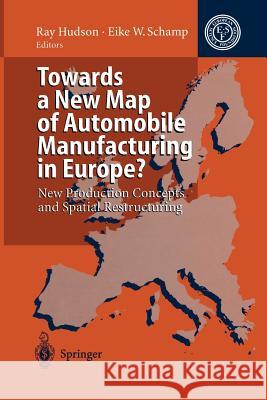
Towards a New Map of Automobile Manufacturing in Europe?: New Production Concepts and Spatial Restructuring

ISBN-13: 9783642794735 / Angielski / Miękka / 2011 / 269 str.
Ray Hudson; Eike W. Schamp
Towards a New Map of Automobile Manufacturing in Europe?: New Production Concepts and Spatial Restructuring Hudson, Ray 9783642794735 Springer - książkaWidoczna okładka, to zdjęcie poglądowe, a rzeczywista szata graficzna może różnić się od prezentowanej.

Towards a New Map of Automobile Manufacturing in Europe?: New Production Concepts and Spatial Restructuring

ISBN-13: 9783642794735 / Angielski / Miękka / 2011 / 269 str.

Ray Hudson; Eike W. Schamp
cena 402,53
(netto: 383,36 VAT:  5%)

Najniższa cena z 30 dni: 385,52
Termin realizacji zamówienia:
ok. 22 dni roboczych.

Darmowa dostawa!

This book discusses the changes in the regional infrastructure within the European automobile industry. It is based on the increased competition between the European automobile industry and its suppliers, which has several causes: the intensified activities of Japanese competitors in Europe, leading to faster adaptation to new production concepts in European companies (lean production); concentration of suppliers in connection with these new concepts; new opportunities and competition as a result of the home market and the opening of Eastern Europe.


Kategorie:
Nauka, Geografia
Kategorie BISAC:
Technology & Engineering > Automotive
Science > Earth Sciences - Geography
Business & Economics > Economics - General
Wydawca:
Springer
Język:
Angielski
ISBN-13:
9783642794735
Rok wydania:
2011
Wydanie:
Softcover Repri
Ilość stron:
269
Waga:
0.45 kg
Wymiary:
23.5 x 15.5
Oprawa:
Miękka
Wolumenów:
01

1 New Challenges to the Automobile Production Systems in Europe.- 1.1 Introduction.- 1.2 The European Automobile Industry in Global Context.- 1.2.1 The global significance of the European automobile system.- 1.2.2 Europe’s position in the global strategies of the major automobile producers.- 1.3 The Automobile Production Systems Approach.- 2 National and International Regulatory Frameworks: The Politics of European Automobile Production and Trade.- 2.1 Introduction.- 2.2 National Regulatory Environments in Europe.- 2.3 International Regulation: the European Community’s Policies Towards Auto Production and Trade.- 2.4 Concluding Comments.- 3 “Europeanisation” in the Automotive Components Sector and Its Implications for State and Locality.- 3.1 Introduction.- 3.2 The Changing Geography of Automotive Components Production in the United Kingdom.- 3.3 “Europeanisation” and Corporate Strategies in the Automotive Component Sector.- 3.3.1 Bosch.- 3.3.2 Valeo.- 3.3.3 Four major UK companies: Lucas, GKN, T & N, BBA.- 3.3.4 Four major US companies: TRW, Allied-Signal, ITT and Tenneco.- 3.3.5 Japanese component companies and Europe.- 3.4 Concluding Comments.- 4 The Japanese, the European Market and the Automobile Industry in the United Kingdom.- 4.1 Introduction.- 4.2 Competition Between Automobile Companies in the United Kingdom.- 4.3 Cooperation Between Automobile Companies in the United Kingdom.- 4.4 Cooperation Between Component Suppliers and Automobile Producing Companies in the United Kingdom.- 4.5 Competition and Cooperation Between Component Companies in the United Kingdom and European Community.- 4.6 Capital: Labour Relations.- 4.7 State Regulation of Japanese Competition: European Community Trade Policies, National Interests and Corporate Interests.- 4.8 The Local and Regional Development Implications of Japanese Inward Investment: Just-in-Time and In One Place ?.- 4.9 Concluding Comments.- 5 The German Automobile Production System Going European.- 5.1 Introduction.- 5.2 Market Structures During the 1980s.- 5.3 Competitiveness via the Technological Competences of Automobile Producers.- 5.3.1 The emergent spatial pattern.- 5.3.2 Choices in product and process.- 5.3.3 Two joint strategies: Europeanisation and flexibilisation.- 5.3.4 The 1990s.- 5.4 Organisational and Spatial Restructuring of the Components Sector.- 5.5 Consequences for Labour.- 5.6 The Changing Geography of the German Automobile Production System During the 1990s.- 6 The Italian Automobile Industry and the Case of Fiat: One Country, One Company, One Market ?.- 6.1 Introduction.- 6.2 The Italian Automobile Industry: Some Structural Features.- 6.3 The Relationship Between the Automobile Industry and Government Economic Policies.- 6.3.1 Protectionist policies.- 6.3.2 Bail-out policies.- 6.3.3 Policies of territorial re-equilibrium.- 6.3.4 Other forms of state intervention.- 6.4 Spatial Strategies and Reorganisation Strategies.- 6.4.1 The approach: the automobile industry as a complex industrial system.- 6.4.2 From expansion to crisis.- 6.4.3 The first turning point.- 6.4.4 The 1980s: the great rationalisation.- 6.5 Continuity and Discontinuity in the Geography of the Italian Automobile System.- 6.6 Concluding Comments.- 7 Competitive Strategies in the World Market: The Case of Renault and the Emergence of a European Group ?.- 7.1 Introduction.- 7.2 Why Did European Automobile Companies Have to Make Strategic Changes ?.- 7.3 A Basic Answer: Improving Efficiency.- 7.3.1 Project structures.- 7.3.2 Development of quality.- 7.3.3 Automation, just-in-time manufacturing and supply.- 7.3.4 A new supply policy.- 7.3.5 Restructuring the European plants.- 7.3.6 National and international agreements.- 7.4 A Missed Opportunity: Renault’s Failure to Grow Outside Europe.- 7.4.1 The missed deal in the USA.- 7.4.2 The weak positions in other countries.- 7.5 The Result: The Weaknesses of Renault in the 1990s.- 7.6 A European Answer: Rise and Fall of the Renault-Volvo Merger.- 7.6.1 1990–1993: the deepening of the alliance.- 7.6.2 September 1993: the move towards a merger.- 7.6.3 December 1993: the merger failure.- 7.7 Privatisation and After?.- 7.7.1 Towards a Renault-Fiat deal ?.- 7.7.2 Towards new international alliances within Europe.- 8 The Restructuring of the Swedish Automobile Production System.- 8.1 Introduction.- 8.2 The Swedish Automobile Production System — Some General Characteristics.- 8.3 Volvo and Saab: Corporate Structures and Strategies.- 8.3.1 Diversification.- 8.3.2 Internationalisation.- 8.3.3 Production organisation and location.- 8.4 1970 to 1987: From Crisis to Success.- 8.5 1988 to 1992: Renewed Crisis and Intensive Restructuring.- 8.5.1 Saab Automobile.- 8.5.2 Volvo.- 8.6 Post 1992: Future Prospects for Swedish Car Production.- 8.6.1 Lost national identities ?.- 8.6.2 Prospects for component suppliers.- 8.7 Concluding Comments.- 9 Multi-purpose Vehicles, a New Opportunity for the Periphery ? Lessons from the Ford\VW Project (Portugal).- 9.1 Introduction.- 9.2 Prospects for the Growth of Multi-purpose Vehicles: The Visible Hand of the Single Market.- 9.3 The Automobile Industry in Portugal.- 9.3.1 The formation of the industry.- 9.3.2 The current situation.- 9.4 The Ford Wolkswagen (AutoEuropa) Project.- 9.4.1 Background.- 9.4.2 A brief description of the project.- 9.4.3 Investment and financing.- 9.4.4 Production and markets.- 9.4.5 Employment.- 9.4.6 The process of setting up supplier-networks.- 9.4.7 The geography of direct suppliers: possible outlines of an emerging archipelago.- 9.5 Concluding Comments.- 10 Interdependent and Uneven Development in the Spatial Reorganisation of the Automobile Production Systems in Europe.- 10.1 Introduction.- 10.2 Challenges to the Core from Western and Southern Europe.- 10.3 Central and Eastern Europe — the New ‘Frontier’ of European Automobile Production.- 10.4 Resistance to the Erosion of the European Automobile Core.- 10.5 Towards a New Map of Automobile Production in Europe ?.- Author Index.- Location Index.

Eike W. Schamp lehrt Wirtschaftsgeografie an der Universität Frankfurt/Main.

Hudson, Ray Hudson is Professor of Geography at the University... więcej >
Schamp, Eike W. Eike W. Schamp is professor of economic and social... więcej >


Udostępnij

Facebook - konto krainaksiazek.pl


Opinie o Krainaksiazek.pl na Opineo.pl

Partner Mybenefit

Krainaksiazek.pl w programie rzetelna firma Krainaksiaze.pl - płatności przez paypal

Czytaj nas na:

Facebook - krainaksiazek.pl
  • książki na zamówienie
  • granty
  • książka na prezent
  • kontakt
  • pomoc
  • opinie
  • regulamin
  • polityka prywatności

Zobacz:

  • Księgarnia czeska

  • Wydawnictwo Książkowe Klimaty

1997-2026 DolnySlask.com Agencja Internetowa

© 1997-2022 krainaksiazek.pl
     
KONTAKT | REGULAMIN | POLITYKA PRYWATNOŚCI | USTAWIENIA PRYWATNOŚCI
Zobacz: Księgarnia Czeska | Wydawnictwo Książkowe Klimaty | Mapa strony | Lista autorów
KrainaKsiazek.PL - Księgarnia Internetowa

Polityka prywatnosci - link
Krainaksiazek.pl - płatnośc Przelewy24
Przechowalnia Przechowalnia






