• Wyszukiwanie zaawansowane
  • Kategorie
  • Kategorie BISAC
  • Książki na zamówienie
  • Promocje
  • Granty
  • Książka na prezent
  • Opinie
  • Pomoc
  • Załóż konto
  • Zaloguj się

Towards a Comparative Economic History of Cinema, 1930–1970 » książka

zaloguj się | załóż konto
Logo Krainaksiazek.pl

koszyk

konto

szukaj
topmenu
Księgarnia internetowa
Szukaj
Książki na zamówienie
Promocje
Granty
Książka na prezent
Moje konto
Pomoc
 
 
Wyszukiwanie zaawansowane
Pusty koszyk
Bezpłatna dostawa dla zamówień powyżej 20 złBezpłatna dostawa dla zamówień powyżej 20 zł

Kategorie główne

• Nauka
 [2949965]
• Literatura piękna
 [1857847]

  więcej...
• Turystyka
 [70818]
• Informatyka
 [151303]
• Komiksy
 [35733]
• Encyklopedie
 [23180]
• Dziecięca
 [617748]
• Hobby
 [139972]
• AudioBooki
 [1650]
• Literatura faktu
 [228361]
• Muzyka CD
 [398]
• Słowniki
 [2862]
• Inne
 [444732]
• Kalendarze
 [1620]
• Podręczniki
 [167233]
• Poradniki
 [482388]
• Religia
 [509867]
• Czasopisma
 [533]
• Sport
 [61361]
• Sztuka
 [243125]
• CD, DVD, Video
 [3451]
• Technologie
 [219309]
• Zdrowie
 [101347]
• Książkowe Klimaty
 [123]
• Zabawki
 [2362]
• Puzzle, gry
 [3791]
• Literatura w języku ukraińskim
 [253]
• Art. papiernicze i szkolne
 [7933]
Kategorie szczegółowe BISAC

Towards a Comparative Economic History of Cinema, 1930–1970

ISBN-13: 9783031057724 / Angielski / Miękka / 2023
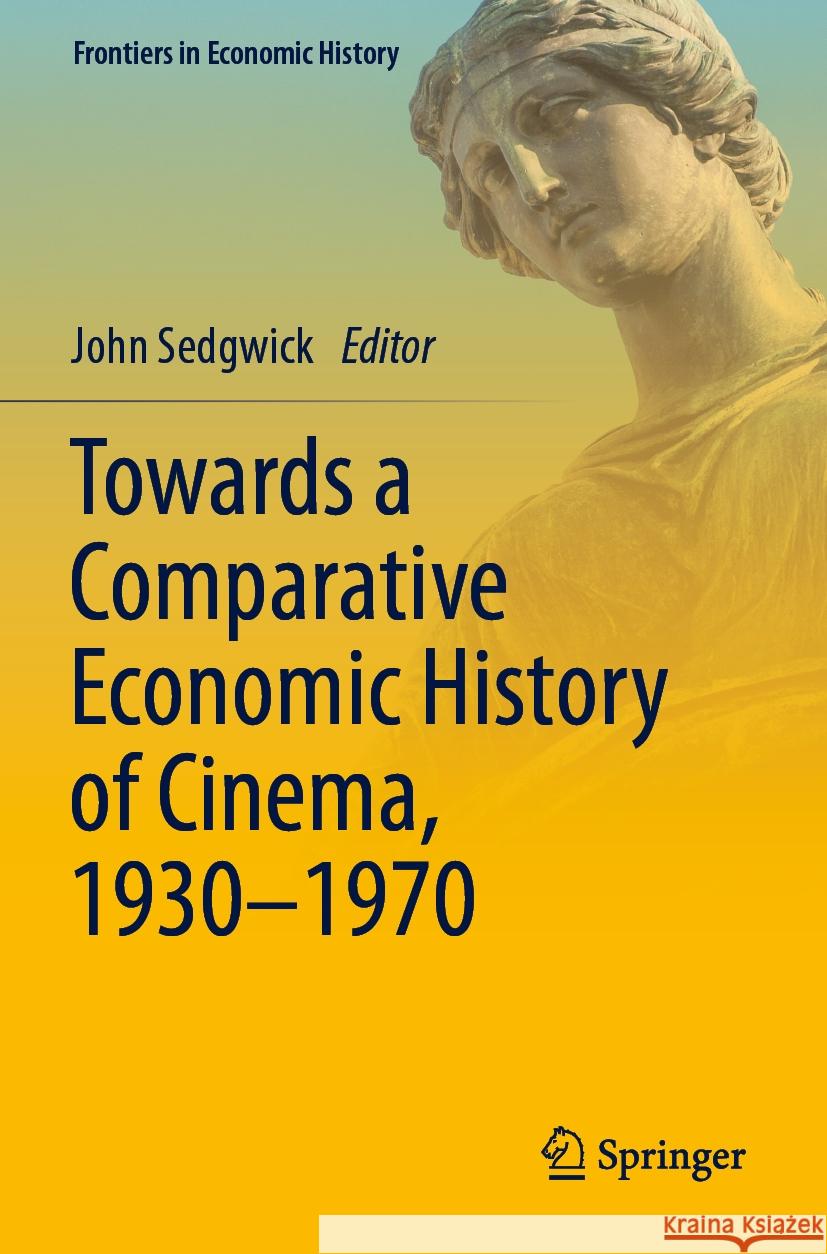
Towards a Comparative Economic History of Cinema, 1930–1970  9783031057724 Springer International Publishing - książkaWidoczna okładka, to zdjęcie poglądowe, a rzeczywista szata graficzna może różnić się od prezentowanej.

Towards a Comparative Economic History of Cinema, 1930–1970

ISBN-13: 9783031057724 / Angielski / Miękka / 2023

cena 443,82 zł
(netto: 422,69 VAT:  5%)

Najniższa cena z 30 dni: 385,52 zł
Termin realizacji zamówienia:
ok. 22 dni roboczych
Bez gwarancji dostawy przed świętami

Darmowa dostawa!
inne wydania


This book examines the economic circumstances in which films were produced, distributed, exhibited, and consumed during the spoken era of film production until 1970. The periodisation covers the years between the onset of sound and the demise of the phased distribution of films. 
 
Films are generally appreciated for their aesthetic qualities. But they are also commodities. This work of economic history presents a new approach, considering consumption behaviour as significant as supply-side decision-making. Audiences’ tastes are considered central, with box-office an indicator of what they liked. The POPSTAT Index of Film Popularity is used as a proxy where box office knowledge is missing. Comparative analysis is conducted through the tool RelPOP.
 
The book comprises original case studies covering film consumption in Great Britain, the Netherlands, Sweden, and the United States during the 1930s; Australia and occupied Belgium during the Second World War; and Italy, the United States, Poland and Czechoslovakia during the Post-war. An overriding theme is how the classical American business model, which emerged during the 1910s linking production to distribution and exhibition, adapted to local circumstances, including the two countries behind the Iron Curtain during the years of ‘High Stalinism’. 

Kategorie:
Nauka, Ekonomia i biznes
Kategorie BISAC:
Business & Economics > Historia ekonomii
Performing Arts > Film - History & Criticism
Art > History - General
Wydawca:
Springer International Publishing
Seria wydawnicza:
Frontiers in Economic History
Język:
Angielski
ISBN-13:
9783031057724
Rok wydania:
2023
Waga:
0.56 kg
Wymiary:
23.5 x 15.5
Oprawa:
Miękka
Dodatkowe informacje:
Wydanie ilustrowane

​Chapter 1. Introduction: ‘Millions of People Every Day’ – Cinema as part of the quotidian of life (John Sedgwick).- Chapter 2. Managing Risk - Key Concepts and Methods (John Sedgwick).- Chapter 3. How did the Department of Justice Get it so Wrong? Philadelphia 1935-36: the Stanley Warner Chain, competitive practices, and consumer welfare (Andrew Hanssen).- Chapter 4. Comparative Film Popularity in Three English Cities - Bolton, Brighton, and Portsmouth: an exercise in POPSTAT methodology (John Sedgwick).- Chapter 5. Popular films in Stockholm during the 1930s: a presentation and discussion of the pioneering work of Leif Furhammar (John Sedgwick).- Chapter 6. Dutch films in the Dutch market in the 1930s: A characteristics approach to film popularity (Clara Pafort-Overduin).- Chapter 7. Unravelling Australia’s “Infamous ‘contract’ system.” Evidence from Adelaide, 1942-3. (Dylan Walker).- Chapter 8. Film exhibition, distribution, and popularity in German-occupied Belgium (1940-1944): Brussels, Antwerp, and Liege (John Sedgwick).- Chapter 9. Five Italian Cities: Comparative analysis of cinema-types, film circulation, and relative popularity in the mid-1950s (John Sedgwick).- Chapter 10. Cinemagoers should ‘…learn from progressive movies, again and again.’ Cinemagoing in Czechoslovakia, 1949-52 (John Sedgwick).- Chapter 11. ‘It seems to me that the most popular films in the West are very harmful to us’: Film Popularity in Poland during the years of ‘High Stalinism’ (John Sedgwick).- Chapter 12. Americanisation in reverse? Hollywood films, international influences, and US audiences, 1946-1965 (Peter Miskell)


John Sedgwick researches the business and economic history of movies and has published widely in business, economic and film history journals. As an academic, he worked for 25 years at London Metropolitan University (UK), teaching industrial economics and research methods. He also served variously as Economics Subject Leader and Director of the Centre for International Business and Sustainability. John was appointed Professor of Film Economics in 2009 and then Professor of Creative Industries in 2011. Between 2013 and 2017, he was employed as a 0.2 Professor in the Business School, University of Portsmouth (UK). He currently has visiting status at Oxford Brooks University


This book examines the economic circumstances in which films were produced, distributed, exhibited, and consumed during the spoken era of film production until 1970. The periodisation covers the years between the onset of sound and the demise of the phased distribution of films. 
 
Films are generally appreciated for their aesthetic qualities. But they are also commodities. This work of economic history presents a new approach, considering consumption behaviour as significant as supply-side decision-making. Audiences’ tastes are considered central, with box-office an indicator of what they liked. The POPSTAT Index of Film Popularity is used as a proxy where box office knowledge is missing. Comparative analysis is conducted through the tool RelPOP.
 
The book comprises original case studies covering film consumption in Great Britain, the Netherlands, Sweden, and the United States during the 1930s; Australia and occupied Belgium during the Second World War; and Italy, the United States, Poland and Czechoslovakia during the Post-war. An overriding theme is how the classical American business model, which emerged during the 1910s linking production to distribution and exhibition, adapted to local circumstances, including the two countries behind the Iron Curtain during the years of ‘High Stalinism’. 



Udostępnij

Facebook - konto krainaksiazek.pl


Opinie o Krainaksiazek.pl na Opineo.pl

Partner Mybenefit

Krainaksiazek.pl w programie rzetelna firma Krainaksiaze.pl - płatności przez paypal

Czytaj nas na:

Facebook - krainaksiazek.pl
  • książki na zamówienie
  • granty
  • książka na prezent
  • kontakt
  • pomoc
  • opinie
  • regulamin
  • polityka prywatności

Zobacz:

  • Księgarnia czeska

  • Wydawnictwo Książkowe Klimaty

1997-2025 DolnySlask.com Agencja Internetowa

© 1997-2022 krainaksiazek.pl
     
KONTAKT | REGULAMIN | POLITYKA PRYWATNOŚCI | USTAWIENIA PRYWATNOŚCI
Zobacz: Księgarnia Czeska | Wydawnictwo Książkowe Klimaty | Mapa strony | Lista autorów
KrainaKsiazek.PL - Księgarnia Internetowa

Polityka prywatnosci - link
Krainaksiazek.pl - płatnośc Przelewy24
Przechowalnia Przechowalnia






