• Wyszukiwanie zaawansowane
  • Kategorie
  • Kategorie BISAC
  • Książki na zamówienie
  • Promocje
  • Granty
  • Książka na prezent
  • Opinie
  • Pomoc
  • Załóż konto
  • Zaloguj się

Time-Domain Beamforming and Blind Source Separation: Speech Input in the Car Environment » książka


zaloguj się | załóż konto
Logo Krainaksiazek.pl

koszyk

konto

szukaj
topmenu
Księgarnia internetowa
Szukaj
Książki na zamówienie
Promocje
Granty
Książka na prezent
Moje konto
Pomoc
 
 
Wyszukiwanie zaawansowane
Pusty koszyk
Bezpłatna dostawa dla zamówień powyżej 20 złBezpłatna dostawa dla zamówień powyżej 20 zł

Kategorie główne

• Nauka
 [2946600]
• Literatura piękna
 [1856966]

  więcej...
• Turystyka
 [72221]
• Informatyka
 [151456]
• Komiksy
 [35826]
• Encyklopedie
 [23190]
• Dziecięca
 [619653]
• Hobby
 [140543]
• AudioBooki
 [1577]
• Literatura faktu
 [228355]
• Muzyka CD
 [410]
• Słowniki
 [2874]
• Inne
 [445822]
• Kalendarze
 [1744]
• Podręczniki
 [167141]
• Poradniki
 [482898]
• Religia
 [510455]
• Czasopisma
 [526]
• Sport
 [61590]
• Sztuka
 [243598]
• CD, DVD, Video
 [3423]
• Technologie
 [219201]
• Zdrowie
 [101638]
• Książkowe Klimaty
 [124]
• Zabawki
 [2473]
• Puzzle, gry
 [3898]
• Literatura w języku ukraińskim
 [254]
• Art. papiernicze i szkolne
 [8170]
Kategorie szczegółowe BISAC

Time-Domain Beamforming and Blind Source Separation: Speech Input in the Car Environment

ISBN-13: 9780387688350 / Angielski / Twarda / 2009 / 225 str.
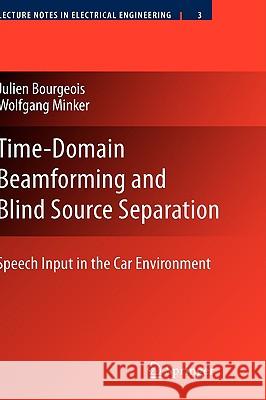
Julien Bourgeois; Wolfgang Minker
Time-Domain Beamforming and Blind Source Separation: Speech Input in the Car Environment Bourgeois, Julien 9780387688350 Springer - książkaWidoczna okładka, to zdjęcie poglądowe, a rzeczywista szata graficzna może różnić się od prezentowanej.

Time-Domain Beamforming and Blind Source Separation: Speech Input in the Car Environment

ISBN-13: 9780387688350 / Angielski / Twarda / 2009 / 225 str.

Julien Bourgeois; Wolfgang Minker
cena 403,47 zł
(netto: 384,26 VAT:  5%)

Najniższa cena z 30 dni: 385,52 zł
Termin realizacji zamówienia:
ok. 22 dni roboczych
Bez gwarancji dostawy przed świętami

Darmowa dostawa!

The development of computer and telecommunication technologies led to a revolutioninthewaythatpeopleworkandcommunicatewitheachother.One of the results is that large amount of information will increasingly be held in a form that is natural for users, as speech in natural language. In the presented work, we investigate the speech signal capture problem, which includes the separation of multiple interfering speakers using microphone arrays. Adaptive beamforming is a classical approach which has been developed since the seventies. However it requires a double-talk detector (DTD) that interrupts the adaptation when the target is active, since otherwise target cancelation occurs. The fact that several speakers may be active simulta- ouslymakesthisdetectiondi?cult, andifadditionalbackgroundnoiseoccurs, even less reliable. Our proposed approaches address this separation problem using continuous, uninterrupted adaptive algorithms. The advantage seems twofold: Firstly, thealgorithmdevelopmentismuchsimplersincenodetection mechanism needs to be designed and no threshold is to be tuned. Secondly, the performance may be improved due to the adaptation during periods of double-talk. In the ?rst part of the book, we investigate a modi?cation of the widely usedNLMSalgorithm, termedImplicitLMS(ILMS), whichimplicitlyincludes an adaptation control and does not require any threshold. Experimental ev- uations reveal that ILMS mitigates the target signal cancelation substantially with the distributed microphone array. However, in the more di?cult case of the compact microphone array, this algorithm does not su?ciently reduce the target signal cancelation. In this case, more sophisticated blind source se- ration techniques (BSS) seem neces


Kategorie:
Technologie
Kategorie BISAC:
Technology & Engineering > Electrical
Science > Acoustics & Sound
Technology & Engineering > Electronics - General
Wydawca:
Springer
Seria wydawnicza:
Lecture Notes Electrical Engineering
Język:
Angielski
ISBN-13:
9780387688350
Rok wydania:
2009
Wydanie:
2009
Numer serii:
000349148
Ilość stron:
225
Waga:
0.51 kg
Wymiary:
23.39 x 15.6 x 1.42
Oprawa:
Twarda
Wolumenów:
01
Dodatkowe informacje:
Bibliografia
Wydanie ilustrowane

1 Introduction 1

1.1 Existing approaches: a brief overview. . . . . . . . . . . . . . . . . . . . . . . . . . . . . . 1

1.2 Scope and objective of the thesis . . . . . . . . . . . . . . . . . . . . . . . . . . . . . . . . 2

1.3 Outline of the thesis . . . . . . . . . . . . . . . . . . . . . . . . . . . . . . . . . . . . . . . 3

2 Non-adaptive stationary beamforming 5

2.1 Problemand notations . . . . . . . . . . . . . . . . . . . . . . . . . . . . . . . . . . . . . . 5

2.2 The space-frequency response for omni-directional microphones . . . . . . . . . . . . . . . 6

2.3 Minimum VarianceDistortionless Response (MVDR) . . . . . . . . . . . . . . . . . . . . . 8

2.4 Data-independent beamformers . . . . . . . . . . . . . . . . . . . . . . . . . . . . . . . . . 9

2.4.1 The delay-and-sumbeamformer . . . . . . . . . . . . . . . . . . . . . . . . . . . . . 9

2.4.2 TheMVDR null beamformer . . . . . . . . . . . . . . . . . . . . . . . . . . . . . . 10

2.5 Statistically optimumMVDR beamformer . . . . . . . . . . . . . . . . . . . . . . . . . . . 11

2.6 FromMVDR to Generalized Sidelobe Canceller (GSC) . . . . . . . . . . . . . . . . . . . . 12

2.7 The target signal cancellation problem . . . . . . . . . . . . . . . . . . . . . . . . . . . . . 14

2.7.1 The power-inversion effect . . . . . . . . . . . . . . . . . . . . . . . . . . . . . . . . 14

2.7.2 Robust versions of the GSC . . . . . . . . . . . . . . . . . . . . . . . . . . . . . . . 15

2.8 Use of directionalmicrophones . . . . . . . . . . . . . . . . . . . . . . . . . . . . . . . . . 15

2.8.1 Directionalmicrophones with the same orientation . . . . . . . . . . . . . . . . . . 16

2.8.2 Directionalmicrophones oriented to the sources . . . . . . . . . . . . . . . . . . . . 16

2.9 Experiments under stationary acoustic conditions . . . . . . . . . . . . . . . . . . . . . . . 18<

2.9.1 Experiments with the mirror array . . . . . . . . . . . . . . . . . . . . . . . . . . . 18

2.9.2 Experiments with the cocooning array . . . . . . . . . . . . . . . . . . . . . . . . . 22

2.10 Summary and conclusion . . . . . . . . . . . . . . . . . . . . . . . . . . . . . . . . . . . . 24

3 Implicit adaptation control for beamforming 27

3.1 Adaptive interference canceller . . . . . . . . . . . . . . . . . . . . . . . . . . . . . . . . . 27

3.2 Implicit adaptation control with a pseudo-optimal step-size . . . . . . . . . . . . . . . . . 29

3.3 ILMS transient behavior and stability . . . . . . . . . . . . . . . . . . . . . . . . . . . . . 31

3.3.1 Transient convergence and divergence . . . . . . . . . . . . . . . . . . . . . . . . . 31

3.3.2 About the stability . . . . . . . . . . . . . . . . . . . . . . . . . . . . . . . . . . . . 34

3.4 Robustness improvement . . . . . . . . . . . . . . . . . . . . . . . . . . . . . . . . . . . . . 34

3.5 Experiments . . . . . . . . . . . . . . . . . . . . . . . . . . . . . . . . . . . . . . . . . . . . 35

3.5.1 Experiments with the mirror array . . . . . . . . . . . . . . . . . . . . . . . . . . . 36

3.5.2 Experiment with the cocooning array . . . . . . . . . . . . . . . . . . . . . . . . . 38

3.6 Summary and conclusion . . . . . . . . . . . . . . . . . . . . . . . . . . . . . . . . . . . . 40

4 Second-Order Blind Source Separation 43

4.1 Problemand notations . . . . . . . . . . . . . . . . . . . . . . . . . . . . . . . . . . . . . . 44

4.1.1 Froma scalar to a convolutivemixture model . . . . . . . . . . . . . . . . . . . . . 44

4.1.2 Separation constraints and degrees of freedom. . . . . . . . . . . . . . . . . . . . . 46

4.2 Nonstationarity and source separation . . . . . . . . . . . . . . . . . . . . . . . . . . . . . 47

4.2.1 The insufficiency of decorrelation . . . . . . . . . . . . . . . . . . . . . . . . . . . . 47

i

4.2.2 Nonstationarity-based separation cost function. . . . . . . . . . . . . . . . . . . . . 47

4.3 Gradient-basedminimization . . . . . . . . . . . . . . . . . . . . . . . . . . . . . . . . . . 49

4.3.1 Standard gradient . . . . . . . . . . . . . . . . . . . . . . . . . . . . . . . . . . . . 49

4.3.2 Natural gradient . . . . . . . . . . . . . . . . . . . . . . . . . . . . . . . . . . . . . 50

4.4 Natural gradient algorithmfor non-square systems . . . . . . . . . . . . . . . . . . . . . . 50

4.5 Summary and conclusion . . . . . . . . . . . . . . . . . . . . . . . . . . . . . . . . . . . . 52

5 Implementation Issues in Blind Source Separation 53

5.1 Convolutive Natural Gradient . . . . . . . . . . . . . . . . . . . . . . . . . . . . . . . . . . 53

5.1.1 Gradient in the Sylvestermanifold . . . . . . . . . . . . . . . . . . . . . . . . . . . 53

5.1.2 From matrices to z-transforms . . . . . . . . . . . . . . . . . . . . . . . . . . . . . 55

5.1.3 Self-closed and non-self-closed natural gradients . . . . . . . . . . . . . . . . . . . . 56

5.1.4 From z-transforms back to the time domain . . . . . . . . . . . . . . . . . . . . . . 57

5.1.5 Application to second-order BSS. . . . . . . . . . . . . . . . . . . . . . . . . . . . . 59

5.1.6 Discussion: Which natural gradient is best? . . . . . . . . . . . . . . . . . . . . . . 60

5.2 Online adaptation . . . . . . . . . . . . . . . . . . . . . . . . . . . . . . . . . . . . . . . . 62

5.2.1 Blockwise batch BSS algorithm . . . . . . . . . . . . . . . . . . . . . . . . . . . . . 62

5.2.2 Sample-wise BSS algorithm . . . . . . . . . . . . . . . . . . . . . . . . . . . . . . . 63

5.3 Experimental results . . . . . . . . . . . . . . . . . . . . . . . . . . . . . . . . . . . . . . . 63

5.3.1 Experiments with the mirror array . . . . . . . . . . . . . . . . . . . . . . . . . . . 64

5.3.2 Experiments with the cocooning array . . . . . . . . . . . . . . . . . . . . . . . . . 66

5.3.3 Comparison with other BSS algorithms in the frequency domain . . . . . . . . . . 66

5.4 Conclusion . . . . . . . . . . . . . . . . . . . . . . . . . . . . . . . . . . . . . . . . . . . . 69

6 Blind Source Separation: Convergence and Stability 71

6.1 Global convergence . . . . . . . . . . . . . . . . . . . . . . . . . . . . . . . . . . . . . . . . 71

6.1.1 Difficulty of a global convergence analysis . . . . . . . . . . . . . . . . . . . . . . . 72

6.1.2 Convergence analysis for a simplified algorithm . . . . . . . . . . . . . . . . . . . . 73

6.2 Local stability . . . . . . . . . . . . . . . . . . . . . . . . . . . . . . . . . . . . . . . . . . . 74

6.3 Conclusion . . . . . . . . . . . . . . . . . . . . . . . . . . . . . . . . . . . . . . . . . . . . 76

7 Comparison of Beamforming and Blind Source Separation 77

7.1 System identification vs. interference cancellation . . . . . . . . . . . . . . . . . . . . . . . 77

7.2 Properties of the cost function . . . . . . . . . . . . . . . . . . . . . . . . . . . . . . . . . 80

7.2.1 Convergence of the gradient descent . . . . . . . . . . . . . . . . . . . . . . . . . . 80

7.2.2 Statistical efficiency . . . . . . . . . . . . . . . . . . . . . . . . . . . . . . . . . . . 80

7.3 Complexity . . . . . . . . . . . . . . . . . . . . . . . . . . . . . . . . . . . . . . . . . . . . 83

7.3.1 NLMS complexity . . . . . . . . . . . . . . . . . . . . . . . . . . . . . . . . . . . . 83

7.3.2 BSS complexity . . . . . . . . . . . . . . . . . . . . . . . . . . . . . . . . . . . . . . 84

7.3.3 NLMS vs. BSS complexity . . . . . . . . . . . . . . . . . . . . . . . . . . . . . . . 85

7.3.4 Online BSS algorithm in the special case N =2 . . . . . . . . . . . . . . . . . . . . 86

7.4 Experimental comparison . . . . . . . . . . . . . . . . . . . . . . . . . . . . . . . . . . . . 87

7.5 Summary and conclusion . . . . . . . . . . . . . . . . . . . . . . . . . . . . . . . . . . . . 89

8 Combining Blind Source Separation and Beamforming 91

8.1 Existing combinations . . . . . . . . . . . . . . . . . . . . . . . . . . . . . . . . . . . . . . 91

8.2 BSS and geometric prior information . . . . . . . . . . . . . . . . . . . . . . . . . . . . . . 92

8.2.1 Causality information . . . . . . . . . . . . . . . . . . . . . . . . . . . . . . . . . . 92

8.2.2 Prior information on the source direction of arrival . . . . . . . . . . . . . . . . . . 93

8.2.3 Geometric information at the initialization . . . . . . . . . . . . . . . . . . . . . . 95

8.2.4 Geometric information as a soft constraint . . . . . . . . . . . . . . . . . . . . . . . 96

8.2.5 Geometric information as a preprocessing . . . . . . . . . . . . . . . . . . . . . . . 99

8.3 Combining BSS and the power criterion . . . . . . . . . . . . . . . . . . . . . . . . . . . . 101

8.4 Combining BSS with geometric prior information and the power criterion . . . . . . . . . 102

ii

8.5 Experimental results on automatic speech recognition . . . . . . . . . . . . . . . . . . . . 104

8.6 Conclusion . . . . . . . . . . . . . . . . . . . . . . . . . . . . . . . . . . . . . . . . . . . . 105

A Experimental setups 109

A.1 Mirror array . . . . . . . . . . . . . . . . . . . . . . . . . . . . . . . . . . . . . . . . . . . . 109

A.2 Cocooning array . . . . . . . . . . . . . . . . . . . . . . . . . . . . . . . . . . . . . . . . . 109

A.3 Acoustic characteristics of the car cabin. . . . . . . . . . . . . . . . . . . . . . . . . . . . . 111

B The RGSC according to Hoshuyama et al. 113

B.1 RGSC for the mirror array . . . . . . . . . . . . . . . . . . . . . . . . . . . . . . . . . . . 113

B.2 RGSC for the cocooning array. . . . . . . . . . . . . . . . . . . . . . . . . . . . . . . . . . 114

B.3 Experimental comparison: GSC vs. RGSC. . . . . . . . . . . . . . . . . . . . . . . . . . . 115

B.3.1 Mirror array . . . . . . . . . . . . . . . . . . . . . . . . . . . . . . . . . . . . . . . 115

B.3.2 Cocooning array. . . . . . . . . . . . . . . . . . . . . . . . . . . . . . . . . . . . . . 115

B.4 Conclusion . . . . . . . . . . . . . . . . . . . . . . . . . . . . . . . . . . . . . . . . . . . . 115

C Stability Analysis 119

C.1 Mixing and separationmodels . . . . . . . . . . . . . . . . . . . . . . . . . . . . . . . . . . 119

C.2 Linearization of the BSS updates . . . . . . . . . . . . . . . . . . . . . . . . . . . . . . . . 120

C.3 Local stability conditions . . . . . . . . . . . . . . . . . . . . . . . . . . . . . . . . . . . . 122

Bibliography 125

iii

Time-domain Beamforming and Convolutive Blind Source Separation addresses the problem of separating spontaneous multi-party speech by way of microphone arrays (beamformers) and adaptive signal processing techniques. While existing techniques requires a Double-Talk Detector (DTD) that interrupts the adaptation when the target is active, the described method addresses the separation problem using continuous, uninterrupted adaptive algorithms. The advantage of such an approach is twofold: Firstly, the algorithm development is much simpler since no detection mechanism needs to be designed and no threshold to be tuned. Secondly, the performance can be improved due to the adaptation during periods of double-talk.

Time-Domain Beamforming and Blind Source Separation addresses the problem of separating spontaneous multi-party speech by way of microphone arrays (beamformers) and adaptive signal processing techniques. While existing techniques require a Double-Talk Detector (DTD) that interrupts the adaptation when the target is active, the described method addresses the separation problem using continuous, uninterrupted adaptive algorithms. With this approach, algorithm development is much simpler since no detection mechanism needs to be designed and needs no threshold to be tuned. Also, performance can be improved due to the adaptation during periods of double-talk.

The authors use two techniques to achieve these results: implicit beamforming, which requires the position of the target speaker to be known; and time-domain blind-source separation (BSS), which exploits second-order statistics of the source signals. In combination, beamforming and BSS can be used to develop novel algorithms. Emphasis is placed on the development of an algorithm that combines the benefits of both approaches. The book presents experimental results obtained with real in-car microphone recordings involving simultaneous speech of the driver and the co-driver. In addition, experiments with background noise have been carried out in order to assess the robustness of the considered methods in noisy conditions.


Udostępnij

Facebook - konto krainaksiazek.pl


Opinie o Krainaksiazek.pl na Opineo.pl

Partner Mybenefit

Krainaksiazek.pl w programie rzetelna firma Krainaksiaze.pl - płatności przez paypal

Czytaj nas na:

Facebook - krainaksiazek.pl
  • książki na zamówienie
  • granty
  • książka na prezent
  • kontakt
  • pomoc
  • opinie
  • regulamin
  • polityka prywatności

Zobacz:

  • Księgarnia czeska

  • Wydawnictwo Książkowe Klimaty

1997-2025 DolnySlask.com Agencja Internetowa

© 1997-2022 krainaksiazek.pl
     
KONTAKT | REGULAMIN | POLITYKA PRYWATNOŚCI | USTAWIENIA PRYWATNOŚCI
Zobacz: Księgarnia Czeska | Wydawnictwo Książkowe Klimaty | Mapa strony | Lista autorów
KrainaKsiazek.PL - Księgarnia Internetowa

Polityka prywatnosci - link
Krainaksiazek.pl - płatnośc Przelewy24
Przechowalnia Przechowalnia





