• Wyszukiwanie zaawansowane
  • Kategorie
  • Kategorie BISAC
  • Książki na zamówienie
  • Promocje
  • Granty
  • Książka na prezent
  • Opinie
  • Pomoc
  • Załóż konto
  • Zaloguj się

Thinking on the Web: Berners-Lee, Gödel, and Turing » książka

zaloguj się | załóż konto
Logo Krainaksiazek.pl

koszyk

konto

szukaj
topmenu
Księgarnia internetowa
Szukaj
Książki na zamówienie
Promocje
Granty
Książka na prezent
Moje konto
Pomoc
 
 
Wyszukiwanie zaawansowane
Pusty koszyk
Bezpłatna dostawa dla zamówień powyżej 20 złBezpłatna dostawa dla zamówień powyżej 20 zł

Kategorie główne

• Nauka
 [2946912]
• Literatura piękna
 [1852311]

  więcej...
• Turystyka
 [71421]
• Informatyka
 [150889]
• Komiksy
 [35717]
• Encyklopedie
 [23177]
• Dziecięca
 [617324]
• Hobby
 [138808]
• AudioBooki
 [1671]
• Literatura faktu
 [228371]
• Muzyka CD
 [400]
• Słowniki
 [2841]
• Inne
 [445428]
• Kalendarze
 [1545]
• Podręczniki
 [166819]
• Poradniki
 [480180]
• Religia
 [510412]
• Czasopisma
 [525]
• Sport
 [61271]
• Sztuka
 [242929]
• CD, DVD, Video
 [3371]
• Technologie
 [219258]
• Zdrowie
 [100961]
• Książkowe Klimaty
 [124]
• Zabawki
 [2341]
• Puzzle, gry
 [3766]
• Literatura w języku ukraińskim
 [255]
• Art. papiernicze i szkolne
 [7810]
Kategorie szczegółowe BISAC

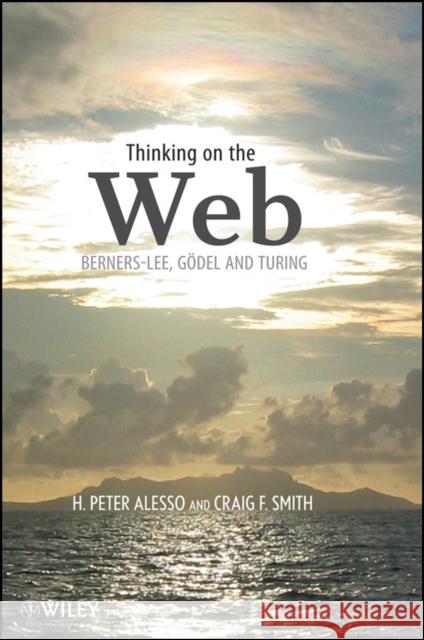
Thinking on the Web: Berners-Lee, Gödel, and Turing

ISBN-13: 9780471768661 / Angielski / Miękka / 2008 / 328 str.
H. P. Alesso; Craig F. Smith
Thinking on the Web: Berners-Lee, Gödel, and Turing Alesso, H. Peter 9780471768661 John Wiley & Sons - książkaWidoczna okładka, to zdjęcie poglądowe, a rzeczywista szata graficzna może różnić się od prezentowanej.

Thinking on the Web: Berners-Lee, Gödel, and Turing

ISBN-13: 9780471768661 / Angielski / Miękka / 2008 / 328 str.

H. P. Alesso; Craig F. Smith
cena 192,86
(netto: 183,68 VAT:  5%)

Najniższa cena z 30 dni: 192,86
Termin realizacji zamówienia:
ok. 30 dni roboczych
Dostawa w 2026 r.

Darmowa dostawa!

What Is Thinking? What is Turing's Test? What is Godel's Undecidability Theorem? How is Berners-Lee's Semantic Web logic going to overcome paradoxes and complexity to produce machine processing on the Web? Thinking on the Web draws from the contributions of Tim Berners-Lee (What is solvable on the Web?), Kurt Godel (What is decidable?), and Alan Turing (What is machine intelligence?) to evaluate how much "intelligence" can be projected onto the Web. The authors offer both abstract and practical perspectives to delineate the opportunities and challenges of a "smarter" Web through a threaded series of vignettes and a thorough review of Semantic Web development.


Kategorie:
Informatyka, Internet
Kategorie BISAC:
Computers > Internet - General
Wydawca:
John Wiley & Sons
Język:
Angielski
ISBN-13:
9780471768661
Rok wydania:
2008
Ilość stron:
328
Waga:
0.43 kg
Wymiary:
23.11 x 15.49 x 1.52
Oprawa:
Miękka
Wolumenów:
01
Dodatkowe informacje:
Bibliografia
Glosariusz/słownik
Wydanie ilustrowane

?Anyone with experience of HCI will want to read this book which after all, has provided a new and entirely different way of providing a stimulus to a subject that is very much in need of direction.? ( Kybernetes, 2009)

"Thinking on the Web offers a fascinating history and impressive background of the age we are living through, and serves as a tribute to three great minds. A true geek bonus is the depth of coverage, with rich explanations, examples, and a look at next generation web services." (Blogcritics.org, March 9, 2009)

Preface.

The Purpose of this Book.

Who Should Read this Book.

The Organization of this Book.

PART I: WHAT IS WEB INTELLIGENCE.

Chapter 1: The Information Age and the Web.

Overview.

Thinking and Intelligent Web Applications.

The Information Age.

The World Wide Web.

The Limitations of Today s Web.

The Next Generation Web.

Why Intelligent Ubiquitous Devices Improve Productivity.

Conclusion.

Exercises.

Interlude #1 Thinking about Thinking.

Chapter 2: Gödel – What is Decidable?

Overview.

Philosophical and Mathematical Logic.

Kurt Gödel.

Knowledge Representation.

Computational Logic .

Artificial Intelligence.

Web Architecture and Business Logic.

The Semantic Web.

Conclusion.

Exercises.

Interlude #2 Truth and Beauty.

Chapter 3: Turing – What is Machine Intelligence?

Overview.

What is Machine Intelligence?

Alan Turing.

What is Machine Intelligence?

Turing Test and the Loebner Prize .

John Searle s Chinese Room.

Artificial Intelligence.

Machine Intelligence .

Semantic Networks and Frames.

Reasoning with Semantic Networks.

Computational Complexity.

Description Logic (DL).

Ontology.

Inference Engines.

Software Agents.

Adaptive Software.

Limitations and Capabilities.

Conclusion.

Exercises.

Interlude #3: Computing Machines.

Chapter 4: Berners–Lee ? What is Solvable on the Web?

Overview.

The World Wide Web.

Berners–Lee.

Competing Web Standards.

The Semantic Web Roadmap.

Semantic Web Services.

Logic on the Semantic Web.

Semantic Web Capabilities and Limitations.

Conclusion.

Exercises.

Interlude #4 Turing s Test.

PART II: WEB ONTOLOGY AND LOGIC.

Chapter 5: Resource Framework Description –– RDF.

Overview .

HTML Language.

XML Language.

RDF Language.

Basic Elements.

RDF Schema.

XQuery – XML Query Language.

Conclusion .

Exercises.

Interlude #5 The Chinese Room.

Chapter 6: Web Ontology Language –– OWL.

Overview.

Ontology Language.

Ontology Language Requirements.

Compatibility of OWL and RDF/RDFS.

The OWL Language.

Basic Elements.

OWL Example –– Compute Ontology.

Ontology Example –– Birthplace.

Applying OWL.

OWL Capabilities and Limitations.

Conclusion.

Exercises.

Interlude #6: Machines and Brains.

Chapter 7: Ontology Engineering.

Overview.

Ontology Engineering.

Constructing Ontologies.

Ontology Example.

Ontology Methods.

Ontology Libraries.

Ontology Matching.

Ontology Mapping .

Ontology Mapping Tools .

Conclusion.

Exercises.

Interlude #7: Machines and Meaning.

Chapter 8: Logic, Inference and Rule Systems.

Overview.

Logic and Inference.

Monotonic and Nonmonotonic Rules.

Descriptive Logic.

Inference Engines.

Example RDF Inference Engine.

Conclusion.

Exercises.

Interlude #8: Machines and Rules.

Chapter 9: Semantic Web Rule Language –– SWRL.

Overview.

Rule Systems.

Rule Languages.

Semantic Web Rule Language (SWRL).

Conclusion.

Exercises.

Interlude #9: Machines and Language.

Chapter 10: Semantic Web Applications.

Overview.

Semantic Web Applications .

Web Services.

Semantic Search.

e–Learning .

Semantic Web and Bio–Informatics .

Enterprise Application Integration.

On–To–Knowledge (OTK) .

Knowledge Base.

Conclusion.

Exercise.

Interlude #10: Distributed Intelligence.

Chapter 11: Web Ontology Language for Services –– OWL–S.

Overview.

XML–Based Web Services.

Next Generation Web Services .

OWL–S Primer.

Creating an OWL–S Ontology for a Web Services.

Conclusion.

Exercises.

Interlude #11: The Semantic Web.

Chapter 12: Semantic Search Technology.

Overview.

Search Engines .

Semantic Search.

Semantic Search Technology.

Web Search Agents.

Semantic Methods.

Latent Semantic Index Search.

TAP.

Swoogle.

Conclusion.

Exercises.

Interlude #12: The Halting Problem.

Chapter 13: Semantic Patterns and Adoptive Software.

Overview .

Patterns in Software Design.

Pattern Frame.

Semantic Patterns.

Self–Organizing and Adaptive Software.

Conclusion.

Exercises.

Interlude #13: The Semantic Web and Meaning.

Chapter 14: Semantic Tools.

Overview .

Semantic Tools.

Semantic Web Services Tools.

Conclusion.

Interlude #14: The Semantic Web and Language.

Chapter 15: Opportunities and Challenges.

Overview.

Semantic Doubt.

Semantic Opportunities.

Challenges.

Balancing Proprietary and Open Standards.

Conclusion.

Interlude #15: The Semantic Web and Zeno s Paradox.

Bibliography.

Glossary.

List of Acronyms.

Index.

H. Peter Alesso is an innovator with twenty years′ research experience at Lawrence Livermore National Laboratory (LLNL). As Engineering Group Leader at LLNL, he led a team of computer scientists and engineers in innovative applications across a wide range of supercomputers, workstations, and networks. He has published several software titles and scientific journal and conference articles, and is the author or coauthor of five books.

Craig F. Smith, PhD, is a Fellow of the American Association for the Advancement of Science (AAAS) with over thirty years′ experience in research and development for applications of advanced technologies. He currently serves as the Lawrence Livermore Chair Professor at the Naval Postgraduate School in Monterey, California. He is the coauthor of four books.

What Is Thinking?

What is Turing′s Test? What is Gödel′s Undecidability Theorem? How is Berners–Lee′s Semantic Web logic going to overcome paradoxes and complexity to produce machine processing on the Web?

Thinking on the Web draws from the contributions of Tim Berners–Lee (What is solvable on the Web?), Kurt Gödel (What is decidable?), and Alan Turing (What is machine intelligence?) to evaluate how much "intelligence" can be projected onto the Web.

The authors offer both abstract and practical perspectives to delineate the opportunities and challenges of a "smarter" Web through a threaded series of vignettes and a thorough review of Semantic Web development.

Smith, Craig F. Smith is an engineer with 30 years experience in r... więcej >


Udostępnij

Facebook - konto krainaksiazek.pl


Opinie o Krainaksiazek.pl na Opineo.pl

Partner Mybenefit

Krainaksiazek.pl w programie rzetelna firma Krainaksiaze.pl - płatności przez paypal

Czytaj nas na:

Facebook - krainaksiazek.pl
  • książki na zamówienie
  • granty
  • książka na prezent
  • kontakt
  • pomoc
  • opinie
  • regulamin
  • polityka prywatności

Zobacz:

  • Księgarnia czeska

  • Wydawnictwo Książkowe Klimaty

1997-2025 DolnySlask.com Agencja Internetowa

© 1997-2022 krainaksiazek.pl
     
KONTAKT | REGULAMIN | POLITYKA PRYWATNOŚCI | USTAWIENIA PRYWATNOŚCI
Zobacz: Księgarnia Czeska | Wydawnictwo Książkowe Klimaty | Mapa strony | Lista autorów
KrainaKsiazek.PL - Księgarnia Internetowa

Polityka prywatnosci - link
Krainaksiazek.pl - płatnośc Przelewy24
Przechowalnia Przechowalnia






