• Wyszukiwanie zaawansowane
  • Kategorie
  • Kategorie BISAC
  • Książki na zamówienie
  • Promocje
  • Granty
  • Książka na prezent
  • Opinie
  • Pomoc
  • Załóż konto
  • Zaloguj się

Thermochemical Surface Engineering of Steels : Improving Materials Performance » książka

zaloguj się | załóż konto
Logo Krainaksiazek.pl

koszyk

konto

szukaj
topmenu
Księgarnia internetowa
Szukaj
Książki na zamówienie
Promocje
Granty
Książka na prezent
Moje konto
Pomoc
 
 
Wyszukiwanie zaawansowane
Pusty koszyk
Bezpłatna dostawa dla zamówień powyżej 20 złBezpłatna dostawa dla zamówień powyżej 20 zł

Kategorie główne

• Nauka
 [2946600]
• Literatura piękna
 [1856966]

  więcej...
• Turystyka
 [72221]
• Informatyka
 [151456]
• Komiksy
 [35826]
• Encyklopedie
 [23190]
• Dziecięca
 [619653]
• Hobby
 [140543]
• AudioBooki
 [1577]
• Literatura faktu
 [228355]
• Muzyka CD
 [410]
• Słowniki
 [2874]
• Inne
 [445822]
• Kalendarze
 [1744]
• Podręczniki
 [167141]
• Poradniki
 [482898]
• Religia
 [510455]
• Czasopisma
 [526]
• Sport
 [61590]
• Sztuka
 [243598]
• CD, DVD, Video
 [3423]
• Technologie
 [219201]
• Zdrowie
 [101638]
• Książkowe Klimaty
 [124]
• Zabawki
 [2473]
• Puzzle, gry
 [3898]
• Literatura w języku ukraińskim
 [254]
• Art. papiernicze i szkolne
 [8170]
Kategorie szczegółowe BISAC

Thermochemical Surface Engineering of Steels : Improving Materials Performance

ISBN-13: 9780857095923 / Twarda / 2014 / 816 str.
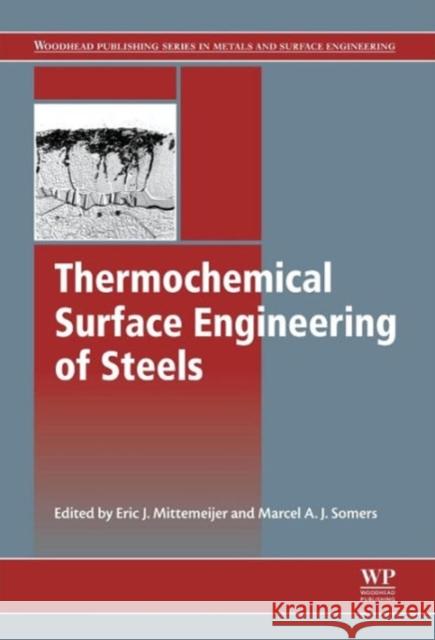
Thermochemical Surface Engineering of Steels : Improving Materials Performance  9780857095923  - książkaWidoczna okładka, to zdjęcie poglądowe, a rzeczywista szata graficzna może różnić się od prezentowanej.

Thermochemical Surface Engineering of Steels : Improving Materials Performance

ISBN-13: 9780857095923 / Twarda / 2014 / 816 str.

cena 949,22 zł
(netto: 904,02 VAT:  5%)

Najniższa cena z 30 dni: 941,44 zł
Termin realizacji zamówienia:
ok. 30 dni roboczych
Bez gwarancji dostawy przed świętami

Darmowa dostawa!

Thermochemical surface engineering significantly improves the properties of steels. Edited by two of the world's leading authorities, this important book summarises the range of techniques and their applications. It covers nitriding, nitrocarburizing and carburizing. There are also chapters on low temperature techniques as well as boriding, sheradizing, aluminizing, chromizing, thermo-reactive deposition and diffusion.

  • Reviews the fundamentals of surface treatments and current performance of improved materials
  • Covers nitriding, nitrocarburizing and carburizing of iron and iron carbon alloys
  • Examines how different thermochemical surface engineering methods can help against corrosion

Kategorie:
Technologie
Kategorie BISAC:
Technology & Engineering > Technical & Manufacturing Industries & Trades
Science > Chemia - Fizyczna
Technology & Engineering > Metallurgy
ISBN-13:
9780857095923
Rok wydania:
2014
Ilość stron:
816
Waga:
1.37 kg
Wymiary:
16.1 x 23.8 x 4.6
Oprawa:
Twarda
Dodatkowe informacje:
Bibliografia
Wydanie ilustrowane

"...a welcome and extremely useful addition to the literature on surface engineering of steels. This book will be essential to all students and research scientists as well as production engineers." -- International Journal of Materials Research

  • About the editors
  • List of contributors
  • Woodhead Publishing Series in Metals and Surface Engineering
  • Introduction
  • Part One: Fundamentals
    • 1: Thermodynamics and kinetics of gas and gas-solid reactions
      • Abstract
      • 1.1 Introduction
      • 1.2 Equilibria for gas-exchange reactions
      • 1.3 Equilibria for gas-solid reactions
      • 1.4 Kinetics of gas-exchange reactions
      • 1.5 Kinetics of gas-solid reactions
      • 1.6 Phase stabilities in the Fe-N, Fe-C and Fe-C-N systems
    • 2: Kinetics of thermochemical surface treatments
      • Abstract
      • 2.1 Introduction
      • 2.2 Development of an interstitial solid solution
      • 2.3 Precipitation of second phase particles in a supersaturated matrix
      • 2.4 Product-layer growth at the surface
      • 2.5 Conclusion
    • 3: Process technologies for thermochemical surface engineering
      • Abstract
      • 3.1 Introduction
      • 3.2 Different ways of achieving a hardened wear-resistant surface
      • 3.3 Furnaces
      • 3.4 Gaseous carburising
      • 3.5 Gaseous carbonitriding
      • 3.6 Gaseous nitriding and nitrocarburising
      • 3.7 Variants of gaseous nitriding and nitrocarburising
      • 3.8 Gaseous boriding
      • 3.9 Plasma assisted processes: plasma (ion) carburising
      • 3.10 Plasma (ion) nitriding/nitrocarburising
      • 3.11 Implantation processes (nitriding)
      • 3.12 Salt bath processes (nitrocarburising)
      • 3.13 Laser assisted nitriding
      • 3.14 Fluidised bed nitriding
      • Acknowledgements
  • Part Two: Improved materials performance
    • 4: Fatigue resistance of carburized and nitrided steels
      • Abstract
      • 4.1 Introduction
      • 4.2 The concept of local fatigue resistance
      • 4.3 Statistical analysis of fatigue resistance
      • 4.4 Fatigue behavior of carburized microstructures
      • 4.5 Fatigue behavior of nitrided and nitrocarburized microstructures
      • 4.6 Conclusion
    • 5: Tribological behaviour of thermochemically surface engineered steels
      • Abstract
      • 5.1 Introduction
      • 5.2 Contact types
      • 5.3 Wear mechanisms
      • 5.4 Conclusions
    • 6: Corrosion behaviour of nitrided, nitrocarburised and carburised steels
      • Abstract
      • 6.1 Introduction
      • 6.2 Corrosion behaviour of nitrided and nitrocarburised unalloyed and low alloyed steels: introduction
      • 6.3 Nitriding processes and corrosion behaviour
      • 6.4 Structure and composition of compound layers and corrosion behaviour
      • 6.5 Post-oxidation and corrosion behaviour
      • 6.6 Passivation of nitride layers
      • 6.7 Corrosion behaviour in molten metals
      • 6.8 Corrosion behaviour of nitrided, nitrocarburised and carburised stainless steels: introduction
      • 6.9 Austenitic-ferritic and austenitic steels: corrosion in chloride-free solutions
      • 6.10 Austenitic-ferritic and austenitic steels: corrosion in chloride-containing solutions
      • 6.11 Ferritic, martensitic and precipitation hardening stainless steels
      • 6.12 Conclusion
  • Part Three: Nitriding, nitrocarburizing and carburizing
    • 7: Nitriding of binary and ternary iron-based alloys
      • Abstract
      • 7.1 Introduction
      • 7.2 Strong, intermediate and weak Me-N interaction
      • 7.3 Microstructural development of the compound layer in the presence of alloying elements
      • 7.4 Microstructural development of the diffusion zone in the presence of alloying elements
      • 7.5 Kinetics of diffusion zone growth in the presence of alloying elements
      • 7.6 Conclusion
    • 8: Development of the compound layer during nitriding and nitrocarburising of iron and iron-carbon alloys
      • Abstract
      • 8.1 Introduction
      • 8.2 Compound layer formation during nitriding in a NH3/H2 gas mixture
      • 8.3 Nitrocarburising in gas
      • 8.4 Compound layer development during salt bath nitrocarburising
      • 8.5 Post-oxidation and phase transformations in the compound layer
      • 8.6 Conclusion
    • 9: Austenitic nitriding and nitrocarburizing of steels
      • Abstract
      • 9.1 Introduction
      • 9.2 Phase stability regions of nitrogen-containing austenite
      • 9.3 Phase transformation of nitrogen-containing austenite and its consequences for the process
      • 9.4 Phase stability and layer growth during austenitic nitriding and nitrocarburizing
      • 9.5 Properties resulting from austenitic nitriding and nitrocarburizing
      • 9.6 Solution nitriding and its application
    • 10: Classical nitriding of heat treatable steel
      • Abstract
      • 10.1 Introduction
      • 10.2 Steels suitable for nitriding
      • 10.3 Microstructure and hardness improvement
      • 10.4 Nitriding-induced stress in steel
      • 10.5 Nitriding and improved fatigue life of steel
    • 11: Plasma-assisted nitriding and nitrocarburizing of steel and other ferrous alloys
      • Abstract
      • 11.1 Introduction
      • 11.2 Glow discharge during plasma nitriding: general features
      • 11.3 Sputtering during plasma nitriding
      • 11.4 Practical aspects of sputtering and redeposition of the cathode material during plasma nitriding
      • 11.5 Plasma nitriding as a low-nitriding potential process
      • 11.6 Role of carbon-bearing gases and oxygen
      • 11.7 Practical aspects of differences in nitriding mechanism of plasma and gas nitriding processes
      • 11.8 Best applications of plasma nitriding and nitrocarburizing
      • 11.9 Methods for reducing plasma nitriding limitations
      • Acknowledgements
    • 12: ZeroFlow gas nitriding of steels
      • Abstract
      • 12.1 Introduction
      • 12.2 Improving gas nitriding of steels
      • 12.3 Current gas nitriding processes
      • 12.4 The principles of ZeroFlow gas nitriding
      • 12.5 Thermodynamic aspects of nitriding in atmospheres of NH3 and of two-component NH3 + H2 and NH3 + NH3diss. mixes
      • 12.6 Kinetic aspects of nitriding in atmospheres of NH3 and of two-component NH3 + H2 and NH3 + NH3diss. mixes
      • 12.7 Using the ZeroFlow process under industrial conditions
      • 12.8 Applications of the ZeroFlow method
      • 12.9 Conclusion
    • 13: Carburizing of steels
      • Abstract
      • 13.1 Introduction
      • 13.2 Gaseous carburizing
      • 13.3 Low pressure carburizing
      • 13.4 Hardening
      • 13.5 Tempering and sub-zero treatment
      • 13.6 Material properties
      • 13.7 Furnace technology
      • 13.8 Conclusion
  • Part Four: Low temperature carburizing and nitriding
    • 14: Low temperature surface hardening of stainless steel
      • Abstract
      • 14.1 Introduction
      • 14.2 The origins of low temperature surface engineering of stainless steel
      • 14.3 Fundamental aspects of expanded austenite
    • 15: Gaseous processes for low temperature surface hardening of stainless steel
      • Abstract
      • 15.1 Introduction
      • 15.2 Surface hardening of austenitic stainless steel
      • 15.3 Residual stress in expanded austenite
      • 15.4 Prediction of nitrogen diffusion profiles in expanded austenite
      • 15.5 Surface hardening of stainless steel types other than austenite
      • 15.6 Conclusion and future trends
    • 16: Plasma-assisted processes for surface hardening of stainless steel
      • Abstract
      • 16.1 Introduction
      • 16.2 Process principles and equipment
      • 16.3 Microstructure evolution
      • 16.4 Properties of surface hardened steels
      • 16.5 Conclusion and future trends
    • 17: Applications of low-temperature surface hardening of stainless steels
      • Abstract
      • 17.1 Introduction
      • 17.2 Applications in the nuclear industry
      • 17.3 Applications in tubular fittings and fasteners
      • 17.4 Miscellaneous applications
      • 17.5 Conclusion
  • Part Five: Dedicated thermochemical surface engineering methods
    • 18: Boriding to improve the mechanical properties and corrosion resistance of steels
      • Abstract
      • 18.1 Introduction
      • 18.2 Boriding of steels
      • 18.3 Mechanical characterisation of borided steels
      • 18.4 Corrosion resistance of steels exposed to boriding
      • 18.5 Conclusion
    • 19: The thermo-reactive deposition and diffusion process for coating steels to improve wear resistance
      • Abstract
      • 19.1 Introduction
      • 19.2 Growth behavior of coatings
      • 19.3 High temperature borax bath carbide coating
      • 19.4 High temperature fluidized bed carbide coating
      • 19.5 Low temperature salt bath nitride coating
      • 19.6 Properties of thermo-reactive deposition (TRD) carbide/nitride coated parts
      • 19.7 Applications
      • 19.8 Conclusion
    • 20: Sherardizing: corrosion protection of steels by zinc diffusion coatings
      • Abstract
      • 20.1 Introduction
      • 20.2 Pretreatment, surface preparation and processing
      • 20.3 Diffusion heat treatment
      • 20.4 Post-treatment, inspection and quality control
      • 20.5 Corrosion behavior and mechanical properties
      • 20.6 Applications
    • 21: Aluminizing of steel to improve high temperature corrosion resistance
      • Abstract
      • 21.1 Introduction
      • 21.2 Thermodynamics
      • 21.3 Kinetics
      • 21.4 Aluminizing of austenitic stainless steel - experimental examples
      • 21.5 Applications
      • 21.6 Conclusion
      • Acknowledgements
  • Index

Mittemeijer, Eric J.
Eric J. Mittemeijer, Max Planck Institute for Intelligent Systems and Institute for Materials Science, University of Stuttgart, Germany. Somers, Marcel A. J.
Marcel A. J. Somers, Technical University of Denmark, Denmark.


Udostępnij

Facebook - konto krainaksiazek.pl


Opinie o Krainaksiazek.pl na Opineo.pl

Partner Mybenefit

Krainaksiazek.pl w programie rzetelna firma Krainaksiaze.pl - płatności przez paypal

Czytaj nas na:

Facebook - krainaksiazek.pl
  • książki na zamówienie
  • granty
  • książka na prezent
  • kontakt
  • pomoc
  • opinie
  • regulamin
  • polityka prywatności

Zobacz:

  • Księgarnia czeska

  • Wydawnictwo Książkowe Klimaty

1997-2025 DolnySlask.com Agencja Internetowa

© 1997-2022 krainaksiazek.pl
     
KONTAKT | REGULAMIN | POLITYKA PRYWATNOŚCI | USTAWIENIA PRYWATNOŚCI
Zobacz: Księgarnia Czeska | Wydawnictwo Książkowe Klimaty | Mapa strony | Lista autorów
KrainaKsiazek.PL - Księgarnia Internetowa

Polityka prywatnosci - link
Krainaksiazek.pl - płatnośc Przelewy24
Przechowalnia Przechowalnia








