• Wyszukiwanie zaawansowane
  • Kategorie
  • Kategorie BISAC
  • Książki na zamówienie
  • Promocje
  • Granty
  • Książka na prezent
  • Opinie
  • Pomoc
  • Załóż konto
  • Zaloguj się

The Western European Loess Belt: Agrarian History, 5300 BC - Ad 1000 » książka


zaloguj się | załóż konto
Logo Krainaksiazek.pl

koszyk

konto

szukaj
topmenu
Księgarnia internetowa
Szukaj
Książki na zamówienie
Promocje
Granty
Książka na prezent
Moje konto
Pomoc
 
 
Wyszukiwanie zaawansowane
Pusty koszyk
Bezpłatna dostawa dla zamówień powyżej 20 złBezpłatna dostawa dla zamówień powyżej 20 zł

Kategorie główne

• Nauka
 [2944077]
• Literatura piękna
 [1814251]

  więcej...
• Turystyka
 [70679]
• Informatyka
 [151074]
• Komiksy
 [35590]
• Encyklopedie
 [23169]
• Dziecięca
 [611005]
• Hobby
 [136031]
• AudioBooki
 [1718]
• Literatura faktu
 [225599]
• Muzyka CD
 [379]
• Słowniki
 [2916]
• Inne
 [443741]
• Kalendarze
 [1187]
• Podręczniki
 [166463]
• Poradniki
 [469211]
• Religia
 [506887]
• Czasopisma
 [481]
• Sport
 [61343]
• Sztuka
 [242115]
• CD, DVD, Video
 [3348]
• Technologie
 [219293]
• Zdrowie
 [98602]
• Książkowe Klimaty
 [124]
• Zabawki
 [2385]
• Puzzle, gry
 [3504]
• Literatura w języku ukraińskim
 [260]
• Art. papiernicze i szkolne
 [7151]
Kategorie szczegółowe BISAC

The Western European Loess Belt: Agrarian History, 5300 BC - Ad 1000

ISBN-13: 9789400791367 / Angielski / Miękka / 2014 / 295 str.
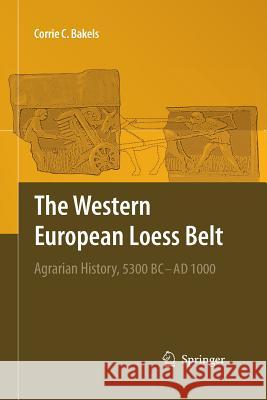
Corrie C. Bakels
The Western European Loess Belt: Agrarian History, 5300 BC - Ad 1000 Bakels, Corrie C. 9789400791367 Springer - książkaWidoczna okładka, to zdjęcie poglądowe, a rzeczywista szata graficzna może różnić się od prezentowanej.

The Western European Loess Belt: Agrarian History, 5300 BC - Ad 1000

ISBN-13: 9789400791367 / Angielski / Miękka / 2014 / 295 str.

Corrie C. Bakels
cena 563,56
(netto: 536,72 VAT:  5%)

Najniższa cena z 30 dni: 539,74
Termin realizacji zamówienia:
ok. 22 dni roboczych.

Darmowa dostawa!
inne wydania

This book deals with the early history of agriculture in a defined part of Western Europe: the loess belt west of the river Rhine. It is a well-illustrated book that integrates existing and new information, starting with the first farmers and ending when food production was no longer the chief source of livelihood for the entire population. The loess belt was chosen because it is a region with only one type of soil and climate as these are all-important factors where farming is concerned. Subjects covered are crops, crop cultivation, livestock and livestock handling, the farm and its yard, and the farm in connection with other farms. Crop plants and animals are described, together with their origin. New tools such as the plough, wheen, wagon and scythe are introduced. Groundplans of farm buildings, the history of the outhouse and the presence or absence of hamlets are presented as well, and the impact of farming on the landscape is not forgotten. The loess belt was not an island and the world beyond its boundaries was important for new ideas, new materials and new people. Summarising six millennia of agriculture, the thinking in terms of the Western European loess belt as one agricultural-cultural unit seems justified.


Kategorie:
Nauka, Historia
Kategorie BISAC:
Social Science > Archaeology
Science > Earth Sciences - Geography
Technology & Engineering > Agriculture - General
Wydawca:
Springer
Język:
Angielski
ISBN-13:
9789400791367
Rok wydania:
2014
Wydanie:
2009
Ilość stron:
295
Waga:
0.43 kg
Wymiary:
23.39 x 15.6 x 1.65
Oprawa:
Miękka
Wolumenów:
01
Dodatkowe informacje:
Bibliografia
Glosariusz/słownik
Wydanie ilustrowane

Preface 1 The loess covered region west of the river Rhine. 5300 BC – AD 1000 1.1 Introduction 1.2 Loess 1.3 The loess region 1.4 The choice of the period, 5300 BC – AD 1000 1.5 The framework of this book 2 Sources 2.1 Information on a distant past 2.2 Plants 2.3 Animals 2.4 Tools 2.5 Buildings and other structures 2.6 Land and countryside 2.7 Written sources 3 The beginning 5300 BC-4900 BC 3.1 The first farmers 3.2 Crops 3.3 Crop cultivation 3.4 Livestock and animal husbandry 3.5 Farm buildings and yards 3.6 The farm in its setting 4 Heirs to the first farmers 4900-4300 BC 4.1 The successors of the Linearbandkeramik culture 4.2 Crops 4.3 Crop cultivation 4.4 Livestock and animal husbandry 4.5 Farm buildings and yards 4.6 The farm in its setting 5 Innovation and expansion 4300-2650 BC 5.1 A new age 5.2 Crops 5.3 Crop cultivation 5.4 Livestock and animal husbandry 5.5 Farm buildings and yards 5.6 The farm in its setting 6 The first millennia of agricultural landscape 6.1 The original vegetation 6.2 The impact of the farming communities on the vegetation 6.3 Erosion 7 Towards a more complex society 2650 – 50 BC 7.1 The so-called Metal Ages 7.2 Crops 7.3 Crop cultivation 7.4 Livestock and animal husbandry 7.5 Farm buildings and yards 7.6 The farm in its setting 8 Part of the Roman Empire 50 BC – AD 407 8.1 Roman rule 8.2 Crops 8.3 Crop cultivation 8.4Livestock and animal husbandry 8.5 Farm buildings and yards 8.6 The farm in its setting 9 The Early Middle Ages D 407 – AD 1000 9.1 The end of Roman rule and thereafter 9.2 Crops 9.3 Crop cultivation 9.4 Livestock and animal husbandry 9.5 Farm buildings and yards 9.6 The farm in its setting 10 The birth of the rural landscape 10.1 The vanishing of the forest as the main vegetation type 10.2 Erosion 11 Summing up six millennia of agriculture Glossary Select bibliography Source of figures and tables Index

This book deals with the early history of agriculture in a defined part of Western Europe: the loess belt west of the river Rhine. It is a well-illustrated book that integrates existing and new information, starting with the first farmers and ending when food production was no longer the chief source of livelihood for the entire population. The loess belt was chosen because it is a region with only one type of soil and climate as these are all-important factors where farming is concerned.

Subjects covered are crops, crop cultivation, livestock and livestock handling, the farm and its yard, and the farm in connection with other farms. Crop plants and animals are described, together with their origin. New tools such as the plough, wheen, wagon and scythe are introduced. Groundplans of farm buildings, the history of the outhouse and the presence or absence of hamlets are presented as well, and the impact of farming on the landscape is not forgotten.

The loess belt was not an island and the world beyond its boundaries was important for new ideas, new materials and new people.

Summarising six millennia of agriculture, the thinking in terms of the Western European loess belt as one agricultural-cultural unit seems justified.

Audience:

This book will be of interest to researchers in archaeology, history and agriculture, and to landscape engineers.


Udostępnij

Facebook - konto krainaksiazek.pl


Opinie o Krainaksiazek.pl na Opineo.pl

Partner Mybenefit

Krainaksiazek.pl w programie rzetelna firma Krainaksiaze.pl - płatności przez paypal

Czytaj nas na:

Facebook - krainaksiazek.pl
  • książki na zamówienie
  • granty
  • książka na prezent
  • kontakt
  • pomoc
  • opinie
  • regulamin
  • polityka prywatności

Zobacz:

  • Księgarnia czeska

  • Wydawnictwo Książkowe Klimaty

1997-2026 DolnySlask.com Agencja Internetowa

© 1997-2022 krainaksiazek.pl
     
KONTAKT | REGULAMIN | POLITYKA PRYWATNOŚCI | USTAWIENIA PRYWATNOŚCI
Zobacz: Księgarnia Czeska | Wydawnictwo Książkowe Klimaty | Mapa strony | Lista autorów
KrainaKsiazek.PL - Księgarnia Internetowa

Polityka prywatnosci - link
Krainaksiazek.pl - płatnośc Przelewy24
Przechowalnia Przechowalnia





