• Wyszukiwanie zaawansowane
  • Kategorie
  • Kategorie BISAC
  • Książki na zamówienie
  • Promocje
  • Granty
  • Książka na prezent
  • Opinie
  • Pomoc
  • Załóż konto
  • Zaloguj się

The Water Footprint Assessment Manual: Setting the Global Standard » książka


zaloguj się | załóż konto
Logo Krainaksiazek.pl

koszyk

konto

szukaj
topmenu
Księgarnia internetowa
Szukaj
Książki na zamówienie
Promocje
Granty
Książka na prezent
Moje konto
Pomoc
 
 
Wyszukiwanie zaawansowane
Pusty koszyk
Bezpłatna dostawa dla zamówień powyżej 20 złBezpłatna dostawa dla zamówień powyżej 20 zł

Kategorie główne

• Nauka
 [2950560]
• Literatura piękna
 [1849509]

  więcej...
• Turystyka
 [71097]
• Informatyka
 [151150]
• Komiksy
 [35848]
• Encyklopedie
 [23178]
• Dziecięca
 [617388]
• Hobby
 [139064]
• AudioBooki
 [1657]
• Literatura faktu
 [228597]
• Muzyka CD
 [383]
• Słowniki
 [2855]
• Inne
 [445295]
• Kalendarze
 [1464]
• Podręczniki
 [167547]
• Poradniki
 [480102]
• Religia
 [510749]
• Czasopisma
 [516]
• Sport
 [61293]
• Sztuka
 [243352]
• CD, DVD, Video
 [3414]
• Technologie
 [219456]
• Zdrowie
 [101002]
• Książkowe Klimaty
 [124]
• Zabawki
 [2311]
• Puzzle, gry
 [3459]
• Literatura w języku ukraińskim
 [254]
• Art. papiernicze i szkolne
 [8079]
Kategorie szczegółowe BISAC

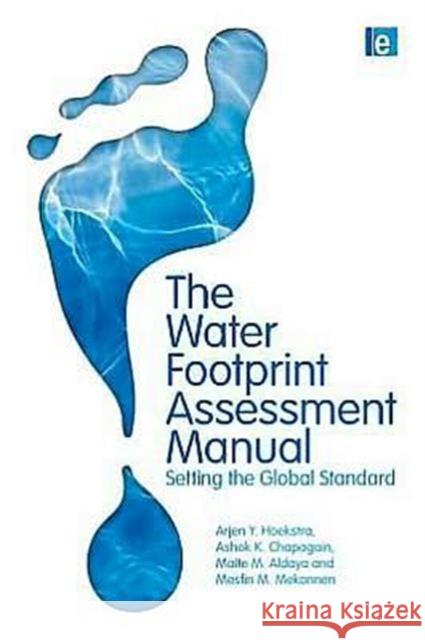
The Water Footprint Assessment Manual: Setting the Global Standard

ISBN-13: 9781849712798 / Angielski / Twarda / 2011 / 204 str.
Hoekstra
The Water Footprint Assessment Manual: Setting the Global Standard Aldaya, Maite M. 9781849712798  - książkaWidoczna okładka, to zdjęcie poglądowe, a rzeczywista szata graficzna może różnić się od prezentowanej.

The Water Footprint Assessment Manual: Setting the Global Standard

ISBN-13: 9781849712798 / Angielski / Twarda / 2011 / 204 str.

Hoekstra
cena 704,38
(netto: 670,84 VAT:  5%)

Najniższa cena z 30 dni: 654,86
Termin realizacji zamówienia:
ok. 22 dni roboczych
Dostawa w 2026 r.

Darmowa dostawa!
inne wydania

People use lots of water for drinking, cooking and washing, but significantly more for producing things such as food, paper and cotton clothes. The water footprint is an indicator of water use that looks at both direct and indirect water use of a consumer or producer. Indirect use refers to the 'virtual water' embedded in tradable goods and commodities, such as cereals, sugar or cotton. The water footprint of an individual, community or business is defined as the total volume of freshwater that is used to produce the goods and services consumed by the individual or community or produced by the business. This book offers a complete and up-to-date overview of the global standard on water footprint assessment as developed by the Water Footprint Network. More specifically it:

  • provides a comprehensive set of methods for water footprint assessment
  • shows how water footprints can be calculated for individual processes and products, as well as for consumers, nations and businesses
  • contains detailed worked examples of how to calculate green, blue and grey water footprints
  • describes how to assess the sustainability of the aggregated water footprint within a river basin or the water footprint of a specific product
  • includes an extensive library of possible measures that can contribute to water footprint reduction.


Kategorie:
Nauka, Polityka
Kategorie BISAC:
Political Science > Public Policy - Environmental Policy
Business & Economics > Industries - General
Nature > Ecology
Język:
Angielski
ISBN-13:
9781849712798
Rok wydania:
2011
Ilość stron:
204
Waga:
0.54 kg
Wymiary:
23.37 x 15.24 x 2.29
Oprawa:
Twarda
Wolumenów:
01
Dodatkowe informacje:
Bibliografia
Glosariusz/słownik
Wydanie ilustrowane

Acknowledgements


Preface


1. Introduction

1.1. Background

1.2. The water footprint concept

1.3. Water footprint assessment

1.4. Guide for the reader


2. Goals and scope of water footprint assessment

2.1. Goals of water footprint assessment

2.2. Scope of water footprint accounting

2.3. Scope of water footprint sustainability assessment

2.4. Scope of water footprint response formulation


3. Water footprint accounting

3.1. Human appropriation of fresh water: what do we measure and why?

3.2. Coherence between different sorts of water footprint accounts

3.3. Water footprint of a process step

3.3.1. Blue water footprint

3.3.2. Green water footprint

3.3.3. Grey water footprint

3.3.4. Calculation of the green, blue and grey water footprint of growing a crop or tree

3.4. Water footprint of a product

3.4.1. Definition

3.4.2. Schematisation of the production system into process steps

3.4.3. Calculation of a product water footprint

3.5. Water footprint of a consumer or group of consumers

3.5.1. Definition

3.5.2. Calculation

3.6. Water footprint within a geographically delineated area

3.6.1. Definition

3.6.2. Calculation

3.7. National water footprint accounting

3.7.1. The national water footprint accounting scheme

3.7.2. Calculation of the water footprint within a nation

3.7.3. Calculation of the water footprint of national consumption

3.7.4. Water savings related to trade

3.7.5. National water dependency versus water self-sufficiency

3.8. Water footprint accounting for catchments and river basins

3.9. Water footprint accounting for municipalities, provinces or other administrative units

3.10. Water footprint of a business

3.10.1. Definition

3.10.2. Choosing the organisational boundaries of the business

3.10.3. Calculation of the business water footprint


4. Water footprint sustainability assessment

4.1. Introduction

4.2. Geographic sustainability: sustainability of the water footprint within a catchment or river basin

4.2.1. Introduction

4.2.2. Environmental sustainability criteria for identifying environmental hotspots

4.2.3. Social sustainability criteria for identifying social hotspots

4.2.4. Economic sustainability criteria for identifying economic hotspots

4.2.5. Assessing primary and secondary impacts in the hotspots identified

4.3. Sustainability of the water footprint of a process

4.4. Sustainability of the water footprint of a product

4.4.1. Identifying the unsustainable components in the water footprint of a product

4.4.2. Water footprint impact indices reflecting local environmental impacts

4.5. Sustainability of the water footprint of a business

4.6. Sustainability of the water footprint of a consumer


5. Library of water footprint response options

5.1. Shared responsibility

5.2. Reducing the water footprint of humanity: what is possible?

5.3. Consumers

5.4. Companies

5.5. Farmers

5.6. Investors

5.7. Governments


6. Limitations

7. Future challenges

7.1. Water footprint assessment methodology and data

7.2. Application of the water footprint in different contexts

7.3. Embedding the water footprint in existing water and environmental accounts and reports

7.4. Linking to ecological, energy and carbon footprint methods

7.5. Linking to material flow analysis, input-output modelling, a


Udostępnij

Facebook - konto krainaksiazek.pl


Opinie o Krainaksiazek.pl na Opineo.pl

Partner Mybenefit

Krainaksiazek.pl w programie rzetelna firma Krainaksiaze.pl - płatności przez paypal

Czytaj nas na:

Facebook - krainaksiazek.pl
  • książki na zamówienie
  • granty
  • książka na prezent
  • kontakt
  • pomoc
  • opinie
  • regulamin
  • polityka prywatności

Zobacz:

  • Księgarnia czeska

  • Wydawnictwo Książkowe Klimaty

1997-2025 DolnySlask.com Agencja Internetowa

© 1997-2022 krainaksiazek.pl
     
KONTAKT | REGULAMIN | POLITYKA PRYWATNOŚCI | USTAWIENIA PRYWATNOŚCI
Zobacz: Księgarnia Czeska | Wydawnictwo Książkowe Klimaty | Mapa strony | Lista autorów
KrainaKsiazek.PL - Księgarnia Internetowa

Polityka prywatnosci - link
Krainaksiazek.pl - płatnośc Przelewy24
Przechowalnia Przechowalnia





