• Wyszukiwanie zaawansowane
  • Kategorie
  • Kategorie BISAC
  • Książki na zamówienie
  • Promocje
  • Granty
  • Książka na prezent
  • Opinie
  • Pomoc
  • Załóż konto
  • Zaloguj się

The Use of First and Second Language in Chinese University Efl Classrooms » książka


zaloguj się | załóż konto
Logo Krainaksiazek.pl

koszyk

konto

szukaj
topmenu
Księgarnia internetowa
Szukaj
Książki na zamówienie
Promocje
Granty
Książka na prezent
Moje konto
Pomoc
 
 
Wyszukiwanie zaawansowane
Pusty koszyk
Bezpłatna dostawa dla zamówień powyżej 20 złBezpłatna dostawa dla zamówień powyżej 20 zł

Kategorie główne

• Nauka
 [2946350]
• Literatura piękna
 [1816154]

  więcej...
• Turystyka
 [70666]
• Informatyka
 [151172]
• Komiksy
 [35576]
• Encyklopedie
 [23172]
• Dziecięca
 [611458]
• Hobby
 [135995]
• AudioBooki
 [1726]
• Literatura faktu
 [225763]
• Muzyka CD
 [378]
• Słowniki
 [2917]
• Inne
 [444280]
• Kalendarze
 [1179]
• Podręczniki
 [166508]
• Poradniki
 [469467]
• Religia
 [507199]
• Czasopisma
 [496]
• Sport
 [61352]
• Sztuka
 [242330]
• CD, DVD, Video
 [3348]
• Technologie
 [219391]
• Zdrowie
 [98638]
• Książkowe Klimaty
 [124]
• Zabawki
 [2382]
• Puzzle, gry
 [3525]
• Literatura w języku ukraińskim
 [259]
• Art. papiernicze i szkolne
 [7107]
Kategorie szczegółowe BISAC

The Use of First and Second Language in Chinese University Efl Classrooms

ISBN-13: 9789811019104 / Angielski / Twarda / 2016 / 264 str.
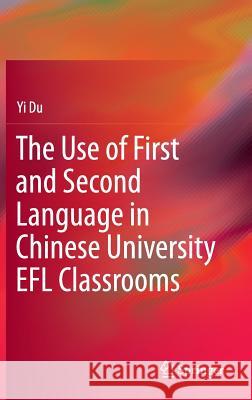
Yi Du
The Use of First and Second Language in Chinese University Efl Classrooms Du, Yi 9789811019104 Springer - książkaWidoczna okładka, to zdjęcie poglądowe, a rzeczywista szata graficzna może różnić się od prezentowanej.

The Use of First and Second Language in Chinese University Efl Classrooms

ISBN-13: 9789811019104 / Angielski / Twarda / 2016 / 264 str.

Yi Du
cena 201,24
(netto: 191,66 VAT:  5%)

Najniższa cena z 30 dni: 192,74
Termin realizacji zamówienia:
ok. 16-18 dni roboczych.

Darmowa dostawa!

This book investigates first language (L1) and second language (L2) use in Chinese university classrooms, focusing on the experiences of four Chinese EFL teachers who were teaching non-English major students at four different proficiency levels.

Kategorie:
Nauka, Językoznawstwo
Kategorie BISAC:
Language Arts & Disciplines > Linguistics - Sociolinguistics
Education > Language Experience Approach
Education > Teaching - Subjects - Language Arts
Wydawca:
Springer
Język:
Angielski
ISBN-13:
9789811019104
Rok wydania:
2016
Wydanie:
2016
Ilość stron:
264
Waga:
0.56 kg
Wymiary:
23.39 x 15.6 x 1.75
Oprawa:
Twarda
Wolumenów:
01
Dodatkowe informacje:
Bibliografia
Wydanie ilustrowane

Foreword                                                                                                                            
Acknowledgements                                                                                                                             
Table of Contents     
                   
List of Tables                                                                                                                             
List of Figures                                                                                                                    
Chapter 1  Introduction
1.1      Introduction
1.2      Issues relevant to the L1 in L2 learning and teaching
1.2.1   Power and politics
1.2.2   Teacher education
1.2.3   Teacher cognition
1.2.4   Culture of learning
1.2.5   Teaching Context
1.3      The objectives of the study   
1.4      Overview of the thesis   

Section A  Background and Design

Chapter 2  The L1 in L2 learning and teaching
2.1        Introduction
2.2        The role of the L1 in L2 learning
2.2.1     Arguments for the negative role of the L1 in L2 learning
2.2.2     Arguments for the positive role of the L1 in L2 learning
2.3        The L1 in L2 teaching
2.3.1     An early attempt to conduct L2 teaching in the L2
2.3.2     The Grammar-Translation Method
2.3.3     The Direct Method
2.3.4     The Audiolingual Method
2.3.5     Communicative Language Teaching
2.3.6     The Natural Approach
2.3.7     Summary
2.3.8     L2 teaching methods in China
2.4        Empirical studies on teachers’ L1 and L2 use
2.4.1     Quantity of teachers’ L1 and L2 use
2.4.2     Functions of teachers’ L1 use
2.4.3     Factors influencing teachers’ language choice
2.4.4     Teachers’ perceptions of L1 use
2.4.5     Students’ perceptions of their teachers’ L1 use
2.4.6     Optimal use of the L1


Chapter 3  Code-switching
3.1        Introduction
3.2        Definitions
3.2.1     Code-switching and code-mixing
3.2.2     Code-switching and borrowing
3.3        Grammatical aspects of code-switching
3.3.1     Types of code-switching
3.3.2     Grammatical constraints on code-switching
3.3.2.1  The free morpheme and equivalence constraint
3.3.2.2  The syntactic government constraint
3.3.2.3  The Matrix Language Frame model
3.4        Pragmatic aspects of code-switching
3.4.1     Situational versus metaphorical code-switching
3.4.2     Conversational functions of code-switching
3.4.3     The Markedness model
3.4.4     A sequential analysis of code-switching: the Conversation Analysis                 approach
3.5        Code-switching in the classroom

Chapter 4  Reseach Design
4.1        Introduction
4.2        Data collection
4.2.1     Background description
4.2.1.1  The research context
4.2.1.2  The English curriculum
4.2.1.3  The participants
4.2.1.4  Initial contacts and relations with the participants
4.2.2    Classroom observation
4.2.2.1   The role of the observer
4.2.2.2   Coding instruments
4.2.2.3   The reasons for not coding in the data collection phase
4.2.2.4   Existing coding systems versus data-driven categories
4.2.2.5   Field notes
4.2.2.6   Observation sheet
4.2.2.7   Recordings
4.2.3      Interviews
4.2.4      Stimulated recall
4.3        Approaches to lesson data analysis
4.3.1      Analytical approaches to the pragmatic aspects of code-switching: 
           the taxonomic approach versus the Markedness model and the Conversation
           Analysis approach
4.3.2      Sequential analysis of classroom discourse: an approach based on 
           the concept of ‘frame’
4.3.3      Criteria for grammatical analysis of code-switching
4.3.4      Units of analysis

Section B  Results

Chapter 5  Classroom Data
5.1        Introduction
5.2        Analysis of the teachers’ code-switching
5.2.1     Procedures of analysis
5.2.2     Taxonomy of functional categories
5.2.3     Results
5.2.3.1  Anne
5.2.3.2  Betty
5.2.3.3  Carl
5.2.3.4  David
5.2.4     Further considerations
5.2.5     Conclusion
5.3        Global analysis [quantitative]
5.3.1     Coding
5.3.2     Results
5.3.2.1  Anne
5.3.2.2  Betty
5.3.2.3  Carl
5.3.2.4  David
5.3.3     Conclusion
5.4        Global analysis [qualitative]
5.4.1     Framing classroom discourse
5.4.2     Results
5.4.2.1  Anne
5.4.2.2  Betty
5.4.2.3  Carl
5.4.2.4  David
5.4.3     Conclusion
<
Chapter 6  Interviews
6.1        Introduction
6.2        Results
6.2.1     Anne
6.2.2     Betty
6.2.3     Carl
6.2.4     David
6.3        Conclusion

Chapter 7  Stimulated Recall
7.1        Introduction
7.2        Results
7.2.1     Anne
7.2.1.1  The reading-and-writing course
7.2.1.2  The listening-and-speaking course
7.2.1.3  Summary and preliminary analysis
7.2.2     Betty
7.2.2.1  The reading-and-writing course
7.2.2.2  The listening-and-speaking course
7.2.2.3  Summary and preliminary analysis
7.2.3     Carl
7.2.3.1  The reading-and-writing course
7.2.3.2  The listening-and-speaking course
7.2.3.3  Summary and preliminary analysis
7.2.4     David
7.2.4.1  The reading-and-writing course
7.2.4.2  The listening-and-speaking course
7.2.4.3  Summary and preliminary analysis
7.3        Conclusion

Section C  Conclusions

Chapter 8  Discussion and Conclusions
8.1       Introduction
8.2       Overview of the major findings of the study
8.2.1    The quantity of L1 and L2 use by the teachers
8.2.2    The grammatical patterns of the teachers’ language use
8.2.3    The circumstances and functions of teachers’ L1 use
8.2.4    The teachers’ perceptions of and reasons for their own language use
8.2.5    The observer’s perceptions of the teachers’ language use
8.2.6    The teachers’ language use across different frames of classroom discourse
8.2.7    The teachers’ beliefs and attitudes towards using the L1 in L2 education
8.2.8    Factors affecting the teachers’ language choices
8.2.8.1 The university policy regarding the medium of instruction
8.2.8.2 Teaching objectives
8.2.8.3 Students’ English abilities
8.2.8.4 Teachers’ beliefs regarding L1 use
8.2.8.5 Teachers’ English abilities
8.2.8.6 Teachers’ role
8.2.8.7 Immediate classroom factors
8.3       Implications for L2 teaching and teacher training
8.4       Reflection on methods
8.5       Recommendations for future research

Bibliography
Appendices (Introductory Note)
Appendix 1: Sample analysis of code-switching instances (Carl)
Appendix 2: Sample pre- and post-observation interview (Anne)


Dr. Yi Du is a lecturer in the English department at North China Electric Power University. She holds a PhD in Applied Language Studies from the University of Edinburgh, UK. Her research interests include code-switching, classroom discourse, teachers’ beliefs and teacher education.

This book investigates first language (L1) and second language (L2) use in Chinese university classrooms, focusing on the experiences of four Chinese EFL teachers who were teaching non-English major students at four different proficiency levels. It examines these four teachers' actual use of L1 and L2, including the distribution of their L1 and L2 use; the circumstances, functions and grammatical patterns of their language use; and their language use across different frames of classroom discourse. It also explores their attitudes and beliefs regarding this issue in depth, as well as their own perceptions of and reasons for their language use and possible influencing factors. Through its detailed analysis of the teachers' language use, as well as their respective beliefs and decision-making techniques, this book contributes to L2 teachers' professional development and L2 teaching in general, especially with regard to establishing a pedagogically principled approach to L1 and L2 use.




Udostępnij

Facebook - konto krainaksiazek.pl


Opinie o Krainaksiazek.pl na Opineo.pl

Partner Mybenefit

Krainaksiazek.pl w programie rzetelna firma Krainaksiaze.pl - płatności przez paypal

Czytaj nas na:

Facebook - krainaksiazek.pl
  • książki na zamówienie
  • granty
  • książka na prezent
  • kontakt
  • pomoc
  • opinie
  • regulamin
  • polityka prywatności

Zobacz:

  • Księgarnia czeska

  • Wydawnictwo Książkowe Klimaty

1997-2026 DolnySlask.com Agencja Internetowa

© 1997-2022 krainaksiazek.pl
     
KONTAKT | REGULAMIN | POLITYKA PRYWATNOŚCI | USTAWIENIA PRYWATNOŚCI
Zobacz: Księgarnia Czeska | Wydawnictwo Książkowe Klimaty | Mapa strony | Lista autorów
KrainaKsiazek.PL - Księgarnia Internetowa

Polityka prywatnosci - link
Krainaksiazek.pl - płatnośc Przelewy24
Przechowalnia Przechowalnia




