• Wyszukiwanie zaawansowane
  • Kategorie
  • Kategorie BISAC
  • Książki na zamówienie
  • Promocje
  • Granty
  • Książka na prezent
  • Opinie
  • Pomoc
  • Załóż konto
  • Zaloguj się

The Transformative Philosophical Dialogue » książka


zaloguj się | załóż konto
Logo Krainaksiazek.pl

koszyk

konto

szukaj
topmenu
Księgarnia internetowa
Szukaj
Książki na zamówienie
Promocje
Granty
Książka na prezent
Moje konto
Pomoc
 
 
Wyszukiwanie zaawansowane
Pusty koszyk
Bezpłatna dostawa dla zamówień powyżej 20 złBezpłatna dostawa dla zamówień powyżej 20 zł

Kategorie główne

• Nauka
 [2946912]
• Literatura piękna
 [1852311]

  więcej...
• Turystyka
 [71421]
• Informatyka
 [150889]
• Komiksy
 [35717]
• Encyklopedie
 [23177]
• Dziecięca
 [617324]
• Hobby
 [138808]
• AudioBooki
 [1671]
• Literatura faktu
 [228371]
• Muzyka CD
 [400]
• Słowniki
 [2841]
• Inne
 [445428]
• Kalendarze
 [1545]
• Podręczniki
 [166819]
• Poradniki
 [480180]
• Religia
 [510412]
• Czasopisma
 [525]
• Sport
 [61271]
• Sztuka
 [242929]
• CD, DVD, Video
 [3371]
• Technologie
 [219258]
• Zdrowie
 [100961]
• Książkowe Klimaty
 [124]
• Zabawki
 [2341]
• Puzzle, gry
 [3766]
• Literatura w języku ukraińskim
 [255]
• Art. papiernicze i szkolne
 [7810]
Kategorie szczegółowe BISAC

The Transformative Philosophical Dialogue

ISBN-13: 9783031400735 / Angielski / Twarda / 2023
Shai Tubali
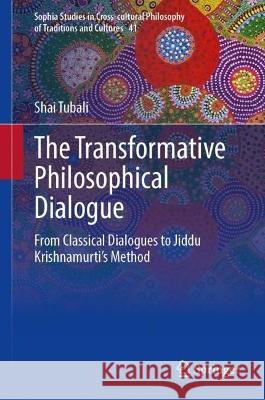
The Transformative Philosophical Dialogue Shai Tubali 9783031400735 Springer Nature Switzerland - książkaWidoczna okładka, to zdjęcie poglądowe, a rzeczywista szata graficzna może różnić się od prezentowanej.

The Transformative Philosophical Dialogue

ISBN-13: 9783031400735 / Angielski / Twarda / 2023

Shai Tubali
cena 442,79
(netto: 421,70 VAT:  5%)

Najniższa cena z 30 dni: 424,07
Termin realizacji zamówienia:
ok. 22 dni roboczych
Bez gwarancji dostawy przed świętami

Darmowa dostawa!
inne wydania

This book explores dialogue as a transformative form of philosophical practice by unveiling the method behind the unique dialogue developed by mystic and thinker Jiddu Krishnamurti (1895–1986). While Krishnamurti himself generally rejected the cultivation of systems and techniques, Shai Tubali argues that there are easily identifiable patterns through which Krishnamurti strove to realize his dialogical aims. For this reason, he refers to this method, whose existence has evaded Krishnamurti’s followers and scholars alike, as the Krishnamurti dialogue. He suggests that these discursive patterns serve to broaden our understanding of the possibilities of philosophical and religious dialogues and further illuminate established forms of dynamic discourse, such as the Socratic method.   Inspired by Pierre Hadot’s revolutionary reading of the classical Greco-Roman texts, the author centers his attention on Plato’s Socratic dialogues and the guru–disciple conversations in the Hindu Upanishads, which fall within the scope of what may be termed ‘the transformative dialogue’: dialogues that have been written with the intention of bringing about a transformation in the mind of the interlocutor and reader and reorienting their way of life. This text appeals to students as well as researchers and suggests that the Krishnamurti dialogue is not only a continuation and development of the transformative dialogue, but that it also amalgamates ingredients of classical Western philosophy and South Asian mysticism. Moreover, this type of dialogue encourages readers to revisit the lost practice of transformative philosophy, in that it reveals new pathways of philosophical and religious inquiry that bear thought-provoking practical implications. 

Kategorie:
Religia
Wydawca:
Springer Nature Switzerland
Seria wydawnicza:
Sophia Studies in Cross-cultural Philosophy of Traditions an
Język:
Angielski
ISBN-13:
9783031400735
Rok wydania:
2023
Waga:
0.58 kg
Wymiary:
23.5 x 15.5
Oprawa:
Twarda
Dodatkowe informacje:
Wydanie ilustrowane

Chapter 1 Introduction
The dialogical disposition of Krishnamurti’s work
Hadot and the classical philosophical dialogue
Understanding Krishnamurti through the Hadotian lens
The Krishnamurti dialogue and multicultural philosophy
The journey ahead

Part I: The classical philosophical dialogue 

Chapter 2 ‘Know thyself’: Hadot and the conception of transformative philosophy
The ‘organized totality’ of classical philosophy
Transformative philosophy
The communal dimension of transformative philosophy
Sages or philosophers? 

Chapter 3 ‘You have dispelled my doubts and delusions’: Dialogue in classical India and classical Greece  
The dialogical dimension of Indian philosophies
The conversational nature of Greek philosophy
The beginnings of the transformative dialogue

Chapter 4 ‘When people are questioned, and the questions are well put’: Transformative dialogue in the Upaniṣads and in Plato 
Dialogue as transformation
The teacher as a midwife
The two types of transformation

Chapter 5 Dialogues of life and death: Transformative dialogue in Plato’s Phaedo and in the Kaṭhopaniṣad  
Death as an opportunity
Soul-liberation in the Phaedo
‘Know thyself to be pure and immortal!’
Where mysticism diverges from transformative philosophy
Complete and incomplete endings

Part II: The Krishnamurti dialogue

Chapter 6 ‘We are inquiring together’: The dialogical nature of Jiddu Krishnamurti’s work
Krishnamurti as a rebel
The awakening of intelligence
Krishnamurti’s teachings as a living praxis

Chapter 7 ‘Questions to which there are no answers’: The method behind the Krishnamurti dialogue
The birth of a new method
First dialogue analysis
Second dialogue analysis
On Krishnamurti’s question and negation

Chapter 8 ‘The thunder of insight’: The final destination of Krishnamurti’s dialogue
First stage: The method
Second stage: The preparatory stage
Third stage: The shift of insight
Fourth stage: The ultimate state

Chapter 9 ‘Come and join me’: Krishnamurti in dialogue with scholars
Krishnamurti and the life of the mind
Murdoch–Krishnamurti: Trying to ‘build up structures’
Needleman–Krishnamurti: Looking beyond the self’s barbed-wire fence
Understanding Krishnamurti

Part III: Krishnamurti and the classical philosophical dialogue 

Chapter 10 Socrates, kōan, Krishnamurti: Questions as a spiritual exercise
Socrates: Refutation as cleansing
Kōan: Rooting out the entire mind
Krishnamurti: The answer is in the question

Chapter 11 Nāgārjuna, Śaṅkara, Krishnamurti: Negation as a spiritual exercise
Nāgārjuna: The relinquishing of all views
Śaṅkara: ātman is left unnegated
Krishnamurti: The denial of knowledge

Chapter 12 Conclusions and Implications
Main conclusions
Transformative philosophy or mysticism?
Implementing the Krishnamurti dialogue

Bibliography

Shai Tubali is a Postdoctoral Research Fellow at the University of Leeds, UK. He has a doctorate in philosophy of religion from the School of Philosophy, Religion and History of Science at the University of Leeds. He is the author of the monograph Cosmos and Camus: Science Fiction Film and the Absurd (Peter Lang) and a contributor to the upcoming Routledge Companion to Absurdist Literature and a prolific published author since 1996, who has written more than twenty books, including award-winning and bestselling titles, which have appeared in 12 languages. Among his diverse publications, one can find prose, poetry, practical books on meditation and self-development, as well as philosophical treatises on South-Asian philosophy and classical Greek philosophy.  

This book explores dialogue as a transformative form of philosophical practice by unveiling the method behind the unique dialogue developed by mystic and thinker Jiddu Krishnamurti (1895–1986). While Krishnamurti himself generally rejected the cultivation of systems and techniques, Shai Tubali argues that there are easily identifiable patterns through which Krishnamurti strove to realize his dialogical aims. For this reason, he refers to this method, whose existence has evaded Krishnamurti’s followers and scholars alike, as the Krishnamurti dialogue. He suggests that these discursive patterns serve to broaden our understanding of the possibilities of philosophical and religious dialogues and further illuminate established forms of dynamic discourse, such as the Socratic method.   

Inspired by Pierre Hadot’s revolutionary reading of the classical Greco-Roman texts, the author centers his attention on Plato’s Socratic dialogues and the guru–disciple conversations in the Hindu Upanishads, which fall within the scope of what may be termed ‘the transformative dialogue’: dialogues that have been written with the intention of bringing about a transformation in the mind of the interlocutor and reader and reorienting their way of life. This text appeals to students as well as researchers and suggests that the Krishnamurti dialogue is not only a continuation and development of the transformative dialogue, but that it also amalgamates ingredients of classical Western philosophy and South Asian mysticism. Moreover, this type of dialogue encourages readers to revisit the lost practice of transformative philosophy, in that it reveals new pathways of philosophical and religious inquiry that bear thought-provoking practical implications. 



Udostępnij

Facebook - konto krainaksiazek.pl


Opinie o Krainaksiazek.pl na Opineo.pl

Partner Mybenefit

Krainaksiazek.pl w programie rzetelna firma Krainaksiaze.pl - płatności przez paypal

Czytaj nas na:

Facebook - krainaksiazek.pl
  • książki na zamówienie
  • granty
  • książka na prezent
  • kontakt
  • pomoc
  • opinie
  • regulamin
  • polityka prywatności

Zobacz:

  • Księgarnia czeska

  • Wydawnictwo Książkowe Klimaty

1997-2025 DolnySlask.com Agencja Internetowa

© 1997-2022 krainaksiazek.pl
     
KONTAKT | REGULAMIN | POLITYKA PRYWATNOŚCI | USTAWIENIA PRYWATNOŚCI
Zobacz: Księgarnia Czeska | Wydawnictwo Książkowe Klimaty | Mapa strony | Lista autorów
KrainaKsiazek.PL - Księgarnia Internetowa

Polityka prywatnosci - link
Krainaksiazek.pl - płatnośc Przelewy24
Przechowalnia Przechowalnia





